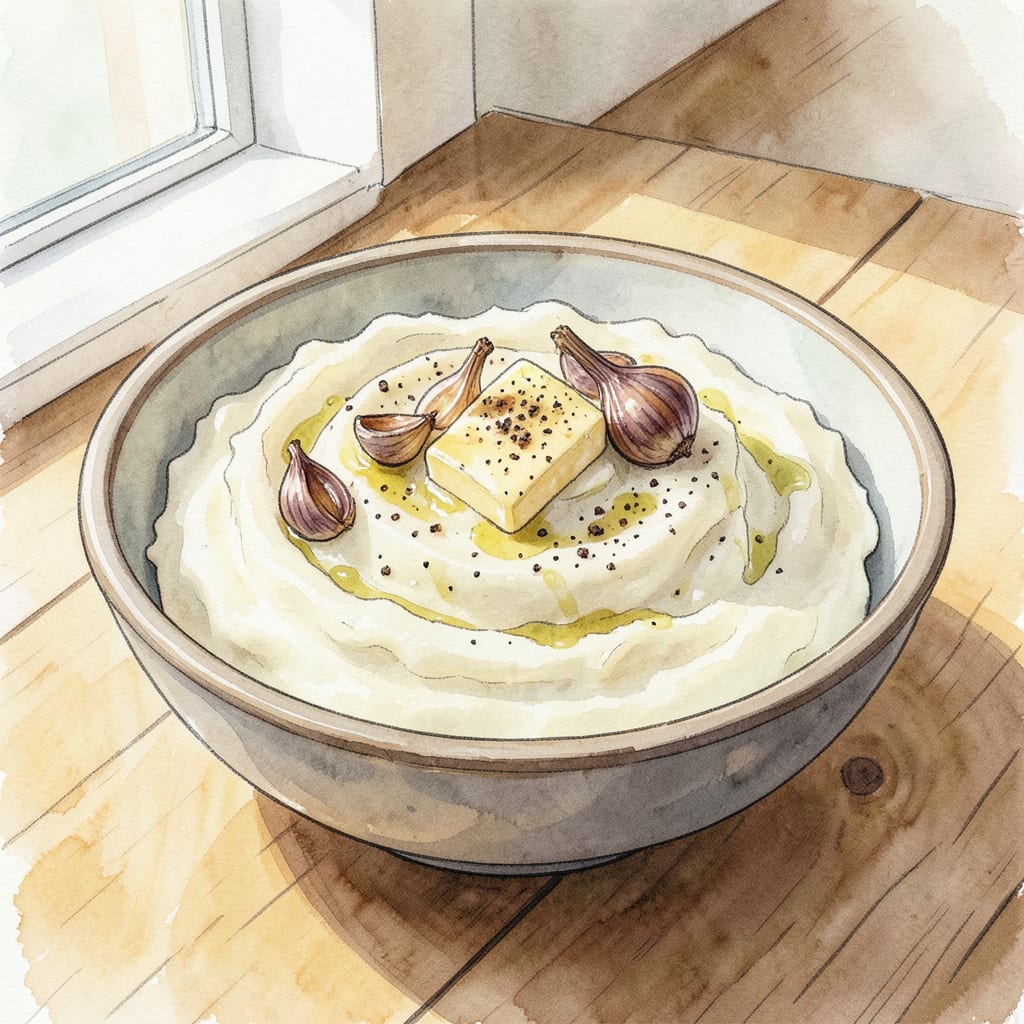
I’m sharing my secret for achieving creamy mashed potatoes without milk. 🔥 As a pitmaster with French training, I’ve perfected a technique that delivers rich, velvety results using simple ingredients you likely have on hand.
This recipe relies on quality potatoes and precise technique to achieve that perfect mash. By using the right ratio of butter to potatoes and careful mashing, you’ll create a dairy-free version that’s just as satisfying as traditional mashed potatoes.
Ingredients for Mashed Potato Recipe No Milk
Simple, quality ingredients come together for creamy mashed potatoes without dairy.
| Ingredient | Amount | Notes |
|---|---|---|
| Russet Potatoes 🥔 | 3 whole | High-starch variety preferred |
| Unsalted Butter 🧈 | ½ cup | Softened for easier mashing |
| Garlic Cloves 🧄 | 4 cloves | Minced for flavor infusion |
| Salt 🧂 | 1 tsp | Kosher or sea salt preferred |
| Black Pepper 🌶️ | ½ tsp | Freshly ground for best flavor |
| Olive Oil 🫒 | 2 tbsp | For boiling water, optional |
| Fresh Chives 🌿 | ¼ cup | Chopped, for garnish |
[recipe_ingredient_scaler]
For the best results, choose Russet potatoes—they’re high in starch, which makes for fluffier mash. I like to buy mine from local farmers’ markets when they’re in season. If you’re using a big batch, get them from Costco or your regular grocery store. Make sure they’re firm with no green spots.
No unsalted butter? You can use regular salted butter and skip the added salt. If you’re feeling fancy, try adding some roasted garlic instead of raw. For an extra rich flavor, some people swear by adding a splash of olive oil to the boiling water—about 2 tablespoons does the trick. You can also experiment with different herbs like parsley or thyme.
These mashed potatoes keep beautifully in the fridge for up to 4 days. Reheat with a splash of extra butter or olive oil to refresh. You can also freeze them for 3 months—just thaw overnight in the fridge and reheat gently on the stovetop or in the microwave.
Step-by-Step Instructions for Mashed Potato Recipe No Milk
Here’s the method for achieving creamy mashed potatoes without any dairy products.
🔥 Step 1: Boil the Potatoes Until Tender
Start by placing the 3 whole Russet Potatoes in a large pot and adding enough cold water to cover them completely. If you’re using the 2 tbsp Olive Oil, add it to the water now to help prevent the potatoes from sticking together. Bring the water to a boil over high heat, then reduce the heat to medium-low and simmer for 15-20 minutes until the potatoes are tender when pierced with a fork. You’ll know they’re done when they’re easily mashed with a fork.
Drain the potatoes in a colander and return them to the pot. Let them sit for 1-2 minutes to allow excess moisture to evaporate. This step is crucial for achieving the right consistency in your mashed potatoes.
👨🍳 Step 2: Prepare the Garlic Butter Mixture
While the potatoes are cooking, prepare the garlic butter mixture. In a small saucepan, melt the 0.5 cup Unsalted Butter over low heat. Add the 4 cloves Garlic Cloves that have been minced and cook for 1-2 minutes until fragrant. Be careful not to burn the garlic, as it can quickly become bitter. Remove the saucepan from the heat and set it aside.
The garlic butter mixture will add a rich, savory flavor to your mashed potatoes. By cooking the garlic in butter, you’ll mellow out its flavor and create a creamy, aromatic sauce.
🥘 Step 3: Mash the Potatoes with Garlic Butter and Seasonings
Add the garlic butter mixture to the cooked potatoes and begin mashing them with a potato masher or a fork until they’re mostly smooth. Add the 1 tsp Salt and 0.5 tsp Black Pepper, and continue mashing until the potatoes are creamy and well-seasoned. You can also use a ricer or food mill for an even smoother texture.
Taste the mashed potatoes and adjust the seasoning as needed. If they need more salt or pepper, add it now. The key to great mashed potatoes is achieving the right balance of flavors.
🌿 Step 4: Garnish with Fresh Chives and Serve
Transfer the mashed potatoes to a serving dish and garnish with the 0.25 cup Fresh Chives that have been chopped. The fresh chives will add a bright, oniony flavor and a pop of color to your dish. Serve the mashed potatoes hot, alongside your favorite main course.
These mashed potatoes are perfect for accompanying roasted meats or as a comforting side dish on their own. The garlic butter adds a rich, creamy element without the need for any dairy products.
Storing and Reheating This mashed potato recipe no milk
Refrigerator Storage Tips
Cool your mashed potatoes to room temperature within 2 hours to prevent bacterial growth. Transfer them to an airtight container—I prefer glass containers with tight-fitting lids. Store in the refrigerator at 40°F or below for up to 4 days. The flavors will meld together beautifully, making leftovers even better. ❄️
Freezer Storage Strategies
For longer storage, you can freeze mashed potatoes for up to 3 months. Use freezer-safe containers or heavy-duty freezer bags, removing as much air as possible before sealing. Label with the date and contents. When you’re ready to eat them, thaw overnight in the refrigerator or reheat directly from frozen. Frozen mashed potatoes are perfect for meal prep or holiday planning.
Stovetop Reheating Techniques
For the best texture, reheat mashed potatoes on the stovetop. Place them in a heavy-bottomed pot over low heat, adding a splash of olive oil or melted butter to refresh their creaminess. Stir frequently to prevent sticking—about 5-7 minutes should do the trick. If they’re too thick, add a tablespoon of chicken or vegetable broth at a time until you reach your desired consistency. 🔥
Microwave Reheating Tips
For quick reheating, use the microwave. Transfer mashed potatoes to a microwave-safe dish, cover with a damp paper towel, and heat on 50% power in 30-second intervals, stirring between each interval, until heated through. Be careful not to overheat, as this can cause dryness. If needed, add a splash of broth or melted butter to restore creaminess.
Tips for Maintaining Quality
To keep your mashed potatoes tasting their best, avoid overheating, which can cause them to become dry and gluey. When reheating, add liquid gradually to achieve the right consistency. For an extra burst of flavor, stir in some freshly chopped herbs or a sprinkle of grated cheese just before serving. These small touches can elevate your leftovers to a whole new level. 🌿
Nutrition Facts

Trained in classic French technique but raised on slow-cooked ribs and spicy rubs, she blends culinary skill with smoke and soul.
- Recipe for Boneless Pork Chops in Cast Iron Skillet: Sear and Baste to Juicy Perfection - October 3, 2026
- Recipe for Boneless Cross Rib Roast: Slow-Roasted Beef with Herb Crust - October 3, 2026
- Hamburgers in Sauce Recipe Crock Pot: Slow-Cooked Savory Delight - October 3, 2026