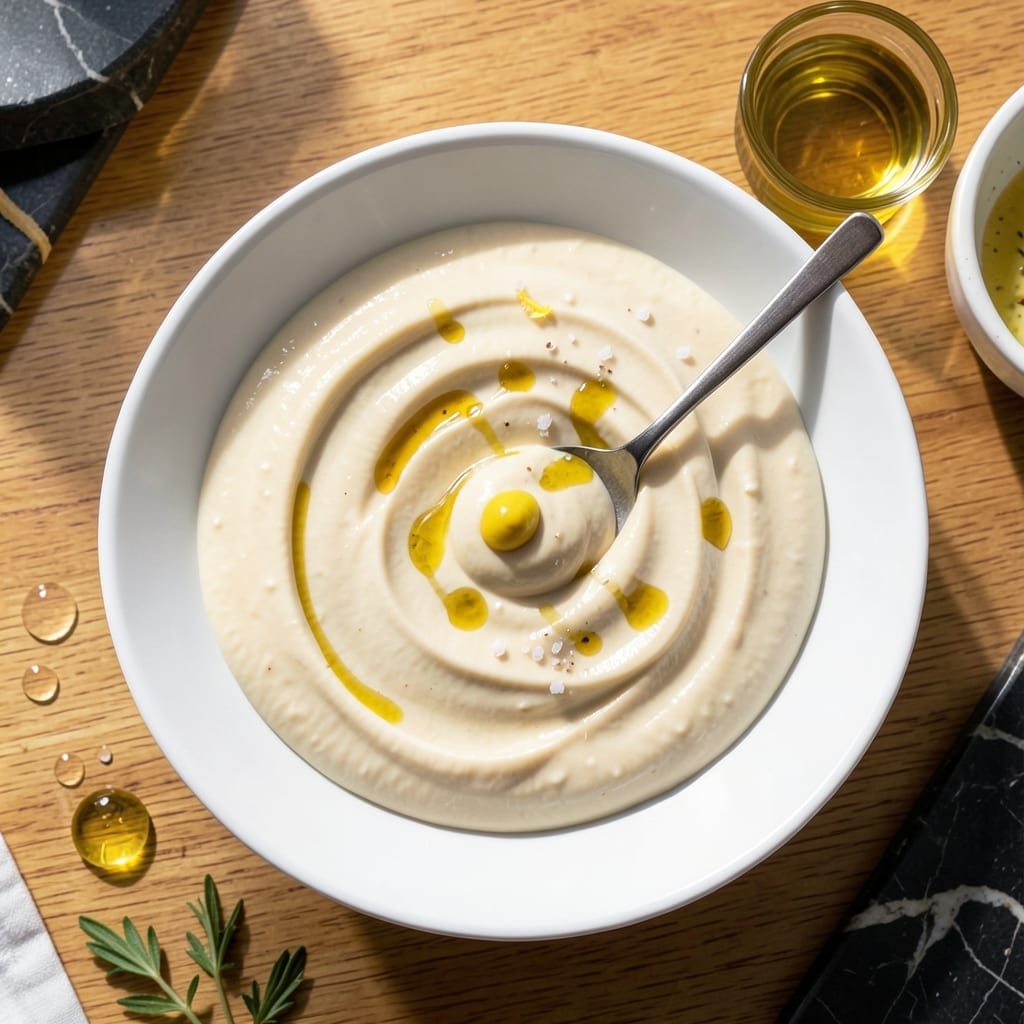
Homemade mayonnaise with olive oil delivers a rich, creamy texture that store-bought versions can’t match. This simple method ensures a stable emulsion every time.
With just a few ingredients and a whisk, you can create a versatile condiment that elevates sandwiches, salads, and sauces. Fresh is always best.
Ingredients for Mayo Recipe with Olive Oil
Seven ingredients transform into emulsified perfection with just a whisk and bowl.
| Ingredient | Amount | Notes |
|---|---|---|
| Large Egg Yolk 🥚 | 1 whole | Room temperature for stability |
| Whole Egg 🥚 | 1 whole | Room temperature for stability |
| Dijon Mustard 🟡 | 1 tsp | Smooth, not whole grain |
| White Wine Vinegar 💧 | 1 tbsp | Or apple cider vinegar |
| Extra-Virgin Olive Oil 🫒 | 1 cup | Light or mild variety preferred |
| Sea Salt 🧂 | ¼ tsp | Fine grain for dissolution |
| Lemon Juice 🍋 | 1 tsp | Freshly squeezed for brightness |
[recipe_ingredient_scaler]
The olive oil quality is paramount here. Light or mild extra-virgin olive oil prevents an overpowering flavor—save your peppery finishing oils for drizzling. Room temperature eggs are non-negotiable for stable emulsification. Most grocery stores carry Dijon mustard in the condiment aisle; Grey Poupon is a reliable choice if you’re unsure which brand to select.
No white wine vinegar? Apple cider vinegar or fresh lemon juice at the same ratio works perfectly. For a tangier result, increase the vinegar by half a teaspoon. If you’re concerned about raw eggs, use pasteurized eggs (available at most Whole Foods locations). The mustard acts as an emulsifier, so don’t skip it—yellow mustard in a pinch if that’s all you have.
Homemade mayonnaise keeps for 5-7 days in the fridge in an airtight container. The emulsion may separate slightly over time—just whisk it back together. For longer storage, the acidity can be increased slightly to extend shelf life by a day or two.
Why You’ll Love This Recipe
- One Bowl Wonder: I just whisk an egg yolk, a whole egg, and a splash of vinegar, then slowly drizzle in the olive oil—no fancy tools, no mess.
- Rich & Tangy: The Dijon mustard gives it a sharp kick while the extra-virgin olive oil adds this deep, fruity richness I can’t get enough of.
- Sandwich Hero: Honestly, it turns even a basic turkey sandwich into something I actually look forward to eating.
- Stays Fresh: I make a big batch on Sunday and it keeps in the fridge all week, ready for dips, dressings, or spreading on toast.
Step-by-Step Instructions for Homemade Olive Oil Mayonnaise
Master the emulsion technique and produce a rich, velvety mayonnaise with perfect consistency.
Step 1: Combine Eggs and Acidic Components
In a medium mixing bowl, whisk together the 1 whole Large Egg Yolk, 1 whole Whole Egg, 1 tsp Dijon Mustard, 1 tbsp White Wine Vinegar, and 0.25 tsp Sea Salt until fully combined. The mustard acts as an emulsifier, while the vinegar provides the necessary acidity to balance the richness.
Use a fork or small whisk to break up the yolk completely. The mixture should appear pale yellow and slightly thickened. Ensure all ingredients are at room temperature—this is crucial for stable emulsification. Cold ingredients can cause the mayonnaise to break or separate during mixing.
Step 2: Begin the Emulsion with Slow Oil Incorporation
With the whisk in one hand and the bowl stabilized in the other, begin adding the 1 cup Extra-Virgin Olive Oil in a very thin, steady stream. Start with just a few drops at a time while whisking vigorously. This slow introduction allows the oil to incorporate gradually into the egg mixture, forming the base of your emulsion.
As the mixture begins to thicken and lighten in color, you can increase the oil to a thin stream. Maintain constant whisking—this motion is what binds the oil and water-based ingredients together. If the mixture appears glossy and slightly thickened, you’re on the right track. If it looks greasy or separated, you may be adding the oil too quickly.
Step 3: Complete the Emulsion with Remaining Oil
Once about half of the 1 cup Extra-Virgin Olive Oil has been incorporated and the mixture has visibly thickened, you can add the remaining oil in a slightly faster but still controlled stream. Continue whisking without stopping. The mayonnaise should now have a creamy, pale yellow appearance and a thick, spoonable consistency.
If at any point the mixture appears to be breaking or separating, stop adding oil and whisk vigorously for 10-15 seconds to re-emulsify. Then resume adding the oil more slowly. The final product should be smooth, with no visible separation between oil and liquid components.
Step 4: Finish with Lemon Juice and Final Adjustments
Once all the 1 cup Extra-Virgin Olive Oil has been incorporated, whisk in the 1 tsp Lemon Juice. This final addition brightens the flavor and adds a subtle tang that complements the richness of the mayonnaise. Taste and adjust seasoning if needed, though the initial 0.25 tsp Sea Salt should provide adequate seasoning.
The finished mayonnaise should be thick, creamy, and glossy, with a pale yellow color. It will have a rich, velvety texture that coats the back of a spoon. If it seems too thick, you can thin it slightly with a teaspoon of water, but proper technique should yield the perfect consistency without adjustment.
Pro Tips For Making Mayo Recipe With Olive Oil
- Drip the Oil Slow: Add the olive oil in a thin, steady stream—like a pencil-thin ribbon. I learned this the hard way after my first few attempts broke into a greasy mess.
- Use Room-Temp Eggs: Pull your egg and yolk out of the fridge 30 minutes before starting. Cold eggs resist emulsifying, and you’ll spend twice the time whisking.
- Skip the Overmixing: Once the mayo thickens, stop whisking. Overworking it after emulsification can actually break the sauce, turning it from creamy to curdled.
- Start with Mustard First: Whisk the Dijon into the egg before adding oil—it acts as a natural emulsifier and gives you a head start on stability. Sounds small, but it prevents early separation.
Wine and Beer Pairings for This Dish
Crisp White Wines
A dry Sauvignon Blanc from New Zealand brings bright citrus notes that cut through the richness of homemade mayo. I love the Kim Crawford version for its zesty lime and grapefruit profile. The acidity refreshes your palate beautifully. 🍷
Light Beers
For beer lovers, a crisp pilsner like Pilsner Urquell offers a clean, slightly bitter contrast to the creamy mayonnaise. The light body won’t overwhelm the delicate flavors of your creation. Serve ice-cold for best results.
Sparkling Options
A chilled Prosecco provides effervescence that cleanses the palate between bites. Look for La Marca—its subtle apple and pear notes complement without competing. The bubbles enhance the mouthfeel of your dish.
Rosé Pairings
A dry Provence rosé with its strawberry and melon notes offers a refreshing counterpoint. I recommend Whispering Angel for its consistent quality. The subtle fruitiness balances the mayo’s richness perfectly. 💫
Non-Alcoholic Choices
For a non-alcoholic option, try sparkling water with a squeeze of lemon or lime. The carbonation mimics the palate-cleansing effect of wine. I prefer San Pellegrino for its mineral complexity.
Nutrition Facts
Frequently Asked Questions
Why use light olive oil instead of extra-virgin?
Light olive oil has a milder flavor that won’t overpower your mayo. Extra-virgin can be too peppery, making the condiment bitter. Stick with light for a neutral, creamy base.
Can I make this without a whisk?
Yes! A fork or immersion blender works too. Slowly drizzle the 1 cup oil while blending to maintain the emulsion. Whisking just gives you more control.
How do I fix broken mayo?
If it separates, start over with a fresh yolk in a clean bowl. Slowly whisk in the broken mixture as if it were oil. It should re-emulsify perfectly.
How long does homemade mayo last?
Store it in an airtight container in the fridge for 5-7 days. The acidity helps preserve it, but fresh is always best.

Trained in classic French technique but raised on slow-cooked ribs and spicy rubs, she blends culinary skill with smoke and soul.
- Recipe for Boneless Pork Chops in Cast Iron Skillet: Sear and Baste to Juicy Perfection - October 3, 2026
- Recipe for Boneless Cross Rib Roast: Slow-Roasted Beef with Herb Crust - October 3, 2026
- Hamburgers in Sauce Recipe Crock Pot: Slow-Cooked Savory Delight - October 3, 2026