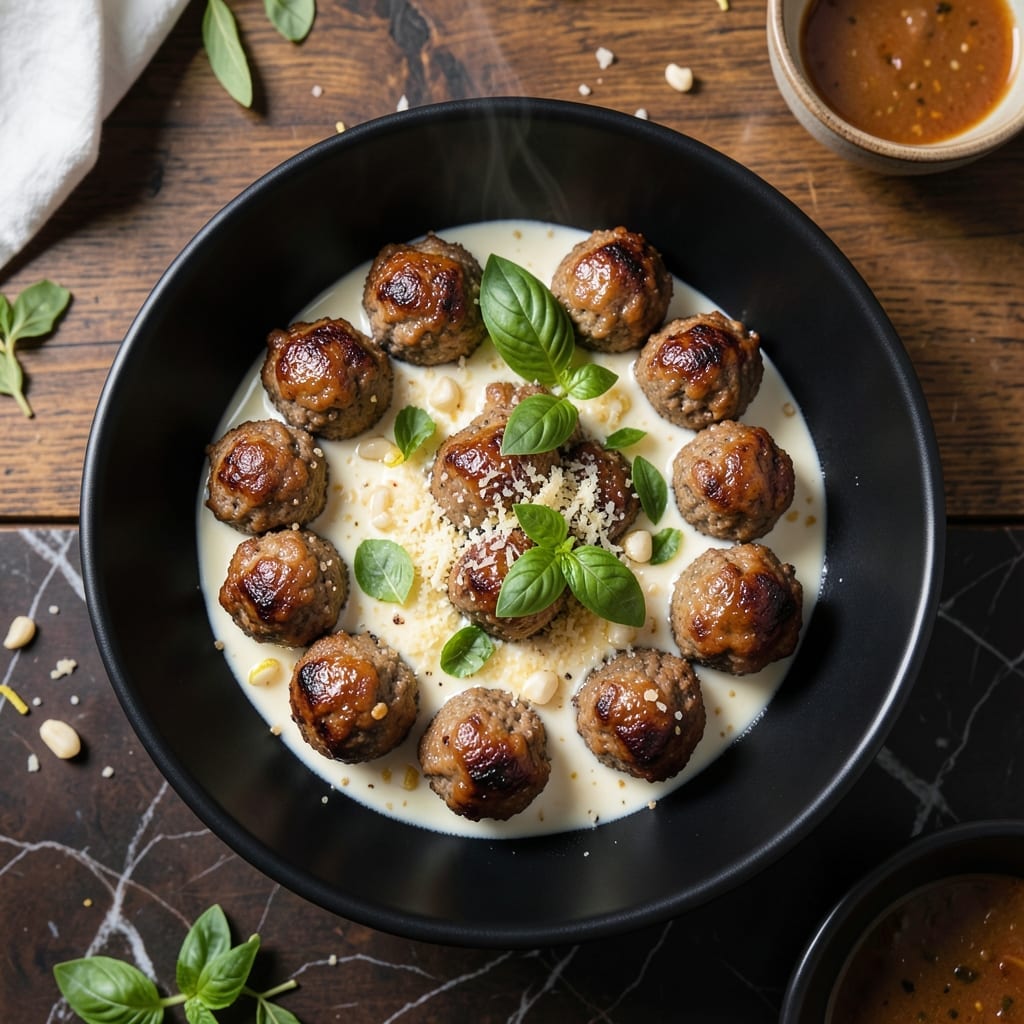
This meatball recipe delivers on a simple promise: ultra-moist results every time. The secret lies in one unexpected ingredient that transforms the texture completely.
Milk replaces traditional breadcrumbs, binding the meat while adding tenderness you can taste in every bite. The technique ensures the meatballs hold their shape during cooking without drying out.
What emerges from the oven is perfectly browned meatballs with a juicy interior that stays moist even when reheated. The flavor remains rich and satisfying, with a delicate texture that melts in your mouth.
Ideal for pasta, subs, or serving as an appetizer. This method works with beef, pork, or a combination of both.
Ingredients for Meatball Recipe with Milk
These carefully selected ingredients create meatballs that stay juicy and hold their shape perfectly.
| Ingredient | Amount | Notes |
|---|---|---|
| Ground Beef 🥩 | 1 lb | 80/20 fat ratio ideal |
| Ground Pork 🥩 | ½ lb | Optional for blend |
| Whole Milk 🥛 | ½ cup | Cold, for binding |
| Large Egg 🥚 | 1 whole | Room temperature preferred |
| Grated Parmesan Cheese 🧀 | ½ cup | Freshly grated for best texture |
| Garlic Cloves 🧄 | 3 cloves | Minced finely |
| Dried Oregano 🌿 | 1 tsp | Mediterranean variety preferred |
| Dried Basil 🍃 | 1 tsp | Crushed between fingers |
| Kosher Salt 🧂 | 1 tsp | Diamond Crystal preferred |
| Freshly Ground Black Pepper 🌶️ | ½ tsp | Coarse grind ideal |
| Olive Oil 🫒 | 2 tbsp | For browning meatballs |
| Onion Powder 🧅 | 1 tsp | Enhances savory depth |
| Red Pepper Flakes 🌶️ | ¼ tsp | Optional for heat |
[recipe_ingredient_scaler]
The meat selection is critical. Ground chuck with 80/20 fat ratio delivers optimal moisture and flavor, while adding pork (optional) creates a more complex taste profile. Most supermarkets carry pre-ground mixes—Whole Foods offers excellent quality. The milk should be whole fat; lower fat percentages won’t bind as effectively. Always use cold milk straight from the refrigerator for best results.
For substitutions, ground turkey or chicken can replace beef (use dark meat for moisture). No Parmesan? Pecorino Romano adds a sharper flavor. The egg can be omitted if necessary, but texture may suffer. For the freshest spices, Penzeys offers superior quality oregano and basil. The garlic can be swapped for garlic powder at one-third the amount, though fresh is preferred.
Prepped meatball mixture keeps 1 day refrigerated. Cooked meatballs store 4-5 days in the fridge or freeze for 3 months. Reheat gently to preserve moisture—microwave with a damp paper towel cover works well.
Why You’ll Love This Recipe
- One Bowl Wonder: I just dump everything in a single bowl—ground beef, pork, milk, egg, Parmesan—and mix. No extra dishes, no fuss.
- Rich, Juicy Bite: The whole milk keeps them incredibly tender, and the Parmesan adds that salty depth I crave.
- Stretches Further: Ground beef plus pork means I can feed my whole family without breaking the bank.
Step-by-Step Instructions for Meatballs With Milk
This method guarantees tender, cohesive results with a perfect crust on every batch.
Step 1: Combine Wet and Dry Ingredients Separately
In a large mixing bowl, whisk together the whole milk, large egg, grated parmesan cheese, minced garlic cloves, dried oregano, dried basil, kosher salt, freshly ground black pepper, onion powder, and red pepper flakes until fully combined. The cold milk helps create a tender texture while binding the mixture.
In a separate bowl, gently mix the ground beef and ground pork with your hands just until evenly blended. This prevents overworking the meat, which can lead to tough meatballs. The pork adds richness while the beef provides structure.
Step 2: Gently Incorporate All Components
Pour the wet mixture over the ground meat. Using your hands or a fork, gently fold everything together until just combined. The mixture should feel slightly sticky but hold together when pressed. Avoid compacting the mixture too tightly—this ensures light, tender results.
Let the mixture rest for 5-10 minutes at room temperature. This brief pause allows the milk to fully hydrate the proteins, which is the secret to ultra-moist meatballs that don’t dry out during cooking. You’ll notice the texture becomes slightly more cohesive during this time.
Step 3: Form Uniform Meatballs for Even Cooking
Using a cookie scoop or your hands, portion the mixture into 1.5-inch balls, rolling gently between your palms to smooth the surface. I aim for uniform sizing—this ensures even cooking so every meatball reaches perfect doneness simultaneously.
Arrange the formed meatballs on a plate or tray. If the mixture feels too wet to handle, dampen your hands slightly with cold water to prevent sticking. You should get about 16-18 meatballs from this batch, enough to serve four generously.
Step 4: Brown and Cook Through for Maximum Flavor
Heat the olive oil in a large skillet over medium-high heat until shimmering but not smoking. Add the meatballs in a single layer, working in batches if necessary to avoid crowding. Cook undisturbed for 2-3 minutes per side until deep golden brown on all sides.
Reduce heat to medium and continue cooking, turning occasionally, for an additional 8-10 minutes until the meatballs are cooked through. They’re done when an instant-read thermometer inserted into the center registers 160°F and the juices run clear. The browning creates a flavorful crust while locking in moisture.
Step 5: Rest Briefly Before Serving
Transfer the cooked meatballs to a paper towel-lined plate to drain any excess oil. Let them rest for 3-5 minutes before serving. This brief rest allows the internal juices to redistribute, ensuring the first bite is as moist as the last.
Serve immediately while still warm. The meatballs should hold their shape perfectly when pierced with a fork, yet yield easily to reveal a juicy, tender interior. Any leftovers can be cooled and stored in an airtight container in the refrigerator for up to three days.
Pro Tips For Making Meatball Recipe With Milk
- Chill Before Browning: After mixing, refrigerate the meatballs for at least 30 minutes—this keeps them from falling apart in the pan and actually changes the outcome by letting the milk and egg bind properly.
- Use Cold Milk: Sounds weird, but it works: pour the whole milk straight from the fridge so it doesn’t start cooking the egg in the mix, which can make the texture rubbery.
- Skip Overmixing: I learned this the hard way—mix just until the ingredients come together, or the meatballs turn dense and tough instead of tender.
- Soak the Breadcrumbs: If you’re adding breadcrumbs, let them soak in the milk for 10 minutes first; it’s the thing that matters most for keeping the meatballs juicy.
Perfect Pairings for These Flavors
Classic Pasta Pairings
These meatballs shine atop spaghetti or linguine with a rich tomato sauce. The milk in the recipe helps the meatballs absorb the sauce beautifully without falling apart. I love using De Cecco spaghetti for its perfect bite. 🥗
Bread and Sandwiches
A crusty baguette or ciabatta roll makes an excellent meatball sub. The soft texture of the meatballs contrasts perfectly with the bread’s crunch. For added flavor, brush the bread with garlic butter before assembling.
Wine Pairings
A medium-bodied Chianti or Sangiovese complements the richness of these meatballs. The acidity cuts through the fat while enhancing the savory notes. For white wine lovers, a crisp Pinot Grigio works beautifully. 🍷
Vegetable Sides
Serve with roasted broccoli or garlic green beans for a balanced meal. The charred edges of roasted vegetables add a nice contrast to the tender meatballs. Toss with olive oil and a pinch of red pepper flakes for extra kick.
Fresh Salads
A simple Caprese salad with tomatoes, mozzarella, and basil pairs wonderfully. The lightness of the salad balances the heartiness of the meatballs. Drizzle with balsamic glaze for a touch of sweetness.
Dipping Sauces
Offer marinara or alfredo sauce for dipping. The meatballs hold up well to both, making them versatile for any preference. I serve sauces warm in small ramekins for easy access.
Nutrition Facts
Frequently Asked Questions
Why does milk make meatballs more tender?
Milk hydrates the proteins in ground meat, preventing them from tightening during cooking. This keeps the texture moist and juicy while helping the meatballs hold their shape. The fat in whole milk adds richness too.
Can I use a milk substitute like almond milk?
Stick with dairy milk for best results. Plant-based alternatives lack the protein and fat content needed to properly bind and tenderize the meat. Whole milk works best for texture and flavor.
How do I keep meatballs from falling apart in sauce?
Let the mixture rest for 5-10 minutes after combining. This gives the milk time to fully hydrate the proteins. Also, avoid overmixing the meat, which can weaken the structure.
What’s the best way to reheat these meatballs?
Warm them gently in sauce or broth over low heat for 5-8 minutes. For the microwave, cover with a damp paper towel and use 50% power in 30-second intervals.

Trained in classic French technique but raised on slow-cooked ribs and spicy rubs, she blends culinary skill with smoke and soul.
- Meat and Potato Recipe Ideas: Savory Pairings for Hearty Meals - October 3, 2026
- Recipe for Fried Prawns Batter: Ultra-Crispy Golden Shell - October 3, 2026
- Indian Lamb Curry Recipe Pressure Cooker: Fragrant Spices in a Fraction of the Time - October 3, 2026