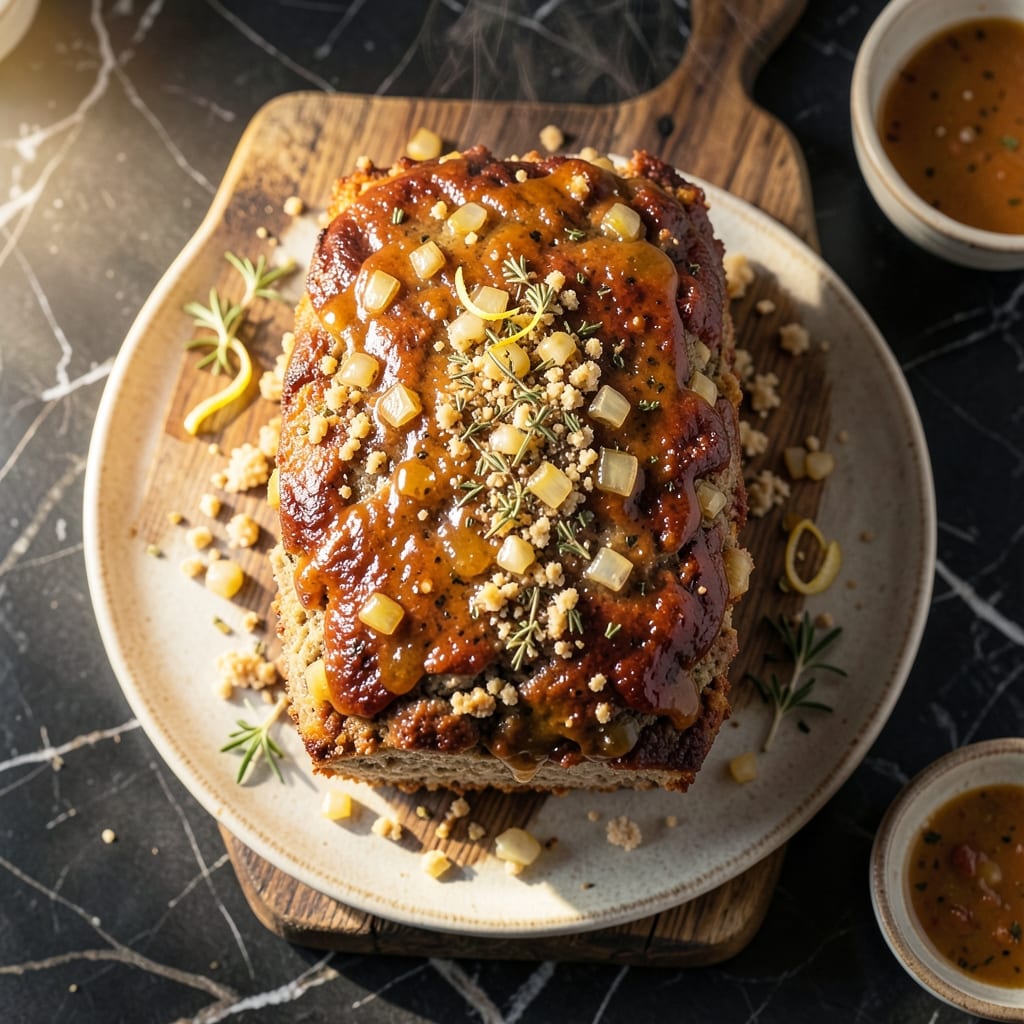
This meatloaf recipe transforms a classic into something extraordinary with one simple ingredient. Apple cider vinegar works its magic to create the moist texture you crave.
I discovered this trick while testing ways to improve my grandmother’s version. The vinegar tenderizes the meat and balances the richness, while the glaze adds a tangy finish.
The result is a perfectly moist loaf with a caramelized crust and layers of flavor. It’s comfort food that delivers on every bite.
Serve with mashed potatoes for a complete meal. This dish proves small additions make a big difference.
Ingredients for Meatloaf Recipe Apple Cider Vinegar
Pantry staples and fresh ingredients combine for a tangy, moist classic.
| Ingredient | Amount | Notes |
|---|---|---|
| Ground Beef 🥩 | 1 ½ lb | 80/20 lean-to-fat ratio preferred |
| Apple Cider Vinegar 🍏 | 2 tbsp | Unfiltered for best flavor |
| Breadcrumbs 🍞 | 1 cup | Plain or panko variety |
| Large Egg 🥚 | 1 whole | For binding the mixture |
| Yellow Onion 🧅 | 1 whole | Finely diced for texture |
| Garlic Cloves 🧄 | 3 cloves | Minced for even distribution |
| Ketchup 🍅 | ½ cup | For glaze and moisture |
| Worcestershire Sauce 🫒 | 1 tbsp | Adds depth to flavor |
| Dijon Mustard 🟡 | 1 tbsp | For tangy glaze |
| Dried Thyme 🌿 | 1 tsp | For herbaceous notes |
| Dried Oregano 🍃 | 1 tsp | Complements the vinegar |
| Salt 🧂 | 1 tsp | Kosher or sea salt preferred |
| Black Pepper 🌶️ | ½ tsp | Freshly ground for best flavor |
| Brown Sugar 🟤 | 2 tbsp | For caramelized crust |
[recipe_ingredient_scaler]
The beef is the foundation—80/20 lean-to-fat ratio keeps it juicy without being greasy. Most supermarkets carry pre-packaged options, but ask the butcher for freshly ground if you want the best texture. Apple cider vinegar is the secret here, and Bragg is my go-to brand (the cloudy kind with the mother). Don’t skip the unfiltered version—it adds complexity.
No ground beef? Ground turkey or pork work in a pinch (adjust cook time slightly). Out of apple cider vinegar? White wine vinegar at half the amount gets you close. The breadcrumbs can be any variety, but panko adds a lighter texture. For a gluten-free option, swap in crushed cornflakes or almond flour.
This meatloaf keeps beautifully—store leftovers in an airtight container for up to 4 days in the fridge or freeze for 3 months. The glaze thickens as it cools, so let it rest 10 minutes before slicing (worth the extra minute).
Why You’ll Love This Recipe
- One Bowl Wonder: I just dump everything in, mix, and bake—no fancy steps, just ground beef, breadcrumbs, and that tangy apple cider vinegar doing the work.
- Tangy Twist: Honestly, the vinegar cuts through the richness of the beef and onion in a way that’s bright and totally addictive.
- Feeds the Crowd: I make this for Sunday dinner and have leftovers for lunches all week—my kids even eat the cold slices straight from the fridge.
- Pantry Staples: Between us, I always have these ingredients on hand, so it’s my go-to when I need dinner on the table fast without a store run.
Step-by-Step Instructions for Tangy Meatloaf
Here’s the method I use to create a perfectly moist meatloaf with a sweet-tangy glaze every time.
Step 1: Prepare and Mix the Meatloaf Base
Preheat your oven to 375°F. In a large bowl, combine the 1.5 lb Ground Beef, 1 cup Breadcrumbs, 1 whole Large Egg, finely diced Yellow Onion, minced 3 cloves Garlic Cloves, 1 tsp Dried Thyme, 1 tsp Dried Oregano, 1 tsp Salt, and 0.5 tsp Black Pepper.
I like to use my hands for this—it’s the best way to ensure all ingredients are evenly distributed without overworking the mixture. The breadcrumbs will absorb moisture from the egg and onion, creating a tender texture. Don’t skip the onion; it adds essential sweetness that balances the tanginess we’ll add later.
Step 2: Shape and Add the Flavor Boosters
Gently form the mixture into a loaf shape on a parchment-lined baking sheet. I press a slight indentation down the center—this helps the glaze stay in place rather than running off the sides.
In a small bowl, whisk together the 0.5 cup Ketchup, 2 tbsp Apple Cider Vinegar, 1 tbsp Worcestershire Sauce, 1 tbsp Dijon Mustard, and 2 tbsp Brown Sugar. This glaze is the secret to that perfect sweet-tangy crust. The vinegar cuts through the richness while the brown sugar caramelizes beautifully.
Step 3: Glaze and Bake to Perfection
Spread about half of the glaze mixture over the top and sides of the meatloaf. Bake at 375°F for 45 minutes. At this point, you’ll start to see the edges turning a deep brown and the glaze beginning to caramelize.
Remove from the oven and carefully spread the remaining glaze over the top. Return to the oven and bake for another 15-20 minutes until the internal temperature reaches 160°F and the glaze has formed a sticky, slightly charred crust. The vinegar in the glaze will create that signature tang we’re after.
Step 4: Rest and Serve
Let the meatloaf rest for 10 minutes before slicing. This resting period allows the juices to redistribute throughout the loaf, ensuring every slice stays moist. I know it’s tempting to dive right in, but this step makes all the difference.
Slice and serve with the pan juices spooned over the top. The combination of the moist interior and that glaze’s sweet-tangy crust is what makes this version special. The apple cider vinegar gives it just the right amount of brightness to cut through the richness of the beef.
Pro Tips For Making Meatloaf Recipe Apple Cider Vinegar
- Chill Before Baking: After mixing, refrigerate the meatloaf for 20-30 minutes—I learned this the hard way after mine kept falling apart in the pan. The vinegar and egg bind better when cold.
- Sauté the Onion: Cook the yellow onion until soft and translucent before mixing it in. Raw onion makes the texture uneven and the flavor harsh, especially with the tang of apple cider vinegar.
- Skip the Overmixing: Mix just until the ingredients come together—resist the urge to keep squishing it. Overworking the ground beef turns the finished loaf dense and dry, no matter how much vinegar you add.
- Use Fresh Breadcrumbs: Swap stale breadcrumbs for fresh ones toasted in a dry pan for 2 minutes. Sounds weird, but it works: they absorb the vinegar and egg better, keeping the loaf moist without turning mushy.
Common Mistakes When Making This Dish
Overmixing the Meat
I learned the hard way that handling the meat too much creates a dense, tough loaf. Mix just until combined—30 seconds with your hands is plenty. The heat from your palms can start cooking the fat prematurely, which we definitely don’t want. 💡
Skipping the Rest
That 10-minute rest after baking isn’t optional. Slicing too soon lets all the juices escape, leaving you with a dry meatloaf. I set a timer—it’s the easiest way to resist the temptation to cut early.
Using Lean Beef
While it might seem healthier, 90/10 lean beef makes for a dry loaf. Stick with 80/20 for that perfect juicy texture. The fat isn’t the enemy here—it’s what keeps every bite tender and flavorful.
Forgetting the Glaze
The glaze isn’t just for show. That second application at the 45-minute mark ensures a deep, caramelized crust. Without it, you’ll miss out on the tangy-sweet balance that makes this dish special.
Incorrect Oven Temp
Baking at too high a temperature can burn the glaze before the inside cooks. 375°F is the sweet spot—hot enough to caramelize the sugar but gentle enough to cook the meat through evenly.
Ignoring Internal Temp
Don’t rely on time alone. Use a meat thermometer to check for 160°F in the center. This guarantees perfect doneness without overcooking. I keep mine in the oven the whole time to monitor progress. 🌡️
Nutrition Facts
Frequently Asked Questions
Why does the vinegar make it so moist?
The acid in apple cider vinegar breaks down proteins in the meat, helping it retain moisture during cooking. It also balances the richness, creating a tender texture that melts in your mouth.
Can I substitute another vinegar?
Yes, but adjust carefully. White wine vinegar works at half the amount, while balsamic adds sweetness. Avoid strong flavors like distilled white vinegar.
How do I know when it’s done?
Use a meat thermometer to check for an internal temperature of 160°F. The glaze should be caramelized and the meat should pull away slightly from the pan edges.
Can I make this ahead of time?
Shape the loaf and refrigerate for up to 24 hours before baking. Add 5-10 minutes to the cooking time since it will be cold.

Trained in classic French technique but raised on slow-cooked ribs and spicy rubs, she blends culinary skill with smoke and soul.
- Energy Ball Recipe Peanut Butter: No-Bake Protein-Packed Bites - September 24, 2026
- Jerk Chicken Recipe Crock Pot: Slow-Cooked Caribbean Heat - September 24, 2026
- Japanese Curry Recipe Kenji: Chef-Tested Rich and Velvety Sauce - September 24, 2026