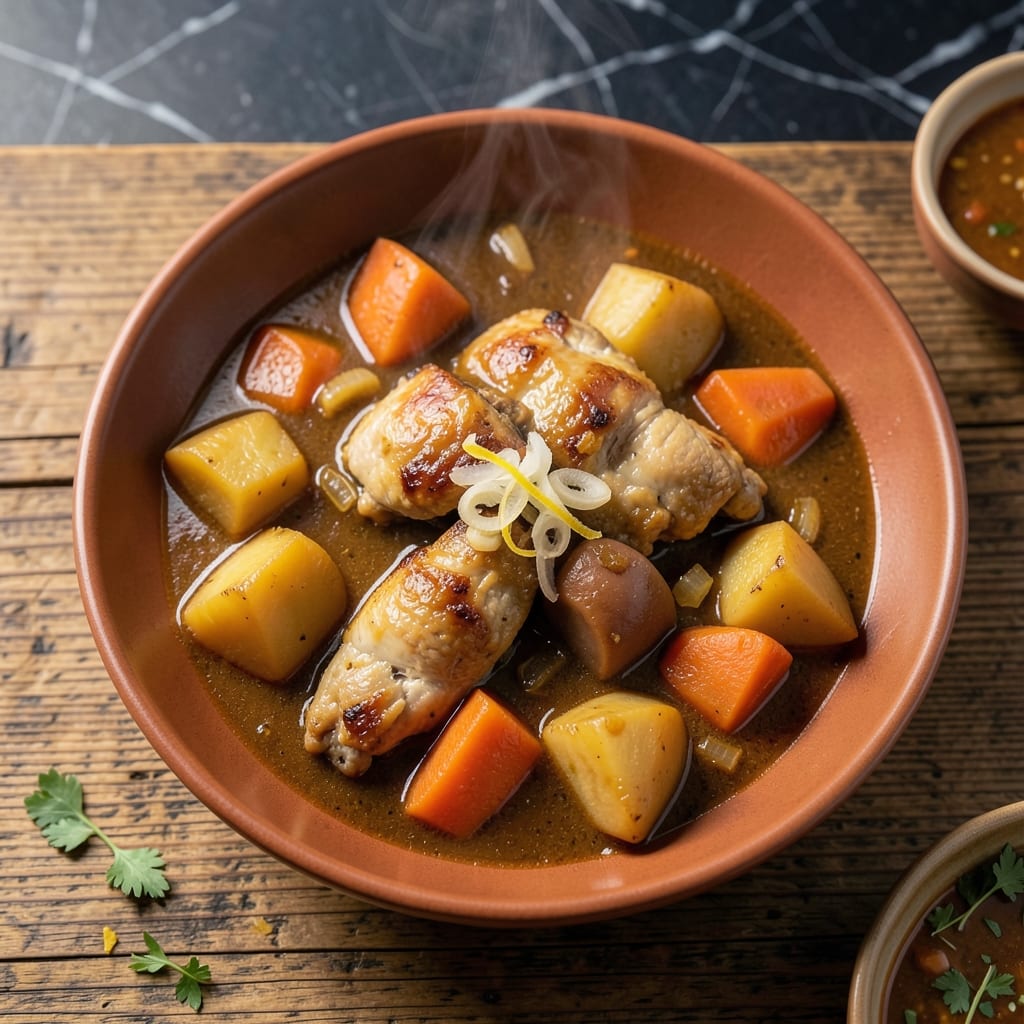
Creating Japanese curry from scratch elevates the dish beyond store-bought mixes. The homemade roux builds layers of flavor that packaged versions simply cannot match.
I developed this method after years of experimenting with spice blends and cooking techniques. The key is slowly toasting the flour and spices together, which deepens their aromas and creates a rich, velvety base for the curry.
This recipe delivers tender chicken pieces in a thick, fragrant sauce that clings perfectly to rice. The balance of sweet, savory, and slightly spicy notes makes it comforting yet sophisticated.
Serve with steamed rice and pickled vegetables for an authentic experience. The extra effort in making the roux is what sets this apart from any shortcut version.
Ingredients for Japanese Chicken Curry Recipe from Scratch
These ingredients come together to build a rich, velvety Japanese curry from scratch with homemade roux.
| Ingredient | Amount | Notes |
|---|---|---|
| Boneless Chicken Thighs 🍗 | 1 ½ lb | Skin-on or skinless, cut into bite-sized pieces |
| Yellow Onion 🧅 | 1 whole | Medium-sized, finely diced |
| Carrots 🥕 | 2 whole | Peeled and sliced into rounds |
| Russet Potatoes 🥔 | 2 whole | Peeled and cubed into 1-inch pieces |
| Garlic Cloves 🧄 | 3 cloves | Minced for depth of flavor |
| Fresh Ginger 🌿 | 1 tbsp | Grated or minced |
| All-Purpose Flour 🌾 | ½ cup | For the homemade roux |
| Curry Powder 🌶️ | 3 tbsp | Japanese-style preferred for authentic flavor |
| Garam Masala 🌿 | 1 tsp | Warm and aromatic spice blend |
| Turmeric 🌶️ | 1 tsp | For color and earthy notes |
| Vegetable Oil 🫒 | ¼ cup | Neutral-flavored for cooking roux |
| Chicken Stock 🥣 | 4 cups | Low-sodium preferred for controlled seasoning |
| Honey 🍯 | 2 tbsp | Balances the savory and spicy notes |
| Soy Sauce 🫒 | 2 tbsp | Low-sodium for seasoning control |
| Ketchup 🍅 | 2 tbsp | Adds subtle sweetness and tang |
[recipe_ingredient_scaler]
The curry powder is the soul of this dish. S&B Golden Curry or House Foods are authentic Japanese brands, but any high-quality curry powder works. The all-purpose flour is toasted with the spices to create the roux—use fresh flour for best results. For the chicken, thighs stay juicier than breasts during the long simmer. Local butchers often have better-quality chicken than grocery stores.
No curry powder? Mix equal parts cumin, coriander, and turmeric with a pinch of cinnamon and cayenne for a DIY version. Swap honey for maple syrup or brown sugar if needed. Low-sodium soy sauce is key—regular can make the dish too salty. The ketchup might seem odd, but it adds the perfect sweet-tangy balance (trust me on this one).
The roux keeps in an airtight container at room temperature for 2 weeks. The finished curry tastes even better the next day—store in the fridge for up to 4 days or freeze for 3 months. Reheat gently to avoid breaking the sauce.
Why You’ll Love This Recipe
- One Pot Wonder: I just toss in the chicken thighs, onions, carrots, and potatoes—everything cooks together in one pot.
- Deep Comfort: The garlic and slow-cooked veggies give it that rich, savory-sweet depth I crave on chilly evenings.
- Feeds Everyone: It’s my go-to when I need to satisfy both picky kids and hungry adults with one dish.
- Leftover Gold: Honestly, it tastes even better the next day, and the portions stretch perfectly for lunches.
Step-by-Step Instructions for Japanese Chicken Curry From Scratch
Here’s the method. Straightforward, tested, works every time.
Step 1: Prepare the Vegetables and Chicken
Start by prepping all your vegetables. Finely dice the yellow onion, peel and slice the carrots into rounds, and peel and cube the russet potatoes into 1-inch pieces. I keep them uniform in size so they cook at the same rate.
Cut the 1.5 lb boneless chicken thighs into bite-sized pieces. This size ensures they cook quickly and evenly in the sauce. Mince the 3 cloves garlic and grate the 1 tbsp fresh ginger—these aromatics form the flavor foundation of the curry.
Step 2: Build the Homemade Roux
Heat the 0.25 cup vegetable oil in a large pot or Dutch oven over medium heat. Add the 0.5 cup all-purpose flour and whisk constantly for 5-7 minutes until it turns a light golden color. This is your roux, and it needs to cook slowly to remove the raw flour taste.
Stir in the 3 tbsp curry powder, 1 tsp garam masala, and 1 tsp turmeric. Cook for another 2 minutes, stirring constantly, until the mixture is fragrant and deepens in color. The spices should bloom in the oil, releasing their full aroma.
Step 3: Cook the Aromatics and Chicken
Add the diced yellow onion, minced garlic, and grated fresh ginger to the roux. Cook for 3-4 minutes until the onion softens and becomes translucent. This step builds the base layers of flavor.
Add the bite-sized boneless chicken thighs and cook for 5-6 minutes until the pieces are lightly browned on all sides. The chicken doesn’t need to cook through completely at this stage—it will finish in the sauce.
Step 4: Simmer with Vegetables and Stock
Stir in the sliced carrots and cubed russet potatoes, coating them in the spiced roux. Pour in the 4 cups chicken stock, then add the 2 tbsp honey, 2 tbsp soy sauce, and 2 tbsp ketchup. Stir well to combine.
Bring the mixture to a boil, then reduce the heat to low. Cover and let it simmer for 25-30 minutes, stirring occasionally, until the potatoes and carrots are fork-tender and the sauce has thickened to your desired consistency.
Step 5: Rest and Serve
Turn off the heat and let the curry rest for 5-10 minutes before serving. This allows the flavors to meld together and the sauce to thicken slightly as it cools.
Serve hot over steamed rice or with crusty bread. The sauce should be rich and velvety, coating the back of a spoon, while the chicken and vegetables remain tender and full of the deep, aromatic flavors from the homemade roux.
Pro Tips For Making Japanese Chicken Curry Recipe From Scratch
- Brown the Chicken Well: Sear the boneless thighs in batches over medium-high heat until deeply golden—about 4-5 minutes per side. I learned this the hard way: under-browned chicken makes the curry taste flat, no matter how good your spices are.
- Cut Potatoes Evenly: Dice the russets into 1-inch cubes, no bigger. Sounds fussy, but it’s the difference between some pieces turning to mush while others stay raw.
- Skip the Watery Onions: After slicing the yellow onions, give them a quick salt and let them sit for 10 minutes, then squeeze out the excess moisture. Does it look weird? Yes. Does it stop your curry from turning watery? Every time.
- Bloom the Spices First: Toast the curry powder and garlic in the pot for 30 seconds before adding liquids—just until fragrant. My grandmother swore by this, and she was right: it wakes up the flavors in a way raw spices just can’t.
Troubleshooting This Dish
Roux Too Thin
If your roux isn’t thickening, cook it longer over medium-low heat—it needs at least 5-7 minutes of constant whisking. I learned this the hard way in my early Charleston days. Add flour gradually if needed, but patience is key. 🌡️
Lumpy Sauce
Whisk vigorously when adding chicken stock to prevent clumping. If lumps form, use an immersion blender for 10-15 seconds or strain through a fine-mesh sieve. Smooth sauce is non-negotiable for authentic texture.
Bland Flavor
Bloom your spices properly in the oil before adding liquids. If still bland, stir in 1 tsp soy sauce or ½ tsp curry powder at the end. I always taste and adjust before serving—trust your palate.
Vegetables Too Soft
Cut potatoes and carrots into uniform 1-inch pieces and add them after browning the chicken. This prevents overcooking. If they’re still mushy, reduce simmer time to 20 minutes next time.
Sauce Too Thick
Thin with ½ cup hot water or extra stock, stirring constantly. Simmer for 2-3 minutes to incorporate. Remember, the sauce thickens as it cools, so err slightly thin during cooking.
Chicken Overcooked
Brown the chicken thighs just until lightly colored, then let them finish in the simmering sauce. This keeps them juicy. If dry, reduce initial browning to 3-4 minutes next batch. 💡
Nutrition Facts
Frequently Asked Questions
Can I use chicken breast instead of thighs?
You can, but thighs stay juicier during the 25-30 minute simmer. If using breasts, reduce cooking time to 15-20 minutes to prevent dryness.
Why toast the flour with spices?
Toasting removes the raw flour taste and deepens the spice flavors. Cook the roux for 5-7 minutes until golden for the richest base.
How do I store leftovers?
Keep in an airtight container in the fridge for up to 4 days or freeze for 3 months. Reheat gently to maintain the sauce’s velvety texture.

Trained in classic French technique but raised on slow-cooked ribs and spicy rubs, she blends culinary skill with smoke and soul.
- Energy Ball Recipe Peanut Butter: No-Bake Protein-Packed Bites - September 24, 2026
- Jerk Chicken Recipe Crock Pot: Slow-Cooked Caribbean Heat - September 24, 2026
- Japanese Curry Recipe Kenji: Chef-Tested Rich and Velvety Sauce - September 24, 2026