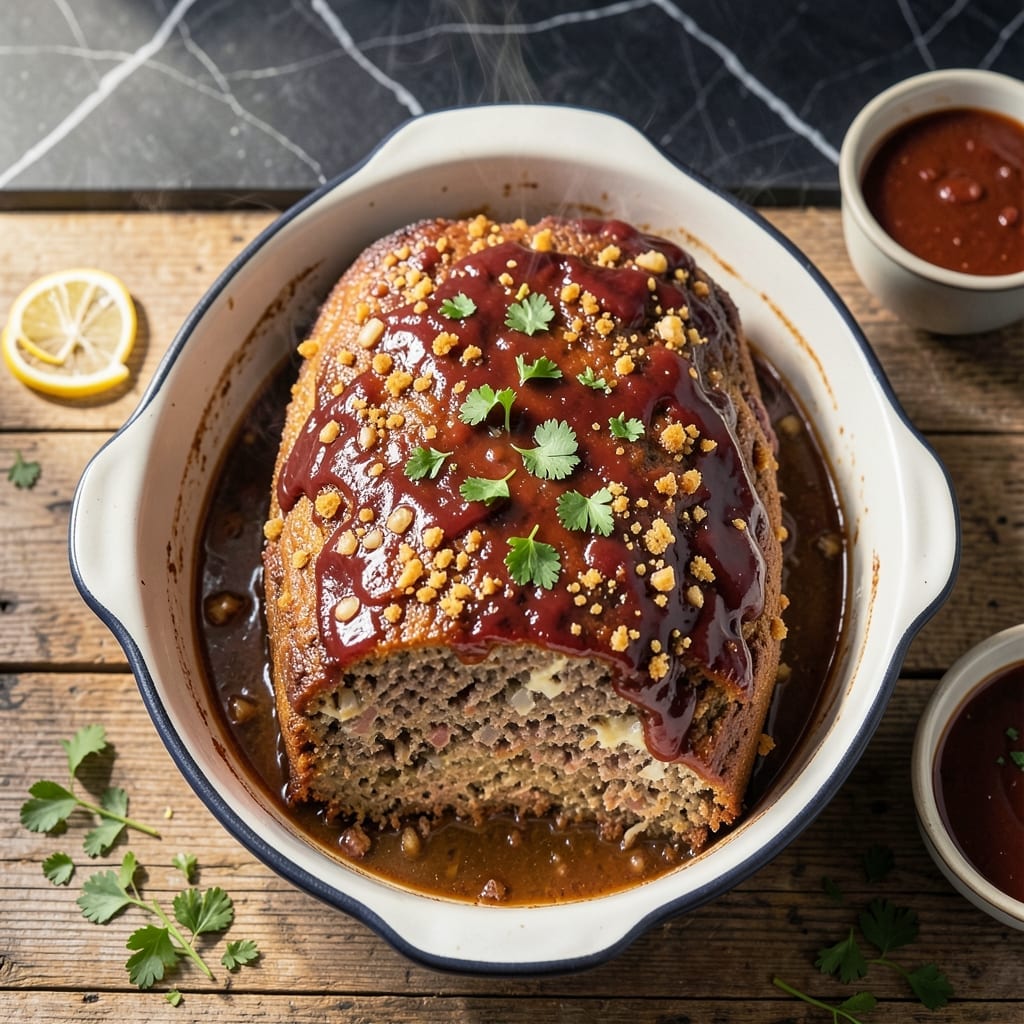
This recipe delivers the ultimate meatloaf—tender, flavorful, and topped with a rich, savory glaze that caramelizes beautifully in the oven.
I’ve refined this method over years of testing to ensure every slice stays moist and packed with depth. The secret lies in the balance of lean ground beef, subtle seasonings, and a glaze so good it’s worth licking off the pan.
Baking at the right temperature keeps it juicy, while the glaze adds a sticky, sweet-savory finish. It’s the kind of dish that turns a simple dinner into something special.
Serve with mashed potatoes or roasted vegetables for a classic, satisfying meal.
Ingredients for Meatloaf Recipe Best
Lean ground beef and subtle seasonings create the perfect base for this classic dish.
| Ingredient | Amount | Notes |
|---|---|---|
| Ground Beef 🥩 | 2 lb | 80/20 lean-to-fat ratio preferred |
| Breadcrumbs 🍞 | 1 cup | Plain or panko variety |
| Large Eggs 🥚 | 2 whole | For binding the mixture |
| Onion 🧅 | 1 whole | Finely diced for texture |
| Garlic Cloves 🧄 | 3 cloves | Minced for flavor depth |
| Ketchup 🍅 | ½ cup | Plus extra for glaze |
| Worcestershire Sauce 🫒 | 2 tbsp | For umami richness |
| Dijon Mustard 🟡 | 1 tbsp | Adds tangy depth |
| Dried Thyme 🌿 | 1 tsp | Crushed for even distribution |
| Dried Oregano 🍃 | 1 tsp | Mediterranean flavor profile |
| Salt 🧂 | 1 ½ tsp | Kosher or sea salt |
| Black Pepper 🌶️ | 1 tsp | Freshly ground preferred |
| Brown Sugar 🟤 | ¼ cup | For glaze caramelization |
| Milk 🥛 | ¼ cup | Any kind for moisture |
[recipe_ingredient_scaler]
The beef is critical here. Opt for 80/20 ground chuck—leaner blends can dry out. Whole Foods or Costco have reliable quality. Fresh breadcrumbs from a stale loaf work better than store-bought (the good stuff, not the pre-seasoned kind). For the onion and garlic, yellow onions and fresh cloves give the best flavor foundation.
No Worcestershire? Soy sauce with a dash of vinegar gets you close. Swap Dijon for yellow mustard if needed, but the tang is worth finding. Dried herbs can be swapped for fresh at one-third the amount. For a gluten-free version, crushed crackers or oats replace breadcrumbs. The milk can be any kind—whole, skim, or even plant-based.
Store raw meatloaf mixture in the fridge for up to 24 hours before baking. Leftovers keep 4-5 days refrigerated or freeze for 3 months. Slice before freezing for easy portions (worth the extra minute).
Why You’ll Love This Recipe
- One Bowl Wonder: I dump everything in, mix it up, and it’s ready for the oven—no fancy prep or extra dishes to wash.
- Garlic-Onion Magic: The sautéed onion and fresh garlic cloves give it that deep, savory richness you just can’t skip.
- Feeds the Crew: Between us, it’s my reliable go-to for Sunday dinner, potlucks, or even a cozy weeknight meal.
- Leftovers for Days: Honestly, it tastes even better the next day—sandwiches, anyone?
Step-by-Step Instructions for Classic Meatloaf
Here is my tested method for delivering the juiciest, most flavorful meatloaf with a caramelized glaze.
Step 1: Prepare the Aromatic Base
Finely dice the onion and mince the 3 cloves garlic cloves until nearly paste-like. I use a chef’s knife for the onion and a microplane for the garlic—this ensures even distribution throughout the mixture without overpowering bites.
In a small skillet over medium heat, sauté the diced onion for 5 minutes until translucent and just beginning to caramelize. Add the minced garlic cloves and cook for 1 additional minute until fragrant. This step removes the raw bite from the alliums and builds a sweet, savory foundation for the meatloaf.
Step 2: Combine Wet and Dry Ingredients
In a large mixing bowl, thoroughly whisk the 2 whole large eggs with the 0.5 cup ketchup, 2 tbsp Worcestershire sauce, 1 tbsp Dijon mustard, 0.25 cup milk, 1.5 tsp salt, and 1 tsp black pepper. The mixture should be smooth and pale orange in color.
Add the sautéed onion and garlic cloves, then stir in the 1 cup breadcrumbs, 1 tsp dried thyme, and 1 tsp dried oregano. Let this sit for 5 minutes to allow the breadcrumbs to absorb the liquid—this prevents a dry, crumbly texture in the finished loaf.
Step 3: Incorporate Ground Beef and Shape
Add the 2 lb ground beef to the bowl and use your hands to gently mix everything together. I find using my fingers in a claw shape works best—this prevents overworking the meat, which would result in a dense, tough meatloaf. You want the mixture to just come together uniformly.
Transfer the mixture to a parchment-lined loaf pan or shape it into a free-form loaf on a rimmed baking sheet. The loaf should be about 9×5 inches and evenly shaped for consistent cooking. Use your hands to smooth the top and sides—this helps the glaze adhere evenly later.
Step 4: Bake and Apply the Glaze
Preheat your oven to 375°F. Bake the meatloaf on the middle rack for 45 minutes. While it bakes, prepare the glaze by mixing the remaining 0.25 cup brown sugar with 2 tbsp ketchup (from your 0.5 cup ketchup total) until smooth.
After 45 minutes, carefully brush the glaze over the top and sides of the meatloaf. Return it to the oven and bake for an additional 20-25 minutes until the internal temperature reaches 160°F and the glaze is deep mahogany brown and slightly caramelized at the edges.
Step 5: Rest and Slice for Maximum Moisture
Transfer the meatloaf to a cutting board and tent loosely with foil. Let it rest for 10-15 minutes before slicing—this allows the juices to redistribute throughout the loaf rather than spilling out onto the cutting board.
Use a sharp knife to cut into 1-inch thick slices. Each serving should have a tender, moist interior with a glossy, slightly sticky glaze on top. The texture should be uniform throughout, with no dry spots or greasy pockets.
Pro Tips For Making Meatloaf Recipe Best
- Chill Before Baking: Let the meatloaf rest in the fridge for 20-30 minutes after mixing—I learned this the hard way after mine kept falling apart straight from the bowl to the pan.
- Sauté the Aromatics: Cook the onion and garlic until soft before adding to the mix; raw bits leave an unpleasant crunch and harsh flavor in the finished loaf.
- Skip Overmixing: Stir just until the eggs and breadcrumbs are incorporated, as overworking the beef makes for a dense, tough meatloaf.
- Use a Meat Thermometer: Pull it at 160°F internal temperature—no guessing, no dry loaves, and no worrying about undercooking.
Essential Equipment for This Dish
Loaf Pan Choice
I always use a 9×5-inch glass loaf pan for even heat distribution and easy monitoring of browning. The glass lets me check the sides without opening the oven door. Pyrex is my go-to brand for durability and heat resistance.
Mixing Bowl Matters
A large, wide stainless steel mixing bowl gives you room to combine ingredients without spilling. I prefer one with a flat bottom for stability. Cuisinart makes excellent options that won’t react with acidic ingredients like the Worcestershire sauce.
Essential Utensils
Use a wooden spoon for mixing the base ingredients to avoid scratching your bowl. For incorporating the 2 lb ground beef, clean hands work best—just
Baking Sheet Backup
For a free-form loaf, a rimmed baking sheet catches any drips from the glaze. I line mine with parchment paper for easy cleanup. Half-sheet pans (about 18×13 inches) give you plenty of space to shape the loaf without crowding. 💡
Temperature Tools
An instant-read meat thermometer is non-negotiable for checking the 160°F internal temperature. I trust my ThermoWorks ThermoPop for accuracy and speed. A pastry brush helps apply the glaze evenly without tearing the meatloaf surface.
Resting Setup
After baking, transfer the meatloaf to a wooden cutting board to rest. Tent it loosely with aluminum foil to keep it warm during the 10-15 minute rest period. This simple setup ensures your slices stay intact and juicy. 🔥
Nutrition Facts
Frequently Asked Questions
Why do you need to rest it after baking?
Resting for 10-15 minutes lets juices redistribute throughout. Slicing too soon causes them to spill out, leaving you with a drier result.
Can I use a different meat instead of beef?
Yes! Try ground turkey or chicken, but add 1/4 cup extra breadcrumbs to compensate for leanness. Pork works too, but keep the ratio at 80/20 for moisture.
How do I know when it’s fully cooked?
Use an instant-read thermometer to check the center reaches 160°F. The glaze should be deep brown and slightly caramelized.
Can I make this ahead of time?
Shape the loaf, cover, and refrigerate up to 24 hours before baking. This actually enhances flavor as the ingredients meld.

Trained in classic French technique but raised on slow-cooked ribs and spicy rubs, she blends culinary skill with smoke and soul.
- Recipe for Boneless Pork Chops in Cast Iron Skillet: Sear and Baste to Juicy Perfection - October 3, 2026
- Recipe for Boneless Cross Rib Roast: Slow-Roasted Beef with Herb Crust - October 3, 2026
- Hamburgers in Sauce Recipe Crock Pot: Slow-Cooked Savory Delight - October 3, 2026