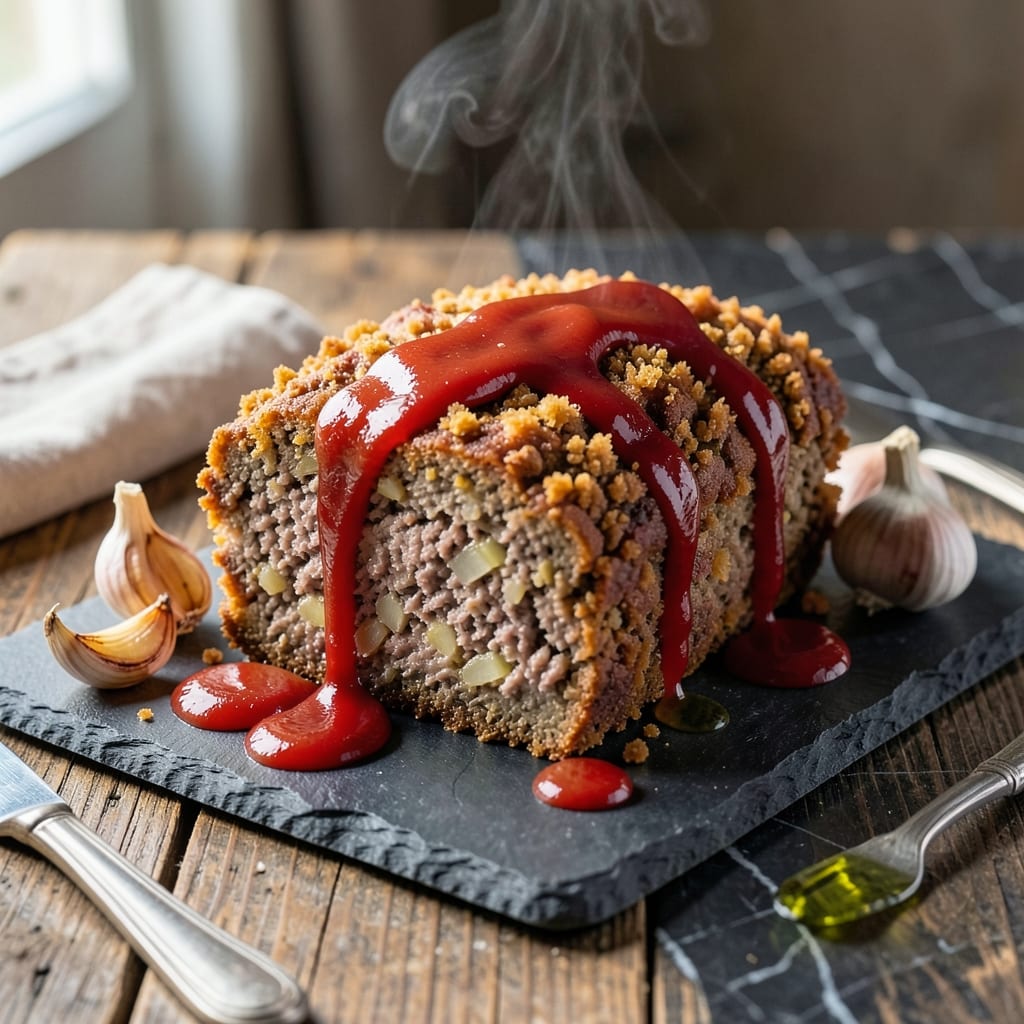
This meatloaf delivers on a bold promise: ultra-moist texture without traditional binders. I developed this method after years of testing, replacing breadcrumbs with crushed pork rinds for structure and flavor.
The pork rinds absorb juices while cooking, creating a tender interior and crispy exterior. This approach eliminates the need for eggs or breadcrumbs, yet the loaf holds together perfectly every time.
You’ll get a rich, savory meatloaf with ideal texture in every slice. The pork rinds add subtle pork flavor that complements the beef without overpowering it.
Simple ingredients, precise technique, and professional results. This recipe transforms weeknight dinner into something special.
Ingredients for Meatloaf Recipe with Pork Rinds
Ultra-moist meatloaf starts with ground beef, pork rinds, and bold seasonings for unparalleled texture and flavor.
| Ingredient | Amount | Notes |
|---|---|---|
| Ground Beef 🥩 | 2 lb | 80/20 fat ratio preferred |
| Pork Rinds 🐷 | 1 ½ cups | Crushed into fine crumbs |
| Yellow Onion 🧅 | 1 whole | Finely diced for even distribution |
| Garlic Cloves 🧄 | 3 cloves | Minced for maximum flavor |
| Worcestershire Sauce 💧 | 2 tbsp | Adds umami depth to mixture |
| Ketchup 🍅 | ½ cup | Divided for mixture and glaze |
| Dijon Mustard 🟡 | 1 tbsp | Enhances savory notes |
| Dried Thyme 🌿 | 1 tsp | Crushed to release oils |
| Dried Rosemary 🍃 | 1 tsp | Crushed to release oils |
| Smoked Paprika 🌶️ | 1 tsp | For subtle smoky flavor |
| Salt 🧂 | 1 ½ tsp | Diamond Crystal kosher preferred |
| Black Pepper 🌶️ | 1 tsp | Freshly ground for best flavor |
| Egg 🚫 | 0 whole | Omitted per recipe design |
| Breadcrumbs 🚫 | 0 cup | Omitted per recipe design |
[recipe_ingredient_scaler]
The pork rinds are non-negotiable here. Epic Pork Rinds or Mac’s brands crush nicely and absorb juices perfectly. 80/20 ground beef provides optimal fat for moisture—leaner blends yield drier results. For the onion and garlic, freshly diced is essential; pre-minced lacks the necessary texture. Most supermarkets carry these brands, but Costco offers bulk pork rinds at a better price.
No pork rinds? Crushed saltine crackers work as a last resort, but texture suffers. Gluten-free breadcrumbs are a closer second choice. Worcestershire can be swapped for soy sauce (use half the amount). The ketchup glaze is flexible—barbecue sauce or a mix of tomato paste and brown sugar works. For herbs, fresh thyme and rosemary at triple the amount can replace dried.
The assembled loaf can rest refrigerated for 24 hours before baking. Leftovers keep for 5 days wrapped tightly in the fridge or freeze for 3 months. Slice only after resting 10 minutes post-bake to maintain structure. This method guarantees moisture without traditional binders every time.
Why You’ll Love This Recipe
- One Bowl Wonder: I just dump everything in, mix, and shape—no extra dishes, no fuss.
- Umami Bomb: The pork rinds and Worcestershire give it this deep, savory richness that’s honestly addictive.
- Feeds the Crew: I make this for Sunday dinner, then pack leftovers for lunches all week.
Step-by-Step Instructions for Meatloaf With Pork Rinds
Here’s the method that guarantees a juicy result without traditional binders.
Step 1: Prepare and Combine the Aromatics
Finely dice the yellow onion and mince the 3 cloves garlic cloves until both are nearly uniform in size. This fine texture ensures even distribution throughout the meatloaf. I use a sharp chef’s knife for this—dull blades crush rather than cut, releasing bitter compounds from the onion.
In a large mixing bowl, combine the diced yellow onion, minced garlic cloves, 2 tbsp Worcestershire sauce, 1 tbsp Dijon mustard, 1 tsp dried thyme, 1 tsp dried rosemary, 1 tsp smoked paprika, 1.5 tsp salt, and 1 tsp black pepper. Stir to create a uniform paste that will season the mixture evenly.
Step 2: Incorporate the Pork Rinds and Beef
Crush the 1.5 cups pork rinds into fine crumbs using a food processor or by placing them in a sealed bag and rolling with a rolling pin. The crumbs should resemble coarse breadcrumbs. These will replace traditional binders while adding a subtle crispness to the texture.
Add the crushed pork rinds and the 2 lb ground beef to the bowl with the aromatic mixture. Using your hands, gently fold and press the ingredients together until just combined. Overworking the mixture can lead to a dense, tough meatloaf—stop as soon as the ingredients are evenly distributed. The pork rinds will absorb moisture from the beef, ensuring a tender result.
Step 3: Shape and Prepare for Baking
Transfer the mixture to a parchment-lined baking sheet and shape it into a uniform loaf, approximately 9×5 inches. Press gently to eliminate air pockets, which can cause uneven cooking. The loaf should hold its shape but not be compacted too tightly.
Preheat your oven to 375°F and position a rack in the center. This temperature allows the meatloaf to cook through evenly while developing a flavorful crust. Place the shaped loaf in the oven and bake for 45 minutes.
Step 4: Add the Glaze and Finish Baking
After 45 minutes, carefully remove the meatloaf from the oven. Spread the remaining 0.5 cup ketchup evenly over the top and sides of the loaf. This will create a tangy, slightly sweet glaze that caramelizes in the oven.
Return the meatloaf to the oven and bake for an additional 15-20 minutes, or until the internal temperature reaches 160°F. The glaze should be bubbly and slightly thickened, with a deep reddish-brown color. This final step ensures the meatloaf is fully cooked while adding a layer of flavor and moisture.
Step 5: Rest and Serve
Transfer the meatloaf to a cutting board and let it rest for 10 minutes before slicing. This resting period allows the juices to redistribute throughout the meat, ensuring every slice is moist and flavorful. Tenting with foil during this time helps retain heat.
Slice the meatloaf into 1-inch thick pieces and serve immediately. The pork rinds will have absorbed enough moisture to keep the loaf tender, while the glaze adds a complementary sweet and tangy finish. The texture should be uniformly moist, with no dry or crumbly sections.
Pro Tips For Making Meatloaf Recipe With Pork Rinds
- Crush the Rinds Fine: Pulse the pork rinds in a food processor until they’re almost powder—this binds better than chunks and gives the meatloaf that perfect texture without falling apart.
- Sauté the Aromatics: Cook the yellow onion and garlic in a little oil until soft before mixing them in; raw bits stay harsh and can leave the loaf unevenly flavored.
- Don’t Overmix: I learned this the hard way—once the pork rinds and beef are just combined, stop mixing or your meatloaf turns dense and tough.
- Rest Before Slicing: Give it a solid 10 minutes out of the oven under foil—this keeps the juices from running all over the cutting board when you slice.
Troubleshooting Great meatloaf recipe with pork rinds
Loaf Falls Apart
If your meatloaf crumbles when slicing, it likely needs more binding. Add ¼ cup additional crushed pork rinds next time or press the mixture more firmly when shaping. I learned this the hard way after my first few attempts fell apart on the cutting board. 💡
Dry Texture Issues
Overbaking is the usual culprit. Pull it at exactly 160°F internal temperature and rest for 10 minutes. The pork rinds should absorb enough juices to keep it moist. Also, use 80/20 ground beef—leaner blends dry out faster.
Glaze Burns
If your ketchup glaze blackens, tent the loaf with aluminum foil after adding the glaze. Bake at 375°F for the first 45 minutes, then reduce to 350°F for the final 15-20 minutes to prevent burning while finishing.
Uneven Cooking
Shape your loaf uniformly—9×5 inches is ideal. Press gently to eliminate air pockets. If one end cooks faster, rotate the pan 180 degrees halfway through baking. My early loaves had raw centers until I started rotating them. 🔥
Greasy Pooling
Excess fat can pool around the loaf. Drain off 1-2 tbsp of rendered fat after the first 45 minutes. Use a rimmed baking sheet to contain drippings. The pork rinds help absorb some fat, but a little drainage keeps the texture balanced.
Bland Flavor
Boost seasoning with an extra ½ tsp salt or 1 tsp smoked paprika. Let the loaf rest after mixing for 10 minutes so flavors meld. I always taste the raw mixture (yes, safely!) to adjust seasoning before baking.
Nutrition Facts
Frequently Asked Questions
Why use crushed pork rinds instead of breadcrumbs?
Pork rinds absorb juices while cooking, creating a tender interior. They also add a subtle pork flavor and crispy texture without traditional binders.
Can I use a different fat ratio for the beef?
80/20 ground beef is ideal for moisture. Leaner blends like 90/10 may result in a drier loaf, as the fat helps keep it juicy.
How do I crush the pork rinds properly?
Use a food processor for fine, even crumbs. Alternatively, place them in a sealed bag and roll with a rolling pin until they resemble coarse breadcrumbs.
What if my loaf falls apart when slicing?
Add ¼ cup additional crushed pork rinds next time. Also, press the mixture firmly when shaping to ensure it holds together.

Trained in classic French technique but raised on slow-cooked ribs and spicy rubs, she blends culinary skill with smoke and soul.
- Recipe for Boneless Pork Chops in Cast Iron Skillet: Sear and Baste to Juicy Perfection - October 3, 2026
- Recipe for Boneless Cross Rib Roast: Slow-Roasted Beef with Herb Crust - October 3, 2026
- Hamburgers in Sauce Recipe Crock Pot: Slow-Cooked Savory Delight - October 3, 2026