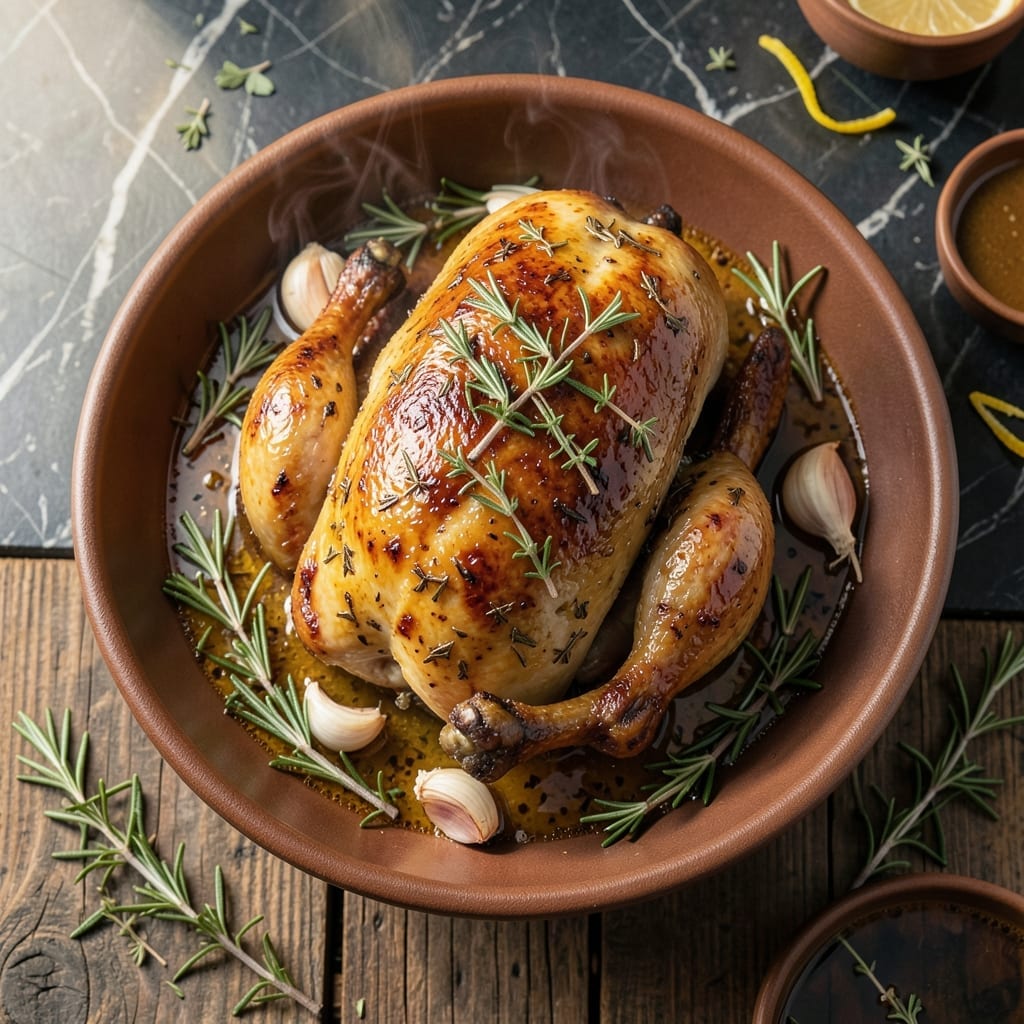
This recipe brings the bold flavors of medieval feasts to your modern kitchen. A garlic-herb rub transforms simple chicken into a royal-worthy dish with minimal effort.
I developed this method after studying historical cooking techniques, blending them with my professional training. The result is juicy, aromatic chicken with a golden crust that’s surprisingly easy to achieve.
The secret is in the slow roasting process, which allows the herbs and garlic to infuse the meat deeply. Every bite delivers the rich, rustic taste of a bygone era.
Serve it with crusty bread and roasted vegetables for a complete meal fit for a king—or your family.
Ingredients for Medieval Times Chicken
Garlic, herbs, and a touch of honey create this royal-worthy roasted chicken feast.
| Ingredient | Amount | Notes |
|---|---|---|
| Whole Chicken 🍗 | 4 lb | Cut into 8 pieces, skin-on |
| Garlic Cloves 🧄 | 12 cloves | Minced for rub |
| Fresh Rosemary 🌿 | 3 tbsp | Chopped, stems removed |
| Fresh Thyme 🍃 | 3 tbsp | Leaves stripped from stems |
| Fresh Sage 🌿 | 2 tbsp | Chopped, for earthy depth |
| Olive Oil 🫒 | ½ cup | Extra-virgin for richness |
| Kosher Salt 🧂 | 2 tbsp | Diamond Crystal preferred |
| Black Pepper 🌶️ | 2 tsp | Freshly ground for best flavor |
| Lemon 🍋 | 1 whole | Zested and juiced |
| Red Wine Vinegar 🍷 | 2 tbsp | For tangy brightness |
| Honey 🍯 | 1 tbsp | For caramelized glaze |
| Carrots 🥕 | 4 whole | Cut into chunks for roasting |
| Potatoes 🥔 | 1 ½ lb | Yukon Gold, quartered |
| Onion 🧅 | 1 whole | Cut into wedges |
[recipe_ingredient_scaler]
The herbs are everything here. Fresh rosemary, thyme, and sage give that authentic medieval flavor—dried just won’t cut it. I grab mine from Whole Foods or the farmers market when I can. The chicken should be skin-on for that crispy, golden finish. Look for air-chilled birds if your store carries them; they brown better and have less water in the skin.
No fresh herbs? Dried at one-third the amount, but the flavor won’t be as vibrant. Swap honey for maple syrup if you prefer. Red wine vinegar can be apple cider vinegar in a pinch. For the veggies, any root veggies work—parsnips or sweet potatoes would be great. The olive oil should be good quality (California Olive Ranch is my go-to).
Leftovers taste even better the next day. Store in the fridge for up to 4 days or freeze for 3 months. Reheat in the oven to keep the skin crispy. The herbs can be prepped a day ahead—just keep them wrapped in damp paper towels.
Why You’ll Love This Recipe
- One Pan Wonder: I toss everything in a single roasting pan—chicken, garlic, and herbs—then let the oven do the work.
- Herb Heaven: The rosemary, thyme, and sage make the skin so fragrant it fills the whole kitchen.
- Feeds a Crowd: This whole chicken is my go-to for Sunday dinner, with enough for leftovers.
- Budget Friendly: A whole chicken plus pantry herbs costs less than takeout but tastes way better.
Step-by-Step Instructions for Garlic-Herb Roasted Chicken
This method transforms simple ingredients into a royal feast with minimal effort.
Step 1: Prepare the Garlic-Herb Marinade
In a large bowl, combine the 0.5 cup olive oil, 12 cloves minced garlic, 3 tbsp fresh rosemary, 3 tbsp fresh thyme, and 2 tbsp fresh sage. Add the zest and juice from the 1 whole lemon, then whisk in the 2 tbsp red wine vinegar and 1 tbsp honey.
This creates a fragrant, tangy base that will infuse the chicken with bold medieval-inspired flavors. I like to let the herbs steep in the oil for 5-10 minutes while I prep the rest, as this helps release their essential oils for maximum impact.
Step 2: Season and Marinate the Chicken
Pat the 4 lb whole chicken pieces dry with paper towels—this ensures the skin crisps up beautifully. Place them in the marinade and turn to coat every piece thoroughly. Sprinkle with the 2 tbsp kosher salt and 2 tsp black pepper, rubbing it into the meat and under the skin where possible.
Let the chicken marinate at room temperature for 30 minutes. This short rest allows the salt to begin penetrating the meat while the acid from the lemon and vinegar starts tenderizing it. Don’t skip this—it’s the difference between good and extraordinary.
Step 3: Roast the Chicken with Vegetables
Preheat your oven to 425°F. Arrange the 4 whole carrots, 1.5 lb potatoes, and 1 whole onion in a single layer in a large roasting pan. Place the chicken pieces skin-side up on top of the vegetables.
Roast for 45-50 minutes until the chicken skin is deep golden brown and the internal temperature reaches 165°F in the thickest pieces. The vegetables should be tender and starting to caramelize at the edges.
Step 4: Rest and Serve the Feast
Transfer the chicken to a serving platter and let it rest for 10 minutes. This allows the juices to redistribute, ensuring every bite is moist and flavorful. Spoon the roasted vegetables and any pan drippings over the chicken.
Serve immediately while hot. The skin should be crisp, the meat juicy and infused with garlic and herbs, and the vegetables perfectly roasted with a hint of the marinade’s sweet and tangy notes. This is a meal worthy of a king’s table.
Pro Tips For Making Medieval Times Chicken
- Start Hot, Finish Low: Sear the chicken over high heat first to lock in juices, then drop the temperature to 325°F for even cooking—I learned this the hard way after drying out three birds.
- Smash the Garlic: Crush the garlic cloves with the side of your knife before stuffing them under the skin; it releases way more flavor than leaving them whole.
- Skip the Dried Herbs: Fresh rosemary, thyme, and sage are non-negotiable here—dried versions just don’t give that bold, earthy punch the dish needs.
- Rest Before Carving: Let the chicken sit for 15 minutes after roasting, tented with foil. I used to rush this part and ended up with a dry, sad bird every time.
Common Mistakes When Making This Recipe
Overcrowding the Pan
Don’t cram all 8 chicken pieces into one pan—this steams rather than roasts. Use two pans or cook in batches to ensure the skin crisps properly. I learned this the hard way at my first local BBQ competition. 🔥
Skipping the Rest
Cutting into the chicken right out of the oven sends all those juices running onto your cutting board. Always rest for the full 10 minutes—this keeps the meat moist and tender. Trust me, it’s worth the wait.
Using Dried Herbs
Fresh rosemary, thyme, and sage are non-negotiable for authentic medieval flavor. Dried herbs lack the essential oils that create the dish’s aromatic depth. If you must, use one-third the amount, but fresh is always better.
Neglecting the Skin
Pat the chicken very dry before seasoning—wet skin won’t crisp. I use paper towels and press firmly to remove every bit of moisture. This step is what gives you that golden, crackling exterior.
Uneven Seasoning
Rub the salt and pepper under the skin too, not just on top. This ensures the meat itself is flavorful, not just the surface. I also like to lift the skin slightly to tuck herbs underneath for extra aroma.
Overcooking the Veggies
Cut the carrots, potatoes, and onion into uniform chunks so they cook evenly. If your pieces are too small, they’ll turn to mush before the chicken finishes. Aim for 2-inch chunks for perfect texture.
Nutrition Facts
Frequently Asked Questions
Can I use boneless chicken breasts instead?
Yes, but adjust the cooking time to 25-30 minutes at 425°F. Bone-in pieces stay juicier and handle the bold herbs better, though.
Why does the recipe call for so much garlic?
Medieval cooking relied on strong flavors to preserve and enhance meats. The 12 cloves mellow during roasting, creating a sweet, aromatic base without overpowering.
Can I make this in a slow cooker?
Not recommended—the skin won’t crisp, and the texture will be different. For authentic results, oven roasting at 425°F is essential.
What if I don’t have fresh herbs?
Use dried herbs at one-third the amount, but fresh delivers the true medieval taste. Dried works in a pinch, though.

Trained in classic French technique but raised on slow-cooked ribs and spicy rubs, she blends culinary skill with smoke and soul.
- Recipe for Boneless Pork Chops in Cast Iron Skillet: Sear and Baste to Juicy Perfection - October 3, 2026
- Recipe for Boneless Cross Rib Roast: Slow-Roasted Beef with Herb Crust - October 3, 2026
- Hamburgers in Sauce Recipe Crock Pot: Slow-Cooked Savory Delight - October 3, 2026