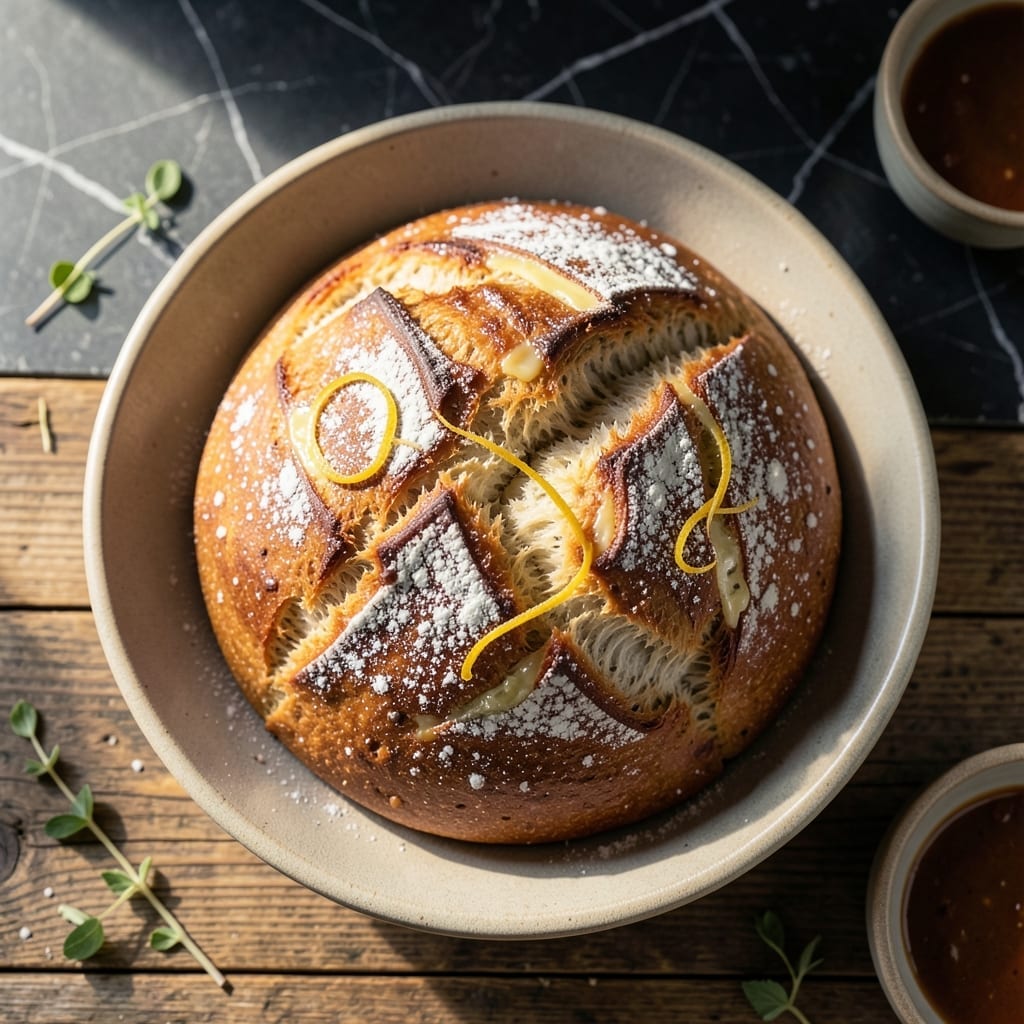
This traditional yeast-raised loaf carries deep cultural significance, honoring loved ones through its simple yet sacred preparation.
With a golden crust and soft, tender crumb, it transforms basic ingredients into something meaningful through time and care.
Ingredients for Memorial Bread
Simple, sacred ingredients transform into this meaningful yeast-raised loaf through time and care.
| Ingredient | Amount | Notes |
|---|---|---|
| All-Purpose Flour 🌾 | 4 cups | Unbleached preferred for texture |
| Active Dry Yeast 🍞 | 2 ¼ tsp | One standard packet plus extra |
| Warm Water 💧 | 1 ¼ cups | 105-110°F for yeast activation |
| Granulated Sugar 🍚 | 2 tbsp | Feeds the yeast for rising |
| Kosher Salt 🧂 | 2 tsp | Diamond Crystal preferred for consistency |
| Unsalted Butter 🧈 | 2 tbsp | Softened for dough enrichment |
| Large Egg 🥚 | 1 whole | Room temperature for best incorporation |
| Whole Milk 🥛 | ¼ cup | Warmed slightly for dough softness |
| Honey 🍯 | 2 tbsp | Adds subtle sweetness and golden color |
| Olive Oil 🫒 | 1 tbsp | For bowl greasing and crust brushing |
| Cornmeal 🌽 | 2 tbsp | For dusting baking surface |
| Sesame Seeds 🍲 | 1 tbsp | Optional for topping and texture |
[recipe_ingredient_scaler]
The flour is foundational here. King Arthur Unbleached or Bob’s Red Mill deliver consistent results for traditional bread. Yeast freshness is non-negotiable—check the expiration date and store unopened packets in the freezer. Warm water temperature matters: too hot kills yeast, too cold prevents activation. Use a thermometer for precision (worth the extra minute).
No all-purpose flour? Bread flour at a 1:1 ratio works, though the crumb will be slightly denser. Milk can be swapped for water plus 1 tbsp powdered milk per cup. Honey alternatives include maple syrup or agave at the same volume. For a dairy-free version, replace butter with coconut oil—texture remains excellent.
Store yeast in the freezer for 1-2 years of viability. Dough rises best in a warm, draft-free spot—turn on your oven light for 75-80°F. Baked loaves stay fresh wrapped in foil at room temperature for 2-3 days, or freeze for 3 months.
Why You’ll Love This Recipe
- No-Fuss Dough: Honestly, mixing flour, yeast, and warm water feels like baking magic—minimal effort, maximum payoff.
- Warm & Nostalgic: That first bite tastes like childhood memories, sweet and simple with just sugar and salt.
- Feeds a Crowd: I bake two loaves at once—one for dinner, one for sandwiches all week.
- Pennywise Comfort: Five basic ingredients, one incredible loaf. My wallet and my family both thank me.
Step-by-Step Instructions for Memorial Bread
This traditional method ensures a perfectly risen loaf with a golden crust and soft, tender crumb.
Step 1: Activate the Yeast and Prepare the Dough
In a stand mixer bowl, dissolve the 2.25 tsp Active Dry Yeast and 2 tbsp Granulated Sugar in the 1.25 cups Warm Water at 105-110°F. Let it sit for 5-10 minutes until the mixture becomes frothy and cloudy—this confirms the yeast is active and ready to work.
Add the 4 cups All-Purpose Flour, 2 tsp Kosher Salt, 2 tbsp Unsalted Butter, 1 whole Large Egg, 0.25 cup Whole Milk, and 2 tbsp Honey to the yeast mixture. The milk and honey contribute to the dough’s softness and subtle sweetness, while the egg enriches the texture.
Step 2: Knead the Dough to Develop Gluten
Attach the dough hook to your mixer and knead on low speed for 8-10 minutes until the dough is smooth and elastic. It should pull away from the sides of the bowl but still feel slightly tacky to the touch. If it’s too sticky, add a 1 tbsp of flour at a time, but avoid over-flouring, as this can make the bread dense.
This kneading process develops the gluten, giving the bread structure and chew. You’ll notice the dough transforms from a shaggy mess to a cohesive ball that springs back when gently pressed.
Step 3: First Rise Until Doubled in Volume
Lightly grease a large bowl with the 1 tbsp Olive Oil and transfer the dough into it, turning once to coat all sides. Cover the bowl with a damp kitchen towel or plastic wrap and place it in a warm, draft-free spot. Let it rise for 1-2 hours or until doubled in size.
To test if the dough is ready, press two fingers gently into it. If the indentations remain, the dough has risen sufficiently. This first rise allows the yeast to ferment the sugars, creating air pockets for a light, airy texture.
Step 4: Shape, Second Rise, and Prepare for Baking
Punch down the dough to release excess air, then turn it out onto a lightly floured surface. Shape it into a round or oval loaf, tucking the edges under to create surface tension. Place the shaped dough on a baking sheet dusted with the 2 tbsp Cornmeal, which adds texture and prevents sticking.
Cover loosely and let it rise again for 45-60 minutes until puffy. Preheat your oven to 375°F during this time. Brush the top of the loaf with a little of the 0.25 cup Whole Milk and sprinkle with the 1 tbsp Sesame Seeds for a decorative, nutty finish.
Step 5: Bake to Golden Perfection
Bake the loaf in the preheated oven for 25-30 minutes or until the crust is deep golden brown and the internal temperature reaches 190-200°F. If the top browns too quickly, tent it with aluminum foil to prevent burning.
Remove the bread from the oven and let it cool on a wire rack for at least 20 minutes before slicing. This cooling period allows the crumb to set, ensuring clean, even slices. Serve warm for the best flavor and texture.
Pro Tips For Making Memorial Bread
- Test the Yeast: I learned this the hard way—always bloom your active dry yeast in the warm water with a pinch of sugar first. If it doesn’t foam within 5-10 minutes, your bread won’t rise, and you’ll waste flour.
- Measure Flour Right: Scooping flour directly from the bag packs it down—spoon it into your measuring cup and level it off. After three dense loaves, I finally figured out this was the culprit.
- Skip Cold Water: Warm water (around 110°F) wakes up the yeast, but too hot kills it. My grandmother swore by testing it on her wrist first—if it feels comfortable, it’s good to go.
- Salt Last: Sounds weird, but it works: add the kosher salt after the yeast has started foaming. Salt can slow yeast activation, and this gives your loaf a better rise.
Serving Suggestions for memorial bread
Warm with Butter
There’s nothing like serving this loaf still warm from the oven with softened butter melting into each slice. The butter enhances the honey’s subtle sweetness while the tender crumb soaks it up beautifully. I always use European-style butter for its richer flavor. 🧈
Pair with Tea
A hot cup of Earl Grey tea or chamomile complements the bread’s gentle sweetness perfectly. The bergamot notes in Earl Grey cut through the richness, while chamomile’s floral tones harmonize with the honey. Brew 1 tsp loose leaves per 8 oz water at 200°F for best results.
Soups and Stews
This bread shines alongside hearty soups like tomato basil or butternut squash. The crust holds up to dipping, and the soft interior soaks up broth without falling apart. I love tearing off chunks and savoring every bite.
Cheese Board
Add sliced loaf to a cheese board with brie, aged cheddar, and fresh fruit for a simple yet elegant spread. The bread’s mild sweetness pairs well with both creamy and sharp cheeses. Drizzle with local honey for an extra touch.
French Toast
Use day-old slices for the best French toast. Soak in a mix of 2 eggs, ½ cup milk, and 1 tsp cinnamon, then cook on a buttered griddle until golden. The egg-enriched dough makes it especially custardy. 💛
Gift Presentation
Wrap the cooled loaf in parchment paper tied with twine for a heartfelt gift. Add a handwritten note and a small jar of homemade jam or local honey to complete the gesture. This bread carries meaning beyond its flavor.
Nutrition Facts
Frequently Asked Questions
Can I make this dough ahead of time?
Yes! Prepare the dough through the first rise, then refrigerate it overnight. This slow fermentation actually enhances the flavor. Let it come to room temperature before shaping and the second rise.
Why did my bread turn out dense?
Most likely the yeast wasn’t fully activated or the dough didn’t rise long enough. Ensure your water is 105-110°F and give it the full 1-2 hours for the first rise in a warm spot.
How can I tell when it’s fully baked?
The loaf is done when it’s deep golden brown and sounds hollow when tapped on the bottom. For precision, use a thermometer to check the internal temperature reaches 190-200°F.
Can I use bread flour instead of all-purpose?
Bread flour will give you a slightly chewier texture with better rise. Use the same 4 cups measurement, but you might need a splash more water as bread flour absorbs more liquid.

Trained in classic French technique but raised on slow-cooked ribs and spicy rubs, she blends culinary skill with smoke and soul.
- Recipe for Boneless Pork Chops in Cast Iron Skillet: Sear and Baste to Juicy Perfection - October 3, 2026
- Recipe for Boneless Cross Rib Roast: Slow-Roasted Beef with Herb Crust - October 3, 2026
- Hamburgers in Sauce Recipe Crock Pot: Slow-Cooked Savory Delight - October 3, 2026