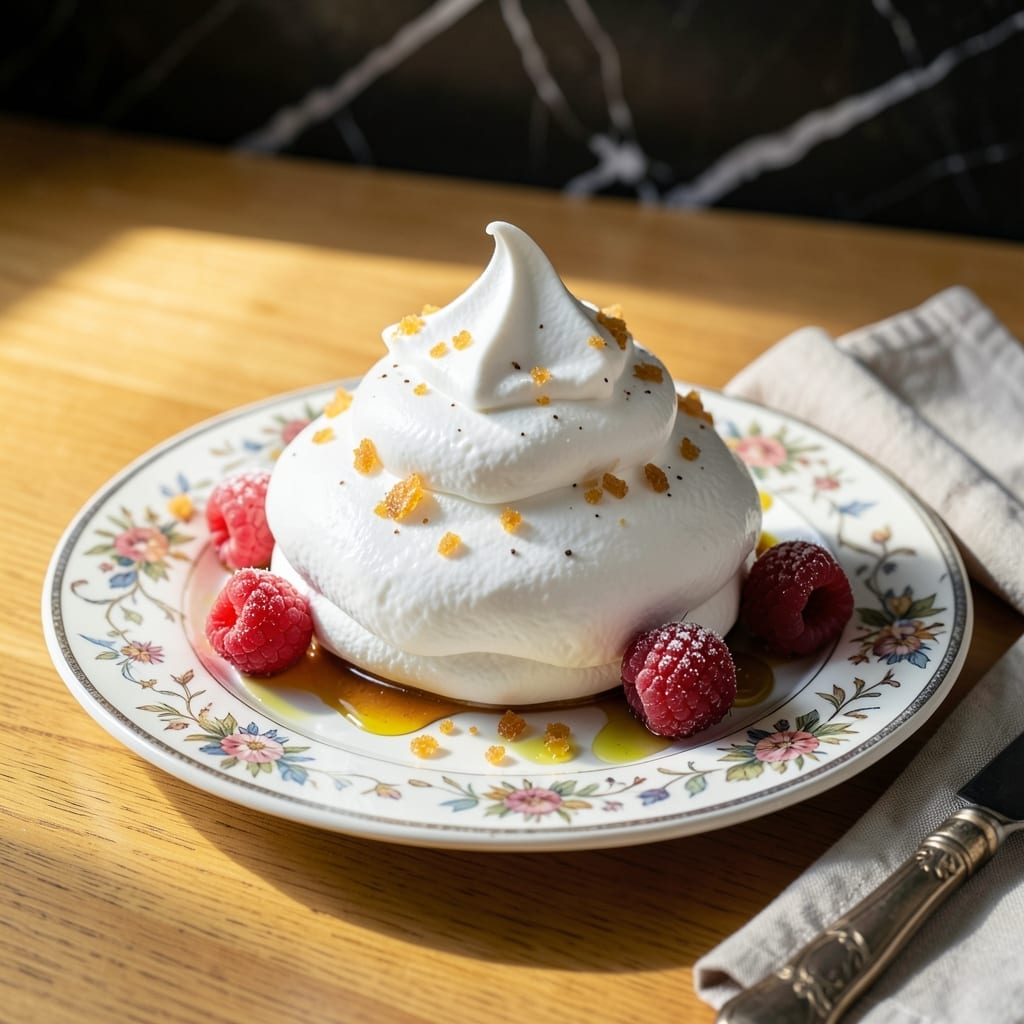
Achieving perfect meringue without cream of tartar is simpler than you think. This method uses common kitchen acids to stabilize egg whites for stiff, glossy peaks every time.
The secret lies in using vinegar or lemon juice as a stabilizer. These substitutions work just as effectively as cream of tartar to create the stable foam needed for light, airy meringues.
With careful beating and the right technique, you’ll produce a meringue that holds its shape beautifully. The process requires patience and attention to detail, but the results are worth the effort.
This approach proves you don’t need specialty ingredients to achieve professional-quality meringue at home. The key is in the timing and proper incorporation of your chosen acid.
Ingredients for Meringue Recipe Without Cream of Tartar
Room temperature egg whites, sugar, and a splash of acid—no specialty items needed here.
| Ingredient | Amount | Notes |
|---|---|---|
| Large Egg Whites 🥚 | 4 whole | Room temperature, no yolk traces |
| Granulated Sugar 🍚 | 1 cup | Superfine preferred, regular works |
| White Vinegar 💧 | ½ tsp | Or use lemon juice alternative |
| Lemon Juice 🍋 | ½ tsp | Freshly squeezed preferred |
| Salt 🧂 | 0.125 tsp | Fine grain for even distribution |
| Vanilla Extract 🌿 | ½ tsp | Pure extract for best flavor |
| Cream of Tartar ⚠️ | 0 tsp | Excluded per recipe requirement |
[recipe_ingredient_scaler]
Egg whites are everything here. Room temperature whips up fluffier than cold ones (trust me on this). The sugar should be superfine if you’re going for ultra-smooth meringues, but regular granulated works fine. I grab mine from King Arthur when I’m baking a lot. For the acid, either white vinegar or fresh lemon juice does the trick—whatever you’ve got in the pantry.
No lemon juice? White vinegar at the same amount works perfectly. Want a touch of flavor? Apple cider vinegar adds a subtle note, but stick to clear vinegars for classic meringue. The vanilla is optional but nice for sweet applications. If you’re making savory meringues (yes, that’s a thing), skip it entirely. Salt balances the sweetness, but don’t overdo it.
Unused egg whites freeze beautifully in ice cube trays for 3 months. Meringues themselves keep in an airtight container at room temp for 2 days (or 1 week if it’s dry out). Baked meringues can also be frozen—just layer with parchment to prevent sticking.
Why You’ll Love This Recipe
- No-Fuss Whipping: I love that I can skip the cream of tartar and still get stiff peaks with just egg whites, sugar, and a splash of vinegar or lemon juice.
- Bright and Sweet: The hint of lemon juice gives it a light, fresh taste that balances the sugar perfectly.
- Pavlova Ready: I use this for holiday desserts, but it’s just as good on a random Tuesday for topping pies or eating plain.
- Pantry Staples: Between us, I always have these ingredients on hand, so I can make meringues without a last-minute store run.
Step-by-Step Instructions for Meringue Without Cream of Tartar
Here’s the method that guarantees stable, glossy peaks using simple acid substitutes.
Step 1: Prepare the Egg Whites for Maximum Volume
Start with 4 whole Large Egg Whites at room temperature—cold whites won’t expand properly. Separate them carefully, ensuring no yolk traces remain, as even a speck of fat will prevent proper stiffening.
Place the whites in a clean, grease-free bowl. I always wipe my bowl with lemon juice first to remove any residual oils. The bowl should be wide with high sides to give your whisk room to incorporate air efficiently.
Step 2: Add Stabilizers Before Whipping
To the egg whites, add 0.5 tsp White Vinegar, 0.5 tsp Lemon Juice, and 0.125 tsp Salt. These acids mimic cream of tartar’s stabilizing effect by strengthening the protein bonds in the whites, allowing them to hold more air and maintain structure.
The salt enhances flavor and balances sweetness, while the vinegar and lemon juice work together to create that characteristic meringue stability. Don’t skip this step—it’s what makes this version work without traditional stabilizers.
Step 3: Whip to Soft Peaks Before Adding Sugar
Using a stand mixer with the whisk attachment or a hand mixer, beat the egg white mixture on medium-high speed until you reach the soft peak stage. This is when the whisk leaves trails that briefly hold their shape before melting back into the mixture.
This stage typically takes 2-3 minutes with a stand mixer. Watch for the whites to turn from clear to opaque, then to a glossy white foam. Adding sugar too early will weigh down the whites and prevent maximum volume.
Step 4: Gradually Incorporate the Sugar
With the mixer running on medium speed, begin adding the 1 cup Granulated Sugar very slowly, about 1 tablespoon at a time. Wait 10-15 seconds between each addition to allow the sugar to fully dissolve.
This gradual addition is crucial—it gives the egg whites time to incorporate the sugar without deflating. The meringue will become thick, glossy, and hold stiff peaks when the whisk is lifted. The entire process should take 8-10 minutes.
You’ll know it’s ready when the meringue holds a peak that stands straight up when the whisk is lifted, and the texture looks smooth and satiny.
Step 5: Finish with Vanilla and Check Consistency
Once stiff peaks form, add 0.5 tsp Vanilla Extract and mix just until combined. Be careful not to overmix at this stage—you want to preserve all that air you’ve incorporated.
Test the consistency by stopping the mixer and lifting the whisk. The meringue should hold a firm peak that doesn’t droop at the tip. If it seems grainy, the sugar hasn’t fully dissolved—keep mixing for another 1-2 minutes.
Your meringue is now ready to pipe or spread for baking. The acid substitutes have done their job, creating a stable base that will hold its shape during baking without weeping or collapsing.
Pro Tips For Making Meringue Recipe Without Cream Of Tartar
- Whip Egg Whites First: Start beating the egg whites before adding any other ingredients—wait until they reach soft peaks before slowly incorporating sugar, vinegar, or lemon juice. I learned this the hard way after ending up with a grainy, deflated mess.
- Use Room-Temp Eggs: Cold egg whites won’t whip up to full volume, so pull them out of the fridge 30 minutes ahead. Sounds tedious, but it actually changes the outcome.
- Skip Greasy Bowls: Even a trace of oil or residue will keep your meringue from stiffening. I now wipe my bowl with lemon juice before starting, and it’s made a real difference.
- Add Sugar Slowly: Sprinkle in the granulated sugar 1 tablespoon at a time, waiting a few seconds between each addition. After burning three batches, I finally figured out that rushing this step causes weeping and collapse.
Serving Suggestions for This Dish
Classic Pavlova Presentation
Pipe your meringue into a 9-inch circle with a slight well in the center on parchment paper. Bake at 250°F for 1.5 hours, then cool completely. Top with whipped cream and fresh berries—strawberries or raspberries add a pop of color. 💫
Mini Meringue Kisses
Pipe small 1-inch mounds onto a baking sheet and bake at 200°F for 1.5-2 hours until crisp. These make adorable bite-sized treats for parties. I like dusting them with powdered sugar before serving.
Meringue-Topped Pies
Spread meringue over a pre-baked pie, like lemon curd or chocolate cream, sealing the edges. Bake at 350°F for 10-12 minutes until golden. This creates a showstopping finish that’s lighter than traditional crusts.
Frozen Meringue Desserts
Layer meringue with whipped cream and crushed berries in a loaf pan. Freeze for 4+ hours for a semi-freddo style dessert. Slice and serve with a drizzle of chocolate sauce for an elegant, no-bake treat. ❄️
Meringue Nests
Pipe 3-inch circles with high edges and bake until crisp. Fill with whipped cream and fresh fruit just before serving. These hold their shape beautifully and look stunning on a dessert platter.
Nutrition Facts
Frequently Asked Questions
Why does vinegar work as a substitute?
Vinegar stabilizes egg whites by strengthening protein bonds, just like cream of tartar. Use 0.5 tsp per 4 egg whites for best results. The acid helps create stiff peaks that hold shape during baking.
Can I use apple cider vinegar instead?
Yes, but white vinegar is preferred for neutral flavor. Apple cider vinegar works but may add a slight taste. Stick to clear vinegars for classic meringue to avoid altering the flavor profile.
How do I know when it’s done?
The meringue is ready when it holds a stiff peak that doesn’t droop. Test by lifting the whisk – the peak should stand straight up. If grainy, mix for 1-2 minutes longer.
What’s the most common mistake?
Adding sugar too early weighs down the whites. Always whip to soft peaks first, then gradually add sugar. This ensures maximum volume and stability for perfect meringue every time.

Trained in classic French technique but raised on slow-cooked ribs and spicy rubs, she blends culinary skill with smoke and soul.
- Recipe for Boneless Pork Chops in Cast Iron Skillet: Sear and Baste to Juicy Perfection - October 3, 2026
- Recipe for Boneless Cross Rib Roast: Slow-Roasted Beef with Herb Crust - October 3, 2026
- Hamburgers in Sauce Recipe Crock Pot: Slow-Cooked Savory Delight - October 3, 2026