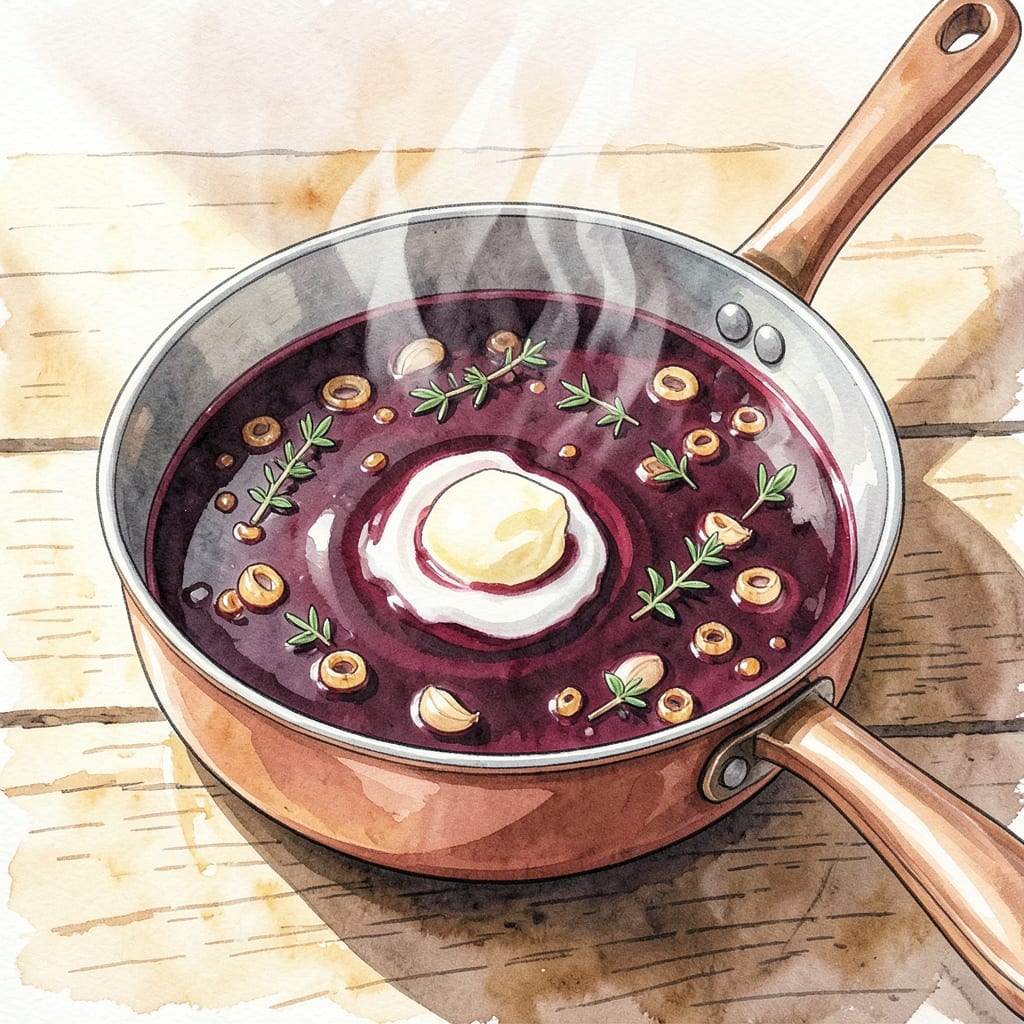
A rich merlot sauce transforms ordinary meals into restaurant-worthy dishes with minimal effort. This reduction balances bold red wine with aromatic shallots and velvety butter, creating a versatile component that elevates everything from grilled steaks to roasted mushrooms. The key lies in precise reduction timing—too short and the sauce lacks depth, too long and the wine’s complexity fades.
Perfect for meal prep, this sauce keeps beautifully in the refrigerator for up to 5 days or can be frozen for longer storage. For those avoiding alcohol, a combination of red grape juice and balsamic vinegar delivers similar depth without compromising flavor. Whether drizzled over filet mignon or tossed with pasta, this sauce proves that sophisticated results don’t require complicated techniques.
Ingredients for Merlot Sauce
Nine essential ingredients create this sophisticated merlot reduction with professional depth and balance.
| Ingredient | Amount | Notes |
|---|---|---|
| Dry Merlot Wine 🍷 | 2 cups | Bold, full-bodied preferred |
| Unsalted Butter 🧈 | ½ cup | Cold, cubed for finishing |
| Shallots 🧅 | ⅓ cup | Finely minced for even cooking |
| Beef Stock 🥩 | 1 cup | Low-sodium for controlled seasoning |
| Fresh Thyme Sprigs 🌿 | 3 pieces | Stems removed before serving |
| Garlic Cloves 🧄 | 2 cloves | Crushed for aromatic depth |
| Tomato Paste 🍅 | 1 tbsp | Concentrated for umami richness |
| Kosher Salt 🧂 | ½ tsp | Diamond Crystal preferred |
| Freshly Ground Black Pepper 🌶️ | ¼ tsp | Coarse grind for texture |
[recipe_ingredient_scaler]
The wine selection is paramount. Optimal results require a dry Merlot with pronounced tannins—Columbia Valley or Bordeaux appellations deliver consistent quality. Shallots, not onions, provide the necessary sweetness without overpowering; fresh thyme sprigs (not dried) contribute the requisite aromatic complexity. For the beef stock, homemade or premium brands like More Than Gourmet ensure proper body without artificial flavors. Professional kitchens standardize on Diamond Crystal kosher salt for its clean taste and precise measurement properties.
For alcohol-free preparation, substitute 2 cups red grape juice reduced with 2 tbsp balsamic vinegar. The butter must remain unsalted to control sodium levels; European-style cultured butter (like Plugrá) offers superior emulsification. Tomato paste can be replaced with boiled-down tomato sauce at a 3:1 ratio. While shallots are ideal, yellow onions at half the quantity provide acceptable results in emergencies. Fresh thyme may be replaced with rosemary at one-third the amount for a more robust profile.
The completed sauce maintains optimal quality for 5 days refrigerated in airtight containers. For extended storage, freeze in ice cube trays (up to 3 months), then transfer to sealed bags. Reheat gently over low heat while whisking to prevent separation. Butter may be added fresh after reheating if the emulsion breaks. Always use a non-reactive container (glass or stainless steel) to preserve flavor integrity.
Why You’ll Love This Recipe
- One-Pan Magic: I love that this comes together in a single skillet—no blender, no straining, just a quick sauté of shallots, a splash of Merlot, and a simmer with beef stock. The butter finishes it off while the pan does most of the work, and cleanup? A quick wipe-down.
- That Butter-Wine Balance: Here’s what sold me—the way the dry Merlot sharpens the richness of the butter, while the shallots and thyme add this earthy warmth. It’s not cloying like some wine sauces; it’s deep, slightly tangy, and clings to steak (or mushrooms, or roasted potatoes) like it was made for them.
- Steakhouse Without the Tab: Honestly, I make this for weeknight dinners *and* when friends come over. It turns a simple pan-seared steak into something that feels fancy, but costs pennies compared to ordering out. (Pro tip: double the batch—it reheats beautifully for meal-prep lunches.)
- No Waste, All Reward: Between us, I’ve stretched this sauce further than you’d think. Toss leftover sauce with pasta, drizzle over meatloaf, or stir into gravy for a boost. And since it’s just wine, stock, and pantry staples? It’s my go-to when I need to impress without a special grocery trip.
Step-by-Step Instructions for Merlot Sauce
This reduction technique transforms simple ingredients into a sophisticated sauce with deep, layered flavors.
Step 1: Sauté Aromatics to Build Flavor Foundation
Heat a heavy-bottomed saucepan over medium heat until warm. Add the 0.33 cup Shallots and cook for 4-5 minutes, stirring frequently, until they become translucent and begin to develop a light golden hue. The shallots should soften without browning, as their delicate sweetness forms the aromatic base.
Add the 2 cloves Garlic Cloves (crushed) and 1 tbsp Tomato Paste, stirring constantly for 1 minute until the tomato paste darkens slightly and the garlic releases its fragrance. This step develops the Maillard reaction, creating complex umami notes that will carry through the finished sauce.
Step 2: Deglaze and Reduce the Wine
Pour in the 2 cups Dry Merlot Wine, scraping the bottom of the pan with a wooden spoon to incorporate any browned bits. Increase heat to medium-high and bring to a gentle boil. The initial alcohol aroma will be strong but will dissipate as the wine reduces.
Allow the wine to simmer vigorously for 10-12 minutes until reduced by about two-thirds. You’ll know it’s ready when the liquid becomes syrupy and coats the back of a spoon. The color will deepen to a rich ruby hue, and the sharp alcohol edge will mellow into concentrated fruit notes.
Step 3: Incorporate Stock and Infuse Herbs
Add the 1 cup Beef Stock and 3 pieces Fresh Thyme Sprigs, reducing heat to medium-low. Simmer gently for 8-10 minutes until the sauce reduces by about one-third. The thyme will infuse its subtle earthy notes during this time.
As the sauce simmers, it should develop a velvety consistency. Tilt the pan occasionally to check the texture – it should nappe the back of a spoon but still flow easily. Remove and discard the thyme sprigs once their flavor has been extracted.
Step 4: Finish with Butter and Seasoning
Reduce heat to low and whisk in the 0.5 cup Unsalted Butter (cold, cubed) one piece at a time, allowing each addition to fully incorporate before adding the next. This mounting technique creates a glossy, emulsified sauce with perfect body.
Season with 0.5 tsp Kosher Salt and 0.25 tsp Freshly Ground Black Pepper, then taste and adjust as needed. The finished sauce should balance the wine’s acidity with rich, rounded flavors. Strain through a fine-mesh sieve if you prefer a perfectly smooth texture, though I often leave it rustic for more character.
Serving Suggestions for This Dish
Perfect Protein Pairings
This sauce was practically made for grilled steaks—especially ribeye or filet mignon. I love spooning it over a medium-rare steak fresh off the grill, where the wine’s acidity cuts through the richness. For a restaurant-worthy presentation, slice the steak against the grain and fan it out before drizzling the sauce. 🥩
Don’t overlook braised short ribs either. The sauce’s depth complements the meat’s unctuous texture beautifully. I’ll sometimes reduce the sauce slightly more when pairing with ribs to create a thicker glaze that clings to each bite.
Vegetarian Delights
Roasted portobello mushrooms become steakhouse-worthy with this sauce. Brush the mushrooms with olive oil, roast at 400°F for 20 minutes, then finish with a generous spoonful of warm merlot sauce. The earthy mushrooms absorb the wine’s complexity like a sponge.
For a lighter option, try tossing with wild mushroom risotto. Stir in 2-3 tablespoons of sauce per serving just before plating—the acidity brightens the creamy rice while the thyme notes tie everything together.
Pasta Perfection
Toss with fresh pappardelle and seared duck breast for a luxurious weeknight meal. The wide noodles capture the sauce beautifully. I’ll often add 1/4 cup of the pasta water to help the sauce coat each strand evenly.
For a vegetarian version, combine with butternut squash ravioli. The sauce’s acidity balances the squash’s sweetness perfectly. Garnish with toasted pine nuts for crunch and a sprinkle of Parmigiano-Reggiano for umami depth. ✨
Unexpected Pairings
This sauce works wonders with grilled lamb chops. The merlot’s berry notes complement the lamb’s gaminess while the thyme bridges both flavors. I’ll marinate the chops in 1 tablespoon of the sauce before grilling for extra depth.
For a surprising twist, try it with seared scallops. The contrast between the delicate seafood and robust sauce creates magic. Use just 1 teaspoon per scallop to avoid overpowering—sometimes less is more with such pristine ingredients.
Chef’s Presentation Tips
For elegant plating, create a sauce swipe on the plate using the back of a spoon before adding your protein. This technique, which I learned in my French training, makes even simple dishes look restaurant-worthy. Garnish with fresh thyme leaves for color contrast.
When serving family-style, keep the sauce warm in a small stainless steel pitcher—it maintains temperature better than ceramic. I picked up this trick from a coastal inn where I once worked, and it’s been my go-to ever since for keeping sauces at perfect serving temperature.
Nutrition Facts

Trained in classic French technique but raised on slow-cooked ribs and spicy rubs, she blends culinary skill with smoke and soul.
- Recipe for Boneless Pork Chops in Cast Iron Skillet: Sear and Baste to Juicy Perfection - October 3, 2026
- Recipe for Boneless Cross Rib Roast: Slow-Roasted Beef with Herb Crust - October 3, 2026
- Hamburgers in Sauce Recipe Crock Pot: Slow-Cooked Savory Delight - October 3, 2026