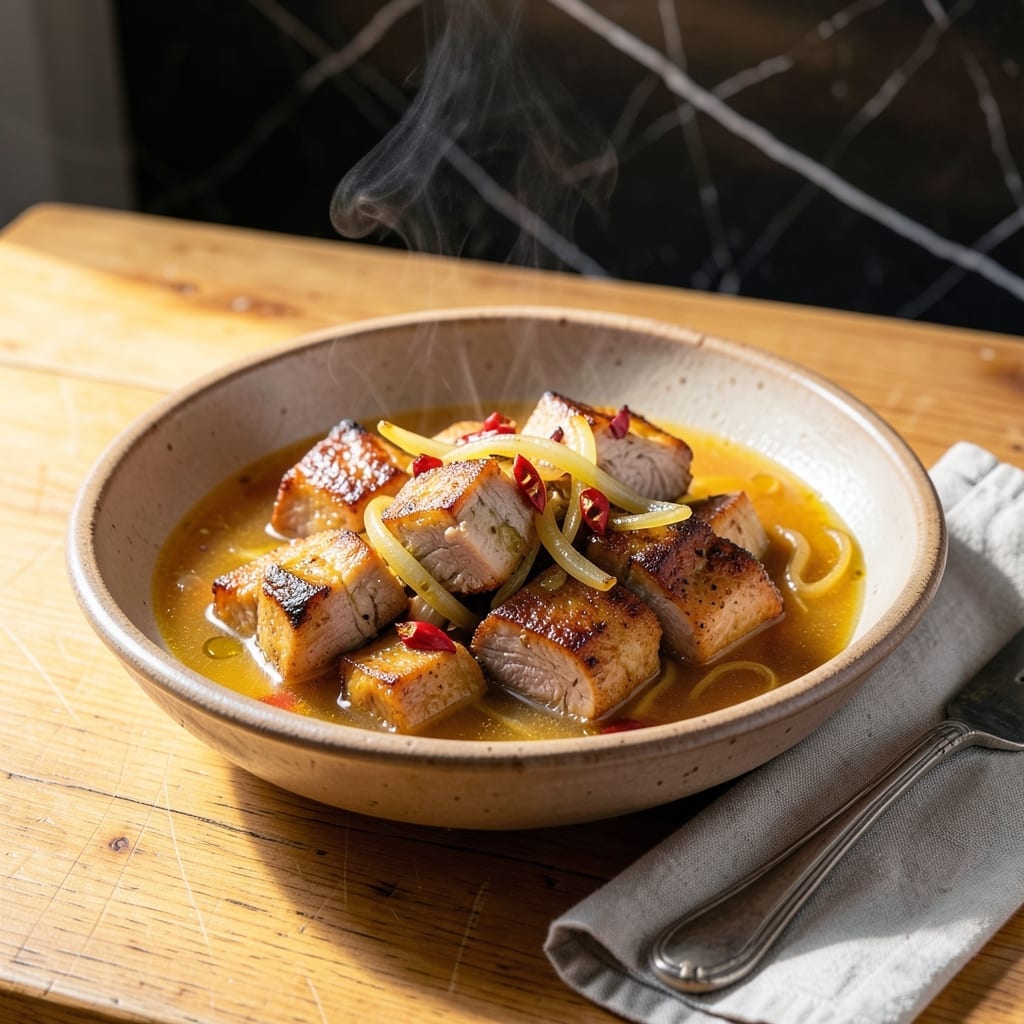
This Caribbean-style pork dish brings bright citrus and herb flavors to your table with a traditional Miami touch.
Tender pork cooks slowly in a tangy broth, creating a restaurant-quality dish that’s both comforting and refreshing.
Ingredients for Miami Pork Souse
Bright citrus and bold spices transform pork into a Miami-style Caribbean feast.
| Ingredient | Amount | Notes |
|---|---|---|
| Pork Shoulder 🐷 | 2 lb | Cut into 1-inch cubes |
| Lime Juice 🍈 | 1 cup | Freshly squeezed preferred |
| Orange Juice 🍊 | ½ cup | Freshly squeezed preferred |
| White Vinegar 💧 | ½ cup | Distilled or apple cider |
| Yellow Onion 🧅 | 1 whole | Thinly sliced |
| Scotch Bonnet Pepper 🌶️ | 1 whole | Seeds removed, minced |
| Fresh Thyme 🌿 | ¼ cup | Chopped leaves only |
| Fresh Cilantro 🌿 | ¼ cup | Chopped, stems removed |
| Garlic Cloves 🧄 | 4 cloves | Minced finely |
| Ground Allspice 🌶️ | 1 tsp | Essential for Caribbean flavor |
| Dijon Mustard 🟡 | 1 tbsp | For tangy depth |
| Brown Sugar 🟤 | 2 tbsp | Light or dark variety |
| Kosher Salt 🧂 | 1 ½ tsp | Adjust to taste |
| Black Pepper 🌶️ | 1 tsp | Freshly ground preferred |
| Water 💧 | 2 cups | For braising liquid |
[recipe_ingredient_scaler]
The pork shoulder is key here—look for well-marbled pieces at your butcher or Whole Foods meat counter. If you’re short on time, ask them to cube it for you (most will do this for free). The citrus base needs to be freshly squeezed—bottled juice just doesn’t have the same punch. Scotch bonnet peppers are non-negotiable for authenticity, but habaneros work in a pinch if that’s what your grocery store carries.
No lime juice? Lemon juice in a pinch, but the flavor profile shifts slightly. Out of allspice? A mix of cinnamon, nutmeg, and cloves gets you close—use equal parts. If you can’t find fresh thyme or cilantro, dried at one-third the amount works, but fresh is worth the effort. The brown sugar balances the acidity, so don’t skip it—coconut sugar or honey (if not vegan) can substitute.
This souse tastes even better the next day once the flavors meld. Store in an airtight container in the fridge for up to 4 days. It freezes beautifully too—3 months max. Reheat gently on the stove to avoid curdling the citrus.
Why You’ll Love This Recipe
- One Pot Wonder: I love how this comes together in a single pot—just pork shoulder simmering with lime, orange, and vinegar while I do other things.
- Zesty Punch: That tangy kick from the lime and vinegar cuts through the richness of the pork shoulder so perfectly.
- Feeds a Crowd: Honestly, it’s my go-to for family gatherings because it scales beautifully and tastes even better the next day.
- Budget Stretcher: Pork shoulder is affordable, and the citrus and vinegar make it taste anything but cheap.
Step-by-Step Instructions for Miami Pork Souse
Here’s how to layer those bold citrus and herb flavors into tender, fall-apart pork.
Step 1: Sear and Season the Pork
Cut the 2 lb Pork Shoulder into 1-inch cubes and pat them dry with paper towels. This ensures a good sear. Heat a Dutch oven or heavy pot over medium-high heat and add the pork in batches, browning on all sides for about 5-7 minutes total. You want a deep, golden crust—this adds flavor depth to the final dish.
Once browned, return all pork to the pot. Season immediately with the 1.5 tsp Kosher Salt, 1 tsp Black Pepper, 1 tsp Ground Allspice, and 2 tbsp Brown Sugar. Stir to coat evenly. The sugar will start to caramelize slightly, which balances the acidity of the citrus.
Step 2: Build the Aromatic Base
Reduce heat to medium and add the thinly sliced Yellow Onion, minced Scotch Bonnet Pepper, and 4 cloves minced Garlic Cloves. Sauté for 3-4 minutes until the onions soften and turn translucent. The Scotch Bonnet will release its heat, so avoid touching your face after handling it.
Next, stir in the 1 tbsp Dijon Mustard, 0.25 cup Fresh Thyme, and 0.25 cup Fresh Cilantro. Cook for another 1-2 minutes until the herbs become fragrant. This step blooms the spices and herbs, ensuring their flavors infuse the entire dish.
Step 3: Add the Citrus Braising Liquid
Pour in the 1 cup Lime Juice, 0.5 cup Orange Juice, and 0.5 cup White Vinegar. Scrape the bottom of the pot to deglaze, lifting all the browned bits into the liquid. These bits are packed with flavor and will dissolve into the sauce.
Add the 2 cups Water and stir to combine. The liquid should just cover the pork. Bring the mixture to a gentle boil, then reduce heat to low. Cover and let it simmer for 1.5 to 2 hours, stirring occasionally, until the pork is fork-tender and the liquid has reduced slightly.
Step 4: Finish and Adjust the Sauce
Once the pork is tender, uncover and simmer for an additional 15-20 minutes to allow the sauce to thicken slightly. The sauce should coat the back of a spoon but still be pourable. If it reduces too much, add a splash of water to loosen it.
Taste and adjust seasoning if needed. The flavors should be bright and tangy from the citrus, with a subtle sweetness from the sugar and depth from the allspice. The pork should be tender enough to break apart with a gentle nudge. Serve hot with crusty bread or rice to soak up the flavorful sauce.
Pro Tips For Making Miami Pork Souse
- Boil Then Simmer: Start the pork shoulder in a rolling boil for 10 minutes to render fat, then drop to a low simmer—this keeps the meat tender without drying it out. I learned this the hard way after my first batch turned chewy.
- Marinate Overnight: Let the pork soak in lime, orange juice, and vinegar for at least 12 hours. Sounds weird, but it works: the acid tenderizes the meat and infuses it with that bright, tangy flavor Miami souse is known for.
- Skimming Is Crucial: Scoop off the foam and fat that rises to the top during cooking—it prevents a greasy broth. Skip this and your souse will taste flat, no matter how good your ingredients are.
- Slice Against Grain: After cooking, slice the pork shoulder against the grain for shorter, easier-to-eat pieces. My grandmother swore by this, and she was right: it makes the texture just right for soaking up the citrusy broth.
Common Mistakes When Making miami pork souse
Overcrowding the Pot
I see this all the time—crowding the pot with all the pork at once. Brown the 2 lb Pork Shoulder in batches to get that perfect sear. Too much in the pot steams instead of browns, and you lose that caramelized crust that adds so much flavor. 🔥
Skipping the Deglaze
After browning, those browned bits stuck to the bottom are pure flavor. When you add the 1 cup Lime Juice, 0.5 cup Orange Juice, and 0.5 cup White Vinegar, scrape them up. Skipping this step means missing out on layers of taste.
Rushing the Simmer
This dish needs time for the pork to become fork-tender. Don’t crank the heat to speed it up—keep it at a gentle simmer for 1.5 to 2 hours. High heat toughens the meat, and the sauce won’t develop its rich, balanced tang.
Ignoring the Scotch Bonnet
The Scotch Bonnet Pepper is key for authentic Caribbean heat. Removing it entirely flattens the flavor profile. If you’re heat-sensitive, remove the seeds and membranes, but keep the flesh. Always wear gloves when handling—trust me, you don’t want that on your fingers.
Over-reducing the Sauce
Uncover and simmer for 15-20 minutes at the end, but watch it closely. The sauce should coat a spoon, not turn into a thick paste. If it reduces too much, add a splash of water. The balance of tangy and sweet is what makes this dish shine.
Using Bottled Citrus
Freshly squeezed Lime Juice and Orange Juice are non-negotiable. Bottled juice lacks the bright, vibrant acidity that defines this souse. It’s a small effort for a big payoff in flavor. 💛
Nutrition Facts
Frequently Asked Questions
What cut of pork works best?
Pork shoulder is traditional for its rich marbling and 1.5 to 2 hours of cooking time. Pork butt also works well. Avoid lean cuts like tenderloin—they’ll dry out during the long simmer.
Can I make this less spicy?
Yes! Remove seeds and membranes from the Scotch Bonnet Pepper before mincing. For zero heat, substitute with a bell pepper, but add a pinch of cayenne for depth.
How do I store leftovers?
Keep in an airtight container in the fridge for up to 4 days. It freezes beautifully for 3 months. Reheat gently on the stove to preserve the sauce texture.
What if I don’t have fresh herbs?
Use dried thyme or cilantro at 1/3 the amount. The flavor will be slightly different but still delicious. Fresh is ideal, but dried works in a pinch.

Trained in classic French technique but raised on slow-cooked ribs and spicy rubs, she blends culinary skill with smoke and soul.
- Recipe for Boneless Pork Chops in Cast Iron Skillet: Sear and Baste to Juicy Perfection - October 3, 2026
- Recipe for Boneless Cross Rib Roast: Slow-Roasted Beef with Herb Crust - October 3, 2026
- Hamburgers in Sauce Recipe Crock Pot: Slow-Cooked Savory Delight - October 3, 2026