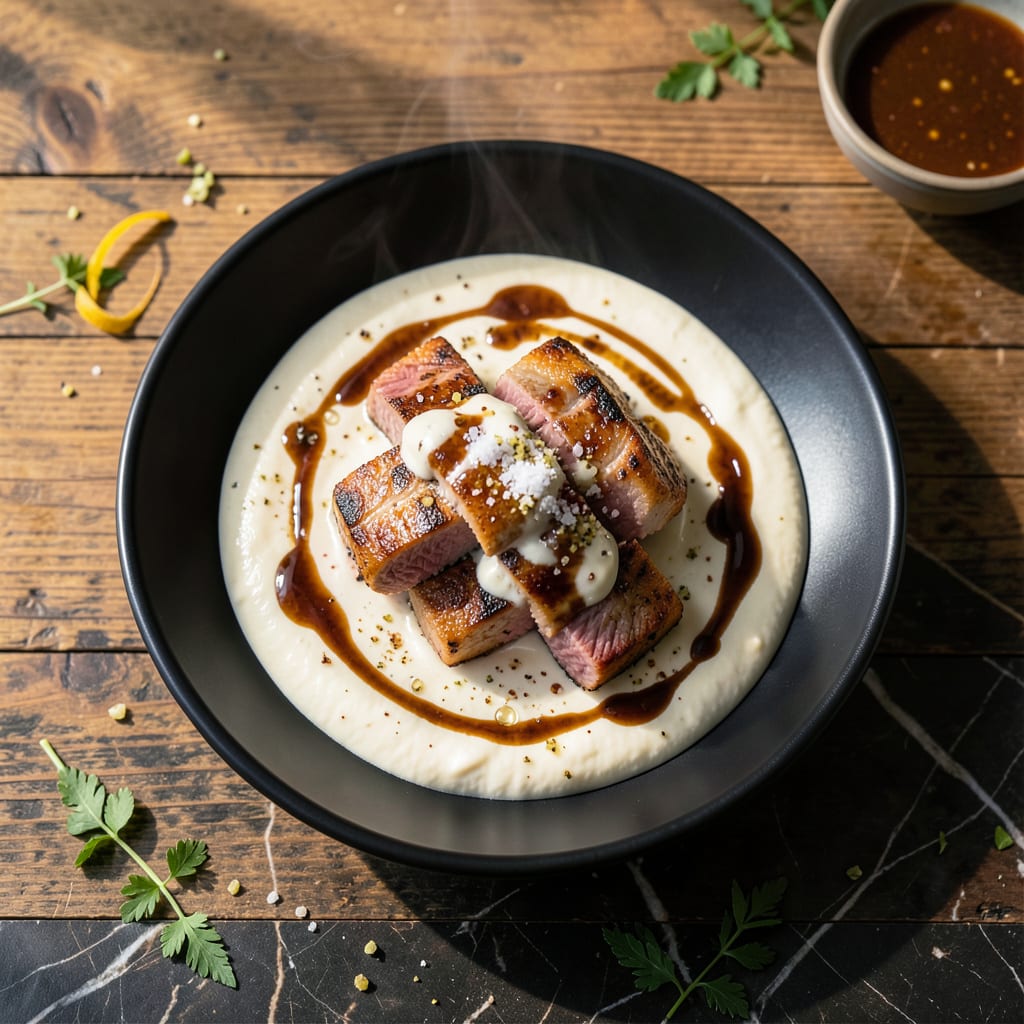
This signature white sauce captures the essence of Japanese steakhouse dining, transforming simple ingredients into a creamy, umami-rich masterpiece.
With just a few pantry staples and 10 minutes of prep, you’ll recreate the velvety sauce that elevates Mikuni’s famous BBQ tuna to restaurant-quality perfection.
Ingredients for Mikuni Bbq Tuna White Sauce
Nine ingredients transform into that signature steakhouse white sauce in minutes.
| Ingredient | Amount | Notes |
|---|---|---|
| Mayonnaise 🥚 | ¾ cup | Full-fat for creaminess |
| Sour Cream 🥛 | ½ cup | Full-fat preferred |
| Garlic Cloves 🧄 | 3 cloves | Minced finely |
| Soy Sauce 🫙 | 1 tbsp | Low-sodium preferred |
| Rice Vinegar 🍚 | 1 tbsp | Unseasoned variety |
| Sugar 🍚 | 1 tsp | Granulated white |
| Dijon Mustard 🟡 | 1 tsp | Smooth for consistency |
| Sesame Oil 🫒 | ½ tsp | Toasted for depth |
| White Pepper ⚪ | ¼ tsp | Freshly ground |
[recipe_ingredient_scaler]
The mayonnaise and sour cream base demands full-fat versions for that restaurant-quality velvety texture. Kewpie mayonnaise (found at Asian markets or Amazon) adds authentic Japanese flavor, but standard mayo works. For garlic, freshly minced is non-negotiable—jarred lacks the sharpness that cuts through the richness. The soy sauce should be Japanese-style (Kikkoman or Yamasa) for balanced umami without overpowering.
No rice vinegar? Apple cider vinegar at equal amount works, but reduce sugar slightly. Out of Dijon? Yellow mustard at half the quantity gets you close. For a lighter version, Greek yogurt can replace half the sour cream, though texture will be slightly thinner. The sesame oil is potent—toasted is essential for that nutty aroma that defines the sauce.
This sauce keeps 5 days refrigerated in an airtight container. The flavors meld and deepen over 24 hours, so make it ahead if possible. Do not freeze—separation is inevitable. Always give it a good stir before using as ingredients may settle slightly.
Why You’ll Love This Recipe
- 5-Minute Mix: I just dump mayo, sour cream, garlic, soy, and rice vinegar in a bowl and stir—no cooking, no fuss.
- Umami Bomb: The soy and rice vinegar hit that sweet-salty spot, while the garlic gives it a serious flavor kick.
- Dinner or Dip: I slather it on grilled tuna one night, then serve it as a veggie dip the next.
- Fridge Lifesaver: Leftovers keep for a week, so I always have a quick sauce ready for last-minute meals.
Step-by-Step Instructions for Mikuni BBQ Tuna White Sauce
Master this technique and you’ll recreate the Japanese steakhouse favorite with perfect balance every time.
Step 1: Prepare the Garlic Base
Finely mince the 3 cloves Garlic Cloves until they reach a near-paste consistency. This fine texture ensures the garlic distributes evenly throughout the sauce without overpowering any single bite.
In a mixing bowl, combine the minced garlic with the 1 tablespoon Soy Sauce, 1 tablespoon Rice Vinegar, 1 teaspoon Sugar, 1 teaspoon Dijon Mustard, 0.5 teaspoon Sesame Oil, and 0.25 teaspoon White Pepper. Whisk vigorously until the sugar fully dissolves and the mixture emulsifies slightly—this takes about 1 minute of steady whisking.
Step 2: Incorporate the Creamy Elements
Add the 0.75 cup Mayonnaise to the bowl first. The mayonnaise serves as the primary emulsifier, so introducing it early helps stabilize the sauce. Use a spatula to fold it in completely, scraping the bowl’s sides and bottom to catch every bit of the garlic mixture.
Next, add the 0.5 cup Sour Cream and fold again until no streaks remain. The sour cream adds the signature tang that balances the richness of the mayonnaise. The final mixture should be smooth, glossy, and pale with tiny flecks of garlic visible throughout.
Step 3: Rest and Develop the Flavors
Cover the bowl with plastic wrap, pressing it directly against the sauce’s surface to prevent a skin from forming. Refrigerate for at least 30 minutes, though 2 hours is ideal for maximum flavor development. This resting period allows the garlic’s sharpness to mellow and the sesame oil’s aroma to infuse the entire mixture.
Before serving, give the sauce one final whisk. You’ll notice it has thickened slightly during chilling. The color should remain bright white with a subtle sheen from the sesame oil. Taste and adjust seasoning if needed, though the original proportions typically yield perfect balance.
Step 4: Serve with Precision
Transfer the sauce to a serving bowl or squeeze bottle for easy application. For the authentic Mikuni experience, drizzle it over seared tuna or use it as a dipping sauce for grilled proteins. The sauce should cling to food without being overly thick, creating a velvety coating that complements rather than overpowers.
Store any leftovers in an airtight container in the refrigerator for up to 5 days. The flavor will continue to develop over time, with the garlic becoming more pronounced. Stir well before each use, as some separation may occur naturally.
Pro Tips For Making Mikuni Bbq Tuna White Sauce
- Mince Garlic Fine: I learned this the hard way—big garlic chunks give the sauce a harsh bite. Grate or finely mince the cloves so they melt into the mayo-sour cream base.
- Balance the Tang: Rice vinegar can overpower quickly. Start with half the amount you think you need, taste, then add more if the sauce needs brightness.
- Skip Cold Ingredients: Cold mayo and sour cream won’t emulsify as smoothly. Pull them from the fridge 15 minutes early so they blend into a silky, lump-free sauce.
- Rest Before Serving: After mixing, let the sauce sit 10 minutes. The flavors meld and the garlic mellows—I was skeptical until I tried it, but it actually changes the outcome.
Wine and Beer Pairings for This Dish
Crisp White Wines
A dry Riesling from Washington state offers the perfect contrast with its bright acidity cutting through the sauce’s richness. I love Chateau Ste. Michelle for its consistent quality and citrus notes. The wine’s mineral finish cleanses your palate between bites. 🍷
Rich White Wines
For those who prefer more body, a lightly oaked Chardonnay from Sonoma works beautifully. The vanilla and butter notes complement the sauce’s creamy texture. Try Kendall-Jackson Vintner’s Reserve for a reliable pairing.
Japanese Beer Pairings
A crisp Sapporo Premium Beer provides a refreshing counterpoint to the umami depth in this sauce. Its light body and subtle sweetness balance the garlic and soy perfectly. Serve it ice-cold in frosted glasses for the full experience.
Light Lager Options
For a domestic option, Asahi Super Dry offers that same clean finish as Japanese beers. The carbonation lifts the sauce’s richness off your palate. I always keep a few bottles on hand for impromptu BBQ nights. 🍺
Sparkling Alternatives
If you’re celebrating, a dry prosecco like La Marca adds festive bubbles while its apple and pear notes harmonize with the sauce’s subtle sweetness. The effervescence makes each bite feel lighter.
Non-Alcoholic Pairing
For a non-alcoholic option, serve with chilled green tea—its grassy notes and slight bitterness complement the sauce beautifully. I use Ito En Unsweetened for authentic Japanese flavor.
Nutrition Facts

Trained in classic French technique but raised on slow-cooked ribs and spicy rubs, she blends culinary skill with smoke and soul.