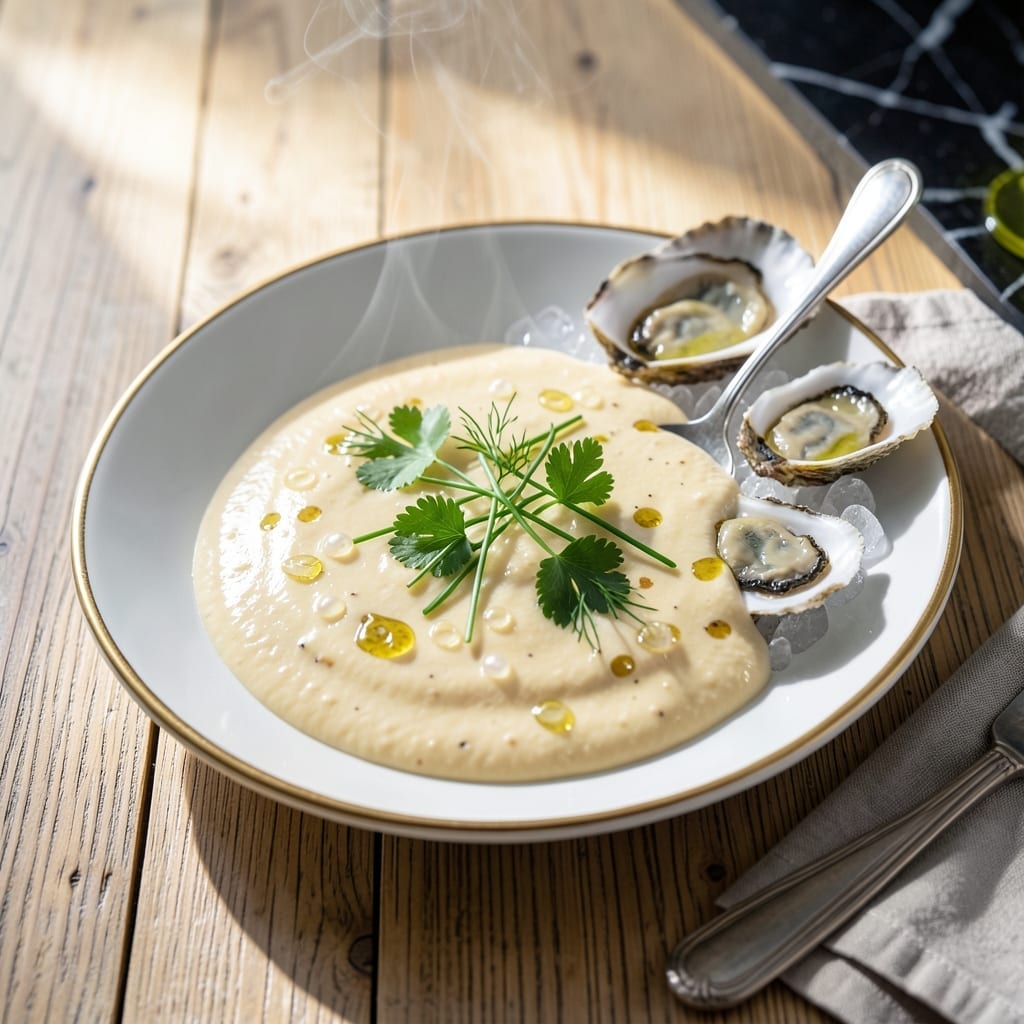
This classic French reduction elevates oysters with a rich, herb-infused butter sauce that’s surprisingly simple to prepare.
The secret lies in a precise balance of white wine, shallots, and fresh herbs, creating a velvety finish that complements seafood perfectly.
Ingredients for Minuet Sauce Recipe for Oysters
Nine classic ingredients create this velvety French reduction for seafood perfection.
| Ingredient | Amount | Notes |
|---|---|---|
| Unsalted Butter 🧈 | ½ cup | European-style preferred for richness |
| Dry White Wine 🍷 | ½ cup | Sauvignon Blanc or Pinot Grigio recommended |
| Shallots 🧅 | 2 tbsp | Finely minced for even distribution |
| Fresh Parsley 🌿 | 2 tbsp | Flat-leaf variety, finely chopped |
| Fresh Chives 🌿 | 1 tbsp | Minced just before use |
| Fresh Tarragon 🍃 | 1 tsp | French tarragon for authentic flavor |
| Lemon Juice 🍋 | 1 tbsp | Freshly squeezed for brightness |
| White Wine Vinegar 💧 | 1 tsp | Balances richness of the sauce |
| Salt 🧂 | ¼ tsp | Fine sea salt or kosher salt |
| White Pepper 🌶️ | 0.125 tsp | Freshly ground for subtle heat |
[recipe_ingredient_scaler]
The butter is non-negotiable—European-style unsalted (like Plugrá or Kerrygold) has the fat content needed for that velvety texture. Shallots should be fresh and firm; avoid any with green sprouts. For the wine, a crisp Sauvignon Blanc from New Zealand or a French Muscadet lends the right acidity. Fresh herbs are essential—dried simply won’t deliver the same aromatic complexity.
No white wine? Dry vermouth works in a pinch, or substitute with extra vinegar and a splash of water. Out of tarragon? A pinch of dried tarragon (at one-third the amount) can substitute, though fresh is vastly superior. Shallots can be replaced with mild yellow onion, minced finely. The lemon juice can be swapped for white wine vinegar if needed, though the citrus note is traditional.
This sauce is best used immediately but can be held in a thermos for up to 1 hour at serving temperature. Store leftover sauce in an airtight container in the fridge for 2-3 days. Reheat gently over low heat, whisking constantly to re-emulsify. Do not boil or the sauce may separate.
Why You’ll Love This Recipe
- One Pan Wonder: I melt the butter, sauté the shallots, and deglaze with wine—all in the same pan before tossing in the oysters.
- Bright and Zesty: The white wine cuts through the richness, while parsley and chives add that fresh, herby punch.
- Date Night Ready: Honestly, it feels fancy but takes less time than ordering takeout.
- Budget Luxury: A splash of wine and a handful of herbs turn affordable oysters into something restaurant-worthy.
Step-by-Step Instructions for Minuet Sauce for Oysters
This classic French technique delivers a rich, aromatic reduction perfect for fresh oysters.
Step 1: Sauté the Shallots in Butter
In a small saucepan over medium-low heat, melt the 0.5 cup Unsalted Butter until foaming subsides. Immediately add the 2 tbsp Shallots and cook gently for 3-4 minutes, stirring frequently, until translucent but not browned.
This low-and-slow approach prevents burning and allows the shallots to release their sweetness. The butter should remain a pale golden color throughout this process. Watch carefully—shallots can go from perfect to burnt in seconds.
Step 2: Deglaze with White Wine
Pour in the 0.5 cup Dry White Wine and increase heat to medium-high. Bring to a gentle boil, then reduce heat to maintain a steady simmer for 5-7 minutes until the liquid reduces by about half.
Use a wooden spoon to stir occasionally, scraping up any browned bits from the bottom. The wine should reduce to a syrupy consistency with a pronounced aromatic quality. This step concentrates the flavors and burns off the alcohol.
Step 3: Incorporate Vinegar and Seasonings
Stir in the 1 tsp White Wine Vinegar, 0.25 tsp Salt, and 0.125 tsp White Pepper. The vinegar adds necessary acidity to balance the richness of the butter. Simmer for 1-2 minutes to allow the flavors to meld.
This is where the sauce begins to transform. The vinegar’s sharpness will mellow as it cooks, creating a more complex flavor profile that complements the oysters beautifully.
Step 4: Finish with Fresh Herbs and Citrus
Remove the saucepan from heat. Stir in the 1 tsp Fresh Tarragon, 1 tbsp Fresh Chives, 2 tbsp Fresh Parsley, and 1 tbsp Lemon Juice. The residual heat will gently warm the herbs without cooking them, preserving their bright, fresh flavors.
Let the sauce rest for 2-3 minutes to allow the herbs to infuse fully. The mixture should have a glossy appearance with visible flecks of green from the herbs. Taste and adjust seasoning if needed before serving over freshly shucked oysters.
Pro Tips For Making Minuet Sauce Recipe For Oysters
- Reduce the Wine First: I learned this the hard way—boil down the white wine by half before adding butter, or your sauce will taste watery and weak. A good 3-4 minutes on medium-high heat concentrates the flavor.
- Chill Your Butter: Use cold, cubed unsalted butter and add it slowly while whisking off the heat. Sounds fussy, but it makes a real difference in getting that silky, emulsified texture.
- Finely Mince Shallots: Skip the lazy chop—shallots should be minced almost to a paste so they melt into the sauce. Anything bigger and you’ll get a harsh, uneven bite.
- Finish with Fresh Herbs: Stir in the parsley and chives at the very end, just before serving. After burning a batch by adding them too early, I finally figured out they lose all their brightness if cooked more than 30 seconds.
Storing and Reheating Leftovers
🍳 Refrigerator Storage
Store your minuet sauce for oysters in an airtight container to maintain its rich, buttery flavor. When properly sealed, it will stay fresh in the refrigerator for 3 to 4 days. For best results, let the sauce cool to room temperature before sealing to prevent condensation, which can affect texture.
❄️ Freezer Storage
For longer storage, freeze the minuet sauce in a freezer-safe container or heavy-duty freezer bag. It can be kept for 2 to 3 months without significant loss of quality. Portion the sauce into smaller containers if you plan to use it gradually. This helps avoid repeated thawing and refreezing, which can degrade its consistency.
🔥 Reheating Methods
Gently reheat the sauce to preserve its delicate flavors. On the stovetop, warm it over low heat (around 160°F), stirring frequently to prevent separation. For a quick option, use the microwave in 15-20 second bursts, stirring between each interval. Avoid high heat, as it can cause the butter to break.
💡 Quality Preservation
To maintain the sauce’s smooth, velvety texture, avoid exposing it to rapid temperature changes. When thawing frozen sauce, transfer it to the refrigerator overnight. If the sauce appears separated after storage, whisk in a small amount of warm water or butter to restore its creamy consistency. Always reheat only what you need to minimize waste.
Nutrition Facts

Trained in classic French technique but raised on slow-cooked ribs and spicy rubs, she blends culinary skill with smoke and soul.
- Recipe for Boneless Pork Chops in Cast Iron Skillet: Sear and Baste to Juicy Perfection - October 3, 2026
- Recipe for Boneless Cross Rib Roast: Slow-Roasted Beef with Herb Crust - October 3, 2026
- Hamburgers in Sauce Recipe Crock Pot: Slow-Cooked Savory Delight - October 3, 2026