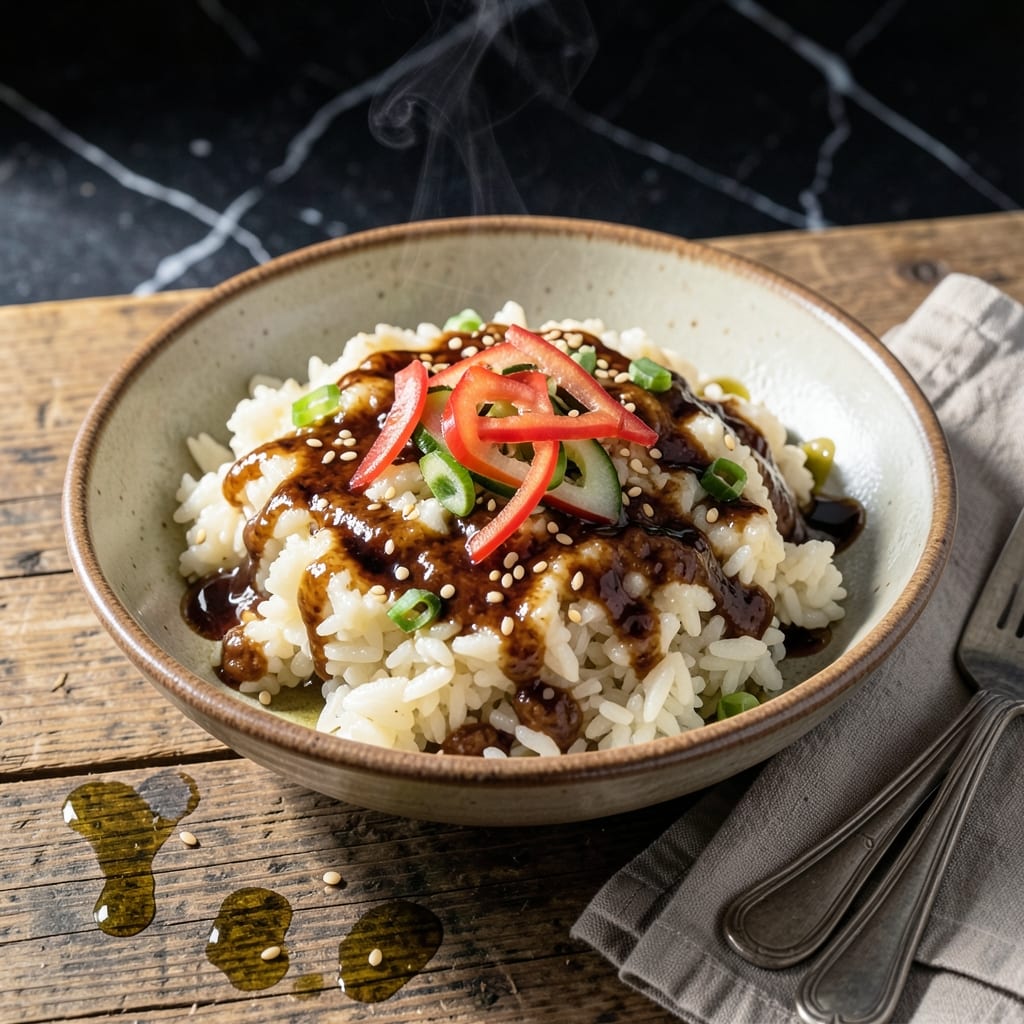
This dish transforms simple rice into a comforting meal with rich umami depth. I developed this method to bring authentic Japanese flavors to your kitchen with minimal effort.
The secret lies in blending miso paste with the cooking liquid, infusing every grain with savory complexity. It pairs perfectly with grilled proteins or stands beautifully on its own.
Ingredients for Miso Rice
Transform plain rice with miso and a few pantry staples. Simple, savory, deeply satisfying.
| Ingredient | Amount | Notes |
|---|---|---|
| White Rice 🍚 | 2 cups | Short or medium grain preferred |
| Water 💧 | 2 ½ cups | For cooking rice |
| Red Miso Paste 🥣 | 3 tbsp | Or white miso for milder flavor |
| Soy Sauce 🫙 | 1 tbsp | Low-sodium if preferred |
| Rice Vinegar 🍯 | 1 tsp | Adds subtle tanginess |
| Sesame Oil 🫒 | 1 tsp | Toasted for best aroma |
| Green Onions 🧅 | 3 whole | Thinly sliced for garnish |
| Sesame Seeds 🌰 | 1 tsp | Toasted, for topping |
| Garlic Cloves 🧄 | 2 cloves | Minced for extra flavor |
| Fresh Ginger 🌿 | 1 tsp | Grated, optional boost |
| Neutral Oil 🫒 | 1 tbsp | For sautéing aromatics |
| Nori Sheets 🍱 | 1 sheet | Cut into strips for garnish |
[recipe_ingredient_scaler]
The miso is key here. Red miso gives bold umami (look for it in the refrigerated section at Whole Foods or Asian markets), but white miso works if that’s what you have. Don’t skip the rice vinegar—it balances the saltiness. I grab my miso from H Mart when I’m stocking up, but any grocery store with a solid international aisle will have it.
No miso paste? Soybean paste or doenjang can sub in a pinch (use half the amount). Out of rice vinegar? A squeeze of lemon or lime works. For the rice, jasmine or sushi rice are ideal, but any short-grain will do. If you’re adding the optional ginger, fresh is best—that jarred stuff just doesn’t compare.
This keeps well in the fridge for 3-4 days. Reheat with a splash of water to keep it from drying out. Freezes for up to 2 months (portion first for easy meals). The garnishes are best added fresh, but you can prep them ahead and store separately.
Why You’ll Love This Recipe
- 5-Minute Mix: I just stir miso paste and soy sauce into hot rice—no chopping, no fuss.
- Umami Bomb: The red miso gives it this deep, savory kick that plain rice never had.
- Lunchbox Hero: I pack leftovers for work and it tastes even better cold the next day.
- Pantry Staple: Between us, I always have these ingredients on hand, so dinner’s never far away.
Step-by-Step Instructions for Miso Rice
This method delivers rich, savory rice with minimal effort and maximum flavor.
Step 1: Cook the White Rice to Perfection
Rinse the 2 cups white rice under cold water until the water runs clear—this removes excess starch and prevents gummy rice. I use a fine-mesh strainer for this step to make it easier.
Combine the rinsed rice with the 2.5 cups water in a medium saucepan. Bring to a boil over high heat, then reduce to low, cover, and simmer for 15-18 minutes until the water is absorbed and the rice is tender.
Turn off the heat and let it sit covered for 10 minutes—this steaming step ensures every grain is fluffy and fully cooked.
Step 2: Sauté the Aromatics for Depth
While the rice cooks, heat the 1 tbsp neutral oil in a small skillet over medium heat. Add the minced 2 cloves garlic cloves and grated 1 tsp fresh ginger, stirring constantly for 30-45 seconds until fragrant but not browned.
Here’s the thing—burnt garlic turns bitter fast, so keep the heat moderate and don’t walk away. The moment you smell that warm, spicy aroma, you’re ready for the next step.
Step 3: Mix the Miso Sauce into the Rice
In a small bowl, whisk together the 3 tbsp red miso paste, 1 tbsp soy sauce, 1 tsp rice vinegar, and 1 tsp sesame oil until smooth. The miso will be thick at first, but the liquids will loosen it into a glossy, pourable sauce.
Transfer the cooked rice to a large bowl and pour the miso mixture over it. Add the sautéed garlic and ginger, then fold everything together gently with a rice paddle or spatula. You want to distribute the sauce evenly without mashing the grains.
Step 4: Garnish and Serve Warm
Thinly slice the 3 whole green onions on a diagonal for a pretty presentation. Sprinkle them over the rice along with the 1 tsp sesame seeds. For extra flair, cut the 1 sheet nori sheets into thin strips with kitchen shears and scatter them on top.
Let the rice sit for 2-3 minutes before serving—this gives the garnishes time to soften slightly and the flavors to meld. Serve warm, and dig in while the rice is still steaming and the sesame seeds are just beginning to toast from the residual heat.
Pro Tips For Making Miso Rice
- Stir Miso Last: Mix the red miso paste into the cooked rice at the very end, off the heat. I learned this the hard way—adding it early makes the miso bitter and dulls its rich flavor.
- Use Warm Water: Dissolve the miso paste in 2-3 tablespoons of warm water before mixing it into the rice. Sounds weird, but it works: prevents clumping and ensures even distribution.
- Rinse the Rice: Always rinse your white rice until the water runs clear before cooking. Skipping this leaves a starchy residue that makes the miso rice gummy instead of fluffy.
- Add Vinegar Late: Stir in the rice vinegar after the rice is cooked and slightly cooled. Adding it too early can make the rice mushy—I was skeptical until I tried it, but the texture is noticeably better.
Serving Suggestions for miso rice
Bowl Presentation
Serve this dish in shallow bowls to showcase the vibrant garnishes. I love using handmade ceramic bowls from local potters—they add warmth to the meal. Arrange the nori strips in a circular pattern on top for visual appeal.
Protein Pairings
This rice makes a perfect bed for grilled salmon or teriyaki chicken. The umami flavors complement rich proteins beautifully. For vegetarians, pan-seared tofu with a soy glaze works wonderfully. 💛
Fresh Garnish Tips
Always add the green onions and sesame seeds right before serving to preserve their freshness and crunch. A sprinkle of furikake (Japanese seasoning) adds extra texture and flavor if you have it.
Side Dish Ideas
A simple cucumber salad with rice vinegar cuts through the richness. Or try steamed edamame with sea salt for a light, protein-packed addition. Both balance the savory notes perfectly.
Family Style Service
For gatherings, present the rice in a large wooden bowl with serving spoon. Let guests add their own garnishes from small dishes. This creates an interactive dining experience everyone enjoys.
Temperature Note
Serve this dish piping hot—the flavors are most vibrant when fresh. If making ahead, reheat gently with a splash of water to restore moisture. The aromatics truly shine at serving temperature.
Nutrition Facts
Frequently Asked Questions
Can I use brown rice instead of white?
Yes, but adjust the water to 3 cups and increase cooking time to 40-45 minutes. Brown rice has a nuttier texture that pairs well with miso’s umami.
Why does my miso rice taste too salty?
Miso paste varies in saltiness. Start with 2 tbsp instead of 3 tbsp, taste, then add more. Balance with a splash of rice vinegar or extra cooked rice.
How do I store leftovers?
Keep in an airtight container in the fridge for up to 4 days. Reheat in microwave with a damp paper towel to prevent drying.
Can I make this without a rice cooker?
Use a heavy pot with a tight lid. The stovetop method in the recipe works just as well as any rice cooker.

Trained in classic French technique but raised on slow-cooked ribs and spicy rubs, she blends culinary skill with smoke and soul.
- Recipe for Boneless Pork Chops in Cast Iron Skillet: Sear and Baste to Juicy Perfection - October 3, 2026
- Recipe for Boneless Cross Rib Roast: Slow-Roasted Beef with Herb Crust - October 3, 2026
- Hamburgers in Sauce Recipe Crock Pot: Slow-Cooked Savory Delight - October 3, 2026