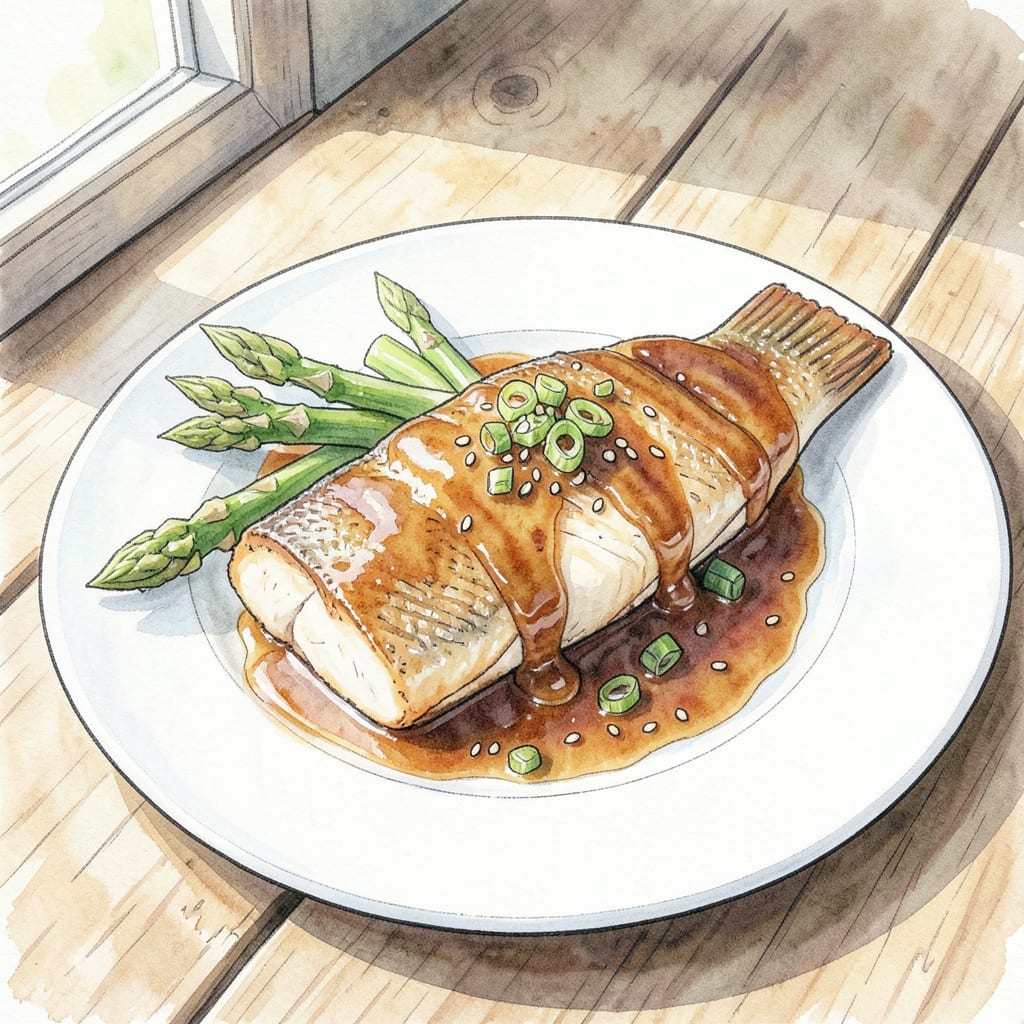
As a pitmaster with French technique training, I’ve perfected the art of balancing bold flavors with delicate fish. This miso sea bass recipe brings together the richness of miso glaze and the tender flakiness of pan-seared sea bass.
With precise temperature control and a 10-minute cooking time, you’ll achieve perfect results every time. The combination of umami miso and fresh sea bass creates a dish that’s both sophisticated and approachable.
Ingredients for Miso Sea Bass
Gather these premium ingredients for a sophisticated miso sea bass dish that’s both elegant and easy to prepare.
| Ingredient | Amount | Notes |
|---|---|---|
| Sea Bass Fillets 🐟 | 4 pieces | Skin removed, 6 oz each |
| White Miso Paste 🧂 | ¼ cup | High-quality, preferably Hikari or similar |
| Soy Sauce 💧 | 2 tbsp | Low-sodium, preferably Kikkoman |
| Sake 🍶 | 2 tbsp | Dry, or dry white wine as substitute |
| Mirin 🍶 | 1 tbsp | Sweet Japanese cooking wine |
| Sugar 🍮 | 1 tbsp | Granulated white sugar |
| Rice Vinegar 🍋 | 1 tsp | Unseasoned, for balance |
| Ginger 🧄 | 2 cloves | Peeled, grated |
| Garlic 🧄 | 1 clove | Minced |
| Sesame Oil 🫒 | 1 tsp | Toasted, for finishing |
| Green Onions 🌿 | ¼ cup | Thinly sliced, for garnish |
| Sesame Seeds 🌱 | 1 tbsp | Toasted, for garnish |
[recipe_ingredient_scaler]
For the sea bass, look for wild-caught Chilean or Alaskan for the best flavor and texture. Most quality fish markets will have suitable fillets. The miso paste matters here—Hikari or similar high-quality makes all the difference. If you’re using a different brand, check the ingredient list for minimal additives.
No sake? Dry white wine or dry sherry works as a decent substitute. The mirin can be tricky to find, but Asian markets or well-stocked supermarkets usually have it. If you can’t find it, a mix of sugar and dry white wine can approximate its flavor. Fresh ginger is a must—don’t skip grating it fresh.
This dish keeps well in the fridge for up to 2 days. Reheat gently in a pan with a bit of water to prevent drying out. The miso glaze can be made ahead and stored in an airtight container for up to 1 week—perfect for meal prep.
Step-by-Step Instructions for Miso Sea Bass
Follow these precise steps to achieve perfectly pan-seared sea bass with a rich umami glaze.
Step 1: Prepare the Miso Glaze
In a small saucepan, combine the 0.25 cup White Miso Paste, 2 tbsp Soy Sauce, 2 tbsp Sake, 1 tbsp Mirin, 1 tbsp Sugar, and 1 tsp Rice Vinegar. Whisk until the miso paste is fully dissolved, creating a smooth mixture. Bring the mixture to a simmer over medium heat, whisking constantly to prevent lumps. Reduce the glaze by 1/3 until it coats the back of a spoon, about 5 minutes. Remove from heat and set aside to cool slightly.
The glaze should be thick enough to adhere to the fish but still pourable. If it’s too thick, whisk in a small amount of water. If too thin, simmer for another minute or until it reaches the desired consistency.
Step 2: Prepare the Sea Bass Fillets
Pat the 4 pieces Sea Bass Fillets dry with paper towels, ensuring they’re moisture-free for proper searing. Season both sides with a pinch of salt. The dry surface helps create a beautiful crust on the fish while preventing it from steaming in the pan.
Make sure the fillets are at room temperature before cooking to ensure even cooking. If they’ve been refrigerated, let them sit out for 15-20 minutes before cooking.
Step 3: Sear the Sea Bass
Heat a large skillet over high heat until it begins to smoke. Add 1 tsp Sesame Oil and swirl to coat the pan. Carefully place the sea bass fillets in the hot skillet, skin side up (if they have skin) or presentation side down. Sear for 2-3 minutes until a golden-brown crust forms. Flip the fillets and cook for an additional 2-3 minutes on the second side, or until they reach an internal temperature of 145°F.
The fish is done when it flakes easily with a fork and has an opaque appearance throughout. Transfer the cooked fillets to a plate and tent loosely with foil to keep warm.
Step 4: Finish with Miso Glaze and Garnish
Reduce the heat to medium and add the prepared miso glaze to the same skillet. Simmer the glaze for 1-2 minutes until heated through, scraping up any browned bits from the bottom of the pan. Return the sea bass fillets to the skillet and spoon the glaze over the top of each fillet, coating them evenly.
Garnish with 0.25 cup Green Onions and 1 tbsp Sesame Seeds just before serving. The green onions add a fresh contrast to the rich miso glaze, while the sesame seeds provide a satisfying crunch.
Essential Equipment for This Dish
Essential Cooking Equipment
For pan-searing the sea bass to perfection, you’ll need a quality skillet that retains heat well. I recommend a 12-inch cast-iron or carbon steel pan as it distributes heat evenly and achieves that beautiful golden crust. Make sure it’s oven-safe if you plan on finishing the dish in the oven.
Thermometer for Precision
A digital instant-read thermometer is crucial for cooking fish to the correct temperature. Sea bass is done at 145°F, and a thermometer ensures you don’t overcook it. I prefer thermometers with a fast response time and high accuracy.
Small Saucepan for Glaze
Preparing the miso glaze requires a small, non-reactive saucepan. Stainless steel or ceramic-coated pans work best as they prevent the glaze from picking up unwanted flavors. The 2-quart capacity is perfect for making the glaze without taking up too much space.
Whisk and Spatula
A stainless steel whisk is essential for smoothly incorporating the miso paste into the glaze. For handling the delicate sea bass fillets, a thin, flexible spatula is ideal. Look for one with a comfortable handle and a blade that’s both heat-resistant and non-stick.
Garnishing Tools
For the final touches, have sharp kitchen shears for trimming green onions and a small strainer for sprinkling sesame seeds evenly. These tools help with presentation, making the dish look as good as it tastes.
Additional Tips
Investing in a non-stick skillet liner or parchment paper can make cleanup easier, especially when working with sticky miso glaze. For those who cook fish frequently, a fish grilling basket can be useful, though it’s not necessary for this pan-seared recipe.
Nutrition Facts

Trained in classic French technique but raised on slow-cooked ribs and spicy rubs, she blends culinary skill with smoke and soul.
- Recipe for Boneless Pork Chops in Cast Iron Skillet: Sear and Baste to Juicy Perfection - October 3, 2026
- Recipe for Boneless Cross Rib Roast: Slow-Roasted Beef with Herb Crust - October 3, 2026
- Hamburgers in Sauce Recipe Crock Pot: Slow-Cooked Savory Delight - October 3, 2026