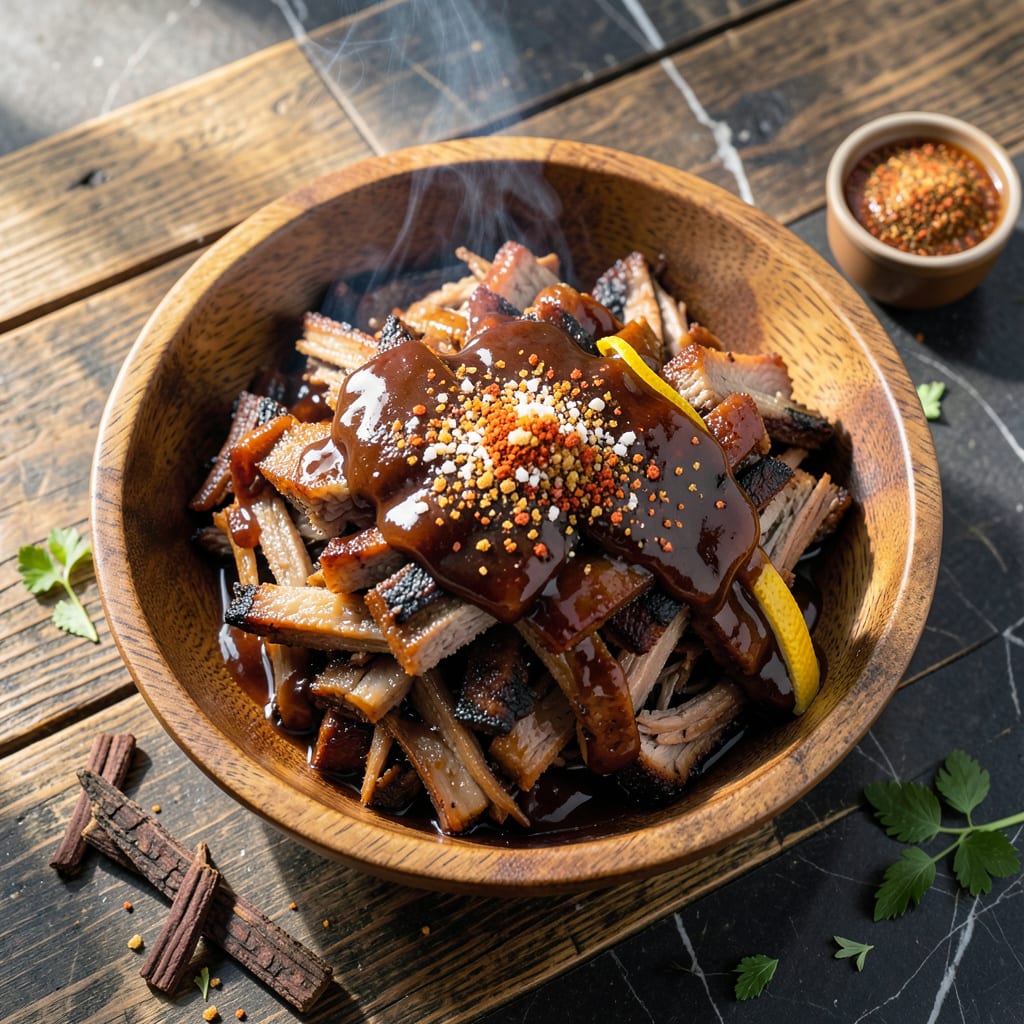
Getting my first whiff of hickory smoke at a family cookout still takes me back. This method captures that smoky sweetness with a slow-cooked approach that transforms tough pork into tender, flavorful perfection.
With the right meat selection and a simple but bold rub, you’ll achieve restaurant-quality results at home. The process is straightforward, but the reward is a dish that tastes like it came straight from a pitmaster’s kitchen.
Ingredients for Mission Bbq Pulled Pork
A bold rub, slow cooking, and hickory smoke deliver that pitmaster magic right at home.
| Ingredient | Amount | Notes |
|---|---|---|
| Pork Shoulder 🐖 | 4 lb | Boneless, with good fat marbling |
| Hickory Wood Chips 🪵 | 2 cups | Soaked in water for 1 hour |
| Brown Sugar 🍚 | ½ cup | Light or dark, packed |
| Paprika 🌶️ | 2 tbsp | Smoked paprika preferred |
| Garlic Powder 🧄 | 1 tbsp | Not garlic salt |
| Onion Powder 🧅 | 1 tbsp | Fresh ground preferred |
| Salt 🧂 | 1 tbsp | Kosher or sea salt |
| Black Pepper 🌶️ | 1 tbsp | Freshly ground preferred |
| Cayenne Pepper 🔥 | ½ tsp | Adjust for heat preference |
| Apple Cider Vinegar 🍏 | ½ cup | For tang and tenderness |
| BBQ Sauce 🍯 | 2 cups | Quality store-bought or homemade |
| Yellow Mustard 🟡 | 2 tbsp | For binding the rub |
| Chicken Stock 🍲 | 1 cup | Low-sodium preferred |
[recipeingredientscaler]
The pork shoulder is non-negotiable here. Look for a well-marbled cut—fat equals flavor and moisture. Most butchers will cube it for you if you ask nicely, but Costco or Sam’s Club have great pre-packaged options. For the hickory, avoid pre-flavored chips; plain lets you control the smoke intensity. The rub spices should be fresh—if your paprika has lost its scent, it’s lost its punch too.
No hickory chips? Apple or cherry wood both add great sweetness. Swap smoked paprika for regular if that’s what you’ve got, but add half a teaspoon of liquid smoke to compensate. Brown sugar can be coconut sugar at a one-to-one ratio. For the vinegar, white vinegar in a pinch, though the apple cider adds a nice depth. The BBQ sauce? Sweet Baby Ray’s or Stubb’s work well if you’re not making your own.
The pork can rest in the fridge for 24 hours after cooking—actually improves the flavor. Leftovers freeze beautifully for 3 months. Shred it fine for sandwiches or leave it chunky for tacos. Just reheat with a splash of stock to keep it juicy.
Why You’ll Love This Recipe
- Set It & Forget It: I toss the pork shoulder in the smoker with hickory chips, then let it do its thing for hours with barely any hands-on time.
- Smoky Sweet Perfection: Brown sugar and paprika create this crave-worthy bark while the hickory chips infuse every bite with that authentic BBQ depth.
- Feeds the Whole Crew: Honestly, one pork shoulder gives me enough for tacos Tuesday, sandwiches Wednesday, and nachos by Friday.
- Leftovers for Days: Between us, this tastes even better the next day—pile it on sliders, mix into chili, or just eat it straight from the fridge.
Step-by-Step Instructions for Mission BBQ Pulled Pork
This method delivers tender, smoky pulled pork with that signature sweet and tangy finish.
Step 1: Prepare the Rub and Season the Pork
In a small bowl, combine the 0.5 cup Brown Sugar, 2 tbsp Paprika, 1 tbsp Garlic Powder, 1 tbsp Onion Powder, 1 tbsp Salt, 1 tbsp Black Pepper, and 0.5 tsp Cayenne Pepper. The spices should be evenly distributed and slightly clumped from the moisture in the sugar.
Pat the 4 lb Pork Shoulder dry with paper towels, then spread the 2 tbsp Yellow Mustard all over its surface—this acts as a binder for the rub. Massage the spice mixture into every crevice of the meat, pressing firmly so it adheres. You’ll use the entire rub mixture. Let the seasoned pork sit at room temperature for 30 minutes while you prepare the smoker.
Step 2: Set Up the Smoker and Begin Cooking
Soak the 2 cups Hickory Wood Chips in water for 1 hour (as specified in the ingredients). Drain them and add to your smoker according to manufacturer instructions. Preheat the smoker to 225°F using indirect heat.
Place the pork shoulder on the smoker grates, fat-side up. Insert a meat thermometer into the thickest part of the pork, avoiding the bone. Smoke undisturbed for 4-5 hours until the internal temperature reaches 160°F. You’ll see a dark, flavorful bark forming on the exterior—this is the smoky crust that defines great pulled pork.
Step 3: Wrap and Continue Cooking
Once the pork hits 160°F, transfer it to a large sheet of heavy-duty foil. Pour the 0.5 cup Apple Cider Vinegar and 1 cup Chicken Stock over the pork, then tightly wrap it in the foil. This step, called the “Texas crutch,” helps power through the stall while keeping the meat moist.
Return the wrapped pork to the smoker and continue cooking until the internal temperature reaches 203°F, about 4-6 more hours. The pork is done when it probes like butter—there should be no resistance when you insert the thermometer.
Step 4: Rest, Shred, and Sauce
Remove the pork from the smoker and let it rest in the foil for 1 hour. This resting period allows the juices to redistribute, ensuring every bite is succulent. Unwrap the pork and transfer it to a large cutting board or bowl.
Using two forks or meat claws, shred the pork into bite-sized pieces, discarding any large fat chunks. Stir in the 2 cups BBQ Sauce until the pork is evenly coated. The sauce should cling to the meat, creating a glossy, flavorful finish. Serve immediately on buns, in tacos, or as a standalone dish.
Pro Tips For Making Mission Bbq Pulled Pork
- Low and Slow: Keep your smoker or grill between 225-250°F and give the pork shoulder at least 8 hours—this isn’t the time to rush. I learned this the hard way after pulling tough meat at 6 hours.
- Soak the Wood: Soak hickory wood chips for 30 minutes before adding them to the fire to prevent quick burning and bitter smoke. Sounds weird, but it works.
- Rest Before Pulling: Let the pork shoulder rest under foil for at least 30 minutes after cooking—skipping this makes the juices run dry. My grandmother swore by this, and she was right.
- Mix the Rub: Combine brown sugar, paprika, and garlic powder in equal parts for the rub and apply it generously the night before for deeper flavor penetration. I was skeptical until I tried it.
Dietary Considerations for This Dish
Gluten-Free Options
This recipe is naturally gluten-free, but verify your BBQ sauce—many brands contain wheat. I recommend Stubb’s Original or Sweet Baby Ray’s as safe options. Also, check your spice blends for hidden gluten, as some pre-mixed rubs include fillers.
Lower Sugar Version
Cut the brown sugar in the rub by half and replace with 1 tbsp erythritol or monk fruit sweetener. Use a sugar-free BBQ sauce like G Hughes to keep the carb count down. The smoke and spices will still shine through beautifully. 💪
Dairy-Free Note
This creation contains no dairy, so it’s perfect for lactose-intolerant guests. Just ensure your buns or serving vessels are dairy-free if that’s a concern. I’ve served this at gatherings where dairy-free friends couldn’t tell the difference.
Low-Sodium Adjustments
Reduce the salt in the rub by half and use low-sodium chicken stock. Opt for a low-sodium BBQ sauce—Annie’s Organic makes a great one. The hickory smoke will still deliver bold flavor without excess salt.
Vegetarian Adaptation
Swap the pork shoulder for 4 lb jackfruit (canned in water). Shred it and apply the same rub and cooking method. Jackfruit absorbs the smoky flavors well, though the texture differs. I’ve had success with this at vegan potlucks.
Allergen Awareness
The main allergens here are mustard and possibly soy in the BBQ sauce. For mustard-free, use olive oil as a binder. Always check sauce labels for soy or other allergens. Safety first in my kitchen. 💡
Nutrition Facts

Trained in classic French technique but raised on slow-cooked ribs and spicy rubs, she blends culinary skill with smoke and soul.
- Recipe for Boneless Pork Chops in Cast Iron Skillet: Sear and Baste to Juicy Perfection - October 3, 2026
- Recipe for Boneless Cross Rib Roast: Slow-Roasted Beef with Herb Crust - October 3, 2026
- Hamburgers in Sauce Recipe Crock Pot: Slow-Cooked Savory Delight - October 3, 2026