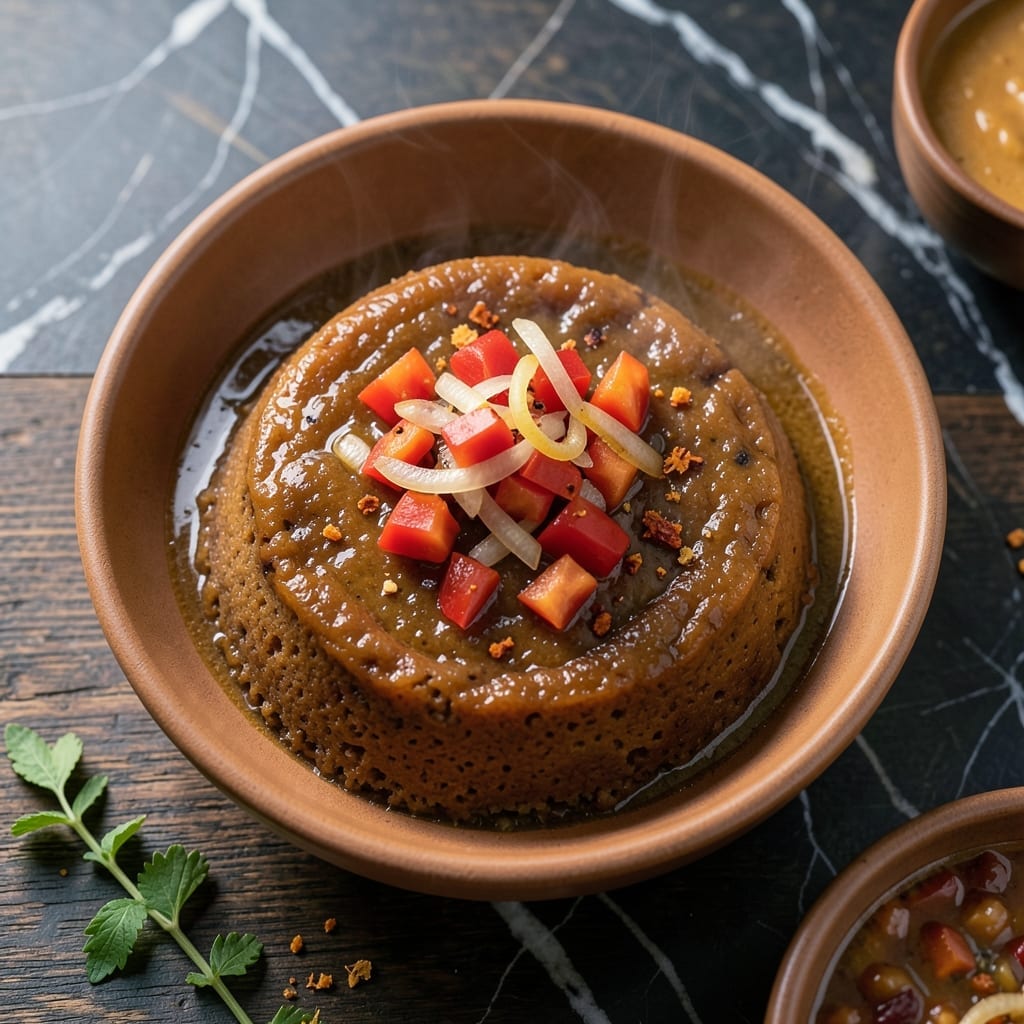
There’s a special satisfaction in creating a dish that carries cultural weight and a rich, earthy depth of flavor. This pudding transforms simple bean flour into a velvety, aromatic creation.
Steaming is the key to its signature texture—moist yet firm, with a custard-like consistency that’s both comforting and elegant. The process is straightforward but yields results that feel anything but ordinary.
What makes this version stand out is its balance: subtle sweetness, a hint of spice, and the natural richness of the beans. It’s a dish that feels both traditional and entirely approachable.
Serve warm or at room temperature, paired with a spicy tomato sauce or alongside a hearty stew for a complete meal.
Ingredients for Moin Moin Recipe with Bean Flour
Transform simple bean flour into a velvety, aromatic Nigerian steamed pudding with these carefully selected ingredients.
| Ingredient | Amount | Notes |
|---|---|---|
| Black-Eyed Pea Flour 🌾 | 2 cups | Also called bean flour |
| Red Bell Pepper 🌶️ | 1 whole | Medium, seeded and chopped |
| Onion 🧅 | 1 whole | Medium, finely chopped |
| Scotch Bonnet Pepper 🌶️ | 1 whole | Seeded for less heat |
| Vegetable Oil 🫒 | ½ cup | Neutral flavor like canola |
| Stock Cube 🧊 | 2 pieces | Vegetable or vegan chicken |
| Salt 🧂 | 1 tsp | Or to taste |
| Ground Crayfish 🦐 | 2 tbsp | Optional for umami depth |
| Fresh Cilantro 🌿 | ¼ cup | Chopped, stems removed |
| Fresh Spinach 🥬 | 1 cup | Chopped, packed |
| Baking Powder 🧁 | 1 tsp | For lighter texture |
| Ground Nutmeg 🌰 | ¼ tsp | Freshly ground preferred |
| Sugar 🍚 | 1 tbsp | Granulated or coconut |
| Water 💧 | ½ cup | As needed for batter consistency |
[recipe_ingredient_scaler]
The black-eyed pea flour is the foundation here—look for finely milled versions at African markets or online retailers like Amazon. The Scotch bonnet pepper delivers authentic heat, but habanero works in a pinch. Fresh cilantro and spinach add brightness; substitute parsley if cilantro isn’t your thing. The stock cube is key for depth, and vegetable bouillon ensures it stays vegan.
No black-eyed pea flour? Lentil or chickpea flour can substitute, though the flavor will differ slightly. Ground crayfish can be omitted, but a dash of seaweed flakes adds similar umami. If using frozen spinach, thaw and drain well to avoid excess moisture. The baking powder is optional but recommended for a fluffier texture.
Store dry ingredients in airtight containers for up to 6 months. Fresh components like peppers and cilantro keep 5-7 days refrigerated. The pudding itself stays fresh for 3 days covered in the fridge or freezes beautifully for 1 month.
Why You’ll Love This Recipe
- One-Bowl Wonder: I just dump the black-eyed pea flour, blended peppers, and onions in a bowl, mix, and pour—no fuss, no extra dishes.
- Smoky Heat Kick: The scotch bonnet brings this fiery depth that pairs perfectly with the sweet red bell pepper. Honestly, it’s the flavor combo that keeps me coming back.
- Party or Meal Prep: I steam a big batch for gatherings or portion into containers for grab-and-go lunches all week.
- Pocket-Friendly Protein: Black-eyed pea flour costs pennies and stretches further than meat. Between us, my wallet notices the difference.
Step-by-Step Instructions for Nigerian Steamed Pudding With Bean Flour
This traditional method ensures a moist, flavorful pudding with the perfect custard-like texture.
Step 1: Prepare the Vegetable Base
In a blender, combine the red bell pepper, onion, and Scotch bonnet pepper (seeded for controlled heat). Pulse until you achieve a smooth, vibrant puree with no visible chunks. This forms the aromatic foundation that gives the pudding its characteristic depth.
Transfer the puree to a large mixing bowl. The mixture should be thick but pourable—if it seems too dense, the natural moisture from the vegetables will balance it during the next steps. Ensure your workspace is clean, as the Scotch bonnet’s oils can be potent.
Step 2: Combine Dry and Wet Ingredients
To the bowl, add the 2 cups Black-Eyed Pea Flour, 1 tsp Baking Powder, 1 tsp Salt, 1 tbsp Sugar, and 0.25 tsp Ground Nutmeg. Whisk vigorously to break up any lumps in the flour and distribute the leavening agents evenly. The baking powder ensures a light, airy texture, while the nutmeg adds a subtle warmth.
Next, incorporate the 0.5 cup Vegetable Oil, 2 tbsp Ground Crayfish, 0.25 cup Fresh Cilantro, and 1 cup Fresh Spinach. Stir until the oil is fully emulsified into the batter and the greens are uniformly distributed. The oil enriches the mixture, while the crayfish and herbs lend umami and freshness.
Step 3: Adjust Consistency and Season
Gradually add the 0.5 cup Water, a little at a time, stirring continuously until the batter reaches a smooth, thick but pourable consistency—similar to pancake batter. Avoid adding all the water at once, as the flour’s absorption can vary. The batter should coat the back of a spoon but still drizzle off slowly.
Taste and adjust seasoning if needed, though the 2 pieces Stock Cube will enhance the flavor during steaming. Crush the stock cubes directly into the batter and stir until fully dissolved. This step ensures every bite is infused with savory depth.
Step 4: Steam to Perfection
Pour the batter into greased ramekins or a single large mold, filling each no more than three-quarters full to allow for expansion. Cover the ramekins tightly with foil, securing the edges to prevent water from seeping in during steaming.
Place the ramekins in a steamer basket set over boiling water. Steam for 45-60 minutes on medium heat, checking occasionally to ensure the water hasn’t evaporated. The pudding is done when a toothpick inserted into the center comes out clean and the top springs back lightly when touched.
Step 5: Rest and Serve
Remove the ramekins from the steamer and let them rest for 10 minutes before unmolding. This allows the pudding to set fully and makes it easier to release from the molds without breaking. The texture should be firm yet tender, with a glossy, slightly caramelized top.
Serve warm or at room temperature, garnished with a sprinkle of extra Fresh Cilantro if desired. The pudding’s earthy richness pairs beautifully with a side of spicy tomato stew or a simple salad.
Pro Tips For Making Moin Moin Recipe With Bean Flour
- Soak the Flour: Mix the black-eyed pea flour with warm water and let it sit for 10-15 minutes before blending—I learned this the hard way after ending up with lumpy moin moin that just wouldn’t smooth out.
- Balance the Peppers: Use 2 parts red bell pepper to 1 part scotch bonnet to keep the heat manageable while still getting that rich, vibrant color and flavor.
- Oil the Leaves: Lightly brush vegetable oil on the banana leaves or foil before pouring the batter—this prevents sticking and makes peeling off the cooked moin moin a breeze.
- Steam Slowly: Keep the heat medium-low and steam for 45-60 minutes; rushing it with high heat leads to a dense, undercooked center, and nobody wants that.
Troubleshooting This Dish
Batter Too Thick
If your batter feels dense or clumpy, gradually add 1-2 tbsp water at a time while stirring. The Black-Eyed Pea Flour can absorb moisture unevenly, so patience is key. I’ve found that letting it rest for 5 minutes often helps the flour hydrate fully. 💡
Pudding Not Cooking
Steaming too long without results? Check your water level—it should be boiling vigorously beneath the steamer basket. Also, ensure your ramekins are covered tightly with foil to trap steam. If using a large mold, it may need up to 90 minutes to cook through completely.
Dense Texture
A dense result usually means overmixing or insufficient leavening. Gently fold ingredients just until combined, and don’t skip the 1 tsp Baking Powder. For extra fluffiness, try whipping the batter briefly with a hand mixer before steaming.
Bland Flavor
If your pudding lacks depth, the 2 pieces Stock Cube might not have dissolved fully. Crush them finely before adding. A pinch of extra Salt or a dash of Ground Nutmeg can also boost flavor. I always taste the batter before steaming to adjust.
Sticking to Molds
Prevent sticking by greasing ramekins generously with Vegetable Oil or using parchment paper liners. Let the pudding rest for 10 minutes after steaming, then run a knife around the edges before unmolding. This simple step saves a lot of frustration.
Watery Batter
If your batter is too thin, add 1-2 tbsp Black-Eyed Pea Flour to thicken it. Over-blending the vegetables can release extra moisture, so pulse just until smooth. The consistency should resemble pancake batter—not runny, but pourable. 🌟
Nutrition Facts
Frequently Asked Questions
Can I use regular flour instead of bean flour?
No, regular flour won’t work as it lacks the protein and density of Black-Eyed Pea Flour. Lentil or chickpea flour can substitute but will alter the flavor slightly.
How do I know when it’s fully cooked?
A toothpick inserted in the center should come out clean. The top will spring back lightly when touched after 45-60 minutes of steaming.
Why did my pudding turn out dense?
Overmixing or skipping the 1 tsp Baking Powder can cause this. Fold ingredients gently and ensure your leavening agent is fresh.
Can I bake this instead of steaming?
Steaming is traditional for the custard-like texture, but baking at 350°F in a water bath for 45 minutes can work as a substitute.

Trained in classic French technique but raised on slow-cooked ribs and spicy rubs, she blends culinary skill with smoke and soul.
- Recipe for Boneless Pork Chops in Cast Iron Skillet: Sear and Baste to Juicy Perfection - October 3, 2026
- Recipe for Boneless Cross Rib Roast: Slow-Roasted Beef with Herb Crust - October 3, 2026
- Hamburgers in Sauce Recipe Crock Pot: Slow-Cooked Savory Delight - October 3, 2026