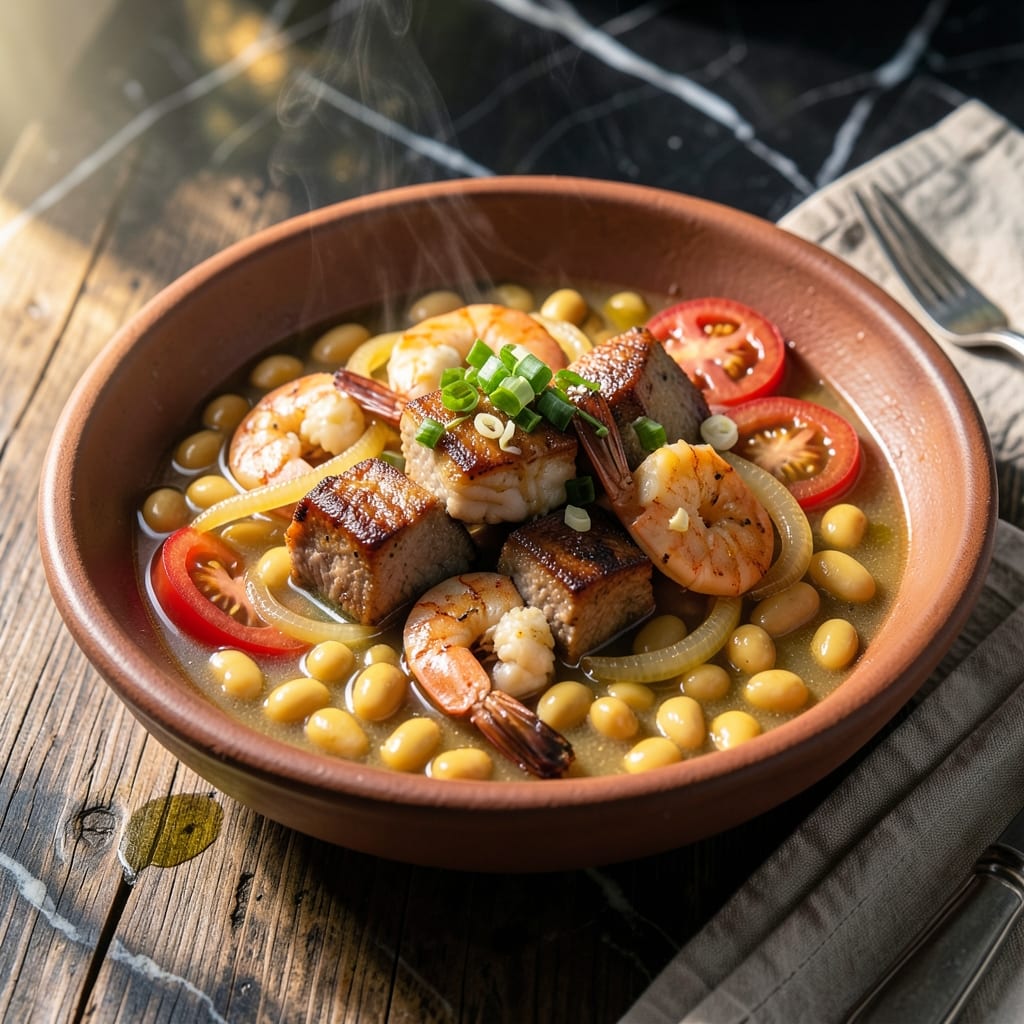
This stew brings back memories of my grandmother’s kitchen, where she cooked by intuition and love. I’ve adapted her approach into a recipe anyone can follow.
What makes this dish special is the combination of tender pork, succulent shrimp, and hearty mung beans. It’s a comforting, one-pot meal that simmers to perfection.
The result is a rich, savory stew with layers of flavor and a texture that feels like home. Every spoonful delivers warmth and satisfaction.
Perfect for weeknight dinners or feeding a crowd. Here’s how to make it.
Ingredients for Monggo Recipe with Pork and Shrimp
Pantry staples and fresh seafood come together for this comforting one-pot meal.
| Ingredient | Amount | Notes |
|---|---|---|
| Dried Mung Beans 🌱 | 1 cup | Rinsed and picked over |
| Pork Belly 🥓 | ½ lb | Cut into small cubes |
| Large Shrimp 🦐 | ½ lb | Peeled and deveined |
| Yellow Onion 🧅 | 1 whole | Medium, finely chopped |
| Garlic Cloves 🧄 | 4 cloves | Minced for depth |
| Tomato 🍅 | 1 whole | Medium, diced |
| Fish Sauce 🐟 | 2 tbsp | Filipino patis preferred |
| Spinach Leaves 🥬 | 2 cups | Fresh or frozen, chopped |
| Water 💧 | 4 cups | For cooking mung beans |
| Vegetable Oil 🫒 | 2 tbsp | For sautéing aromatics |
| Bay Leaf 🍃 | 1 piece | Dried, for aroma |
| Salt 🧂 | 1 tsp | Adjust to taste |
| Ground Black Pepper 🌶️ | ½ tsp | Freshly ground preferred |
[recipe_ingredient_scaler]
The pork belly is non-negotiable here—it renders down to create that rich, unctuous base. Filipino markets often carry pre-cut cubes, but any grocery store with a good butcher counter will work. For the shrimp, wild-caught if your budget allows (look for bright, translucent flesh). The mung beans should be dry, not canned—Goya or store-brand both work fine.
No pork belly? Pork shoulder cut into small pieces is a solid swap. Shrimp can be swapped for mussels or clams if you’re feeling fancy. Fish sauce is key for that authentic flavor—Red Boat or Three Crabs are great brands. Out of spinach? Kale or water spinach (kangkong) both hold up well in the stew.
This stew tastes even better the next day. Store in the fridge for up to 3 days or freeze for 3 months. Reheat gently to keep the shrimp tender (overcooking turns them rubbery).
Why You’ll Love This Recipe
- One Pot Wonder: I just dump the mung beans, pork belly, and shrimp in with the onions and garlic, then let it simmer—minimal cleanup, maximum flavor.
- Umami Bomb: The pork belly renders into the beans while the shrimp soak up that garlicky broth. Honestly, it’s the kind of rich, savory depth that makes me go back for thirds.
- Feeds the Crew: Between us, this stretches easily for potlucks or meal prep—tastes even better the next day.
- Budget Stretcher: Pork belly and shrimp feel fancy, but dried mung beans keep it affordable. I’ll be real: it’s my go-to when I want to impress without breaking the bank.
Step-by-Step Instructions for Filipino-Style Monggo With Pork and Shrimp
This method builds layers of flavor while keeping the process simple and approachable.
Step 1: Cook the Dried Mung Beans Until Tender
Rinse the 1 cup Dried Mung Beans thoroughly under cold water to remove any debris. Place them in a pot with the 4 cups Water and the 1 piece Bay Leaf. Bring to a boil over medium-high heat, then reduce to a simmer.
Cook uncovered for 30-40 minutes, stirring occasionally, until the beans are soft but still hold their shape. You’ll notice the water turning slightly cloudy and the beans expanding. If the water level drops too low, add a splash more to keep the beans submerged.
Once tender, season with 1 tsp Salt and 0.5 tsp Ground Black Pepper. This early seasoning ensures the beans absorb the flavors as they finish cooking.
Step 2: Sauté the Aromatics and Pork Belly
While the beans cook, heat the 2 tbsp Vegetable Oil in a large pot or deep skillet over medium heat. Add the finely chopped 1 whole Yellow Onion and sauté for 2-3 minutes until translucent and fragrant.
Stir in the minced 4 cloves Garlic Cloves and cook for 30 seconds until just golden—don’t let it burn. Add the cubed 0.5 lb Pork Belly and cook for 5-6 minutes, stirring occasionally, until the edges start to brown.
The pork should render some fat, which adds richness. Once browned, stir in the diced 1 whole Tomato and cook for another 2 minutes until it softens.
Step 3: Combine Beans, Pork, and Shrimp
Once the mung beans are tender, drain them (reserving the cooking liquid) and add them to the pot with the pork and aromatics. Pour in 2 cups of the reserved bean liquid to create a stew-like consistency.
Add the peeled and deveined 0.5 lb Large Shrimp and gently stir. Cook for 4-5 minutes until the shrimp turn opaque and pink. Avoid over-stirring to keep the shrimp intact.
Season with the 2 tbsp Fish Sauce, adjusting to taste. The fish sauce should enhance the savory depth without overpowering the dish. Simmer for another 2 minutes to meld the flavors.
Step 4: Finish with Spinach and Serve
Stir in the chopped 2 cups Spinach Leaves and cook just until wilted, about 1-2 minutes. The spinach should retain some texture and vibrant color, not turn mushy.
Taste and adjust seasoning if needed. The stew should be hearty but not too thick—add a little more reserved bean liquid if it’s too dry. Remove the 1 piece Bay Leaf before serving.
Ladle into bowls while hot. The beans should be creamy, the pork tender, and the shrimp perfectly cooked, all in a flavorful broth with wilted spinach.
Pro Tips For Making Monggo Recipe With Pork And Shrimp
- Soak the Beans: I learned this the hard way—dried mung beans need at least 2 hours in warm water to soften properly, or they’ll stay tough no matter how long you simmer them.
- Render the Pork First: Start with cold pork belly in the pot and let the fat slowly render out on medium-low heat before adding anything else—this builds a rich base for the dish.
- Shrimp Last: Add the shrimp only in the last 5 minutes of cooking to keep them from turning rubbery; they cook fast and overdoing it ruins the texture.
- Smash the Garlic: Instead of mincing, lightly smash the garlic cloves before sautéing to infuse the oil with flavor without burning the bits, which can turn bitter.
Serving Suggestions for This Recipe
Traditional Pairings
Serve this stew with steamed white rice—the fluffy grains soak up the rich, savory broth beautifully. I prefer jasmine rice for its mild fragrance. A side of atcharang papaya (pickled green papaya) adds a refreshing, tangy contrast that cuts through the richness. 💪
Bread Options
For a heartier meal, try serving with pandesal (Filipino bread rolls) or crusty baguette slices. The bread is perfect for mopping up every last bit of the flavorful stew. Toast the bread lightly for extra texture.
Fresh Garnishes
Brighten up each bowl with fresh garnishes like sliced green onions or cilantro leaves. A squeeze of calamansi or lime just before eating adds a zesty kick that elevates the dish.
Simple Salad
A light cucumber and tomato salad with a splash of vinegar balances the stew’s heartiness. Toss 1 cup diced cucumber and 1 cup diced tomato with 1 tbsp vinegar, salt, and pepper.
Beverage Pairings
Pair this with iced tea or sago’t gulaman (a Filipino pearl drink) for a traditional touch. For something stronger, a crisp lager beer complements the savory flavors perfectly. 🍺
Leftovers Tip
The stew thickens as it sits, so stir in a splash of water or broth when reheating. Serve leftovers over rice or noodles for a quick, satisfying meal the next day.
Nutrition Facts
Frequently Asked Questions
Can I use canned mung beans instead of dried?
Yes, but the texture will differ. Canned beans are softer and may turn mushy. Drain, rinse, and add them at the end with the shrimp to prevent overcooking.
Why does the pork need to brown first?
Browning creates a flavorful fond (browned bits) in the pot. This adds depth to the stew’s base and enhances the overall savory taste.
What if my shrimp overcooks and turns rubbery?
Add shrimp last and cook just until opaque, about 4-5 minutes. If they overcook, stir in a splash of broth to soften slightly before serving.
Can I make this dish ahead of time?
The flavors deepen overnight. Store in the fridge for up to 3 days or freeze for 3 months. Reheat gently to preserve texture.

Trained in classic French technique but raised on slow-cooked ribs and spicy rubs, she blends culinary skill with smoke and soul.
- Recipe for Boneless Pork Chops in Cast Iron Skillet: Sear and Baste to Juicy Perfection - October 3, 2026
- Recipe for Boneless Cross Rib Roast: Slow-Roasted Beef with Herb Crust - October 3, 2026
- Hamburgers in Sauce Recipe Crock Pot: Slow-Cooked Savory Delight - October 3, 2026