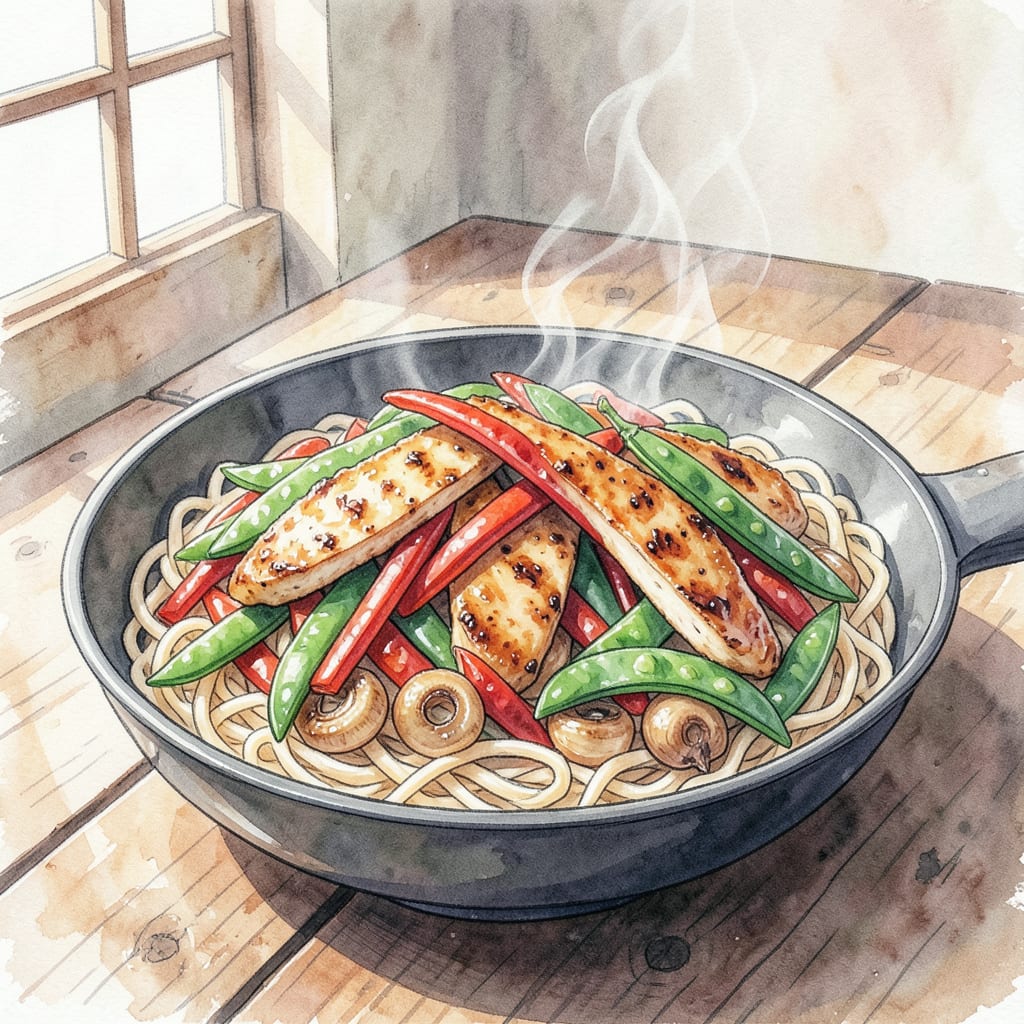
I’ve perfected a Mongolian grill recipe that brings the excitement of stir-fried noodles and vegetables to your dinner table in minutes. This dish is a staple of Mongolian barbecue, adapted for home cooking with simple ingredients and straightforward techniques.
With this recipe, you’ll achieve restaurant-quality results using your favorite protein and vegetables, all cooked to perfection in under 30 minutes. Let’s get started with this easy and delicious meal solution that’s perfect for busy weeknights.
Ingredients for Mongolian Grill
Simple ingredients for a restaurant-quality Mongolian grill experience at home in minutes.
| Ingredient | Amount | Notes |
|---|---|---|
| Rice Noodles 🍜 | 8 oz | Dried, thin rice stick noodles |
| Vegetable Oil 🫒 | 2 tbsp | For stir-frying |
| Chicken Breast 🍗 | 1 lb | Sliced into thin strips |
| Bell Peppers 🥒 | 2 whole | Any color, sliced |
| Onion 🧅 | 1 whole | Thinly sliced |
| Snow Peas 🥦 | 1 cup | Trimmed, sliced |
| Mushrooms 🍄 | 1 cup | Sliced, any variety |
| Garlic Cloves 🧄 | 3 cloves | Minced |
| Ginger 🌿 | 1 tbsp | Fresh, grated |
| Soy Sauce 💧 | ¼ cup | Low-sodium preferred |
| Oyster Sauce 🍜 | 2 tbsp | Optional, for depth |
| Sesame Oil 🫒 | 1 tsp | For finishing |
| Green Onions 🌿 | ¼ cup | Chopped, for garnish |
[recipe_ingredient_scaler]
For the best results, use high-quality rice noodles that cook quickly. Most grocery stores carry them in the international section. For protein, chicken breast is a popular choice, but you can swap it with beef or tofu. Look for fresh vegetables at your local market—whatever’s in season works great.
No oyster sauce? Hoisin sauce is a great substitute. For a gluten-free version, use tamari instead of soy sauce. Feel free to customize the vegetables based on what’s available. Baby corn and water chestnuts are great additions too. If you like spice, add sriracha or red pepper flakes to taste.
This dish reheats well, so it’s perfect for meal prep. Store leftovers in an airtight container in the fridge for up to 3 days. When reheating, add a splash of water or broth to revive the noodles. Freeze individual portions for up to 2 months for a quick meal later.
Step-by-Step Instructions for Stir-Fried Noodles and Vegetables
Follow these simple steps to create a delicious Mongolian-style stir-fry in minutes.
Step 1: Prepare the Rice Noodles and Protein
Start by cooking the 8 oz Rice Noodles according to package instructions – typically soaking them in hot water for 3-5 minutes until they become soft and pliable. Drain and set aside. While the noodles are cooking, slice the 1 lb Chicken Breast into thin strips and season lightly with salt. The key here is to make sure the chicken pieces are relatively uniform so they cook evenly.
Once your chicken is prepared, heat 1 tablespoon of the 2 tbsp Vegetable Oil in a large skillet or wok over high heat. Add the chicken and cook for 5-7 minutes until it’s fully cooked and slightly browned on the edges. Remove the chicken from the pan and set it aside with the noodles.
Step 2: Sauté the Aromatics and Vegetables
In the same pan, add the remaining 1 tablespoon of Vegetable Oil. Add the 3 cloves minced Garlic Cloves and 1 tbsp grated Ginger, stirring constantly for 30 seconds until fragrant. Then add the 1 whole sliced Onion and 2 whole sliced Bell Peppers, cooking for 3-4 minutes until they start to soften.
Next, add the 1 cup sliced Mushrooms and 1 cup sliced Snow Peas to the pan. Continue cooking for another 3-4 minutes, stirring frequently, until all the vegetables are tender-crisp and lightly browned. The vegetables should still have some crunch – you don’t want them to be mushy.
Step 3: Combine Everything and Season
Return the cooked chicken and noodles to the pan with the vegetables. Pour in the 0.25 cup Soy Sauce and 2 tbsp Oyster Sauce (if using), stirring everything together to coat. Cook for 1-2 minutes until the sauce is bubbly and slightly thickened. Taste and adjust the seasoning as needed.
Finish the dish by drizzling with 1 tsp Sesame Oil and sprinkling 0.25 cup chopped Green Onions on top. Stir everything one last time to combine. Your Mongolian-style stir-fry is now ready to serve – enjoy!
Regional Styles of This Recipe
Traditional Mongolian Techniques
Traditional Mongolian barbecue involves cooking ingredients on a large, round griddle called a “teppan” or “griddle“. While we can’t replicate the exact equipment at home, we can achieve similar flavors using a wok or large skillet over high heat. The key is cooking quickly while constantly stirring. 🔥
Beijing-Style Variations
In Beijing, you’ll often find Mongolian grill dishes featuring lamb instead of chicken, with a sweeter sauce profile. To create this variation, substitute 1 lb lamb strips for the chicken and add 1 tbsp hoisin sauce to the soy sauce mixture. This gives the dish a richer, more complex flavor profile that’s popular in northern Chinese cuisine.
Szechuan-Inspired Heat
For those who like spice, Szechuan peppercorns and chili oil can transform this dish into a numbing hot experience. Add 1 tsp Szechuan peppercorns (toasted and ground) to your marinade and drizzle with chili oil before serving. This combination creates a unique mala flavor that Szechuan cuisine is famous for.
Modern Fusion Twists
Modern variations often incorporate non-traditional ingredients like teriyaki sauce or gochujang to create fusion flavors. Try adding 2 tbsp teriyaki sauce to your stir-fry for a sweeter, more caramelized flavor. For a Korean-Mongolian fusion, mix in 1 tbsp gochujang with the soy sauce for a spicy kick.
Regional Vegetable Choices
Different regions feature various vegetables based on local availability. In coastal regions, you might find fresh lotus root or bamboo shoots added to the mix. For a more authentic touch, try incorporating 1 cup lotus root slices or canned bamboo shoots into your stir-fry during the vegetable cooking stage.
Local Adaptations
When cooking Mongolian grill at home,
Nutrition Facts

Trained in classic French technique but raised on slow-cooked ribs and spicy rubs, she blends culinary skill with smoke and soul.
- Recipe for Boneless Pork Chops in Cast Iron Skillet: Sear and Baste to Juicy Perfection - October 3, 2026
- Recipe for Boneless Cross Rib Roast: Slow-Roasted Beef with Herb Crust - October 3, 2026
- Hamburgers in Sauce Recipe Crock Pot: Slow-Cooked Savory Delight - October 3, 2026