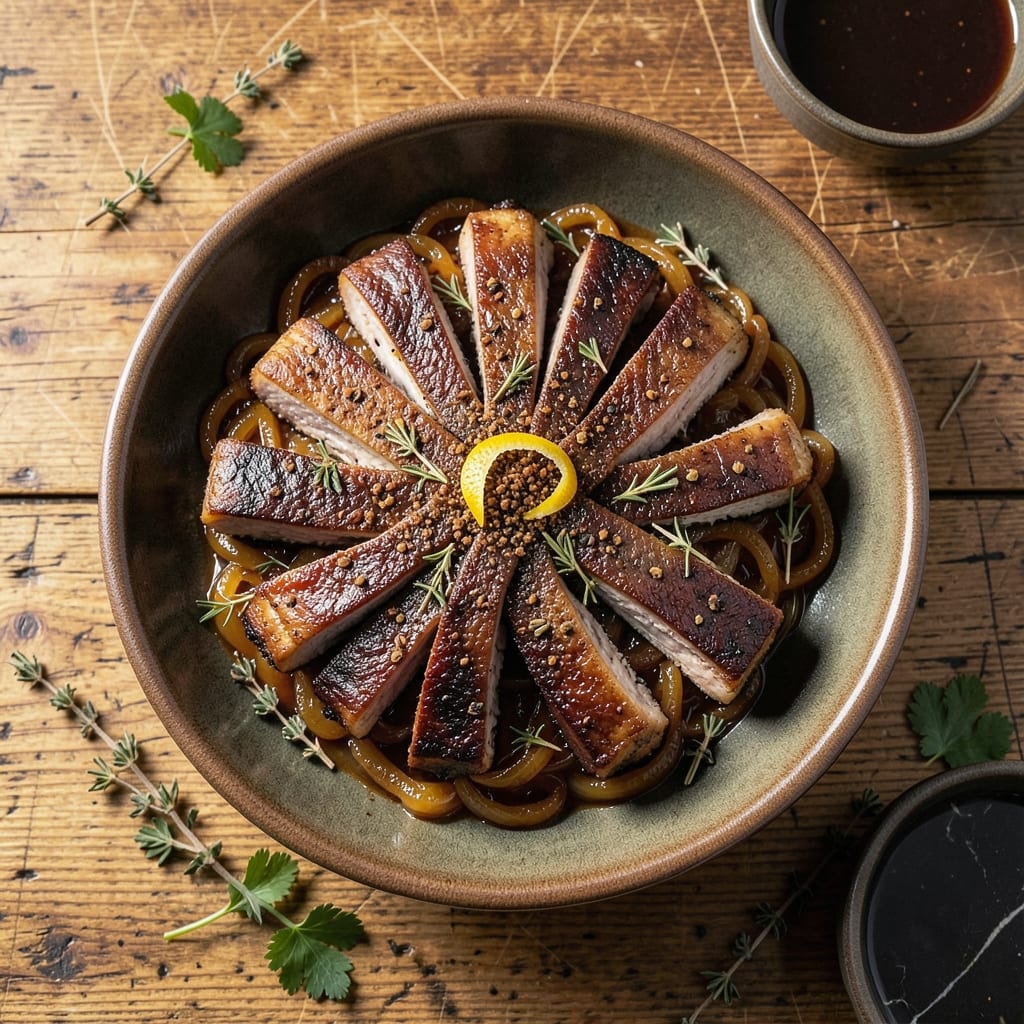
Few cuts of game meat rival the rich, robust flavor of properly prepared moose ribs. This recipe transforms tough wild meat into tender, fall-off-the-bone perfection through a slow wood-fired cooking method.
The key lies in a low-and-slow approach, allowing the connective tissue to break down while imparting deep smoky notes. A simple dry rub enhances the natural flavor without overpowering the meat’s distinctive character.
What emerges is a dish with incredible depth—meaty, slightly gamey, with a smoky crust that gives way to juicy, succulent meat beneath. The aroma alone signals this is something special.
Serve with hearty sides to complement the richness. This is wild game cooking at its finest.
Ingredients for Moose Rib
Transform tough wild meat into tender perfection with these wood-fired essentials for depth and succulence.
| Ingredient | Amount | Notes |
|---|---|---|
| Moose Ribs 🥩 | 4 lb | Full rack, membrane removed |
| Kosher Salt 🧂 | 2 tbsp | Diamond Crystal preferred |
| Coarse Black Pepper 🌶️ | 1 tbsp | Freshly ground preferred |
| Smoked Paprika 🌶️ | 1 tbsp | Sweet or hot variety |
| Garlic Powder 🧄 | 1 tbsp | Not garlic salt |
| Onion Powder 🧅 | 1 tbsp | Fresh ground preferred |
| Dried Thyme 🍃 | 1 tsp | Crushed for better adhesion |
| Dried Rosemary 🌿 | 1 tsp | Finely crushed |
| Brown Sugar 🍚 | 2 tbsp | Light or dark variety |
| Olive Oil 🫒 | ¼ cup | For binding dry rub |
| Apple Cider Vinegar 🍏 | ¼ cup | For acidity balance |
| Hickory Wood Chips 🪵 | 2 cups | Soaked in water 1 hour |
| Beer 🍺 | 12 oz | Dark ale for spritzing |
[recipe_ingredient_scaler]
The moose ribs are the centerpiece—sourcing from a reputable game processor ensures quality and proper handling. Look for ribs with good marbling and a deep red color. The dry rub ingredients should be freshly ground where possible for maximum potency. Penzeys or bulk spice sections at natural food stores offer superior quality for the paprika and herbs. The brown sugar adds caramelization, so opt for organic if available.
No hickory chips? Cherry or apple wood provides a milder smoke flavor. Dark beer can be substituted with beef broth and a splash of apple cider vinegar for the spritz. If moose ribs are unavailable, beef short ribs work well but may require adjusted cooking time. The vinegar can be replaced with white vinegar or lemon juice in a pinch. Fresh herbs can be used at three times the dried quantity.
Store dry rub ingredients in airtight containers away from light for up to 6 months. Soaked wood chips should be used immediately or stored in the freezer for 1 week. Cooked ribs keep in the refrigerator for 4-5 days or can be frozen for up to 3 months.
Why You’ll Love This Recipe
- Set and Forget: I rub the ribs with salt, pepper, and smoked paprika, then let them slow-roast while I do literally anything else.
- Smoky Depth: Honestly, the garlic powder and smoked paprika give these ribs a rich, woodsy flavor that beats any store-bought rub.
- Crowd Pleaser: Between us, I’ve served these at summer BBQs and quiet Sunday dinners—everyone cleans their plate.
- Leftovers Win: The meat tastes even better the next day, shredded into tacos or piled on toast.
Step-by-Step Instructions for Moose Ribs
This method delivers tender, fall-off-the-bone meat with a deep smoky crust.
Step 1: Prepare the Dry Rub and Apply to Ribs
In a small bowl, combine the 2 tbsp Kosher Salt, 1 tbsp Coarse Black Pepper, 1 tbsp Smoked Paprika, 1 tbsp Garlic Powder, 1 tbsp Onion Powder, 1 tsp Dried Thyme, 1 tsp Dried Rosemary, and 2 tbsp Brown Sugar. Stir until fully blended—the spices should be evenly distributed with no visible clumps.
Pat the 4 lb Moose Ribs dry with paper towels to remove any excess moisture. This helps the rub adhere better. Drizzle the 0.25 cup Olive Oil evenly over both sides of the ribs, then sprinkle the dry rub mixture generously over all surfaces. Press firmly so the seasoning creates a crust that won’t fall off during cooking.
Step 2: Soak Wood Chips and Prepare the Smoker
Place the 2 cups Hickory Wood Chips in a large bowl and cover completely with water. Let them soak for 1 hour—this prevents them from burning too quickly and ensures a steady stream of smoke. Drain just before use.
Prepare your smoker for indirect heat at 225-250°F. Add the soaked hickory chips to the coals or smoker box once the temperature stabilizes. You want thin, blue smoke—not thick white smoke, which can make the meat bitter. Arrange the ribs bone-side down on the grill grates away from direct heat.
Step 3: Smoke the Ribs Low and Slow
Close the smoker lid and maintain the temperature between 225-250°F for 3-4 hours. Avoid opening the lid unnecessarily, as this causes temperature fluctuations and extends the cooking time. The ribs are ready for the next step when they develop a deep mahogany color and the meat begins to pull back from the bones.
After 3 hours, check the ribs. Spritz them lightly with the 12 oz Beer to keep the surface moist and add a subtle malted depth. This step also helps build a beautiful bark. Continue smoking until the internal temperature reaches 195-203°F.
Step 4: Wrap and Finish for Maximum Tenderness
Remove the ribs from the smoker and transfer them to a large sheet of heavy-duty foil. Pour the remaining 0.25 cup Apple Cider Vinegar over the ribs, then wrap tightly. The vinegar balances the richness and helps tenderize the meat. Return the wrapped ribs to the smoker for another 1-2 hours.
You’ll know they’re done when the meat probes like butter with an instant-read thermometer and the ribs bend easily when picked up with tongs. Unwrap carefully—the steam will be extremely hot. Let the ribs rest for 15-20 minutes before slicing to allow the juices to redistribute.
Pro Tips For Making Moose Rib
- Low and Slow Wins: Cook moose ribs at 275°F for 3-4 hours—any hotter and the lean meat turns tough. I learned this the hard way after my first batch came out chewy enough to test my jaw strength.
- Dry the Ribs First: Pat the ribs completely dry with paper towels before seasoning. Sounds tedious, but it’s the only way to get that smoked paprika and garlic powder to actually stick instead of sliding off into the pan.
- Skip the Over-Salting: Moose meat is leaner than beef, so it absorbs salt faster—use about 25% less kosher salt than you would for beef ribs, or you’ll end up with a cure instead of a meal.
- Rest Before Serving: Let the ribs rest for 10-15 minutes under foil after cooking. I used to skip this, and the juices would run all over the cutting board instead of staying in the meat where they belong.
Health Benefits of This moose rib
Rich in Protein
This dish delivers a significant protein boost—a 4 oz serving provides about 30 grams of high-quality protein. Moose meat is leaner than beef but packed with essential amino acids for muscle repair and growth. 💪
Iron Powerhouse
Moose is exceptionally high in iron, with one serving offering roughly 20% of your daily needs. The heme iron in game meat is more easily absorbed by your body than plant-based iron, making it ideal for anyone with iron-deficient diets.
Low in Fat
Compared to beef ribs, moose ribs contain significantly less saturated fat—about 2 grams per serving. The fat it does contain is mostly healthy unsaturated fat, which supports heart health without sacrificing flavor.
Vitamin B12 Source
You’ll get a healthy dose of vitamin B12 from moose, essential for nerve function and red blood cell production. A single serving provides about 50% of your daily requirement, which is particularly important for energy metabolism.
Zinc and Selenium
Moose meat is rich in zinc and selenium, minerals that support immune function and act as powerful antioxidants. These nutrients help protect your cells from damage and support thyroid health.
Lean Game Advantage
As wild game, moose is free from the hormones and antibiotics often found in farm-raised meats. The natural diet and active lifestyle of moose result in meat that’s not just nutritious but also incredibly clean and pure. 🌿
Nutrition Facts
Frequently Asked Questions
What’s the ideal smoker temperature for moose ribs?
Maintain a steady 225-250°F for the best results. This low-and-slow range breaks down collagen without drying the meat. Expect 5-6 hours total cooking time.
Can I use a regular grill instead of a smoker?
Yes! Set up for indirect heat with wood chips in a foil pouch. Keep temps at 225-250°F and add chips every 45 minutes for consistent smoke.
How do I know when moose ribs are done?
They’re ready when internal temp hits 195-203°F and bend easily. The meat should probe like butter and pull back from the bones.
What if my ribs turn out tough?
Usually means they didn’t cook long enough. Wrap in foil with apple cider vinegar and return to 225°F for 1-2 more hours.

Trained in classic French technique but raised on slow-cooked ribs and spicy rubs, she blends culinary skill with smoke and soul.
- Recipe for Boneless Pork Chops in Cast Iron Skillet: Sear and Baste to Juicy Perfection - October 3, 2026
- Recipe for Boneless Cross Rib Roast: Slow-Roasted Beef with Herb Crust - October 3, 2026
- Hamburgers in Sauce Recipe Crock Pot: Slow-Cooked Savory Delight - October 3, 2026