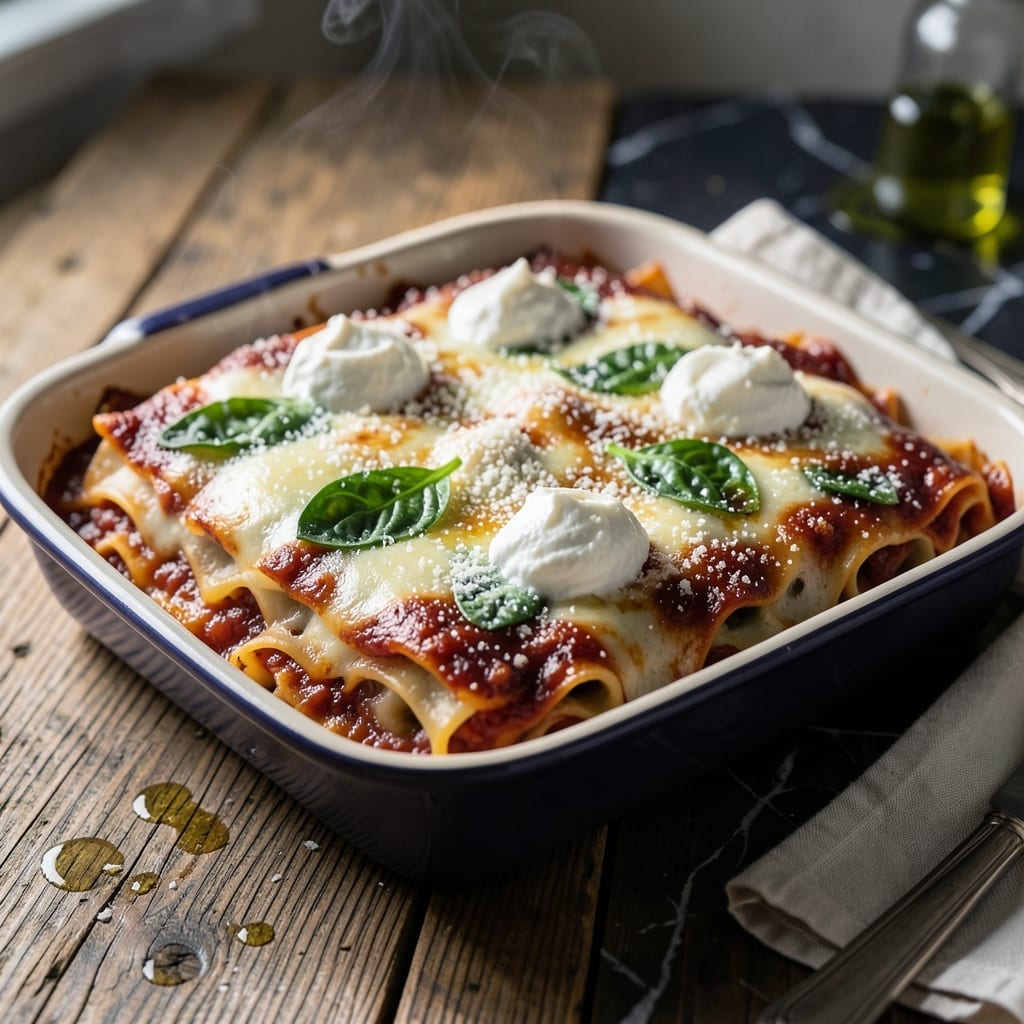
This vegetarian lasagna stacks layers of classic flavors that have stood the test of time. Spinach, ricotta, and marinara combine for a hearty, meat-free main course.
I perfected this method over years, ensuring each bite delivers the comfort of traditional lasagna with fresh, simple ingredients. The result is always satisfying.
Ingredients for Moosewood Lasagna
Classic vegetarian layers require quality cheeses, fresh greens, and robust herbs for authentic flavor.
| Ingredient | Amount | Notes |
|---|---|---|
| Lasagna Noodles 🍝 | 12 sheets | Oven-ready or no-boil preferred |
| Whole-Milk Ricotta Cheese 🧀 | 2 cups | Full-fat for creaminess |
| Fresh Spinach 🥬 | 10 oz | Baby spinach preferred, stems removed |
| Marinara Sauce 🍅 | 4 cups | Homemade or high-quality jarred |
| Low-Moisture Mozzarella Cheese 🧀 | 2 cups | Shredded from block |
| Parmesan Cheese 🧀 | ¾ cup | Freshly grated from wedge |
| Large Egg 🥚 | 1 whole | For ricotta mixture binding |
| Garlic Cloves 🧄 | 4 cloves | Minced finely for depth |
| Dried Oregano 🌿 | 1 tsp | Mediterranean variety preferred |
| Dried Basil 🍃 | 1 tsp | Crushed between fingers |
| Kosher Salt 🧂 | 1 ½ tsp | Diamond Crystal brand recommended |
| Freshly Ground Black Pepper 🌶️ | ½ tsp | Coarse grind for texture |
| Olive Oil 🫒 | 2 tbsp | Extra-virgin for richness |
| Onion 🧅 | 1 whole | Yellow onion, finely diced |
[recipe_ingredient_scaler]
The ricotta and mozzarella are non-negotiable for texture. Whole Foods 365 or BelGioioso brands deliver consistent quality, especially for whole-milk ricotta. For spinach, organic baby spinach from Trader Joe’s avoids grit and wilts perfectly. Lasagna noodles should be the no-boil variety—Barilla or De Cecco hold up best to layering without turning mushy. Always check the expiration on cheese; freshness impacts melt and flavor significantly.
No ricotta? Cottage cheese blended smooth works in a pinch, though texture differs slightly. Spinach can be swapped for Swiss chard or kale (blanched first to soften). Dried herbs can replace fresh at one-third the amount, but fresh basil torn over the top before serving adds brightness. For marinara, Rao’s or Victoria jarred sauces provide depth without added sugars or preservatives.
Assemble lasagna in an airtight container before baking for 1 day refrigerated, or freeze unbaked for 3 months. Baked lasagna keeps 4-5 days in the fridge. Reheat individual portions in the microwave (covered) for 2-3 minutes, or the whole dish in a 350°F oven until bubbly.
Why You’ll Love This Recipe
- No-Boil Noodles: I just layer the dry lasagna sheets with sauce and ricotta—no pre-cooking, no fuss.
- Melted Perfection: That combo of creamy whole-milk ricotta and stretchy mozzarella with spinach tucked in? Ridiculously good.
- Feeds a Hungry Table: It’s my go-to for potlucks or Sunday supper, filling and satisfying every time.
- Leftovers for Days: Honestly, it tastes even better the next day, and it reheats like a dream.
Step-by-Step Instructions for Classic Vegetarian Lasagna
This method ensures perfectly layered lasagna with rich flavors in every bite.
Step 1: Prepare the Spinach and Ricotta Filling
Heat the 2 tbsp Olive Oil in a large skillet over medium heat. Add the 1 whole Onion and cook until translucent, about 5 minutes. Add the 4 cloves Garlic Cloves and cook for 1 minute until fragrant.
Stir in the 10 oz Fresh Spinach and cook until wilted, about 3 minutes. Remove from heat and let cool slightly. In a bowl, combine the 2 cups Whole-Milk Ricotta Cheese, 1 whole Large Egg, 0.75 cup Parmesan Cheese, 1 tsp Dried Oregano, 1 tsp Dried Basil, 1.5 tsp Kosher Salt, and 0.5 tsp Freshly Ground Black Pepper. Stir in the spinach mixture until fully incorporated.
Step 2: Assemble the Lasagna Layers
Spread 1 cup of the 4 cups Marinara Sauce on the bottom of a 9×13-inch baking dish. Arrange 4 sheets Lasagna Noodles over the sauce, overlapping slightly if needed. Spread half of the ricotta-spinach mixture evenly over the noodles.
Sprinkle ⅔ cup of the 2 cups Low-Moisture Mozzarella Cheese over the ricotta layer. Repeat the layers with another 1 cup Marinara Sauce, remaining 4 sheets Lasagna Noodles, remaining ricotta-spinach mixture, and another ⅔ cup Low-Moisture Mozzarella Cheese.
Step 3: Add Final Sauce and Cheese Topping
Pour the remaining 2 cups Marinara Sauce over the top, spreading it evenly. Sprinkle the remaining ⅔ cup Low-Moisture Mozzarella Cheese and any remaining Parmesan Cheese over the sauce. Cover the dish with foil, ensuring it doesn’t touch the cheese.
This final layer ensures a golden, bubbly topping that ties all the flavors together beautifully.
Step 4: Bake to Perfection
Preheat the oven to 375°F. Bake the covered lasagna for 25 minutes. Remove the foil and bake for an additional 20-25 minutes until the cheese is golden brown and bubbly, and the edges are slightly crisp.
Let the lasagna rest for 10-15 minutes before slicing. This resting period allows the layers to set, making it easier to serve neat, well-defined portions. The internal temperature should reach 165°F for optimal texture and flavor melding.
Pro Tips For Making Moosewood Lasagna
- Precook the Noodles: I learned this the hard way—dry lasagna noodles won’t soften enough just from the sauce and ricotta moisture, so boil them for 2 minutes less than package instructions before layering.
- Drain the Spinach Well: After blanching fresh spinach, squeeze out every last drop of water in a clean towel—sounds tedious, but it prevents a soggy, watery lasagna.
- Skip the No-Boil Shortcut: Resist the urge to use no-boil noodles here; with the spinach and ricotta layers, they often end up undercooked or gummy in the middle.
- Rest Before Slicing: Give it a solid 15 minutes out of the oven before cutting—this lets the layers set, so you get clean squares instead of a runny mess.
Storing and Reheating This moosewood lasagna
Refrigerator Storage
Let your lasagna cool for about 2 hours before transferring to an airtight container. I use glass baking dishes with tight lids. Store in the fridge at 40°F or below for up to 4-5 days. Honestly, it tastes even better the next day. ❄️
Freezer Storage
For longer storage, freeze lasagna either baked or unbaked. Wrap tightly in plastic wrap and aluminum foil, or use heavy-duty freezer bags. Unbaked lasagna keeps for 3 months, while baked lasts 2 months. Label with the date to track freshness.
Oven Reheating
Preheat oven to 350°F. Cover lasagna with foil and bake for 20-30 minutes until heated through. For extra crispiness, remove the foil for the last 5-10 minutes. I always check that the internal temperature reaches 165°F before serving. 🔥
Microwave Reheating
For quick meals, place a single portion on a microwave-safe dish, cover with a damp paper towel, and heat on medium power for 2-3 minutes. Stir halfway through if possible. This method keeps the cheese from drying out.
Thawing Tips
Thaw frozen lasagna overnight in the fridge for best results. If you’re in a hurry, use the microwave’s defrost setting, but watch it carefully to avoid partial cooking. I’ve found that slow thawing preserves texture better.
Make-Ahead Tip
Assemble lasagna a day ahead and refrigerate before baking. This lets the flavors meld beautifully. Just add 5-10 minutes to the baking time since it’ll start cold. It’s my secret for stress-free dinner parties.
Nutrition Facts
Frequently Asked Questions
Can I use no-boil noodles for this?
The recipe works perfectly with no-boil noodles. Just add 5 minutes to the covered baking time to ensure they soften completely. They absorb moisture from the sauce beautifully.
What can I substitute for spinach?
Try Swiss chard or kale for a heartier texture. Blanch them first to soften, then drain well to prevent a watery lasagna. Frozen spinach works too—thaw and squeeze out all moisture.
Why does my lasagna turn out watery?
This usually happens from excess moisture in the filling. Always drain spinach thoroughly and use full-fat ricotta. Letting it rest before slicing also helps the layers set properly.
Can I freeze it before baking?
Yes! Assemble completely, wrap tightly in plastic wrap and foil, and freeze for up to 3 months. Thaw overnight in the fridge before baking, adding 10-15 minutes to the time.

Trained in classic French technique but raised on slow-cooked ribs and spicy rubs, she blends culinary skill with smoke and soul.
- Recipe for Boneless Pork Chops in Cast Iron Skillet: Sear and Baste to Juicy Perfection - October 3, 2026
- Recipe for Boneless Cross Rib Roast: Slow-Roasted Beef with Herb Crust - October 3, 2026
- Hamburgers in Sauce Recipe Crock Pot: Slow-Cooked Savory Delight - October 3, 2026