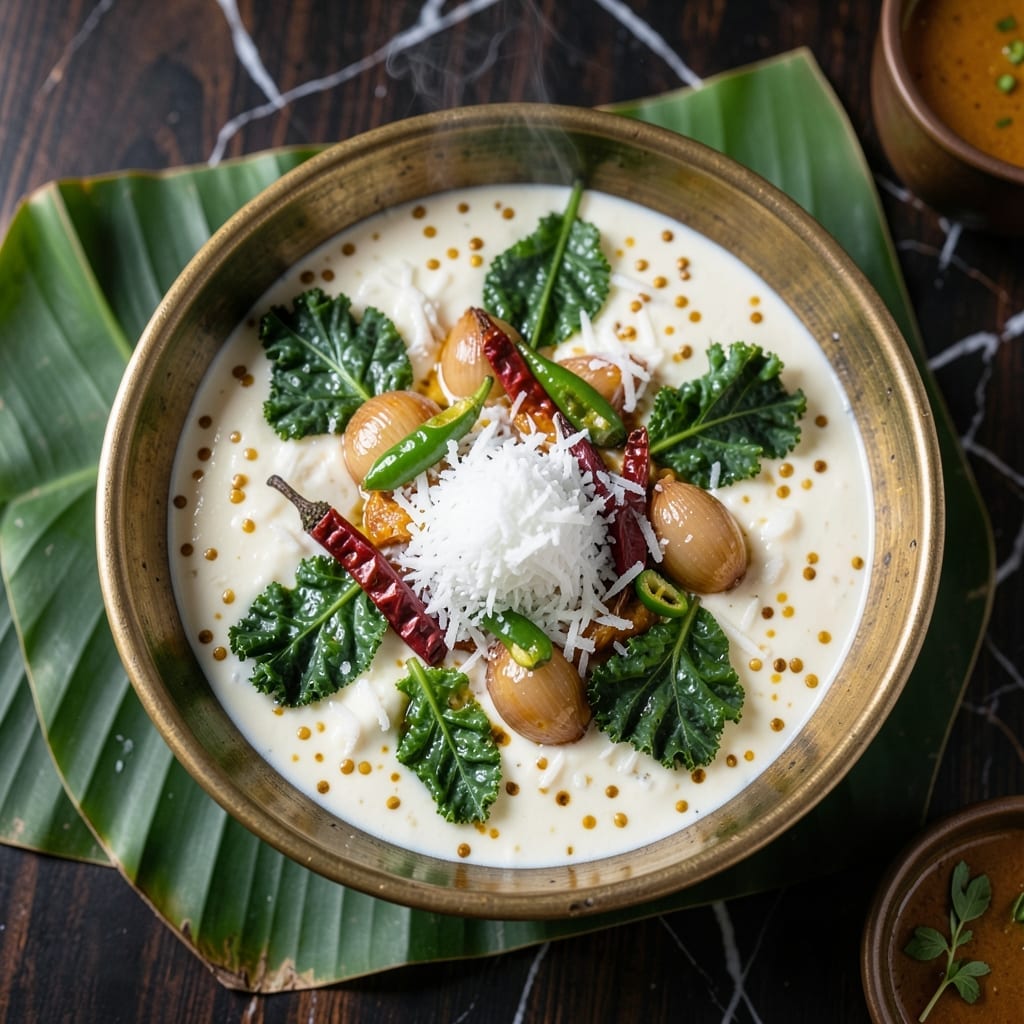
This traditional Kerala dish brings the authentic flavors of South India to your kitchen. Moru curry, a tangy yogurt-based stew, gets its richness from fresh coconut and a blend of spices that have been perfected over generations.
I’ve prepared this recipe countless times, and the balance of sour yogurt with creamy coconut is what makes it unforgettable. The tempering of mustard seeds, curry leaves, and dried red chilies adds layers of aroma and warmth.
What you’ll love is how the spices bloom in hot oil, releasing their essence into the dish. The result is a light yet deeply satisfying stew that pairs perfectly with steamed rice or appam.
This is comfort food at its most traditional, offering a taste of Kerala’s culinary heritage in every spoonful.
Ingredients for Moru Curry with Coconut Recipe in Malayalam
Traditional Kerala flavors come alive with coconut, yogurt, and aromatic spices.
| Ingredient | Amount | Notes |
|---|---|---|
| Plain Yogurt 🥛 | 2 cups | Whole milk, slightly sour preferred |
| Fresh Coconut 🥥 | ½ cup | Grated or finely chopped |
| Mustard Seeds 🌿 | 1 tsp | Black or yellow variety |
| Curry Leaves 🍃 | 10 pieces | Fresh for best aroma |
| Dried Red Chilies 🌶️ | 2 whole | Broken into pieces |
| Green Chilies 🌶️ | 2 whole | Slit lengthwise |
| Shallots 🧅 | ½ cup | Thinly sliced |
| Ginger 🌿 | 1 tbsp | Fresh, grated |
| Turmeric Powder 🌶️ | ½ tsp | For color and warmth |
| Fenugreek Seeds 🌿 | ¼ tsp | Lightly crushed |
| Coconut Oil 🫒 | 2 tbsp | For tempering |
| Water 💧 | 1 cup | For adjusting consistency |
| Salt 🧂 | 1 tsp | Adjust to taste |
| Coconut Milk 🥥 | ½ cup | Optional for extra creaminess |
[recipe_ingredient_scaler]
The yogurt is key here—whole milk with a slight tang gives the best texture and flavor. Fresh coconut is ideal, but frozen grated coconut (thawed) works in a pinch. Mustard seeds and curry leaves are non-negotiable for that authentic Kerala taste. I find mine at Indian grocery stores like Patel Brothers or local Asian markets. Look for bright green curry leaves and plump mustard seeds—they should smell fresh and aromatic.
No fresh coconut? Unsweetened desiccated coconut (soaked in warm water) can substitute, though the texture won’t be quite the same. Out of curry leaves? Dried curry leaves work at half the amount. Green chilies can be swapped for serrano peppers if that’s what you’ve got. The coconut oil brings authenticity, but any neutral oil will do. For extra richness, coconut milk takes it up a notch.
This curry tastes even better the next day as the flavors meld. Stores well in the fridge for 3-4 days. Reheat gently to avoid curdling the yogurt. Freezing isn’t recommended—the texture changes. Serve with steamed rice or appam for the full experience.
Why You’ll Love This Recipe
- Minimal Effort: I just temper mustard seeds, curry leaves, and chilies, then mix in yogurt and coconut—no complicated steps.
- Creamy Tangy Magic: The fresh coconut mellows the yogurt’s tartness while the spices add a warm, aromatic kick.
- Summertime Staple: It’s light yet satisfying, perfect for hot afternoons or paired with rice and a side of pappadam.
- Budget Keeper: A handful of pantry staples and fresh coconut stretch into a meal that feeds the whole family twice over.
Step-by-Step Instructions for Moru Curry With Coconut
Here’s the traditional method to make this comforting Kerala yogurt stew with perfect balance every time.
Step 1: Temper the Spices in Coconut Oil
Heat the 2 tablespoons Coconut Oil in a medium pot over medium heat. When the oil shimmers, add the 1 teaspoon Mustard Seeds and let them pop for about 30 seconds until they’re sizzling and fragrant.
Immediately add the 0.25 teaspoon Fenugreek Seeds, 2 whole Dried Red Chilies, 2 whole Green Chilies, and 10 pieces Curry Leaves. Stir constantly for 1-2 minutes until the chilies darken slightly and the curry leaves release their aroma. Be careful not to burn the spices—this builds the flavor foundation.
Step 2: Sauté Aromatics Until Soft
Add the 0.5 cup Shallots and cook for 3-4 minutes, stirring occasionally, until they turn translucent and just begin to brown at the edges. The shallots should be soft but not caramelized.
Stir in the 1 tablespoon Ginger and 0.5 teaspoon Turmeric Powder, cooking for another 1 minute until the raw smell of ginger disappears and the turmeric turns the oil a golden yellow. This step ensures the spices bloom fully and infuse the oil with their flavors.
Step 3: Incorporate Coconut and Yogurt
Add the 0.5 cup Fresh Coconut and cook for 2 minutes, stirring constantly, until it starts to lightly toast. This enhances its natural sweetness and adds depth to the dish.
Reduce heat to low, then gradually add the 2 cups Plain Yogurt, whisking constantly to prevent curdling. I always use a wooden spoon for this—it distributes the heat more gently. Once fully incorporated, add the 1 cup Water and 1 teaspoon Salt, stirring well to combine.
Step 4: Simmer and Finish with Coconut Milk
Bring the mixture to a gentle simmer over medium-low heat. Let it cook for 8-10 minutes, stirring occasionally, until the flavors meld together and the curry thickens slightly. You’ll know it’s ready when the surface looks glossy and the coconut pieces are tender.
Remove from heat and stir in the 0.5 cup Coconut Milk for extra creaminess. Let it sit for 5 minutes before serving to allow the flavors to fully develop. The curry should be smooth, slightly tangy, and rich with coconut—never boiled vigorously, as this can cause the yogurt to separate.
Pro Tips For Making Moru Curry With Coconut Recipe In Malayalam
- Temper the Yogurt: Always mix the yogurt with a little water or coconut milk before adding to the hot curry—otherwise it’ll split. I learned this the hard way after ruining a whole batch with lumps.
- Toast the Coconut: Lightly dry-roast the fresh coconut grated pieces for 2-3 minutes until fragrant before grinding. Sounds small, but it adds a depth that raw coconut just can’t.
- Bloom the Mustard: Let the mustard seeds sizzle in hot oil until they pop and turn grey—about 30 seconds—before adding curry leaves. Skip this and the flavor stays flat.
- Use Cold Water: If the moru curry turns too thick, thin it with cold water, not hot. Hot water can curdle the yogurt, and nobody wants that.
Regional Styles of moru curry with coconut recipe in malayalam
Kerala Tradition
In Kerala, this dish is called moru kachiyathu and is a staple in every home. The balance of sour yogurt and sweet coconut is what defines its authentic flavor. I remember my grandmother making it with freshly grated coconut from her backyard trees. 💛
Tamil Nadu Variation
Tamil Brahmin style uses more curry leaves and adds hing (asafoetida) during tempering. The yogurt is often slightly more diluted, creating a thinner consistency that pairs beautifully with steamed rice or dosa. The aroma is simply divine.
Karnataka Touch
In Karnataka, they often include cucumber pieces or bottle gourd for added texture. The tempering might feature cumin seeds alongside mustard seeds, giving it a slightly earthier profile. This version is lighter and often served chilled.
Sri Lankan Influence
Sri Lankan kiri hodhi is similar but uses coconut milk as the base instead of yogurt. They temper with pandan leaves and rampe (wild leeks), creating a unique aromatic twist. The result is creamier and slightly sweeter.
Goan Adaptation
In Goa, the Portuguese influence shows in adding vinegar for extra tang. They also use kokum instead of yogurt sometimes, which gives a distinct pink hue. The tempering includes garlic for a bolder flavor profile. 🔥
Modern Fusion
For a contemporary take, I’ve seen chefs add pineapple chunks or mango slices for a sweet-tangy contrast. Some even use Greek yogurt for extra thickness. But honestly, the traditional version is hard to beat.
Nutrition Facts
Frequently Asked Questions
Can I use store-bought grated coconut?
Yes, frozen or dried grated coconut works well. Thaw frozen coconut first and soak dried in warm water for 10 minutes to restore moisture. Fresh is ideal, but these substitutes maintain the dish’s rich texture.
Why does my moru curry curdle?
Curdling happens if yogurt is added to hot oil or boiled vigorously. Always temper the yogurt by gradually mixing it with warm (not hot) liquid. Keep heat at low-medium to prevent separation.
How do I adjust the tanginess?
For more tang, add a splash of lemon juice or use slightly sour yogurt. To reduce acidity, balance with a pinch of sugar or extra coconut milk.
Can I make this ahead of time?
The flavors deepen after 12-24 hours in the fridge. Store in an airtight container and reheat gently to avoid curdling. Avoid freezing as it alters the texture.

Trained in classic French technique but raised on slow-cooked ribs and spicy rubs, she blends culinary skill with smoke and soul.
- Recipe for Boneless Pork Chops in Cast Iron Skillet: Sear and Baste to Juicy Perfection - October 3, 2026
- Recipe for Boneless Cross Rib Roast: Slow-Roasted Beef with Herb Crust - October 3, 2026
- Hamburgers in Sauce Recipe Crock Pot: Slow-Cooked Savory Delight - October 3, 2026