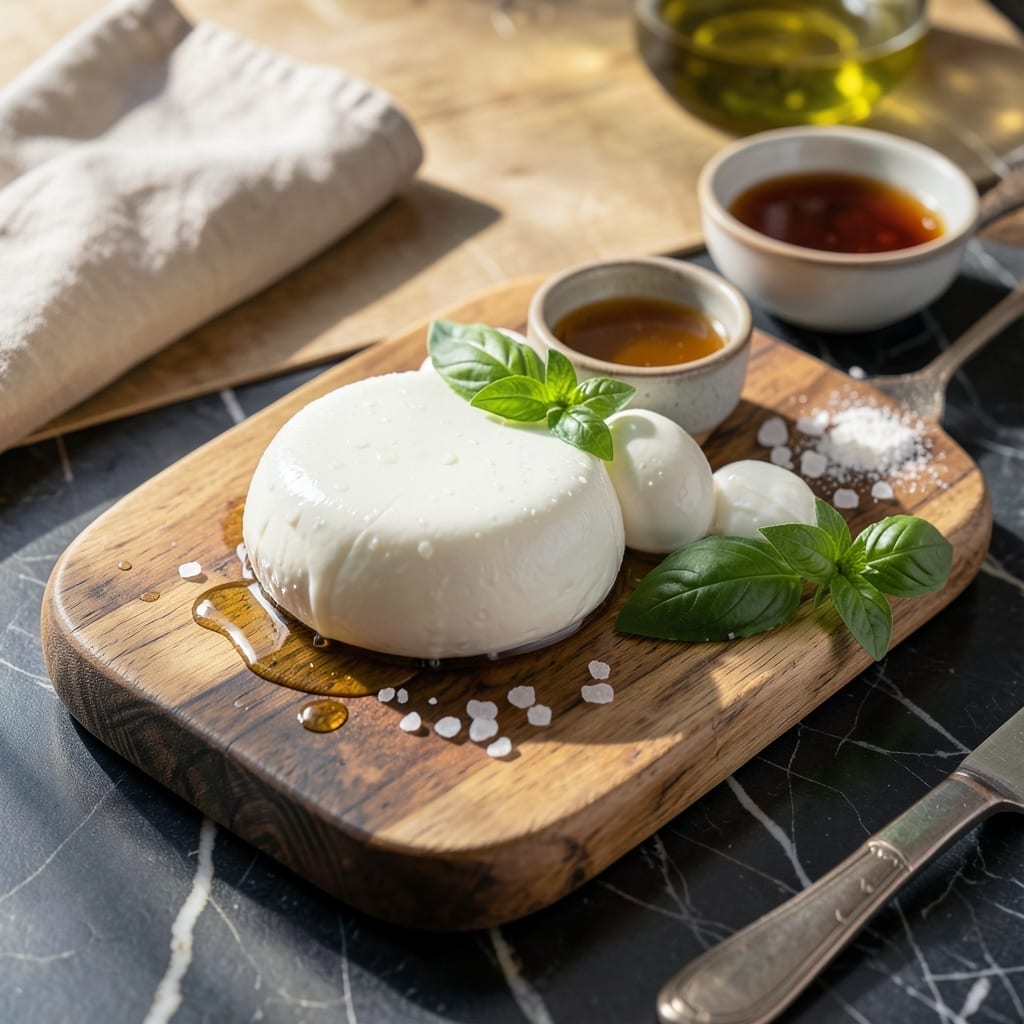
Making fresh mozzarella without rennet is simpler than you might think, using just citric acid and careful temperature control. This method delivers the same stretchy, mild cheese you love, with a process that’s both accessible and rewarding.
The key lies in precise timing and temperature—heat the milk to 90°F before adding citric acid, then gradually raise it to 105°F to form curds. The citric acid mimics rennet’s role, creating a clean break in the curds without altering the flavor.
Once the curds form, you’ll knead them in warm whey until smooth and elastic. The result is fresh, milky mozzarella that’s perfect for caprese salads, pizzas, or eating on its own while still warm.
This approach proves that traditional cheese-making can be adapted without compromising quality or texture. Here’s how to master it at home.
Ingredients for Mozzarella Recipe Without Rennet
Just six things stand between you and homemade cheese. No fancy gear required.
| Ingredient | Amount | Notes |
|---|---|---|
| Whole Milk 🥛 | 1 gallon | Not ultra-pasteurized, cold |
| Citric Acid 🧪 | 1 ½ tsp | Dissolved in water first |
| Ice ❄️ | 4 cups | For cooling curds quickly |
| Salt 🧂 | 1 tsp | Cheese salt or kosher |
| Water 💧 | ¼ cup | For dissolving citric acid |
| Calcium Chloride 🧪 | ¼ tsp | Dissolved in water, optional |
[recipe_ingredient_scaler]
The milk is everything here. Whole, non-ultra-pasteurized is non-negotiable—look for it in the dairy section (not the organic aisle, which often has ultra-pasteurized). Trader Joe’s and local dairies usually carry the right kind. If you can only find ultra-pasteurized, save yourself the heartbreak and skip it. Citric acid is easy to find at Whole Foods or online.
No citric acid? Lemon juice at triple the amount works in a pinch, but the flavor might be slightly tangier. Calcium chloride helps with curd formation but isn’t strictly necessary—skip it if you can’t find it. The salt can be any kind, but cheese salt dissolves most evenly. If using kosher salt, crush it a bit between your fingers before adding.
Fresh mozzarella keeps in brine (salted water) for up to 1 week in the fridge. Change the brine daily for best flavor. It also freezes well for 3 months, though the texture changes slightly—best for cooked dishes like pizza after freezing.
Why You’ll Love This Recipe
- No Rennet Needed: I love that citric acid does all the work—no specialty ingredients to hunt down.
- Fresh Milky Goodness: The whole milk gives it that creamy, melt-in-your-mouth texture that store-bought just can’t match.
- Ready in Hours: Honestly, I start it in the morning and have homemade mozzarella by lunch.
- Budget Stretcher: A gallon of milk turns into multiple batches, saving me a trip to the fancy cheese counter.
Step-by-Step Instructions for Mozzarella Without Rennet
This method is straightforward and produces fresh, stretchy cheese with simple ingredients.
Step 1: Dissolve Citric Acid and Prepare the Milk
First, dissolve the 1.5 tsp Citric Acid in the 0.25 cup Water until fully incorporated. I like to stir it well to ensure there are no grains left—this prevents uneven acid distribution in the milk. Set this solution aside while you prepare the rest.
Pour the 1 gallon Whole Milk into a large stainless steel pot. The milk should be cold, straight from the fridge (not ultra-pasteurized). Stir in the dissolved citric acid solution gently. Avoid splashing. You’ll notice the milk may start to curdle slightly—that’s normal.
Step 2: Heat the Milk and Form Curds
Place the pot over medium heat and slowly warm the milk to 90°F, stirring gently to distribute the heat evenly. Watch for the milk to begin forming small curds as it warms. This is your first visual cue that the acid is working.
Once at 90°F, continue heating slowly to 105°F. Maintain gentle stirring to prevent the curds from sticking to the bottom of the pot. At this temperature, the curds will become more defined and separate from the whey (the liquid). You’re looking for a clean break when you insert a knife.
Step 3: Drain and Press the Curds
Line a colander with cheesecloth and place it over a large bowl or sink. Pour the milk mixture into the colander to separate the curds from the whey. Let it drain naturally for 5 minutes—don’t press or squeeze yet. The whey should be mostly clear, with curds forming a solid mass.
Transfer the curds to a microwave-safe bowl. If using, dissolve the 0.25 tsp Calcium Chloride in 1 tablespoon of cool water and sprinkle it evenly over the curds. This step helps improve the stretchiness of the final cheese, but it’s optional.
Step 4: Microwave and Knead the Curds
Microwave the curds on high for 30 seconds. Drain any excess whey that pools, then fold the curds gently with a spoon or your hands. They’ll be hot, so use caution. Microwave for another 30 seconds, then knead again. Repeat this process 2-3 times until the curds reach 135°F internally.
At this point, the curds should be stretchy and pliable, like taffy. If they’re still crumbly, microwave and knead for another 15-20 seconds. Sprinkle the 1 tsp Salt over the curds and knead until fully incorporated. The salt enhances the flavor and helps with texture.
Step 5: Cool and Shape the Mozzarella
Place the 4 cups Ice in a large bowl and fill it with cold water to create an ice bath. Submerge the cheese in the ice water for 10-15 minutes to cool it rapidly. This step stops the cooking process and sets the texture.
Once cool, remove the cheese from the ice bath and shape it into a ball or log. If the cheese is too soft to hold its shape, knead it briefly again and return it to the ice bath for another 5 minutes. Your finished mozzarella should be smooth, shiny, and ready to eat. Enjoy it fresh for the best texture and flavor.
Pro Tips For Making Mozzarella Recipe Without Rennet
- Heat Milk Slowly: Warm the whole milk to exactly 90°F before adding citric acid—I learned this the hard way after scorching two batches by rushing with high heat.
- Use Fresh Cold Milk: Sounds weird, but it works: the fresher the whole milk, the better your curds will form, so skip the milk that’s been sitting in the fridge for weeks.
- Stir Gently After Acid: After adding citric acid, stir just enough to distribute it, then let the milk sit undisturbed for 5 minutes—resist the urge to poke at it.
- Shock With Ice Water: Plunge the curds into ice water immediately after draining to stop the cooking process, which keeps the texture soft and stretchy.
Essential Equipment for This Recipe
Stainless Steel Pot
A large, heavy-bottomed stainless steel pot is essential for even heating and preventing hot spots. I use a 5-quart pot for a 1-gallon batch—it gives the curds room to form without crowding. Avoid aluminum, as it can react with the acid. 🔥
Cheesecloth
Use food-grade cheesecloth for draining the curds. I prefer unbleached for its strength and lack of chemical residues. A 1-yard square gives you enough to line a colander with overhang for easy gathering. Double-layer it for finer curds.
Digital Thermometer
Precision is key, so a digital instant-read thermometer is non-negotiable. I rely on my ThermoWorks Thermapen for accuracy within 1°F. Check temperatures at multiple spots in the pot to ensure even heating.
Microwave-Safe Bowl
For the kneading step, a large microwave-safe bowl (at least 2-quart capacity) works best. Glass or ceramic retains heat well. I use a Pyrex mixing bowl—it’s durable and easy to clean. Avoid metal, as it can cause arcing.
Kitchen Scale
Weighing your milk ensures consistency, especially if you’re scaling the recipe. A digital kitchen scale with 0.1-gram precision helps measure citric acid accurately. I use an OXO Good Grips scale for its reliability.
Heat-Resistant Gloves
Handling hot curds requires protection. Silicone-coated gloves let you knead safely while maintaining dexterity. I keep a pair near my workspace—heat-resistant up to 450°F is ideal. They also prevent whey burns during draining.
Nutrition Facts
Frequently Asked Questions
Can I use lemon juice instead of citric acid?
Yes, but use 4.5 tsp lemon juice for each 1.5 tsp citric acid. The flavor may be slightly tangier, but it works in a pinch. Dissolve it in 0.25 cup water first for even distribution.
Why won’t my curds stretch?
This usually means the temperature wasn’t high enough. Heat curds to 135°F and knead more. If they’re still crumbly, try microwaving for another 15-20 seconds.
How long does homemade mozzarella last?
Store in brine (salted water) in the fridge for up to 1 week. Change the brine daily for best flavor. It freezes well for 3 months too.
Do I need calcium chloride?
No, it’s optional. Calcium chloride helps with stretchiness, but you can skip it. The cheese will still turn out well, just slightly less elastic.

Trained in classic French technique but raised on slow-cooked ribs and spicy rubs, she blends culinary skill with smoke and soul.
- Recipe for Boneless Pork Chops in Cast Iron Skillet: Sear and Baste to Juicy Perfection - October 3, 2026
- Recipe for Boneless Cross Rib Roast: Slow-Roasted Beef with Herb Crust - October 3, 2026
- Hamburgers in Sauce Recipe Crock Pot: Slow-Cooked Savory Delight - October 3, 2026