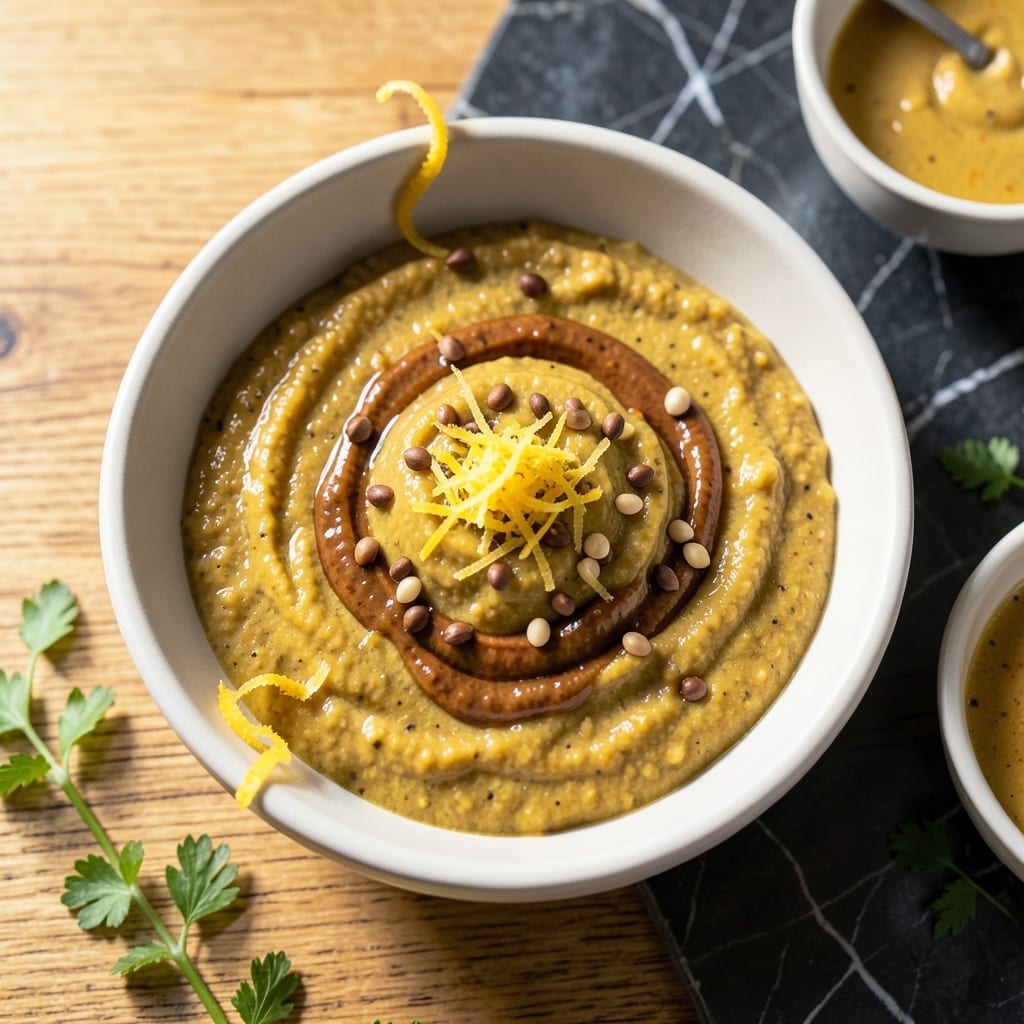
This plant-based mustard delivers creamy texture and bright flavor without vinegar. Lemon zest replaces the tang, creating a smooth condiment with balanced acidity.
Easy to make with simple ingredients, it stores well in the fridge for up to two weeks. Perfect for sandwiches, dressings, or as a dip.
Ingredients for Mustard Recipe Without Vinegar
Nine simple ingredients create a creamy, tangy mustard with bright lemon flavor instead of vinegar.
| Ingredient | Amount | Notes |
|---|---|---|
| Yellow Mustard Seeds 🌿 | ½ cup | Whole or ground, not powdered |
| Dijon Mustard 🟡 | ¼ cup | Ensure vegan, no honey added |
| Lemon Zest 🍋 | 2 tbsp | Finely grated from fresh lemons |
| Lemon Juice 🍋 | 3 tbsp | Freshly squeezed preferred |
| Water 💧 | ¼ cup | Or unsweetened plant milk |
| Turmeric 🌶️ | ½ tsp | Ground, for color and depth |
| Garlic Powder 🧄 | ½ tsp | Balances acidity and spice |
| Sea Salt 🧂 | 1 tsp | Adjust to taste preference |
| Maple Syrup 🍁 | 1 tbsp | Optional for mild sweetness |
[recipe_ingredient_scaler]
The mustard seeds are key. Whole seeds give texture, while ground seeds yield a smoother condiment. Bob’s Red Mill or Penzeys offer high-quality options. For Dijon, Annie’s or Maille are reliable vegan brands—always check labels for honey. Fresh lemons matter here; their zest and juice provide the acidity that replaces vinegar entirely.
No fresh lemons? Bottled lemon juice and zest work in a pinch (though fresh is brighter). Swap yellow mustard seeds for brown seeds for a spicier kick. If you don’t have Dijon, whole grain mustard adds texture, but ensure it’s vegan. Need more sweetness? Agave nectar or date syrup can replace maple syrup one-for-one.
Store in an airtight jar in the fridge for up to 2 weeks. The flavors meld and deepen over time. If it thickens too much, thin with a splash of water or plant milk. Perfect for sandwiches, dressings, or as a bold dip for veggies.
Why You’ll Love This Recipe
- No Fuss Blending: I just toss the mustard seeds, Dijon, lemon zest, juice, and water in a blender—no vinegar, no complications.
- Bright, Tangy Kick: The lemon zest and juice give it that zing I crave, way more vibrant than the usual vinegar sharpness.
- Sandwich Superstar: Honestly, this mustard turns my basic turkey sandwich into something I actually look forward to.
- Pantry Lifesaver: I always have these ingredients on hand, so I can whip up a fresh batch whenever I run out of store-bought.
Step-by-Step Instructions for Mustard Without Vinegar
Here’s the method. Straightforward, tested, works every time.
Step 1: Soak the Yellow Mustard Seeds
Combine the 0.5 cup Yellow Mustard Seeds with the 0.25 cup Water in a small bowl. I use a fork to press the seeds into the liquid, ensuring they’re fully submerged. Let this mixture sit at room temperature for 12-24 hours.
The seeds will soften and absorb most of the water, plumping up significantly. This soaking step is essential for breaking down the seeds’ natural bitterness and creating a smooth, creamy base. If you’re in a hurry, you can reduce the soak to 4-6 hours, but the texture won’t be as refined.
Step 2: Blend the Base until Smooth
Transfer the soaked mustard seeds and any remaining water to a blender or food processor. Add the 0.25 cup Dijon Mustard, 2 tbsp Lemon Zest, 3 tbsp Lemon Juice, 0.5 tsp Turmeric, 0.5 tsp Garlic Powder, 1 tsp Sea Salt, and 1 tbsp Maple Syrup.
Blend on high for 2-3 minutes, stopping to scrape down the sides as needed. You’re aiming for a thick, smooth paste with no visible seed pieces. The lemon zest and juice replace the tang traditionally provided by vinegar, while the turmeric adds a warm, earthy note.
Step 3: Adjust Consistency and Flavor
Taste the mustard and adjust as needed. If it’s too thick, add a teaspoon of water at a time until it reaches your desired consistency. This mustard should be creamy but still spoonable, not runny.
For a stronger lemon flavor, add an additional 1 tbsp Lemon Juice. If you prefer a sweeter mustard, increase the maple syrup by ½ tbsp. Remember, the flavors will deepen slightly as the mustard rests, so err on the side of caution with adjustments.
Step 4: Rest and Mature the Flavors
Transfer the mustard to a clean glass jar with a tight-fitting lid. Let it sit at room temperature for 1-2 hours before refrigerating. This resting period allows the flavors to meld and mellow.
For the best taste, wait at least 24 hours before using. The mustard will keep in the refrigerator for up to 3 months. Over time, the lemon’s brightness will soften, and the turmeric’s warmth will become more pronounced, creating a complex, well-rounded flavor.
Pro Tips For Making Mustard Recipe Without Vinegar
- Soak the Seeds: Cover yellow mustard seeds with water and let them sit for 8-12 hours—this softens them so they blend smoothly and release their full flavor without vinegar’s help.
- Bloom the Dijon: Warm the Dijon mustard slightly in a bowl with a splash of water (about 1 tablespoon) before mixing—this wakes up its sharpness and helps it bind better with the lemon.
- Zest First, Juice Later: Grate the lemon zest before halving and juicing it, and use a microplane to avoid bitter pith—I learned this the hard way after wasting half a lemon.
- Wait Before Adjusting: After mixing, let the mustard rest for 30 minutes before adding more lemon juice or water, as the flavors deepen and mellow over time.
Regional Styles of mustard recipe without vinegar
Mustard lovers know that regional twists can make all the difference! Here’s how different areas put their spin on mustard recipes without vinegar:
Texas Style 🌶️
In Texas, bold flavors reign. A mustard recipe without vinegar here often leans into smoky, spicy profiles, using chili powder, cumin, and a touch of honey for sweetness. Slow-cooked with mesquite or hickory wood, it pairs perfectly with brisket or sausages. The sauce is thick, rich, and packed with a deep, tangy kick from lemon juice or citrus zest.
Carolina Style 🍯
Carolina’s take on vinegar-free mustard is all about sweet and tangy balance. A honey or brown sugar base replaces vinegar, while yellow mustard seeds and turmeric give it that signature golden hue. Often served with pulled pork, this style is lighter and smoother, with a gentle heat from cayenne or black pepper.
Kansas City Style 🍖
Kansas City loves its thick, sticky sauces, and mustard here is no exception. A mustard recipe without vinegar in this region often blends molasses or tomato paste for depth, with Dijon or whole-grain mustard for texture. Slow-simmered with garlic and onions, it’s a sweet, savory staple for ribs and burnt ends.
Memphis Style 🔥
Memphis brings the heat and complexity. Their vinegar-free mustard often includes Worcestershire sauce, paprika, and a hint of coffee for depth. Dry rubs with mustard powder are popular, and the sauce is tangy, slightly spicy, and perfect for dipping or slathering on slow-cooked meats.
Nutrition Facts

Trained in classic French technique but raised on slow-cooked ribs and spicy rubs, she blends culinary skill with smoke and soul.
- Recipe for Boneless Pork Chops in Cast Iron Skillet: Sear and Baste to Juicy Perfection - October 3, 2026
- Recipe for Boneless Cross Rib Roast: Slow-Roasted Beef with Herb Crust - October 3, 2026
- Hamburgers in Sauce Recipe Crock Pot: Slow-Cooked Savory Delight - October 3, 2026