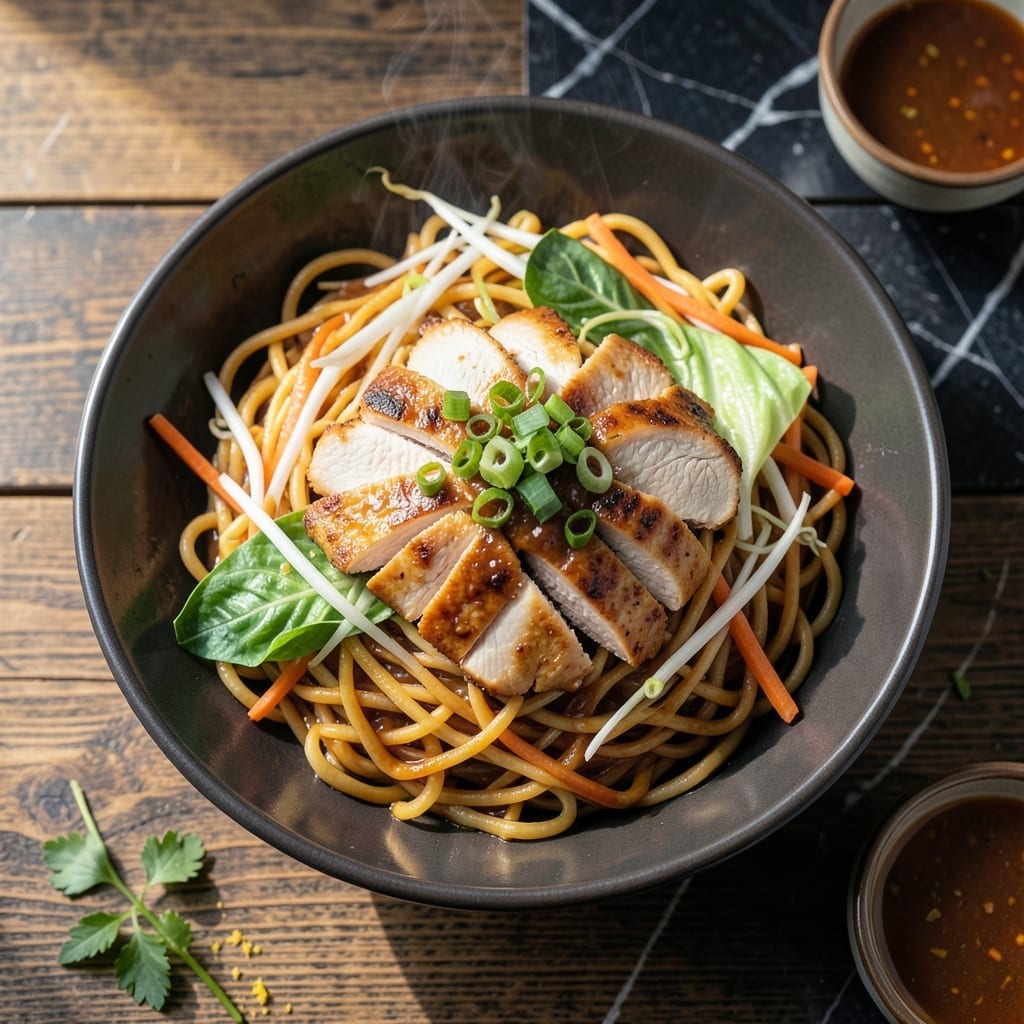
This Cantonese-style stir-fry brings authentic wok hei flavor to your kitchen. The dish combines tender noodles with crisp vegetables and a savory sauce that clings perfectly to every bite.
With simple ingredients and precise technique, you’ll achieve restaurant-quality results. The key is high heat and quick cooking to maintain texture and depth of flavor.
Ingredients for Nankin Chow Mein
Fresh noodles, crisp vegetables, and a rich sauce create this Cantonese classic at home.
| Ingredient | Amount | Notes |
|---|---|---|
| Egg Noodles 🍜 | 8 oz | Fresh or dried, thin variety |
| Chicken Breast 🍗 | 1 lb | Boneless, skinless, thinly sliced |
| Napa Cabbage 🥬 | 2 cups | Thinly shredded |
| Carrots 🥕 | 2 whole | Julienned or matchstick cut |
| Bean Sprouts 🌱 | 1 cup | Fresh, rinsed and drained |
| Green Onions 🧅 | 3 whole | Thinly sliced, white and green parts separated |
| Garlic Cloves 🧄 | 3 cloves | Minced finely |
| Fresh Ginger 🌿 | 1 tbsp | Peeled and grated |
| Soy Sauce 🫒 | 3 tbsp | Light or all-purpose variety |
| Oyster Sauce 🫒 | 2 tbsp | Vegetarian oyster sauce if preferred |
| Sesame Oil 🫒 | 1 tbsp | Toasted, for aromatics |
| Shaoxing Wine 🍶 | 2 tbsp | Dry sherry as substitute |
| Cornstarch 🌾 | 1 tbsp | Mixed with 1 tbsp water for slurry |
| Neutral Oil 🫒 | 3 tbsp | Peanut or vegetable oil, high smoke point |
[recipe_ingredient_scaler]
The noodles are critical here. Fresh egg noodles from an Asian market deliver authentic texture, but dried works if that’s what’s available. Napa cabbage should be crisp and pale green—avoid any with brown spots or wilting. For the chicken, thin, even slices ensure quick cooking. Most Whole Foods locations carry quality soy and oyster sauces in their international aisle.
No Napa cabbage? Regular green cabbage at half the amount works fine. Out of Shaoxing wine? Dry sherry is nearly identical. For a vegetarian version, swap chicken for extra-firm tofu or mushrooms. The cornstarch slurry can be pre-mixed and stored in the fridge for 24 hours. The bean sprouts? Rinse thoroughly just before using.
Store fresh noodles in the fridge for up to 3 days. The vegetables keep 1 week in the crisper drawer. Cooked chow mein reheats best in a wok or skillet—microwave tends to make the noodles soggy. For meal prep, keep sauce and noodles separate until ready to cook.
Why You’ll Love This Recipe
- One Pot Wonder: I toss everything—egg noodles, chicken, and veggies—into a single pan and let it work its magic.
- Umami Bomb: The soy-ginger sauce soaks into the noodles and cabbage for that can’t-stop-eating flavor.
- Meal Prep Hero: It reheats like a dream, so I make a big batch for lunches all week.
- Budget Stretcher: Honestly, chicken breast and cabbage go so far, it feeds my family for pennies per serving.
Step-by-Step Instructions for Cantonese-Style Noodle Stir-Fry
Master the wok toss technique and achieve restaurant-quality texture with these precise steps.
Step 1: Velvet the Chicken and Prep Vegetables
Combine the thinly sliced chicken breast with 1 tbsp Cornstarch, 1 tbsp Soy Sauce, and 1 tbsp Shaoxing Wine in a bowl. Stir until the chicken is evenly coated and let it marinate for 15 minutes. This velveting process ensures the chicken stays tender during high-heat cooking.
While the chicken marinates, prepare all vegetables: thinly shred the 2 cups Napa Cabbage, julienne the 2 whole Carrots, rinse and drain the 1 cup Bean Sprouts, and separate the white and green parts of the 3 whole Green Onions. Mince the 3 cloves Garlic Cloves and grate the 1 tbsp Fresh Ginger.
Step 2: Stir-Fry the Chicken to Perfection
Heat 2 tbsp Neutral Oil in a wok or large skillet over high heat until it shimmers. Add the marinated chicken in a single layer and cook undisturbed for 30 seconds to develop a sear. Then stir-fry for 2-3 minutes until the chicken is just cooked through and no longer pink.
Transfer the chicken to a clean plate, leaving any browned bits in the wok. The chicken should be opaque with a slight golden edge—overcooking at this stage will result in dry, tough meat. Keep the chicken warm while you cook the vegetables.
Step 3: Cook the Aromatics and Vegetables
Add the remaining 1 tbsp Neutral Oil to the wok. Swirl to coat, then add the minced garlic and grated ginger. Stir-fry for 10-15 seconds until fragrant but not browned. Immediately add the carrots and stir-fry for 1 minute until slightly softened.
Incorporate the Napa cabbage, bean sprouts, and the white parts of the green onions. Stir-fry for 2-3 minutes until the vegetables are crisp-tender. The cabbage should wilt slightly but retain some crunch. Avoid overcrowding the wok—cook in batches if necessary to maintain high heat.
Step 4: Combine and Sauce the Noodles
Add the 8 oz Egg Noodles to the wok along with the cooked chicken. Pour in the remaining 2 tbsp Soy Sauce, 2 tbsp Oyster Sauce, and 1 tbsp Sesame Oil. Toss everything together for 1-2 minutes until the noodles are heated through and coated in the sauce.
The sauce should glisten and cling lightly to the noodles without pooling at the bottom. If the mixture seems dry, add a splash of water or Shaoxing wine to loosen the sauce. Taste and adjust seasoning if needed—remember, the flavors will intensify slightly as it sits.
Step 5: Finish and Garnish
Stir in the green parts of the green onions and toss for 30 seconds to wilt slightly. The onions should remain vibrant green. Remove from heat immediately—the residual heat will continue cooking the noodles slightly.
Transfer to a serving platter and serve hot. The ideal texture features tender noodles, crisp-tender vegetables, and juicy chicken pieces all coated in a glossy, savory sauce. The dish should have a balance of flavors: salty from the soy, umami from the oyster sauce, and aromatic from the sesame oil and ginger.
Pro Tips For Making Nankin Chow Mein
- Parboil Noodles First: Boil the egg noodles for just 2 minutes before stir-frying—they’ll finish cooking in the wok without turning mushy. I learned this the hard way after too many gummy batches.
- Velveeta the Chicken: Slice the chicken breast thinly against the grain, then marinate it with 1 tsp cornstarch and 1 tbsp soy sauce for 15 minutes. It stays tender and doesn’t dry out, even if you overcook it a little.
- Skip the Soggy Cabbage: Add the napa cabbage last—it only needs 1-2 minutes in the wok to wilt. Toss it in too early and it’ll release too much water, turning your chow mein into soup.
- Prep Everything First: Have all your ingredients chopped, sauces mixed, and noodles parboiled before heating the wok. Sounds obvious, but once the heat is on, there’s no time to slice carrots or drain sprouts.
Flavor Customization for These Flavors
Spice It Up
Add 1-2 tsp chili garlic sauce or ½ tsp red pepper flakes to the sauce mixture for a spicy kick. David, my official taste-tester, loves this version with extra heat. The chili oil from Central Market works beautifully here. 🌶️
Vegetable Swaps
Swap in 1 cup sliced bell peppers or 1 cup snap peas for a colorful twist. These hold up well to stir-frying and add a satisfying crunch. I often use what’s fresh at the Austin farmers markets.
Protein Variations
Replace chicken with 1 lb shrimp (peeled and deveined) or 1 lb thinly sliced pork shoulder. Shrimp cooks in just 1-2 minutes per side, while pork benefits from an extra 30-second marinade in the velveting mixture.
Sauce Boosts
Enhance the sauce with 1 tbsp hoisin sauce for sweetness or 1 tsp fish sauce for depth. A dash of white pepper adds authentic Cantonese flavor. I learned this trick helping Nana Mae in her diner.
Noodle Options
Use rice noodles or udon noodles instead of egg noodles for a different texture. Rice noodles need just 1-2 minutes in hot water to soften before stir-frying. Udon adds a delightful chewiness.
Garnish Ideas
Top with chopped cilantro, crushed peanuts, or a drizzle of sriracha. These finishing touches add freshness, crunch, and heat. Emma and Jack always fight over who gets the extra peanuts. 💛
Nutrition Facts
Frequently Asked Questions
Can I use dried noodles instead of fresh?
Yes, dried egg noodles work fine. Follow package instructions to cook until al dente, then rinse with cold water to stop cooking. Drain well before stir-frying to prevent sogginess.
What if I don’t have a wok?
A large, heavy skillet like cast iron works well. Use high heat and cook in batches to avoid steaming. The key is maintaining that sizzle throughout cooking.
How do I keep the vegetables crisp?
Cut them uniformly thin and stir-fry over high heat for just 2-3 minutes. Overcrowding the pan or low heat makes them soggy. Keep them moving constantly!
Can this be made gluten-free?
Use tamari instead of soy sauce, gluten-free oyster sauce, and rice noodles. Check all labels as some brands vary. The technique stays the same.

Trained in classic French technique but raised on slow-cooked ribs and spicy rubs, she blends culinary skill with smoke and soul.
- Recipe for Boneless Pork Chops in Cast Iron Skillet: Sear and Baste to Juicy Perfection - October 3, 2026
- Recipe for Boneless Cross Rib Roast: Slow-Roasted Beef with Herb Crust - October 3, 2026
- Hamburgers in Sauce Recipe Crock Pot: Slow-Cooked Savory Delight - October 3, 2026