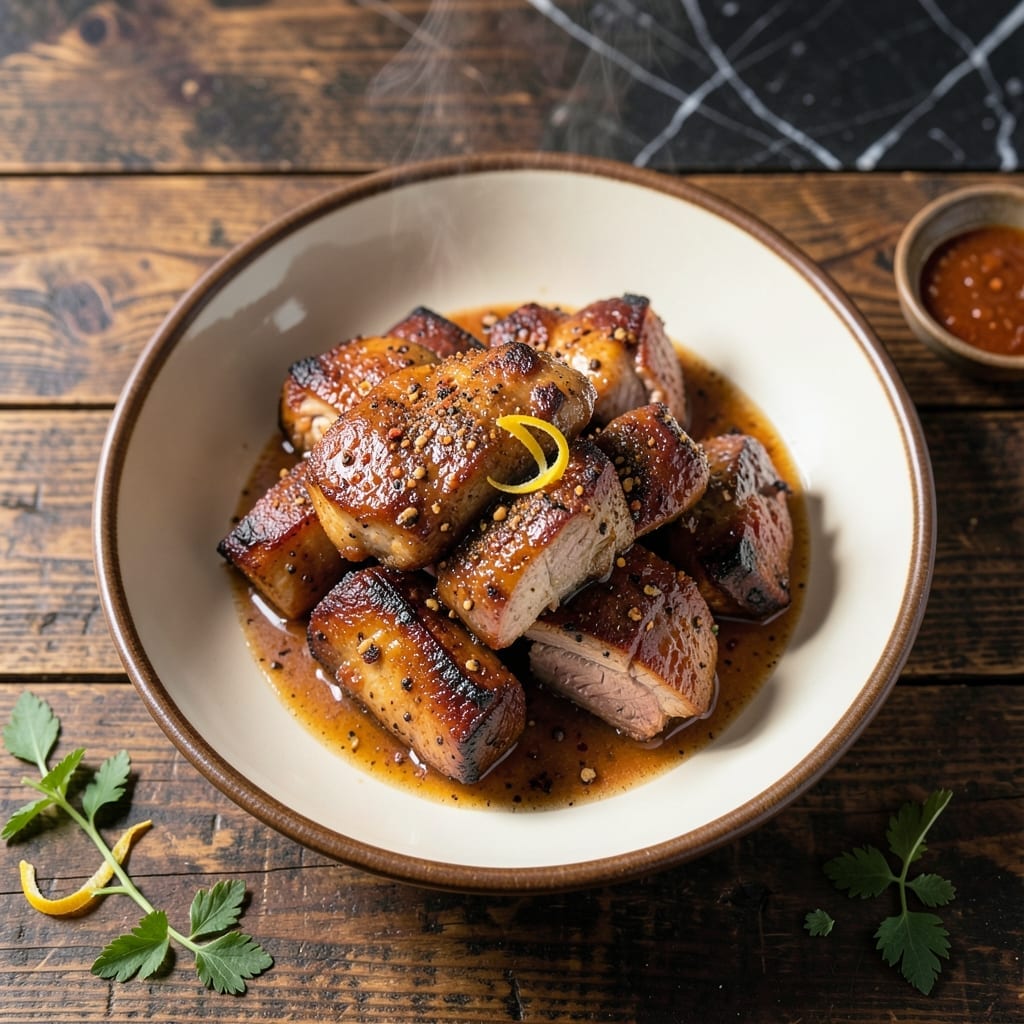
Achieving tender barbecue without a grill is entirely possible with this oven-baked method. The key lies in a smoky dry rub and slow cooking.
This technique transforms pork into fall-apart pieces with caramelized edges. The oven does all the work while delivering that classic barbecue experience.
Ingredients for No Grill Pork Barbecue
Pork shoulder and a bold dry rub create that signature barbecue experience without a grill.
| Ingredient | Amount | Notes |
|---|---|---|
| Pork Shoulder 🐖 | 2 lb | Boneless, cut into 2-inch chunks |
| Brown Sugar 🍚 | ¼ cup | Light or dark variety |
| Smoked Paprika 🌶️ | 1 tbsp | For essential smoky depth |
| Garlic Powder 🧄 | 1 tbsp | Not garlic salt |
| Onion Powder 🧅 | 1 tbsp | Freshly ground preferred |
| Chili Powder 🌶️ | 1 tsp | Mild or hot variety |
| Ground Black Pepper 🌶️ | 1 tsp | Freshly ground for best flavor |
| Kosher Salt 🧂 | 1 tsp | Diamond Crystal preferred |
| Apple Cider Vinegar 🍏 | ¼ cup | For tangy balance |
| Barbecue Sauce 🍯 | 1 ½ cups | Hickory or mesquite flavored |
| Olive Oil 🫒 | 1 tbsp | For coating pork |
| Yellow Mustard 🟡 | 1 tbsp | For binding rub to meat |
| Liquid Smoke 💨 | ½ tsp | Optional for extra smokiness |
[recipe_ingredient_scaler]
The pork shoulder is non-negotiable here—bone-in or boneless both work, but the fat content ensures tenderness. Costco and Sam’s Club sell it in large portions; ask the butcher to cube it for you. For the rub, freshly opened spices make a noticeable difference. Smoked paprika is the primary smoky element, so ensure it’s not expired. The brown sugar caramelizes beautifully during cooking, creating those coveted sticky edges.
No pork shoulder? Pork butt works identically (it’s essentially the same cut). Substitute baby back ribs for a different texture, but adjust cooking time. For a sweeter profile, swap apple cider vinegar with white vinegar plus a pinch of sugar. The barbecue sauce can be homemade or store-bought—Stubs or Sweet Baby Ray’s are reliable choices. Skip the liquid smoke if using a heavily smoked sauce.
This keeps 4-5 days refrigerated in an airtight container and reheats well. The flavors deepen overnight, making leftovers even better. For freezing, portion into meal-sized containers—good for 3 months (thaw in fridge before reheating). Always let the pork rest 15 minutes before shredding to retain juices.
Why You’ll Love This Recipe
- Oven Magic: No grill? No problem. My oven does all the work while I kick back.
- Smoky Sweetness: That brown sugar and smoked paprika combo gives it a deep, caramelized flavor that’s ridicously good.
- Meal Prep Star: I make a big batch on Sunday and it’s my lunch hero all week.
- Budget Winner: Pork shoulder is cheap, feeds a crowd, and leftovers taste even better the next day.
Step-by-Step Instructions for Oven-Baked Pork Barbecue
This method delivers fall-off-the-bone tenderness with smoky depth, all without a grill.
Step 1: Create and Apply the Dry Rub
In a small bowl, combine the 0.25 cup Brown Sugar, 1 tbsp Smoked Paprika, 1 tbsp Garlic Powder, 1 tbsp Onion Powder, 1 tsp Chili Powder, 1 tsp Ground Black Pepper, and 1 tsp Kosher Salt. Whisk until evenly distributed—the sugar will help caramelize while the spices build depth.
Pat the 2 lb Pork Shoulder chunks dry with paper towels, then brush them lightly with the 1 tbsp Yellow Mustard. This acts as a binder for the rub. Coat each piece thoroughly with the spice mixture, pressing gently to adhere. The mustard won’t be noticeable in the final dish but ensures the rub clings perfectly.
Step 2: Sear the Pork for Depth of Flavor
Heat the 1 tbsp Olive Oil in a large Dutch oven over medium-high heat until shimmering. Working in batches to avoid crowding, sear the pork chunks on all sides for 2-3 minutes per side until deeply browned. This step develops the Maillard reaction, creating complex flavors that mimic outdoor grilling.
As you sear, you’ll notice the rub forming a dark, fragrant crust—that’s the sugar caramelizing with the spices. Don’t rush this process; the fond (browned bits) left in the pot will dissolve into the sauce later, adding incredible richness to your creation.
Step 3: Build the Braising Liquid and Slow Cook
Return all pork to the Dutch oven. Add the 0.25 cup Apple Cider Vinegar and 0.5 tsp Liquid Smoke, scraping up any browned bits from the bottom. The vinegar’s acidity balances the sweetness of the barbecue sauce while the liquid smoke delivers that classic outdoor aroma.
Pour in the 1.5 cups Barbecue Sauce and stir to combine. Cover the pot and transfer to a preheated 325°F oven. Braise for 2.5 to 3 hours, turning the pork halfway through, until the meat shreds easily with a fork and the sauce has thickened slightly.
Step 4: Shred and Reduce the Sauce
Remove the pork from the oven and transfer the chunks to a cutting board. Using two forks, shred the meat into bite-sized pieces—it should come apart with minimal effort, a sign of perfect tenderness. Skim any excess fat from the surface of the sauce, then return the shredded pork to the pot.
Simmer uncovered over medium heat for 5-7 minutes to allow the sauce to reduce and coat the pork evenly. Stir occasionally to prevent sticking. The sauce should cling to the meat with a glossy sheen, and the flavors will have melded into a harmonious balance of sweet, tangy, and smoky notes.
Pro Tips For Making No Grill Pork Barbecue
- Low and Slow: Cook the pork shoulder at 300°F for 3-4 hours—any hotter and the brown sugar will burn before the meat gets tender. I learned this the hard way after my first batch turned into a charred, chewy mess.
- Score the Fat: Cut 1/4-inch slits into the fat cap before rubbing with spices so the brown sugar and smoked paprika penetrate deep. Sounds tedious, but it actually changes the outcome.
- Skip the Water: Resist the urge to add liquid to the pan—pork shoulder releases enough juices, and extra water just steams the bark instead of caramelizing it. My grandmother swore by this, and she was right.
- Rest Under Foil: Give it a solid 15-20 minutes wrapped in foil after cooking—this keeps the juices from running out when you shred it. I skip this when I’m lazy, but the dish is noticeably better when I don’t.
Health Benefits of This Dish
Protein Powerhouse
Pork shoulder is rich in high-quality protein, delivering about 20 grams per 3-ounce serving. This supports muscle repair and keeps you feeling full longer. The slow cooking process actually makes the protein more digestible, so your body can use it efficiently. 💪
B Vitamin Boost
This cut provides excellent amounts of B vitamins, especially B12 and B6, which are crucial for energy metabolism and brain function. A single serving covers a significant portion of your daily needs for these essential nutrients.
Iron and Zinc Source
You’ll get a good dose of iron and zinc from pork shoulder, both vital for immune function and oxygen transport. The iron in pork is heme iron, which your body absorbs more easily than the non-heme iron found in plants.
Low in Saturated Fat
While pork shoulder does contain fat, much of it renders out during the long cooking process. The remaining fat provides energy and helps your body absorb fat-soluble vitamins. I always skim off excess fat after cooking for a healthier final dish.
Rich in Selenium
This dish is a great source of selenium, an antioxidant that protects cells from damage. Just 3 ounces of pork provides about 40% of your daily selenium needs. This mineral also plays a role in thyroid function.
I love that this oven method preserves so many nutrients while creating that fall-apart texture we all crave. ✨
Nutrition Facts
Frequently Asked Questions
What’s the best cut for oven-baked barbecue?
Pork shoulder or pork butt works best due to its high fat content. The fat renders down during slow cooking, keeping the meat moist and tender even without a grill.
Can I skip the searing step?
Searing is recommended for flavor development, but you can skip it if short on time. The dish will still be tender, though it may lack some depth from the Maillard reaction.
How do I prevent dry pork?
Cook low and slow at 325°F and keep the pork covered with sauce. Check for doneness at 2.5 hours—it should shred easily.

Trained in classic French technique but raised on slow-cooked ribs and spicy rubs, she blends culinary skill with smoke and soul.
- Recipe for Boneless Pork Chops in Cast Iron Skillet: Sear and Baste to Juicy Perfection - October 3, 2026
- Recipe for Boneless Cross Rib Roast: Slow-Roasted Beef with Herb Crust - October 3, 2026
- Hamburgers in Sauce Recipe Crock Pot: Slow-Cooked Savory Delight - October 3, 2026