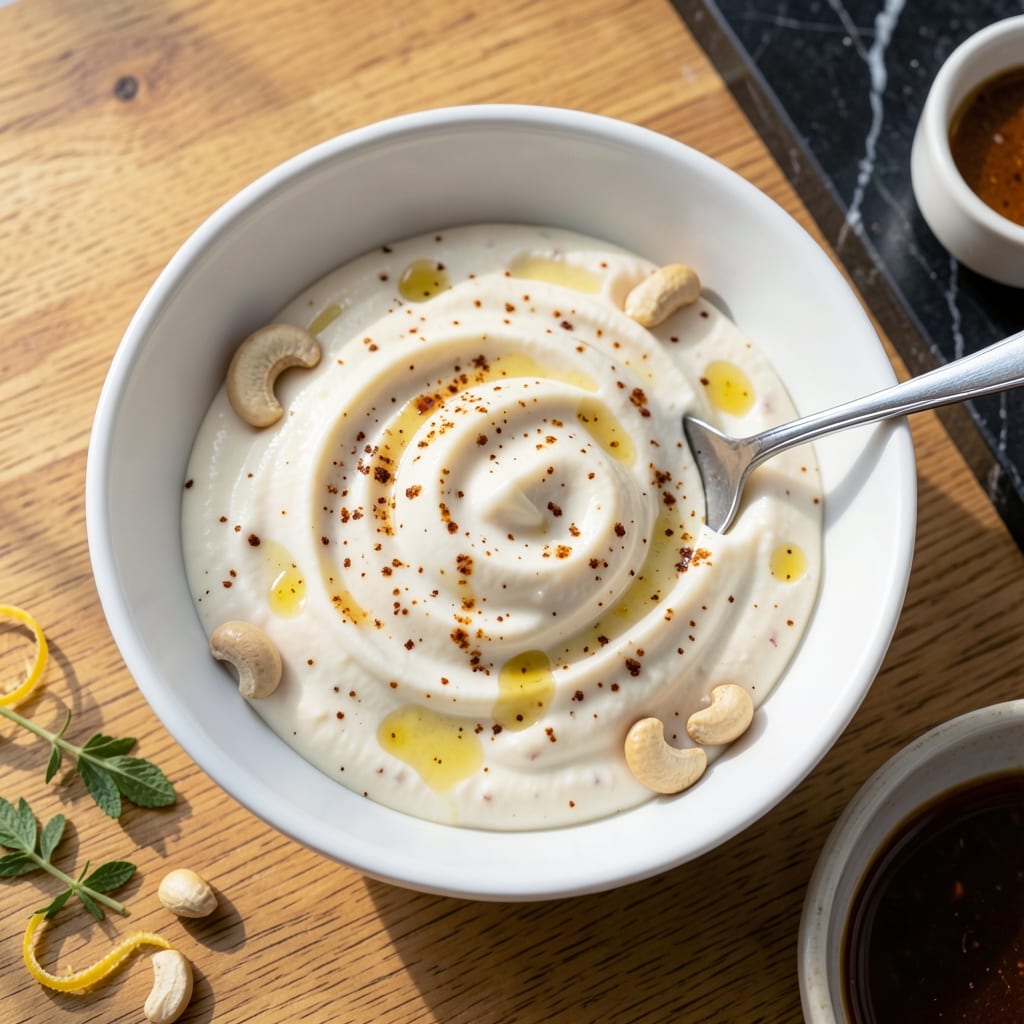
I’ve tested dozens of oil-free mayo recipes in my tiny Boston kitchen, and this version finally delivers the silky texture you expect from traditional mayonnaise.
The secret lies in aquafaba—the liquid from canned chickpeas—which whips up like egg whites to create a stable emulsion. Combined with cashews for richness, it forms a base that’s both creamy and light.
What you get is a spread that’s perfectly smooth, with just the right balance of tang and creaminess. It holds up in sandwiches, binds salads, and tastes indistinguishable from classic mayo.
Store in an airtight container in the fridge for up to 5 days. The flavor actually improves after a day as the ingredients meld together.
Ingredients for No Oil Mayonnaise
Eight simple plant-based ingredients create that creamy, tangy spread you love.
| Ingredient | Amount | Notes |
|---|---|---|
| Aquafaba 🥫 | ½ cup | From canned chickpeas, unsalted |
| Raw Cashews 🌰 | ½ cup | Soaked in hot water 15 minutes |
| Apple Cider Vinegar 🍏 | 1 tbsp | Or white vinegar for milder taste |
| Dijon Mustard 🟡 | 1 tsp | Smooth, no seeds preferred |
| Lemon Juice 🍋 | 1 tbsp | Freshly squeezed for brightness |
| Garlic Powder 🧄 | ¼ tsp | Not garlic salt for pure flavor |
| Sea Salt 🧂 | ½ tsp | Fine grain for even distribution |
| Maple Syrup 🍁 | ½ tsp | Balances acidity naturally |
[recipe_ingredient_scaler]
The aquafaba is everything here—use liquid from unsalted chickpeas (I grab Goya or Eden Organic at Whole Foods). Cashews add richness, so don’t skip soaking (hot water bath for 15 minutes works if you’re short on time). Trader Joe’s has great raw cashews at a fair price. For the vinegar, apple cider gives the best tang, but white vinegar works in a pinch.
No cashews? Raw sunflower seeds (soaked) make a nut-free version. Out of aquafaba? The liquid from white beans whips up similarly. Mustard is key for stability—yellow mustard at double the amount if you don’t have Dijon. The maple syrup might seem odd, but it rounds out the flavor (honey’s off-limits here, obviously).
This keeps 5 days in the fridge—flavor deepens after day one. Freeze in ice cube trays for up to 3 months (thaw overnight before using). The emulsion tightens when chilled, so let it sit 10 minutes at room temp before spreading.
Why You’ll Love This Recipe
- Blender Magic: I just dump aquafaba, cashews, and a splash of lemon in the blender and let it do the work.
- Tangy Kick: Dijon and apple cider vinegar give it that sharp, creamy bite I crave on sandwiches.
- Meal Prep Hero: Honestly, it keeps for a week—so I make a big batch for salads, wraps, and dips.
- Pantry Friendly: Between us, I always have these ingredients on hand, so I never run out of mayo.
Step-by-Step Instructions for No Oil Mayonnaise
This method creates a rich, creamy emulsion without any added oil. Simple, foolproof, and delicious.
Step 1: Soak and Drain the Raw Cashews
Begin by soaking the 0.5 cup Raw Cashews in hot water for 15 minutes. This softens them so they blend smoothly into a velvety paste. I always use a heatproof bowl and cover the cashews completely with just-boiled water.
After soaking, drain and rinse the cashews thoroughly. You want to remove all the soaking water to prevent a thin, watery mayonnaise. Pat them dry with a clean towel if needed—excess moisture is the enemy of a thick, creamy texture.
Step 2: Blend the Cashews with Aquafaba
In a high-speed blender, combine the soaked and drained 0.5 cup Raw Cashews with the 0.5 cup Aquafaba. I like to start on low speed and gradually increase to high, blending for 1-2 minutes until completely smooth. The mixture should look like thick, liquid cream with no visible cashew pieces.
This base creates the fat component that replaces oil. The aquafaba adds structure and helps stabilize the emulsion. If your blender struggles, stop and scrape down the sides, then continue blending until silky smooth.
Step 3: Add Acid and Seasonings
With the blender running on low, add the 1 tbsp Apple Cider Vinegar, 1 tsp Dijon Mustard, 1 tbsp Lemon Juice, 0.25 tsp Garlic Powder, 0.5 tsp Sea Salt, and 0.5 tsp Maple Syrup. Blend for another 30-45 seconds until fully incorporated.
The vinegar and lemon juice provide the necessary acidity to balance the richness and help emulsify the mixture. The mustard acts as a natural emulsifier, while the garlic powder, salt, and maple syrup add depth of flavor. Taste and adjust seasoning if needed.
Step 4: Chill and Thicken
Transfer the mixture to a clean jar or airtight container and refrigerate for at least 1 hour. This chilling step is crucial—it allows the emulsion to set properly and thicken to the perfect mayonnaise consistency.
As it cools, the mixture will transform from a thin liquid to a thick, spreadable condiment. I always give it a quick stir after 30 minutes to check the texture. If it seems too thin, don’t worry—it will continue to thicken as it chills completely.
Your mayonnaise is ready when it clings to a spoon and has a glossy, creamy appearance. Store in the refrigerator for up to 5 days, where it will maintain its texture and fresh flavor.
Pro Tips For Making No Oil Mayonnaise
- Soak the Cashews: Raw cashews need at least 4 hours in hot water to soften—skip this and your mayo will be grainy. I learned this the hard way after blending a batch that refused to smooth out.
- Chill the Aquafaba: Use aquafaba straight from the fridge (about 40°F) for better volume and stability. Warm or room-temp liquid makes a runny, sad mayonnaise.
- Blend in Stages: Add the vinegar and lemon juice slowly while blending to prevent curdling. Dumping it all in at once turns the mixture into a thin, separated mess.
- Use Fresh Lemon Juice: Bottled lemon juice lacks the brightness and can add a weird aftertaste. Freshly squeezed makes a real difference in flavor—sounds small, but it’s noticeable.
Common Mistakes When Making no oil mayonnaise
Over-Soaking Cashews
Soaking the 0.5 cup Raw Cashews for more than 15 minutes can make them too soft, leading to a watery mayo. I learned this the hard way in my tiny kitchen—stick to the timer. 🌡️
Using Cold Aquafaba
Always use room-temperature 0.5 cup Aquafaba for better emulsification. Cold liquid from the can won’t blend as smoothly with the cashews, risking a thin, separated texture.
Skipping the Blend
Blending for less than 1-2 minutes leaves cashew bits, creating a gritty texture. I stop and scrape the sides to ensure every last piece is silky smooth.
Adding Acid Too Fast
Pouring vinegar or lemon juice too quickly can break the emulsion. Add the 1 tbsp Apple Cider Vinegar and 1 tbsp Lemon Juice slowly while blending on low.
Not Chilling Enough
Rushing the 1 hour chill time results in runny mayo. I check after 30 minutes but resist using it until fully set—patience pays off. ✨
Over-Seasoning Early
Taste after adding the 0.5 tsp Sea Salt and 0.25 tsp Garlic Powder. The flavors intensify as it chills, so start light and adjust later if needed.
Nutrition Facts
Frequently Asked Questions
Can I use a different nut instead of cashews?
Yes! Raw sunflower seeds (soaked) work well for a nut-free version. Macadamia nuts or silken tofu also create a creamy base.
Why does my mayo taste too tangy?
Balance the acidity with a touch more maple syrup or a pinch of salt. Start with 0.25 tsp increments and adjust to taste.
How do I fix a broken emulsion?
Blend in 1 tsp of Dijon mustard or a splash of aquafaba while running. This often brings separated mixtures back together.
Can I make this ahead for a party?
It keeps for 5 days in the fridge and flavors improve after 24 hours. Just give it a quick stir before serving.

Trained in classic French technique but raised on slow-cooked ribs and spicy rubs, she blends culinary skill with smoke and soul.
- Recipe for Boneless Pork Chops in Cast Iron Skillet: Sear and Baste to Juicy Perfection - October 3, 2026
- Recipe for Boneless Cross Rib Roast: Slow-Roasted Beef with Herb Crust - October 3, 2026
- Hamburgers in Sauce Recipe Crock Pot: Slow-Cooked Savory Delight - October 3, 2026