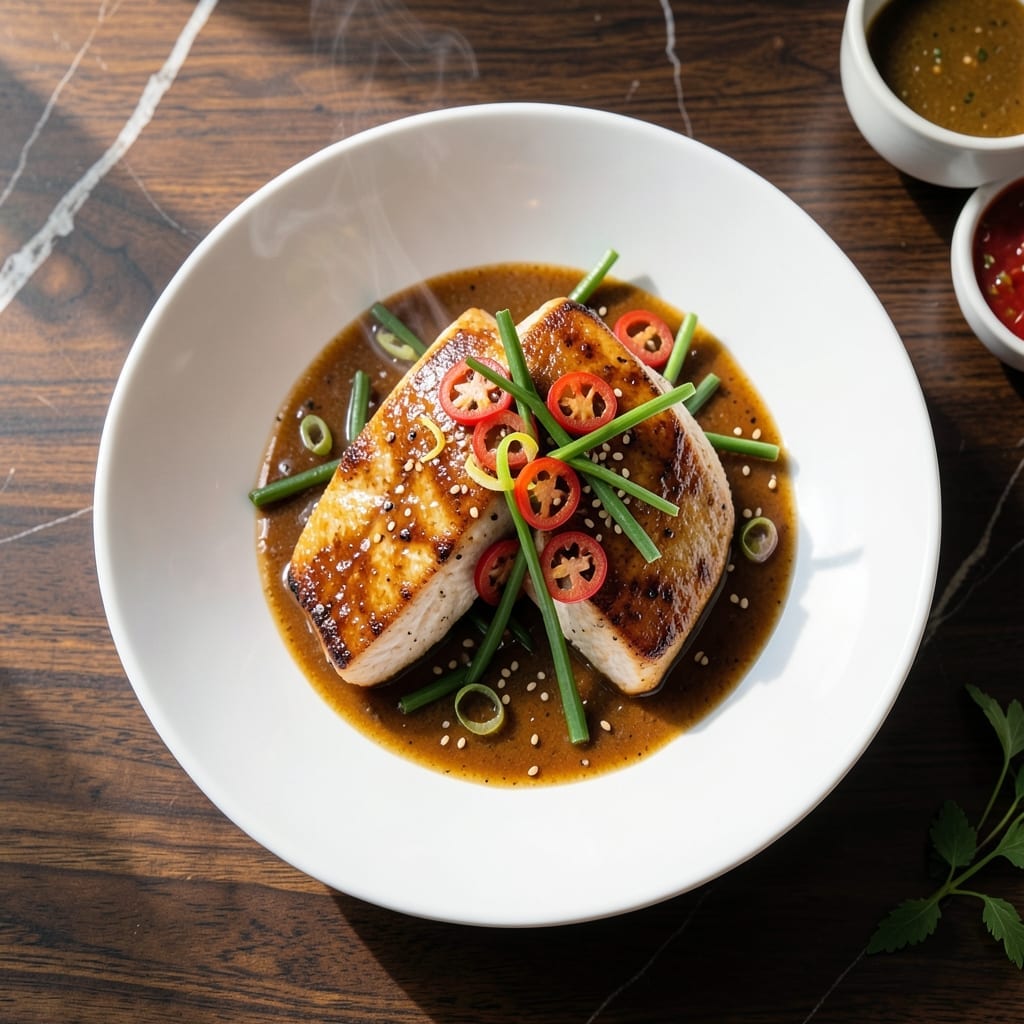
This dish brings Nobu’s signature tender texture to your home kitchen with a simple miso marinade.
White miso and mirin create a sweet-savory glaze that transforms Chilean sea bass into a melt-in-your-mouth experience.
Ingredients for Nobu Chilean Sea Bass
Melt-in-your-mouth sea bass starts with a simple yet elegant ingredient lineup.
| Ingredient | Amount | Notes |
|---|---|---|
| Chilean Sea Bass Fillets 🐟 | 1 ½ lb | Skin-on, about 1-inch thick |
| White Miso Paste 🥣 | ½ cup | Fermented, smooth variety |
| Mirin 🍶 | ¼ cup | Sweet rice wine, aji-mirin preferred |
| Sake 🍶 | 2 tbsp | Dry Japanese rice wine |
| Soy Sauce 🥫 | 2 tbsp | Low-sodium preferred |
| Granulated Sugar 🍚 | 1 tbsp | Balances miso saltiness |
| Fresh Ginger 🌿 | 1 tbsp | Peeled and finely grated |
| Unsalted Butter 🧈 | 4 tbsp | Cold, cubed for finishing |
| Vegetable Oil 🫒 | 1 tbsp | High smoke point for searing |
| Fresh Cilantro 🌿 | ¼ cup | Chopped, for garnish |
| Lemon 🍋 | 1 whole | Zest and juice for brightness |
| Garlic Cloves 🧄 | 2 cloves | Minced for marinade |
[recipe_ingredient_scaler]
The Chilean sea bass is the star—look for skin-on fillets about 1-inch thick for that signature Nobu texture. Whole Foods and high-end seafood markets usually carry it fresh (the skin should be translucent and glisten). For the miso, white miso paste (shiro miso) gives the right sweetness; avoid red miso, which is too strong. The mirin and sake are non-negotiable for authenticity—find them in the Asian aisle.
No mirin? Substitute 1 tbsp rice vinegar plus 1 tbsp sugar per 2 tbsp mirin. Sake can be swapped with dry white wine in a pinch. For a gluten-free version, use tamari instead of soy sauce. The ginger must be fresh—ground ginger lacks the brightness. If cilantro isn’t your thing, thinly sliced scallions add a similar fresh finish.
Marinate the fish for 24-48 hours (any longer and the miso can overpower). Cooked sea bass keeps in the fridge for 2 days—reheat gently in a skillet. The marinade can be prepped 3 days ahead and stored in an airtight container.
Why You’ll Love This Recipe
- 5-Minute Marinade: I mix the miso, mirin, sake, and soy in a bowl, coat the fillets, and let it sit—no fancy steps.
- Umami Bomb: White miso with that sweet-savory mirin glaze makes the bass taste like Nobu’s secret weapon.
- Date Night Ready: Honestly, it feels fancy but takes less effort than ordering takeout.
- Leftovers? Even Better: The flavors deepen overnight, so I make extra for next-day lunches.
Step-by-Step Instructions for Miso-Marinated Chilean Sea Bass
This method guarantees restaurant-quality results with minimal effort and maximum flavor.
Step 1: Prepare the Miso Marinade
In a medium bowl, whisk together the 0.5 cup White Miso Paste, 0.25 cup Mirin, 2 tbsp Sake, 2 tbsp Soy Sauce, 1 tbsp Granulated Sugar, 1 tbsp Fresh Ginger, and minced 2 cloves Garlic Cloves until smooth. The miso should dissolve completely into the liquids, creating a glossy, umami-rich paste.
This marinade is the soul of the dish—the combination of sweet mirin, salty miso, and aromatic sake creates that signature Nobu flavor. I always taste it at this stage to ensure the balance is right; the miso should taste prominent but not overwhelmingly salty.
Step 2: Marinate the Chilean Sea Bass Fillets
Pat the 1.5 lb Chilean Sea Bass Fillets completely dry with paper towels. This is crucial for achieving a good sear later. Place the fillets skin-side down in a shallow dish and spread the marinade evenly over the flesh side, pressing it in gently to adhere.
Cover and refrigerate for 24 to 48 hours. I know it seems like a long time, but this extended marination is what makes the dish extraordinary. The miso tenderizes the fish while infusing it with deep, complex flavors. After 12 hours, you’ll start to see the flesh turn slightly opaque as the marinade works its magic.
Step 3: Sear the Fillets to Perfection
When ready to cook, remove the fillets from the refrigerator and let them sit at room temperature for 15 minutes. Scrape off the excess marinade (don’t rinse—this would wash away flavor). Heat 1 tbsp Vegetable Oil in a large non-stick skillet over medium-high heat until shimmering.
Add the fillets skin-side down and press gently with a spatula for 10 seconds to ensure full contact with the pan. Sear undisturbed for 3-4 minutes until the skin is golden brown and crisp. Flip carefully and cook for another 2-3 minutes until the fish is opaque and flakes easily with a fork. The miso marinade will caramelize slightly, creating a beautiful glaze.
Step 4: Finish with Butter and Garnish
Reduce heat to low and add the 4 tbsp Unsalted Butter, swirling the pan until it melts and forms a glossy sauce. Baste the fillets with the butter for 30 seconds to add richness and shine. This step is what gives the dish its luxurious, velvety finish.
Transfer the fillets to serving plates. Garnish with 0.25 cup Fresh Cilantro and a squeeze of 1 whole Lemon for brightness. The acid from the lemon cuts through the richness of the miso and butter, balancing every bite perfectly. Serve immediately while the skin is still crisp.
Pro Tips For Making Nobu Chilean Sea Bass
- Dry the Fillets: Pat the sea bass fillets very dry with paper towels before marinating—I learned this the hard way after my first few batches came out watery instead of caramelized.
- Bloom the Miso: Heat the white miso paste in the pan for 30 seconds before adding liquids; it deepens the flavor and prevents a raw miso aftertaste.
- Skip the Over-Marinate: 24-48 hours in the miso marinade is plenty—any longer and the fish turns mushy, especially with Chilean sea bass’s delicate texture.
- Reduce the Sauce: After removing the fish, simmer the leftover marinade for 3-4 minutes to thicken into a glossy glaze, then drizzle it over the platted fillets.
Wine and Beer Pairings for This Recipe
White Wine Pairings
For this dish, I always reach for a crisp Japanese Junmai Daiginjo sake—its clean, slightly sweet profile complements the miso marinade beautifully. Look for Dassai 39 or Tyku Junmai for a premium pairing that won’t overpower the delicate fish. 🍶
Rich Whites
A full-bodied Chardonnay from Burgundy or California works wonders. The buttery notes mirror the dish’s finish while the acidity cuts through the richness. I love Meiomi Chardonnay for its balance of oak and fruit.
Light Reds
If you prefer red, go for a light-bodied Pinot Noir. A New Zealand Pinot with bright cherry notes and subtle earthiness pairs surprisingly well. Avoid heavy tannins—they’ll clash with the miso’s umami.
Beer Options
A crisp Japanese lager like Sapporo or Asahi offers a refreshing contrast. The effervescence cleanses your palate between bites. For craft beer lovers, a Belgian witbier with citrus notes harmonizes beautifully. 🍺
Sparkling Sake
For a celebratory touch, try sparkling nigori sake. Its slight sweetness and creamy texture echo the dish’s glaze while adding a festive bubble. Tyku Nigori is my go-to for its approachability.
Nutrition Facts
Frequently Asked Questions
Can I use black miso instead of white?
White miso is essential for Nobu’s signature flavor. Black miso is saltier and more intense, which could overpower the delicate fish. Stick with white for the authentic taste.
How long can I marinate the fish?
Marinate for 24-48 hours maximum. Longer than 48 hours may make the fish too soft or overly salty from the miso.
Can I skip the butter in the recipe?
You can, but the butter adds a luxurious finish. For a lighter version, use 1 tbsp olive oil instead, but expect a less rich result.
What’s the best way to reheat leftovers?
Gently warm in a skillet over low heat for 2-3 minutes per side. Avoid microwaving, as it can make the fish rubbery.

Trained in classic French technique but raised on slow-cooked ribs and spicy rubs, she blends culinary skill with smoke and soul.
- Recipe for Boneless Pork Chops in Cast Iron Skillet: Sear and Baste to Juicy Perfection - October 3, 2026
- Recipe for Boneless Cross Rib Roast: Slow-Roasted Beef with Herb Crust - October 3, 2026
- Hamburgers in Sauce Recipe Crock Pot: Slow-Cooked Savory Delight - October 3, 2026