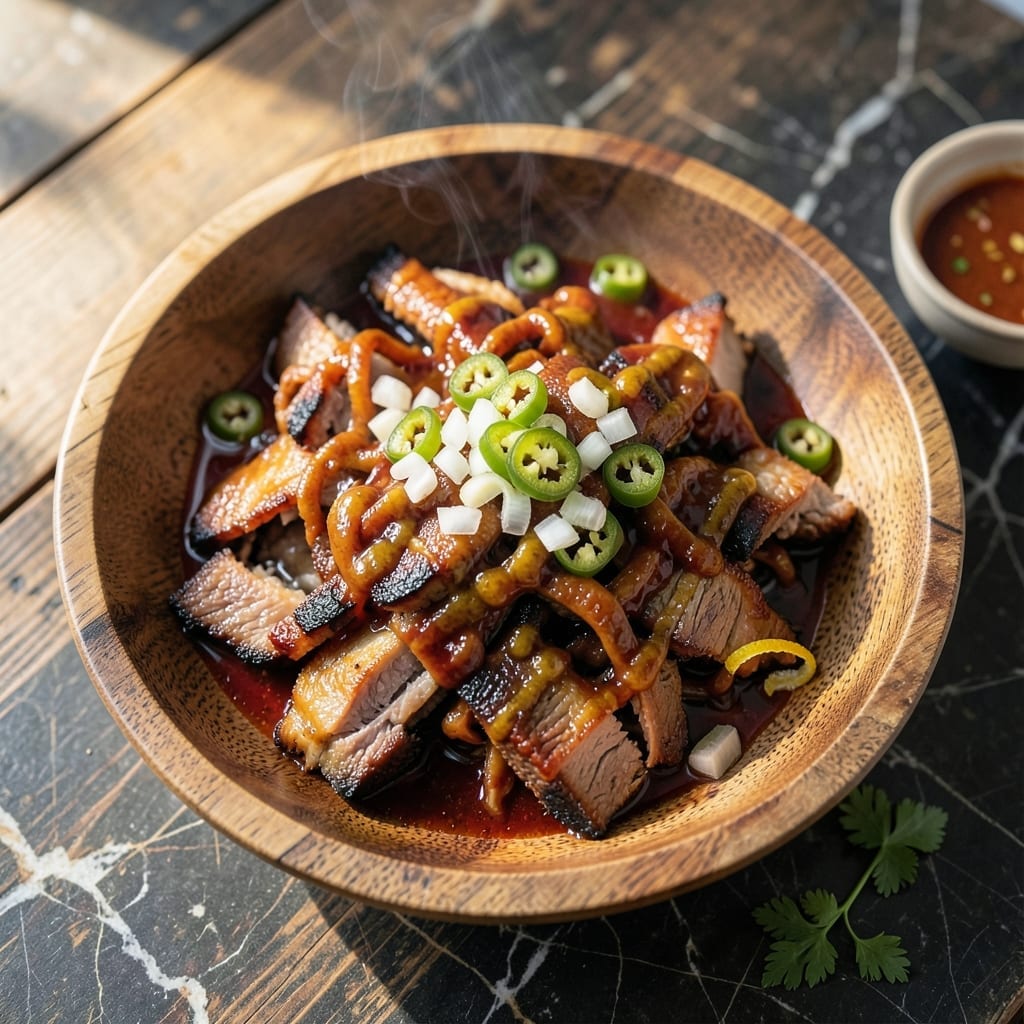
North Carolina barbecue is all about the vinegar-based tang and slow-smoked tenderness that defines this regional tradition. My method delivers that signature pull-apart texture with a crisp bark.
Using a pork shoulder and proper smoking technique, you’ll achieve tender results that honor the state’s barbecue legacy. The vinegar sauce cuts through the richness perfectly.
Ingredients for North Carolina Barbecue Pork
Pork shoulder, vinegar, and spices create that signature Carolina barbecue experience with minimal effort.
| Ingredient | Amount | Notes |
|---|---|---|
| Pork Shoulder 🥩 | 4 lb | Bone-in for best flavor |
| Apple Cider Vinegar 🍏 | 2 cups | For tangy mop sauce |
| Ketchup 🍅 | 1 cup | Balances vinegar sharpness |
| Brown Sugar 🍚 | ½ cup | Light or dark variety |
| Yellow Mustard 🟡 | ¼ cup | Smooth, prepared style |
| Crushed Red Pepper 🌶️ | 1 tsp | Adjust for heat preference |
| Black Pepper 🌶️ | 1 tbsp | Freshly ground preferred |
| Kosher Salt 🧂 | ¼ cup | Diamond Crystal preferred |
| Garlic Powder 🧄 | 1 tbsp | Fine grind for rub |
| Onion Powder 🧅 | 1 tbsp | Complements pork richness |
| Paprika 🌶️ | 1 tbsp | Sweet or smoked variety |
| Hickory Wood Chips 🪵 | 2 cups | Soaked for smoking |
| Water 💧 | ½ cup | For spritzing during smoking |
| Butter 🧈 | ½ cup | Unsalted, for bark finish |
[recipe_ingredient_scaler]
The pork shoulder is non-negotiable for authentic texture. Bone-in, well-marbled cuts from Whole Foods or a trusted butcher yield the best results. Look for 8-10 lb roasts and portion as needed—larger cuts smoke more evenly. Hickory wood chips are traditional, but apple or cherry wood adds a sweeter note if you prefer.
No apple cider vinegar? White vinegar in a pinch, but it lacks depth. Brown sugar can be swapped for white sugar plus molasses. Want more heat? Add cayenne to the rub. The ketchup balances acidity—use a high-quality brand like Heinz. Freshly cracked black pepper makes a noticeable difference over pre-ground.
Smoked pork keeps 4-5 days refrigerated, freezes beautifully for 3 months. Reheat gently with extra sauce to maintain moisture. The vinegar sauce can be made 1 week ahead—flavors meld and intensify over time.
Why You’ll Love This Recipe
- Set It and Forget: It’s just pork shoulder, vinegar, and a quick simmer—no babysitting required.
- Tangy Perfection: That vinegar-ketchup-mustard combo hits the exact sweet-tangy balance I crave every time.
- Crowd Pleaser: I’ve served this at tailgates and weeknight dinners—always disappears first.
- Leftovers for Days: One shoulder makes enough for sandwiches, tacos, and a midnight snack or two.
Step-by-Step Instructions for North Carolina Barbecue Pork
Master the art of low-and-slow smoking with this time-tested approach to pull-apart pork.
Step 1: Prepare the Pork Shoulder and Dry Rub
Pat the 4 lb Pork Shoulder dry with paper towels, ensuring all moisture is removed for optimal bark formation. In a bowl, combine the 0.25 cup Kosher Salt, 1 tbsp Black Pepper, 1 tbsp Garlic Powder, 1 tbsp Onion Powder, 1 tbsp Paprika, and 1 tsp Crushed Red Pepper to create the dry rub.
Massage the rub into every surface of the pork, pressing firmly so it adheres. This step builds a flavorful crust while the spices penetrate the meat. Let the seasoned shoulder rest at room temperature for 30 minutes before smoking to ensure even cooking.
Step 2: Set Up the Smoker and Prepare Wood Chips
Soak the 2 cups Hickory Wood Chips in the 0.5 cup Water for at least 30 minutes to prevent them from burning too quickly. While they soak, preheat your smoker to 225°F using indirect heat, aiming for a consistent, low temperature throughout the cook.
Once the smoker is ready, drain the wood chips and add them to the smoker box or directly onto the coals. The soaked chips will produce a steady, thin blue smoke—ideal for infusing the pork with that signature hickory flavor without bitterness.
Step 3: Smoke the Pork to Perfection
Place the pork shoulder fat-side up on the smoker grate, as far from the direct heat as possible. Insert a meat probe into the thickest part of the shoulder to monitor internal temperature. Smoke undisturbed for 6-8 hours, maintaining the smoker temperature at 225°F.
Every 2 hours, spritz the pork with the 0.5 cup Water to keep the surface moist and enhance bark development. You’ll know it’s ready for the next phase when the internal temperature reaches 165°F and the bark turns a deep mahogany color.
Step 4: Wrap and Finish the Cook
Once the pork hits 165°F, transfer it to a large sheet of heavy-duty foil. Add 0.5 cup Butter, 0.5 cup Brown Sugar, 1 cup Ketchup, 0.25 cup Yellow Mustard, and 2 cups Apple Cider Vinegar to the foil, then tightly wrap the pork in the liquid to create a braising environment.
Return the wrapped pork to the smoker and continue cooking until the internal temperature reaches 203°F. This usually takes another 2-3 hours. The meat will be probe-tender, pulling apart effortlessly when tested with a fork.
Step 5: Rest and Shred the Pork
Remove the pork from the smoker and let it rest, still wrapped, for 1 hour. This allows the juices to redistribute, ensuring every bite is moist and flavorful. Unwrap the pork and transfer it to a large cutting board or serving dish.
Using two forks or meat claws, shred the pork into bite-sized pieces, discarding any large fat chunks. Mix the shredded pork with the accumulated juices from the foil for maximum tenderness and flavor. Serve immediately on buns or as a platter with classic sides.
Pro Tips For Making North Carolina Barbecue Pork
- Slow Cook the Shoulder: I learned this the hard way—rush the pork and it’ll be tough. Let it go low and slow (225°F for 8-10 hours) until it shreds with a fork.
- Balance the Vinegar: North Carolina BBQ needs that tang, but too much apple cider vinegar overpowers. Start with 1 cup per 4 lbs of pork and adjust to taste.
- Skip the Over-Saucing: Resist the urge to drown the pork in sauce before pulling. Mix the vinegar, ketchup, and brown sugar separately, then toss the shredded meat in just enough to coat.
- Rest Before Pulling: After cooking, let the pork shoulder rest under foil for 30 minutes. It holds onto the juices better—my first few batches were dry before I figured this out.
Perfect Pairings for These Flavors
Classic Carolina Sides
You can’t go wrong with creamy coleslaw—its cool crunch cuts through the smoky richness. I toss 6 cups shredded cabbage with a dressing of ½ cup mayonnaise, 2 tbsp apple cider vinegar, and 1 tsp celery seed. It’s a match made in barbecue heaven. 🥗
Vinegar Sauce Pairings
The tangy vinegar sauce on this pork pairs perfectly with crispy hush puppies. My secret is adding 1 tsp baking powder to the cornmeal batter for extra fluffiness. Serve with a side of pickled jalapeños for a spicy kick.
Beverage Matters
For beverages, nothing beats sweet tea—I brew mine with 4 black tea bags and 1 cup sugar per gallon. For beer lovers, a light lager like Pabst Blue Ribbon complements the vinegar tang without overpowering it. 🍺
Bun Selection
Choose a soft hamburger bun toasted lightly on the grill. I prefer Martin’s Potato Rolls for their buttery texture that holds up to the juicy pork. Brush the buns with 1 tbsp melted butter before toasting for extra richness.
Fresh Finishes
Top your sandwich with bread-and-butter pickles for a sweet crunch contrast. Thinly slice 1 large white onion and serve on the side for those who love extra bite. A sprinkle of finely chopped cilantro adds freshness.
Nutrition Facts
Frequently Asked Questions
What cut of pork works best for this?
Pork shoulder (also called Boston butt) is ideal for its marbling and connective tissue. Bone-in cuts add more flavor. Avoid lean cuts like tenderloin—they won’t achieve the same tenderness.
Can I use an oven instead of a smoker?
Yes, cook at 225°F in a Dutch oven or roasting pan with a rack. Add 1 tsp liquid smoke to the braising liquid for that smoky depth. Expect similar timing.
How do I know when it’s done?
The pork is ready when it reaches 203°F internally and pulls apart easily with a fork. If it resists, keep cooking—low and slow is key for perfect texture.
Why is resting important?
Resting for 1 hour lets juices redistribute throughout the meat. Skipping this step can leave the pork dry and unevenly flavored. Patience pays off!

Trained in classic French technique but raised on slow-cooked ribs and spicy rubs, she blends culinary skill with smoke and soul.
- Recipe for Boneless Pork Chops in Cast Iron Skillet: Sear and Baste to Juicy Perfection - October 3, 2026
- Recipe for Boneless Cross Rib Roast: Slow-Roasted Beef with Herb Crust - October 3, 2026
- Hamburgers in Sauce Recipe Crock Pot: Slow-Cooked Savory Delight - October 3, 2026