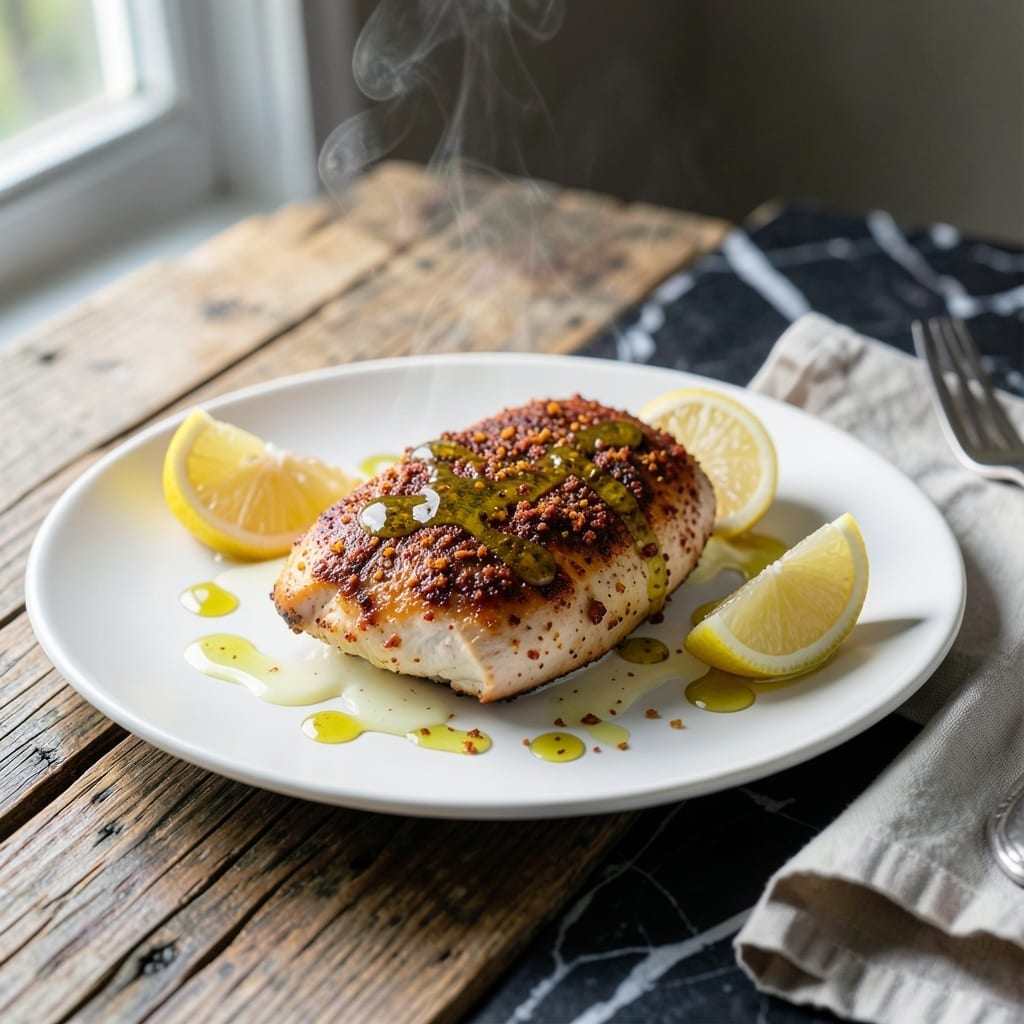
This Old Bay seasoning transforms simple chicken breast into a Maryland-style masterpiece with minimal effort. The blend of spices creates a zesty, aromatic crust that locks in juices while adding layers of flavor.
I developed this method to highlight the seasoning’s versatility—just a few shakes elevate the dish without overpowering the natural taste of the chicken. The result is tender meat with a golden, flavorful exterior that works for weeknight dinners or summer grilling.
What makes this recipe special is its simplicity. With only 5 ingredients and 20 minutes of cooking time, you’ll achieve restaurant-quality results that taste like a coastal getaway.
Serve with fresh lemon wedges to brighten the spices even more. Here’s how to make it perfectly every time.
Ingredients for Old Bay Chicken Breast
Five ingredients deliver bold Maryland-style flavor with minimal effort for this dish.
| Ingredient | Amount | Notes |
|---|---|---|
| Boneless Skinless Chicken Breasts 🍗 | 1 ½ lb | Pounded to even thickness |
| Old Bay Seasoning 🌶️ | 2 tbsp | Divided for coating and finishing |
| Unsalted Butter 🧈 | 3 tbsp | Melted for basting |
| Olive Oil 🫒 | 1 tbsp | High smoke point preferred |
| Fresh Lemon 🍋 | 1 whole | Cut into wedges for serving |
| Kosher Salt 🧂 | ½ tsp | Diamond Crystal preferred |
| Freshly Ground Black Pepper 🌶️ | ½ tsp | Coarse grind recommended |
| Garlic Powder 🧄 | ½ tsp | Optional for extra depth |
[recipe_ingredient_scaler]
The Old Bay seasoning is non-negotiable—McCormick’s original blend is the standard. Most supermarkets carry it in the spice aisle. For the chicken, bone-in, skin-on thighs can work if you prefer darker meat (adjust cooking time). Costco’s pre-pounded chicken breasts save prep time. Look for plump, moist breasts with no graying—this ensures tenderness.
No Old Bay? DIY blend of celery salt, paprika, black pepper, cayenne, and dry mustard gets close. Butter can be swapped for olive oil (less rich but still effective). The lemon is key for brightness—bottled juice won’t cut it. If you’re out of fresh, lime wedges work in a pinch. Garlic powder can be replaced with fresh minced garlic at double the amount.
Cooked chicken keeps 3-4 days refrigerated in an airtight container. Reheat gently to avoid drying out. Old Bay itself stays potent for 1-2 years in a cool, dark place. For best results, season the chicken just before cooking—don’t let it sit too long or the salt can start to break down the meat.
Why You’ll Love This Recipe
- One Pan Wonder: I just toss the chicken in Old Bay, sear it in butter and oil, and finish with lemon—minimal mess, maximum flavor.
- Crave-Worthy Crust: The butter and Old Bay create this golden, zesty crust that’s ridiculously good with every bite.
- Meal Prep Hero: I make a batch on Sunday and it stays juicy all week—great in wraps, salads, or straight from the fridge.
Step-by-Step Instructions for Old Bay Chicken Breast
Master this technique for consistently juicy, flavorful chicken with Maryland-style character every time.
Step 1: Prepare and Season the Chicken Breasts
Begin by pounding the 1.5 lb boneless skinless chicken breasts to an even ½-inch thickness using a meat mallet. This ensures uniform cooking and prevents dry, overdone edges while the center finishes. Place each breast between plastic wrap to avoid tearing.
Pat the pounded chicken completely dry with paper towels—moisture inhibits proper browning. Season both sides evenly with 1 tbsp Old Bay Seasoning, 0.5 tsp kosher salt, 0.5 tsp freshly ground black pepper, and 0.5 tsp garlic powder. Press the seasoning into the meat for maximum adhesion.
Step 2: Sear to Develop Flavor and Color
Heat a large skillet over medium-high heat until a drop of water sizzles and evaporates immediately. Add 1 tbsp olive oil and swirl to coat the pan. Once the oil shimmers but doesn’t smoke, carefully place the seasoned chicken in the pan.
Sear undisturbed for 4-5 minutes per side until the chicken develops a deep golden crust and releases easily from the pan. Avoid moving the chicken prematurely—this disrupts the Maillard reaction that creates complex flavors. The internal temperature should reach 145°F in the thickest part.
Step 3: Baste with Aromatic Butter
Reduce heat to medium and add the remaining 1 tbsp Old Bay Seasoning and 3 tbsp unsalted butter to the skillet. As the butter melts, tilt the pan slightly and use a spoon to baste the chicken continuously for 2-3 minutes. This infuses the meat with rich, savory depth.
The butter should foam and turn a light golden color, but not brown. Watch for the edges of the chicken to turn opaque and the surfaces to glisten with the buttery baste. This step elevates the dish from simple seared chicken to restaurant-quality.
Step 4: Rest and Serve with Lemon
Transfer the chicken to a clean plate or cutting board. Tent loosely with foil and let rest for 5-10 minutes—this allows the juices to redistribute throughout the meat. Skipping this step results in dry chicken as the juices pool on the cutting board.
Serve immediately with the fresh lemon cut into wedges on the side for a bright, citrusy finish that complements the Old Bay’s spice blend. The lemon’s acidity cuts through the richness of the butter, balancing each bite perfectly.
Pro Tips For Making Old Bay Chicken Breast
- Pound Even Thickness: Use a meat mallet to pound the chicken breasts to 1/2-inch thickness—this guarantees even cooking and prevents dry, overdone edges while the center catches up.
- Butter Last Minute: Add the unsalted butter only in the last 2-3 minutes of cooking to avoid burning it; the milk solids in butter brown fast over high heat, and you want that rich flavor, not bitter bits.
- Skip the Lemon Too Soon: I learned this the hard way—adding lemon juice too early can make the chicken tough. Squeeze it fresh over the dish just before serving to keep the meat tender and bright.
- Rest Under Foil: Pull the chicken at 160°F and let it rest under foil for 5-10 minutes—the temp will climb to 165°F, and the juices will redistribute instead of pooling on your cutting board.
Common Mistakes When Making old bay chicken breast
Over-Seasoning the Chicken
More Old Bay doesn’t mean better flavor. Stick to the recommended 2 tbsp total—excess seasoning can make the chicken taste salty and overpower the blend’s delicate spice balance. I learned this the hard way with my first batch. 🔥
Skipping the Pounding
Uneven thickness leads to inconsistent cooking. Always pound chicken to ½-inch thickness so it cooks evenly. Thicker parts will be underdone while thin edges dry out—ruining that tender texture we’re after.
Crowding the Pan
Give each breast space in the skillet. Crowding lowers the pan’s temperature, causing the chicken to steam rather than sear. Cook in batches if needed—medium-high heat is crucial for that golden crust.
Rushing the Sear
Let the chicken develop a proper crust before flipping. Moving it too soon prevents the Maillard reaction from creating those complex flavors. Wait until it releases easily—about 4-5 minutes per side.
Skipping the Rest
Always let the chicken rest for 5-10 minutes after cooking. Cutting too soon causes juices to escape, leaving you with dry meat. Tent with foil to keep it warm while the juices redistribute.
Ignoring Internal Temp
Don’t guess—use a meat thermometer. Pull the chicken at 145°F internal temperature. Overcooking is the fastest way to turn tender chicken into dry, chewy disappointment.
Nutrition Facts
Frequently Asked Questions
Can I use bone-in chicken instead?
Yes, but adjust cooking time. Bone-in pieces need 6-8 minutes per side at medium-high heat to reach 165°F internally. The bone insulates the meat, so check temperature near the joint.
What if I don’t have a meat mallet?
Use a rolling pin or heavy pan wrapped in plastic. Pound gently to ½-inch thickness for even cooking. A wine bottle works in a pinch—just avoid tearing the meat.
Can I bake this instead of pan-searing?
Bake at 375°F for 20-25 minutes on a lined tray. Brush with melted butter halfway through for extra flavor.

Trained in classic French technique but raised on slow-cooked ribs and spicy rubs, she blends culinary skill with smoke and soul.
- Recipe for Boneless Pork Chops in Cast Iron Skillet: Sear and Baste to Juicy Perfection - October 3, 2026
- Recipe for Boneless Cross Rib Roast: Slow-Roasted Beef with Herb Crust - October 3, 2026
- Hamburgers in Sauce Recipe Crock Pot: Slow-Cooked Savory Delight - October 3, 2026