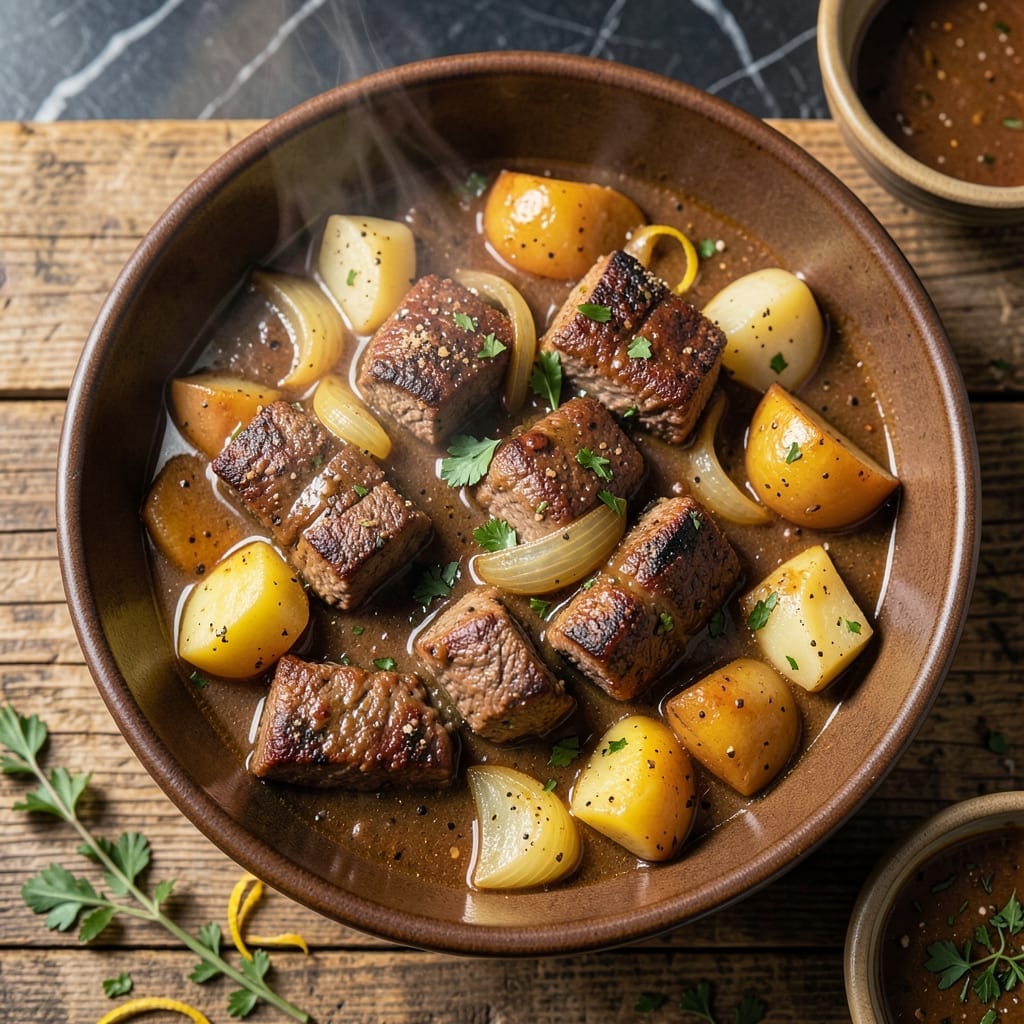
This stove top beef stew delivers the hearty tradition of slow cooking without modern shortcuts. I rely on simple ingredients and patient simmering to develop deep, rich flavors.
Tender beef and vegetables transform through low heat into a comforting meal. The result is always a satisfying bowl of classic warmth.
Ingredients for Old Fashioned Beef Stew Recipe Stove Top
Simple, hearty ingredients transform through patient simmering into classic comfort. Nothing fussy, just tradition.
| Ingredient | Amount | Notes |
|---|---|---|
| Beef Chuck Roast 🥩 | 2 lb | Cut into 1-inch cubes, well-marbled |
| All-Purpose Flour 🌾 | ¼ cup | For dredging beef cubes |
| Kosher Salt 🧂 | 1 tsp | Diamond Crystal preferred for even seasoning |
| Black Pepper 🌶️ | ½ tsp | Freshly ground for optimal flavor |
| Olive Oil 🫒 | 2 tbsp | Extra-virgin for rich depth |
| Yellow Onion 🧅 | 1 whole | Large, diced into 1/2-inch pieces |
| Garlic Cloves 🧄 | 4 cloves | Minced for aromatic base |
| Carrots 🥕 | 3 whole | Peeled, cut into 1-inch chunks |
| Yukon Gold Potatoes 🥔 | 1 ½ lb | Peeled, cubed into 1-inch pieces |
| Celery Stalks 🌿 | 2 whole | Trimmed, sliced into 1/2-inch pieces |
| Tomato Paste 🍅 | 2 tbsp | For depth of umami flavor |
| Dry Red Wine 🍷 | 1 cup | Bold variety like Cabernet Sauvignon |
| Beef Stock 🥣 | 4 cups | Low-sodium for controlled seasoning |
| Bay Leaves 🍃 | 2 whole | Dried, removed before serving |
| Fresh Thyme Sprigs 🌿 | 3 whole | Stems removed, leaves used |
[recipe_ingredient_scaler]
The beef is non-negotiable for authentic texture. Chuck roast with visible marbling yields the most tender results after long cooking. Source from Whole Foods or a trusted butcher for consistent quality. The flour for dredging should be standard all-purpose—no need for specialty types. For the wine, a bold dry red like Cabernet Sauvignon adds depth without overpowering.
No red wine on hand? Substitute beef broth with 1 tbsp balsamic vinegar for similar acidity. Fresh thyme can be replaced with 1 tsp dried thyme (measured before crushing). If Yukon Golds aren’t available, russet potatoes hold up well to long cooking. The tomato paste can be swapped for 1/4 cup crushed tomatoes reduced by half.
Stew tastes even better the next day after flavors meld. Store in an airtight container in the fridge for up to 4 days or freeze for 3 months. Reheat gently on the stove, adding a splash of water if needed to thin.
Why You’ll Love This Recipe
- One Pot Wonder: I love that it all comes together in a single pot—just brown the beef chuck in olive oil, dust with flour, and let the stove do the work.
- Deep, Rich Flavor: The beef chuck roast turns unbelievably tender, soaking up all the savory juices from the salt, pepper, and slow simmer.
- Weeknight Hero: Honestly, it’s my go-to for busy evenings—prep it in the morning, and by dinner, the house smells like comfort.
- Budget Stretch: A chuck roast feeds my family for days, and the leftovers taste even better the next night.
Step-by-Step Instructions for Old Fashioned Beef Stew
Master the stovetop technique for a rich, deeply flavored stew that defines comfort food.
Step 1: Sear and Brown the Beef
Pat the 2 lb beef chuck roast cubes dry with paper towels, then season with 1 tsp kosher salt and 0.5 tsp black pepper. Toss the beef in 0.25 cup all-purpose flour until evenly coated, shaking off any excess. This coating creates a beautiful crust and thickens the stew later.
Heat 2 tbsp olive oil in a heavy pot over medium-high heat until shimmering. Add the beef in a single layer, working in batches if necessary to avoid crowding. Sear undisturbed for 3-4 minutes per side until deeply browned on all sides. Transfer the browned beef to a plate and set aside.
Step 2: Build the Flavor Foundation
In the same pot, add the diced yellow onion, sliced celery stalks, and garlic cloves. Cook over medium heat for 4-5 minutes, stirring frequently, until the vegetables soften and begin to take on color. The browned bits from the beef will add depth to this mixture.
Stir in 2 tbsp tomato paste and cook for 1-2 minutes until it darkens slightly. This step intensifies its umami properties. Pour in 1 cup dry red wine to deglaze the pot, scraping up all the browned bits from the bottom. Simmer for 2-3 minutes until the liquid reduces by half.
Step 3: Simmer to Tender Perfection
Return the beef to the pot along with any accumulated juices. Add 4 cups beef stock, 3 whole carrots, 1.5 lb Yukon Gold potatoes, 2 whole bay leaves, and 3 whole fresh thyme sprigs. Stir to combine and bring to a gentle boil.
Reduce the heat to low, cover, and let it simmer for 2 to 2.5 hours. Check occasionally and stir gently to prevent sticking. The stew is ready when the beef is fork-tender and the vegetables are soft. The sauce will have thickened naturally from the flour coating on the beef.
Step 4: Adjust Seasoning and Serve
Remove the pot from heat. Discard the bay leaves and thyme sprigs. Taste and adjust seasoning with additional kosher salt or black pepper if needed. The flavors should be rich and balanced, with the beef meltingly tender.
Ladle the stew into bowls while hot. The sauce should be thick enough to cling to the beef and vegetables, with a deep, savory flavor that develops from the long, slow cooking process. Serve with crusty bread to soak up every last bit of the delicious broth.
Pro Tips For Making Old Fashioned Beef Stew Recipe Stove Top
- Brown the Beef Well: Use medium-high heat and don’t crowd the pan—sear the chuck roast in batches until deeply browned on all sides, about 3-4 minutes per side. I learned this the hard way after ending up with gray, boiled-looking meat instead of rich, caramelized crust.
- Dust with Flour: Toss the beef chunks in flour just before browning—about ¼ cup for 2 pounds of meat—and shake off the excess. This creates a thicker, more flavorful stew base without needing a separate roux.
- Skip the Cold Oil: Heat the olive oil until it shimmers before adding the beef, or the meat will steam instead of sear. Sounds simple, but I ruined my first three stews by rushing this step.
- Season in Layers: Hit the beef with kosher salt and black pepper right after flouring, then taste and adjust the stew’s seasoning again after adding liquid. The flavor builds in stages, and you’ll need more salt than you think.
Wine and Beer Pairings for This old fashioned beef stew recipe stove top
Red Wine Pairings
A bold Cabernet Sauvignon complements the rich beef flavors beautifully. Its tannins cut through the stew’s heartiness while fruit notes enhance the dish. I prefer California Cabs for their balance of acidity and dark fruit. 🍷
Light Red Options
For a lighter touch, try a Pinot Noir from Oregon. The earthy notes mirror the thyme and bay leaf, while its bright acidity refreshes your palate between bites. Burgundy-style Pinots also work wonderfully here.
Beer Selections
A malty English Brown Ale brings caramel notes that echo the stew’s depth. I reach for Newcastle Brown Ale—its nutty sweetness pairs perfectly with the beef’s savory qualities. The carbonation cleanses your palate. 🍺
Dark Beer Choices
If you prefer darker beers, a Porter or Stout adds roasty flavors that complement the seared beef. Guinness works surprisingly well, though I’d limit to 12 oz to avoid overwhelming the dish.
Non-Alcoholic Pairings
For non-drinkers, try a sparkling pomegranate juice—its tartness cuts through the richness. Or brew a strong Earl Grey tea with bergamot notes that echo the thyme in the stew. Both options refresh beautifully.
Nutrition Facts
Frequently Asked Questions
Can I use a different cut of beef?
Stick with well-marbled cuts like chuck roast or short ribs for best results. Leaner cuts like sirloin may become tough during the 2-2.5 hour simmer. The fat in chuck melts slowly, creating that signature tenderness.
Why do I need to sear the beef first?
Searing develops deep flavor through caramelization and creates a fond that enhances the stew’s base. Skip this step and your dish will lack the rich, complex taste that defines a classic version.
Can I make this in a slow cooker instead?
Yes, but brown the beef first on the stove for flavor development. Then transfer to the slow cooker with all ingredients and cook on low for 7-8 hours. The texture will be similar but lacks some stovetop depth.
How do I fix a stew that’s too thin?
Simmer uncovered for 10-15 minutes to reduce the liquid. Alternatively, mix 1 tbsp cornstarch with 1 tbsp water and stir into the hot stew until thickened. Avoid adding flour directly—it can create lumps.

Trained in classic French technique but raised on slow-cooked ribs and spicy rubs, she blends culinary skill with smoke and soul.
- Recipe for Boneless Pork Chops in Cast Iron Skillet: Sear and Baste to Juicy Perfection - October 3, 2026
- Recipe for Boneless Cross Rib Roast: Slow-Roasted Beef with Herb Crust - October 3, 2026
- Hamburgers in Sauce Recipe Crock Pot: Slow-Cooked Savory Delight - October 3, 2026