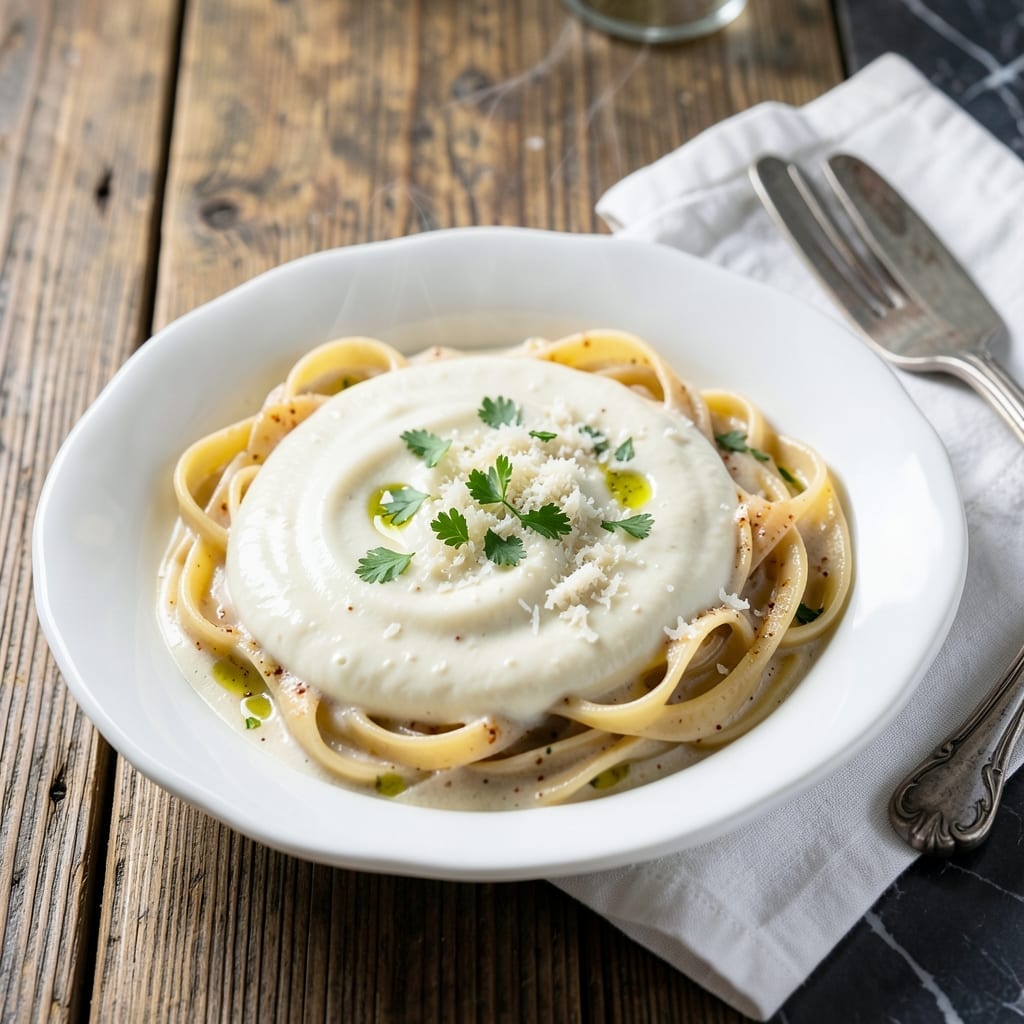
This sauce delivers the authentic, velvety richness you know from Olive Garden. I’ve refined the technique to ensure it clings perfectly to pasta.
Heavy cream, real parmesan, and a touch of garlic create that creamy texture and depth of flavor. Simple ingredients, professional results.
Ingredients for Olive Garden Alfredo Sauce
Nine ingredients deliver that authentic, velvety richness you expect from the restaurant.
| Ingredient | Amount | Notes |
|---|---|---|
| Heavy Cream 🥛 | 2 cups | Full-fat for optimal richness |
| Unsalted Butter 🧈 | ½ cup | Cut into small cubes |
| Garlic Cloves 🧄 | 4 cloves | Minced to fine paste |
| Parmesan Cheese 🧀 | 1 ½ cups | Freshly grated from block |
| All-Purpose Flour 🌾 | ¼ cup | For thickening the sauce |
| Whole Milk 🥛 | ½ cup | Warm, for smooth texture |
| Salt 🧂 | ½ tsp | Diamond Crystal preferred |
| White Pepper 🌶️ | ¼ tsp | Freshly ground for subtle heat |
| Fresh Nutmeg 🌰 | 0.125 tsp | Grated on microplane |
[recipe_ingredient_scaler]
The Parmesan is non-negotiable for authentic flavor. Whole Foods or Costco carry high-quality blocks of Parmigiano-Reggiano—avoid pre-grated, which contains anti-caking agents that make the sauce grainy. Use heavy cream with at least 36% fat; lower-fat versions won’t achieve the proper consistency. For the butter, Plugrá or organic unsalted ensures clean flavor without salt interference.
No white pepper? Black pepper at half the amount works, though the color will show. Short on Parmesan? Pecorino Romano adds a sharper note but reduces the quantity by 25% as it’s saltier. For a lighter version, replace half the cream with whole milk, though texture will be less luxurious. Always use freshly grated nutmeg—pre-ground loses potency quickly.
Sauce keeps for 4-5 days refrigerated in an airtight container, but best used fresh. Reheat gently over low heat with a splash of milk to restore creaminess. Freezing is possible but may cause separation—stir vigorously upon thawing.
Why You’ll Love This Recipe
- One Pot Wonder: I love that I can make this creamy sauce in a single saucepan—no fancy equipment, just melt, whisk, and simmer.
- Rich Garlic Kick: The butter and garlic cook down to a golden base before the Parmesan makes it irresistibly smooth and savory.
- Weeknight Hero: Honestly, it’s my go-to for quick pasta, veggie dips, or even a pizza base when I’m short on time.
- Stretches Further: A batch costs pennies compared to jarred sauces, and leftovers keep well for days—if they last that long.
Step-by-Step Instructions for Olive Garden Style Alfredo Sauce
Master the technique behind this rich, velvety sauce with professional precision and care.
Step 1: Create the Roux Base
In a heavy-bottomed saucepan over medium heat, melt the 0.5 cup Unsalted Butter cut into small cubes. The butter should foam but not brown—this indicates the water has evaporated and the milk solids are beginning to cook.
Once melted, whisk in the 0.25 cup All-Purpose Flour to form a smooth paste. Cook this roux for 1-2 minutes, stirring constantly, until it turns a pale golden color and smells slightly nutty. This cooking step removes the raw flour taste and builds the foundation for your sauce.
Be vigilant here—if the roux darkens too much, it will impart a toasted flavor that overpowers the delicate Parmesan. The mixture should resemble wet sand when ready.
Step 2: Develop the Creamy Foundation
Gradually pour in the 2 cups Heavy Cream, whisking continuously to prevent lumps from forming. I add it in a slow, steady stream while maintaining constant motion—this creates an emulsified, silky base.
Add the 0.5 cup Whole Milk (warm) and continue whisking until fully incorporated. The mixture will thicken slightly as it comes to a gentle simmer. Maintain medium-low heat and cook for 3-4 minutes until the sauce coats the back of a spoon.
At this stage, the sauce should have the consistency of heavy cream. If it appears too thick, you’ve over-reduced—add a splash of warm milk to adjust. The key is patience; rushing with high heat can cause the dairy to separate.
Step 3: Infuse with Aromatics
Reduce the heat to low and add the 4 cloves Garlic Cloves (minced to fine paste). Cook for 30-45 seconds, stirring constantly, until the garlic becomes fragrant but does not take on color. Burnt garlic will impart a bitter taste that ruins the sauce.
Immediately add the 0.5 tsp Salt, 0.25 tsp White Pepper (freshly ground), and 0.125 tsp Fresh Nutmeg (grated on microplane). These seasonings should be added now to bloom in the warm sauce, enhancing their aromatic qualities.
The nutmeg, though subtle, is essential—it adds depth and a hint of warmth that balances the richness of the dairy. Stir well to distribute the seasonings evenly throughout the sauce.
Step 4: Incorporate the Parmesan
Remove the saucepan from heat and let it sit for 1 minute to slightly cool. This prevents the 1.5 cups Parmesan Cheese (freshly grated from block) from seizing up or creating a stringy texture when added.
Gradually sprinkle in the Parmesan, whisking constantly until each addition is fully melted and smooth before adding more. This gradual incorporation ensures a velvety, lump-free sauce. The freshly grated cheese melts more smoothly than pre-shredded, which often contains anti-caking agents.
Return the saucepan to low heat if needed to help the final bits of cheese melt, but do not allow the sauce to boil. Boiling can cause the sauce to break or become grainy. The finished sauce should be thick enough to heavily coat a spoon but still pourable.
Step 5: Final Adjustments and Service
Taste and adjust the seasoning if necessary. The sauce should be rich, creamy, and well-balanced—savory from the Parmesan, with a subtle warmth from the nutmeg and white pepper. If it’s too thick, thin it with a splash of warm milk.
For the most authentic texture, let the sauce rest for 2-3 minutes off the heat before serving. This allows the flavors to meld and the sauce to reach its ideal consistency. Serve immediately over hot pasta, tossing quickly to ensure every strand is evenly coated.
Remember, this sauce thickens as it cools. If you’re preparing it ahead, reheat gently over low heat with a splash of milk or cream to restore its creamy texture.
Pro Tips For Making Olive Garden Alfredo Sauce
- Low and Slow Heat: Keep the sauce on medium-low heat—any higher and the heavy cream will separate or scorch. I learned this the hard way after ruining two batches by rushing it.
- Grate Fresh Parmesan: Skip the pre-shredded stuff; freshly grated Parmesan melts smoother and tastes richer. The anti-caking agents in bagged cheese make the sauce grainy.
- Bloom the Garlic: Cook the minced garlic in butter for just 30 seconds until fragrant, not brown. Burnt garlic turns bitter and ruins the whole sauce.
- Temper the Cream: Warm the heavy cream slightly before adding it to the roux to prevent lumping. Cold cream can cause the flour-butter mix to seize up.
Troubleshooting Great Olive Garden Alfredo Sauce
Sauce Too Thin
If your sauce isn’t thickening, it likely needs more cooking time. Return it to medium-low heat and simmer for 2-3 additional minutes, stirring constantly. The roux needs adequate time to fully develop its thickening power.
For immediate results, create a quick slurry with 1 tbsp flour and 2 tbsp cold milk, whisk until smooth, then stir into the sauce. Cook for 1-2 minutes until thickened. 💡
Sauce Too Thick
Thick sauce can be rescued by gradually whisking in warm whole milk, 1 tbsp at a time, until reaching the desired consistency. Avoid adding cold liquid, which can cause the sauce to seize up.
If you’ve over-reduced, remove from heat and whisk in 1-2 tbsp warm cream. The residual heat will incorporate it smoothly without breaking the emulsion.
Grainy Texture
Graininess usually means the cheese wasn’t fully melted or the sauce boiled. Immediately remove from heat and whisk vigorously. If needed, add 1-2 tbsp warm milk and stir until smooth.
Prevent this by using freshly grated Parmesan and keeping the heat at low when adding cheese. Pre-shredded cheese contains anti-caking agents that cause grittiness.
Sauce Separated
If your sauce looks curdled or oily, it’s broken. Remove from heat and whisk in 1 tsp cold butter or 1 tbsp cold cream. The cold fat helps re-emulsify the sauce.
Prevent separation by maintaining low to medium-low heat throughout and avoiding rapid temperature changes. Patience is key with dairy-based sauces. 🔥
Nutrition Facts
Frequently Asked Questions
What’s the best cheese for this sauce?
Use Parmigiano-Reggiano for authentic flavor. Freshly grate from a block to avoid graininess. Pre-shredded varieties contain anti-caking agents that can ruin the texture.
Can I make this ahead of time?
Yes! Store in an airtight container in the fridge for up to 5 days. Reheat gently over low heat with a splash of milk to restore creaminess.
Why does my sauce get grainy?
Graininess usually means the cheese wasn’t fully melted or the heat was too high. Use freshly grated cheese and keep the heat at low when adding it.
How do I thin a too-thick sauce?
Whisk in warm milk, 1 tbsp at a time, until smooth. Avoid cold liquid, which can cause the sauce to seize.

Trained in classic French technique but raised on slow-cooked ribs and spicy rubs, she blends culinary skill with smoke and soul.
- Recipe for Boneless Pork Chops in Cast Iron Skillet: Sear and Baste to Juicy Perfection - October 3, 2026
- Recipe for Boneless Cross Rib Roast: Slow-Roasted Beef with Herb Crust - October 3, 2026
- Hamburgers in Sauce Recipe Crock Pot: Slow-Cooked Savory Delight - October 3, 2026