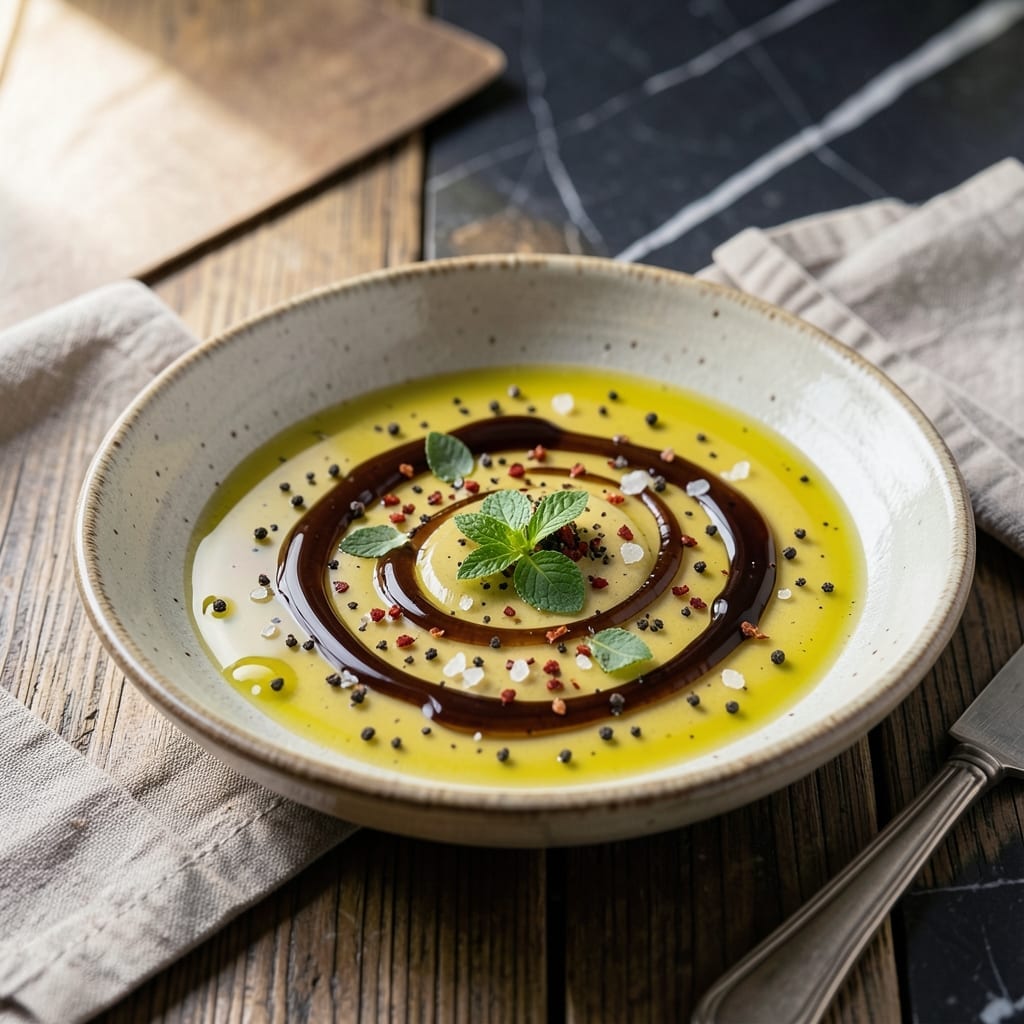
This simple dipping oil transforms ordinary bread into a restaurant-worthy appetizer. The perfect balance of quality olive oil and aged balsamic vinegar creates a bold, tangy flavor that enhances every bite.
With just two ingredients and 5 minutes of prep, this recipe delivers authentic Italian taste. The rich oil carries the vinegar’s depth, making it ideal for crusty bread or as a salad dressing base.
Ingredients for Olive Oil and Balsamic Vinegar Dipping Oil Recipe for Bread
A few quality ingredients create bold Italian dipping oil worthy of any bread basket.
| Ingredient | Amount | Notes |
|---|---|---|
| Extra-Virgin Olive Oil 🫒 | ¾ cup | High-quality, cold-pressed preferred |
| Aged Balsamic Vinegar 🍷 | ¼ cup | Thick, syrupy consistency ideal |
| Freshly Ground Black Pepper 🌶️ | ½ tsp | Coarse grind for texture |
| Dried Oregano 🌿 | ½ tsp | Mediterranean variety preferred |
| Sea Salt Flakes 🧂 | ½ tsp | Maldon or similar finishing salt |
| Crushed Red Pepper Flakes 🔥 | ¼ tsp | Adjust to heat preference |
| Fresh Rosemary 🍃 | 1 tbsp | Finely chopped, optional |
[recipe_ingredient_scaler]
The olive oil is everything here. California Olive Ranch or Colavita offer reliable cold-pressed options at most supermarkets. Look for dark glass bottles—light degrades quality fast. Aged balsamic vinegar should be thick enough to coat a spoon; Trader Joe’s carries a solid 12-year aged version that won’t break the bank. Avoid cheap vinegars with added caramel coloring—they lack depth.
No aged balsamic? Reduce regular balsamic by half on the stovetop until syrupy. Substitute dried thyme at half the amount for oregano. For heat without red pepper flakes, a pinch of cayenne works. The rosemary can be swapped for fresh thyme (1:1). If using dried herbs, reduce quantity by half—they’re more concentrated.
Store in a cool, dark place for up to 3 months. The flavors meld beautifully over time. Shake before each use as ingredients may settle. For gifting, small glass bottles with cork stoppers keep it fresh longest.
Why You’ll Love This Recipe
- 5-Minute Magic: I just stir together the olive oil, balsamic, and a pinch of oregano—no cooking, no mess.
- Flavor Bomb: That first bite of crusty bread dunked in the peppery, tangy oil? I make it every week just for that.
- Dinner Party Hero: Guests always ask for the recipe, and I’ll be real—it’s the easiest thing on my hosting menu.
- Pantry Staple: Honestly, I keep a jar in the fridge and it lasts for days, ready for any bread emergency.
Step-by-Step Instructions for Olive Oil and Balsamic Vinegar Dipping Oil
Here’s the method. Straightforward, tested, works every time.
Step 1: Select and Prepare Your Base Ingredients
Begin by measuring out the 0.75 cup Extra-Virgin Olive Oil and 0.25 cup Aged Balsamic Vinegar. I recommend using a high-quality, cold-pressed olive oil for its superior flavor profile and aromatic complexity. The aged balsamic vinegar should have a thick, syrupy consistency for optimal results.
Pour both into a small mixing bowl. The ratio of three parts oil to one part vinegar creates the perfect balance of richness and acidity that will complement your bread beautifully.
Step 2: Incorporate the Aromatic Seasonings
Add the 0.5 tsp Freshly Ground Black Pepper, 0.5 tsp Dried Oregano, and 1 tbsp Fresh Rosemary to the bowl. The coarse grind of the black pepper provides a satisfying texture, while the Mediterranean oregano and finely chopped rosemary infuse the oil with authentic Italian character.
Whisk the mixture gently to begin distributing the herbs throughout the liquid. Don’t be concerned if the herbs don’t fully incorporate at this stage—they’ll continue to infuse as the mixture rests.
Step 3: Add the Finishing Touches
Sprinkle in the 0.5 tsp Sea Salt Flakes and 0.25 tsp Crushed Red Pepper Flakes. The Maldon or similar finishing salt will dissolve slightly, creating a subtle briny note, while the red pepper flakes add a gentle heat that builds with each dip.
Whisk once more until all ingredients are evenly distributed. The mixture should have a beautiful speckled appearance with herbs suspended throughout.
Step 4: Allow the Flavors to Marry
Let the dipping oil rest at room temperature for at least 30 minutes before serving. This resting period allows the herbs and spices to fully infuse the oil and vinegar, creating a more complex and harmonious flavor profile.
For best results, I recommend preparing this mixture 1-2 hours in advance. The longer it sits, the more pronounced the flavors become, though I’ve found the sweet spot is around 2 hours for optimal herb infusion without overpowering the delicate balance of flavors.
Pro Tips For Making Olive Oil And Balsamic Vinegar Dipping Oil Recipe For Bread
- Use Cold Olive Oil: Skip the fridge, but start with oil that’s been stored in a cool pantry—around 65°F. I learned this the hard way when my first batch tasted bitter from overheated oil.
- Bloom the Oregano: Lightly toast the dried oregano in a dry pan for 20 seconds before mixing. Sounds weird, but it wakes up the flavor and makes the oil taste like it’s been infused for hours.
- Balance the Vinegar: Aged balsamic can overpower, so start with a 3:1 oil-to-vinegar ratio. My grandmother swore by this, and she was right: it keeps the dip smooth and balanced.
- Finish with Salt: Add the sea salt flakes last, right before serving, so they stay crunchy. I was skeptical until I tried it—now I’d never skip this step.
Dietary Considerations for This Dish
Keto-Friendly Options
This dipping oil is naturally low-carb and keto-friendly since olive oil and balsamic vinegar contain minimal net carbs. For a richer keto experience, pair it with low-carb bread alternatives like almond flour or coconut flour bread. Avoid adding honey or sugar to keep it strictly keto-compliant.
Gluten-Free
The dipping oil itself is naturally gluten-free, but cross-contamination can occur if shared utensils or bowls are used. Ensure your bread is certified gluten-free if avoiding gluten. For extra flavor, add gluten-free herbs and spices like dried oregano or rosemary.
Allergens
This recipe is free from common allergens like dairy, nuts, and soy. However, balsamic vinegar may contain sulfites, which some people are sensitive to. Always check labels for potential allergens in store-bought vinegars or seasonings.
Vegetarian Modifications
No modifications are needed—this dipping oil is 100% vegetarian! For a vegan version, simply ensure your bread is egg- and dairy-free. Enhance the flavor with roasted garlic or sun-dried tomatoes for a plant-based twist.
Low-Sodium
To reduce sodium, skip added salt and use herbs, citrus zest, or black pepper for flavor instead. Opt for low-sodium balsamic vinegar if available, and choose unsalted bread or breadsticks to keep the dish light on sodium.
Nutrition Facts

Trained in classic French technique but raised on slow-cooked ribs and spicy rubs, she blends culinary skill with smoke and soul.
- Recipe for Boneless Pork Chops in Cast Iron Skillet: Sear and Baste to Juicy Perfection - October 3, 2026
- Recipe for Boneless Cross Rib Roast: Slow-Roasted Beef with Herb Crust - October 3, 2026
- Hamburgers in Sauce Recipe Crock Pot: Slow-Cooked Savory Delight - October 3, 2026