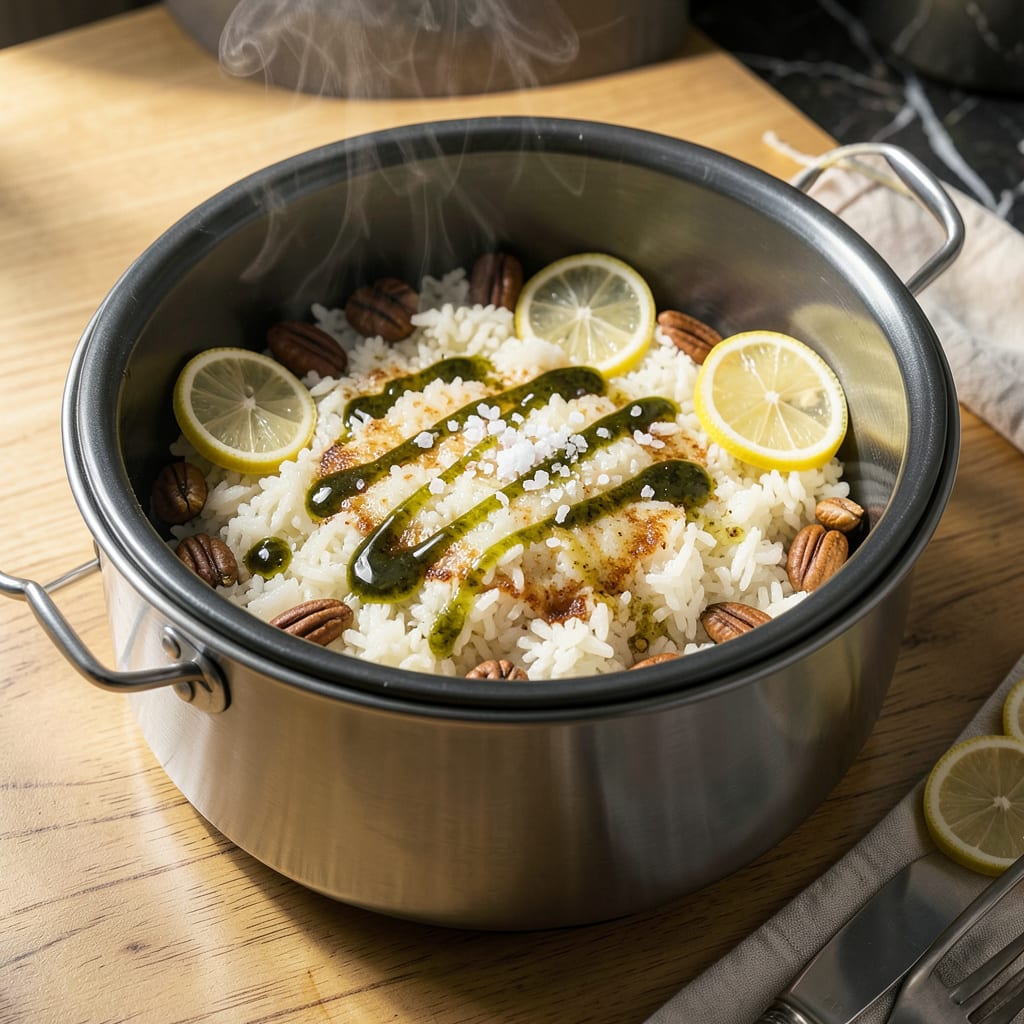
Cooking rice in a rice cooker with olive oil transforms simple grains into something extraordinary. The olive oil doesn’t just prevent sticking—it infuses every bite with a subtle richness and golden aroma that makes basic rice taste anything but. This method delivers perfectly fluffy results with minimal effort, proving that small details create big differences.
I developed this technique after years of experimenting with rice cooker ratios and flavor enhancements. Olive oil acts as both a cooking medium and flavor booster, creating grains that separate beautifully while carrying a delicate nutty essence. The process remains simple: measure, rinse, cook—with one strategic addition that elevates the entire dish.
What emerges is rice with a slight sheen and enhanced texture—each grain distinct yet cohesive, with a whisper of Mediterranean character. The olive oil’s presence is noticeable but never overpowering, making this preparation versatile enough for any meal. It becomes the ideal canvas for herbs, spices, or additional vegetables.
Perfect as a standalone side or base for heartier dishes, this method guarantees consistent results. The rice cooker handles the precision while you enjoy the improved flavor and texture. Here’s how to achieve it every time.
📚 In This Guide
- What You’ll Need
- Instructions
- Tips and Common Mistakes
What Youll Need
- ● Rice cooker (standard 5-10 cup capacity) 🍚
- ● 1 cup long-grain white rice (jasmine or basmati preferred)
- ● 1.5 cups water or broth (adjust based on rice type)
- ● 1-2 tbsp extra-virgin olive oil (cold-pressed for best flavor)
- ○ ½ tsp salt (optional, adjust to taste)
- ○ Optional but recommended: Garlic cloves (2-3, minced) for extra aroma
- ● Lemon zest (½ tsp) for brightness
- ● Fresh herbs (parsley, thyme, or rosemary) for garnish
- ● Measuring cups & spoons (for precision)
- ● Wooden spoon (to fluff rice gently)
Instructions for Olive Oil Rice Cooker Method
This technique transforms ordinary rice into fragrant, perfectly textured grains using your rice cooker.
Rinse and Prepare the Rice
Begin by measuring your rice using the cup that came with your rice cooker. Place the rice in a fine-mesh strainer and rinse under cold running water, gently swirling with your fingers. Continue rinsing until the water runs clear—this removes excess starch that can make rice gummy.
After rinsing, let the rice drain completely for 2-3 minutes. Shake the strainer gently to remove any lingering water droplets. Proper draining prevents the rice from becoming waterlogged during cooking, which is essential for achieving the ideal fluffy texture.
Combine Rice, Water, and Olive Oil
Transfer the drained rice to your rice cooker’s inner pot. Add water using the same measuring cup you used for the rice, following your rice cooker’s standard water-to-rice ratio (typically 1:1 or 1:1.25). The precise measurement depends on your specific model and rice type.
Drizzle in 1-2 tablespoons of extra virgin olive oil—this is the key to enhancing flavor and texture. Use a wooden spoon or rice paddle to gently stir the mixture, ensuring the oil distributes evenly throughout. The oil will coat each grain, preventing excessive stickiness while adding a subtle richness to the final dish.
Cook with Proper Heat Distribution
Close the rice cooker lid securely and select the standard white rice setting. Allow the cooker to complete its full cycle without opening the lid—this typically takes 15-25 minutes depending on your model. The olive oil will help regulate moisture distribution during cooking.
As the rice cooks, you’ll notice a delicate aroma developing—the olive oil’s fruity notes will infuse into the steam. Resist the temptation to peek during cooking, as releasing steam can disrupt the cooking process and lead to unevenly cooked rice.
Rest and Fluff for Optimal Texture
Once the cooking cycle completes, let the rice rest in the cooker with the lid closed for an additional 10-15 minutes. This resting period allows the grains to firm up slightly and absorb any remaining moisture evenly.
After resting, open the lid and use a rice paddle to gently fluff the rice from the bottom up. The grains should separate easily, revealing a glossy sheen from the olive oil. The texture should be tender yet distinct, with each grain maintaining its individual character while contributing to the overall dish’s cohesion.
Serve and Enjoy the Enhanced Flavor
Transfer the rice to a serving bowl while still warm. The olive oil infusion will be most pronounced when served immediately, offering a subtle golden hue and a delicate aroma that complements the rice’s natural flavor.
Notice how the grains maintain their integrity while presenting a slightly richer mouthfeel compared to standard rice cooker results. The olive oil’s influence is subtle but transformative, elevating what would otherwise be ordinary rice into a dish with depth and character.
Tips and Common Mistakes for Perfect Olive Oil Rice Cooker Results
Mastering this technique requires attention to subtle details that transform simple rice into an exceptional dish.
Rinsing and Draining Precision: The 2-3 minute draining period in Step 1 is non-negotiable for achieving the ideal texture. I’ve found that insufficient draining leads to waterlogged grains that steam rather than cook evenly. For best results, gently shake the strainer while tilting it at a 45-degree angle to ensure complete water removal without compacting the rice.
Olive Oil Distribution Technique: When adding the 1-2 tablespoons of extra virgin olive oil in Step 2, use a circular stirring motion starting from the center and working outward. This ensures every grain gets evenly coated, which is crucial for preventing clumping during the 15-25 minute cooking cycle. The oil’s emulsifying properties work best when distributed this way.
Steam Management During Cooking: The aroma development mentioned in Step 3 indicates proper steam circulation – this is your audio cue that the process is working correctly. If you don’t detect that delicate olive oil fragrance by minute 10, your rice cooker’s seal may be compromised. Modern rice cookers with pressure valves (like Zojirushi models) excel at maintaining this environment.
Resting Period Optimization: The 10-15 minute resting time in Step 4 isn’t just about absorption – it’s when the olive oil’s flavor compounds fully integrate with the rice’s starch structure. I recommend setting a timer for exactly 12 minutes as the sweet spot for most rice varieties. This precise resting transforms good rice into exceptional rice with that signature glossy sheen.
Pro Tips for Olive Oil In Rice Cooker
- Mastering this technique requires attention to subtle details that transform simple rice into an exceptional dish.
- Rinsing and Draining Precision: The 2-3 minute draining period in Step 1 is non-negotiable for achieving the ideal te…
- Olive Oil Distribution Technique: When adding the 1-2 tablespoons of extra virgin olive oil in Step 2, use a circular…
Frequently Asked Questions
Can I use any type of olive oil in my rice cooker?
Yes! Extra virgin olive oil adds the richest flavor, but light or pure olive oil works too. Avoid flavored oils (like garlic or chili) unless you want that taste in your rice. Stick to 1-2 tablespoons per cup of rice for best results without overpowering the dish.
When should I add olive oil—before or after cooking?
Add it before cooking! Mix olive oil with rice and water in the cooker so it infuses evenly. If you add it after, the rice may turn greasy. For extra aroma, let the oil heat for 1-2 minutes in the cooker before adding rice and water.
What if my rice turns out too oily or sticky?
Too much oil? Reduce to 1 tsp per cup of rice next time. For sticky rice, rinse the grains thoroughly before cooking and use slightly less water (1:1 rice-to-water ratio). Stirring the rice mid-cook can also release excess starch, making it gummy.
Can I substitute olive oil with another oil?
Try avocado oil (neutral taste), coconut oil (sweet aroma), or sesame oil (nutty flavor). Butter works too for a richer taste. Adjust quantities—some oils (like coconut) are stronger, so start with 1 tsp and taste-test.
Does olive oil change the cooking time in a rice cooker?
Nope! Olive oil doesn’t affect cooking time, but it may slightly delay the cooker’s “switch-off” if the oil lowers the water’s boiling point. Most rice cookers auto-adjust—just follow your usual settings (e.g., white rice: 20-25 mins).
Adding a splash of olive oil in your rice cooker is a game-changer—it transforms simple rice into fragrant, fluffy perfection with minimal effort! 🌾✨ Whether you’re whipping up a quick side or elevating a meal, this tiny tweak delivers big flavor and texture. Now that you’ve mastered the basics, why not experiment? Try infused oils (like garlic or chili) or mix in herbs for even more depth. Your next delicious bowl is just a button press away—happy cooking! 😊

Trained in classic French technique but raised on slow-cooked ribs and spicy rubs, she blends culinary skill with smoke and soul.
- Recipe for Boneless Pork Chops in Cast Iron Skillet: Sear and Baste to Juicy Perfection - October 3, 2026
- Recipe for Boneless Cross Rib Roast: Slow-Roasted Beef with Herb Crust - October 3, 2026
- Hamburgers in Sauce Recipe Crock Pot: Slow-Cooked Savory Delight - October 3, 2026