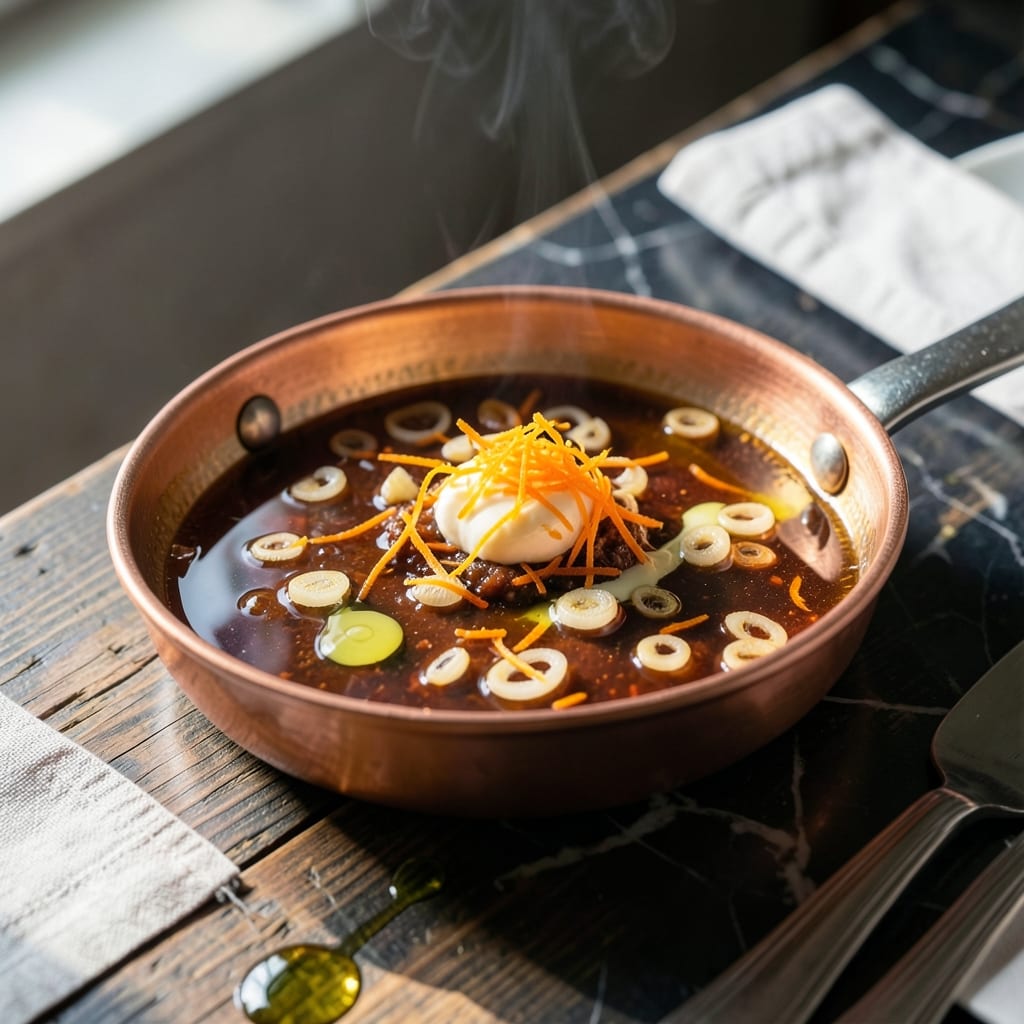
This glossy, caramelized sauce transforms ordinary dishes into restaurant-quality masterpieces. A perfect balance of sweet orange and tangy vinegar creates depth that elevates duck, chicken, or even roasted vegetables.
The process is simpler than it sounds: reduce vinegar with sugar until syrupy, then add fresh orange juice and zest. The result is a sweet-tart glaze with complex layers of flavor that develop as it thickens.
What makes this special is its versatility. Use it as a finishing sauce, marinade, or drizzle over desserts. The natural pectin in oranges helps it cling beautifully to foods.
Store in an airtight container in the refrigerator for up to 2 weeks. The flavors actually improve after a day or two as they meld together.
Ingredients for Orange Gastrique
Eight ingredients transform into a glossy, restaurant-quality sauce with caramelized depth and bright citrus.
| Ingredient | Amount | Notes |
|---|---|---|
| Red Wine Vinegar 🍷 | ½ cup | For acidity and depth |
| Granulated Sugar 🍚 | ½ cup | For caramelization and sweetness |
| Fresh Orange Juice 🍊 | 1 cup | Freshly squeezed for brightness |
| Orange Zest 🍊 | 1 tbsp | Finely grated for aroma |
| Shallot 🧅 | 1 whole | Finely minced for subtle flavor |
| Unsalted Butter 🧈 | 2 tbsp | For richness and shine |
| Salt 🧂 | ¼ tsp | Kosher or sea salt |
| Black Pepper 🌶️ | 0.125 tsp | Freshly ground preferred |
[recipe_ingredient_scaler]
The vinegar is non-negotiable—red wine vinegar brings the right balance of acidity and fruitiness. Trader Joe’s has a great affordable option if you’re not already stocked. For the oranges, navel or Valencia work best (avoid blood oranges—they can turn the sauce muddy). Zest before juicing, and don’t skip the shallot; it adds a subtle depth that onion can’t quite match.
No red wine vinegar? Apple cider vinegar works in a pinch, but the flavor profile shifts slightly. Out of shallots? Red onion at half the amount is your backup. Sugar can be swapped for honey (use one-third less), but the caramelization won’t be as deep. For a vegan version, olive oil or coconut oil replaces the butter—just know the finish won’t be as glossy.
This keeps beautifully. 2 weeks in the fridge in an airtight container, and the flavors actually get better after 48 hours. Freeze for up to 3 months if you’ve made a big batch—just thaw in the fridge overnight before using.
Why You’ll Love This Recipe
- One-Pot Wonder: Five ingredients, one saucepan, and 15 minutes—honestly, it doesn’t get simpler than this.
- Sweet-Tart Magic: The orange zest and red wine vinegar create this bright, tangy kick that’s ridiculously good on everything from duck to cheese boards.
- Dinner Party MVP: I’ve drizzled this over roasted chicken and a charcuterie spread with equal success.
- Makes Extra, No Stress: It keeps for weeks in the fridge, so I always double the batch and have a flavor bomb ready to go.
Step-by-Step Instructions for Orange Gastrique
This method ensures a perfectly balanced sweet-tart glaze with rich caramelized depth every time.
Step 1: Caramelize the Sugar
In a medium saucepan, combine the 0.5 cup Granulated Sugar with just enough water to moisten it—about 2 tablespoons. This prevents burning while allowing even melting. Cook over medium-high heat without stirring until the mixture turns a deep amber color, about 8-10 minutes.
Watch closely as the sugar transforms. You’ll first see it bubble, then darken at the edges before fully caramelizing. Swirl the pan gently if needed for even coloring, but avoid stirring, which can cause crystallization. Remove from heat immediately once it reaches that rich amber hue.
Step 2: Add Aromatics and Acid
Carefully pour in the 0.5 cup Red Wine Vinegar—it will bubble vigorously as it hits the hot caramel. Stir with a wooden spoon to dissolve any hardened sugar. The mixture will seize up initially but will smooth out as it reheats.
Add the 1 whole Shallot, finely minced, to the pan. The vinegar will mellow as it simmers with the shallot for 2-3 minutes, creating a fragrant base. This step builds the foundation of your gastrique’s complex flavor profile.
Step 3: Incorporate Orange Elements
Pour in the 1 cup Fresh Orange Juice and add the 1 tbsp Orange Zest. Stir well to combine all ingredients. The mixture will be quite thin at this point. Return to medium heat and simmer for 10-12 minutes until reduced by about half.
As it reduces, the flavors will concentrate and the liquid will thicken slightly. The orange juice brightens the caramelized sugar while the zest adds aromatic depth. You’ll notice the mixture starting to coat the back of a spoon when it’s ready for the next step.
Step 4: Finish with Butter and Season
Remove the pan from heat and stir in the 2 tbsp Unsalted Butter, one tablespoon at a time, until fully melted and emulsified. This creates a glossy finish and adds richness to balance the acidity. The sauce will take on a beautiful, silky sheen.
Season with 0.25 tsp Salt and 0.125 tsp Black Pepper. Taste and adjust the seasoning if needed, though the balance of sweet, tart, and savory should already be harmonious. The final consistency should be thick enough to coat the back of a spoon but still pourable.
Use immediately while warm for the best texture and flavor, or let it cool to room temperature for a slightly thicker glaze. This gastrique pairs beautifully with roasted meats, grilled vegetables, or as a topping for cheese plates.
Pro Tips For Making Orange Gastrique
- Reduce Low and Slow: I learned this the hard way—crank the heat too high and your gastrique will caramelize into a bitter mess. Keep it at a gentle simmer and let the vinegar and sugar reduce gradually, about 15-20 minutes.
- Zest Before Juicing: Sounds obvious, but I used to juice the oranges first and then struggle to zest the flattened halves. Zest them whole first—you’ll get more flavor and less frustration.
- Mince Those Shallots: After finding chunks in my sauce, I finally started mincing the shallots finely. They dissolve into the gastrique better, giving a smooth texture without overpowering the orange.
- Strain for Smoothness: My grandmother swore by this, and she was right: strain out the shallots and zest after cooking if you want a velvety finish. I skip this when I’m lazy, but the dish is noticeably better when I don’t.
Storing and Reheating This orange gastrique
Refrigerator Storage
Let your gastrique cool completely before transferring to an airtight container. I use glass jars with tight-sealing lids. Store in the fridge at 40°F or below for up to 2 weeks. The flavors deepen beautifully over time. ❄️
Freezer Storage
For longer storage, freeze in ice cube trays first, then transfer to a freezer bag. This lets you portion out exactly what you need. It keeps for 3 months without quality loss. Leave ½ inch headspace in containers for expansion.
Thawing Methods
Thaw overnight in the fridge for best results. For a quick fix, place the sealed container in a bowl of cold water, changing the water every 30 minutes. Never microwave frozen gastrique directly—it can separate.
Reheating for Use
Gently warm in a small saucepan over low heat for 3-5 minutes, stirring occasionally. If it seems too thick, add a splash of water or orange juice. Avoid boiling, which can make the sauce too thin.
Reviving Separated Sauce
If your gastrique separates after storage, whisk in 1 tsp warm water at a time until smooth. The butter may solidify when cold, but it re-emulsifies easily with gentle heat and stirring. 💡
Nutrition Facts
Frequently Asked Questions
Can I use a different type of vinegar?
Yes, but apple cider vinegar works best as a substitute. Avoid white vinegar—it’s too harsh. The acidity level should remain similar for proper balance.
How do I know when it’s reduced enough?
It should coat the back of a spoon and leave a clear trail when you run a finger through it. This takes about 10-12 minutes of simmering.
What if my sauce separates after storage?
Gently reheat over low heat while whisking. Add 1 tsp warm water at a time until smooth. The butter will re-emulsify easily.
Can I make it ahead of time?
It keeps for 2 weeks in the fridge. The flavors actually improve after 48 hours as they meld together.

Trained in classic French technique but raised on slow-cooked ribs and spicy rubs, she blends culinary skill with smoke and soul.
- Recipe for Boneless Pork Chops in Cast Iron Skillet: Sear and Baste to Juicy Perfection - October 3, 2026
- Recipe for Boneless Cross Rib Roast: Slow-Roasted Beef with Herb Crust - October 3, 2026
- Hamburgers in Sauce Recipe Crock Pot: Slow-Cooked Savory Delight - October 3, 2026