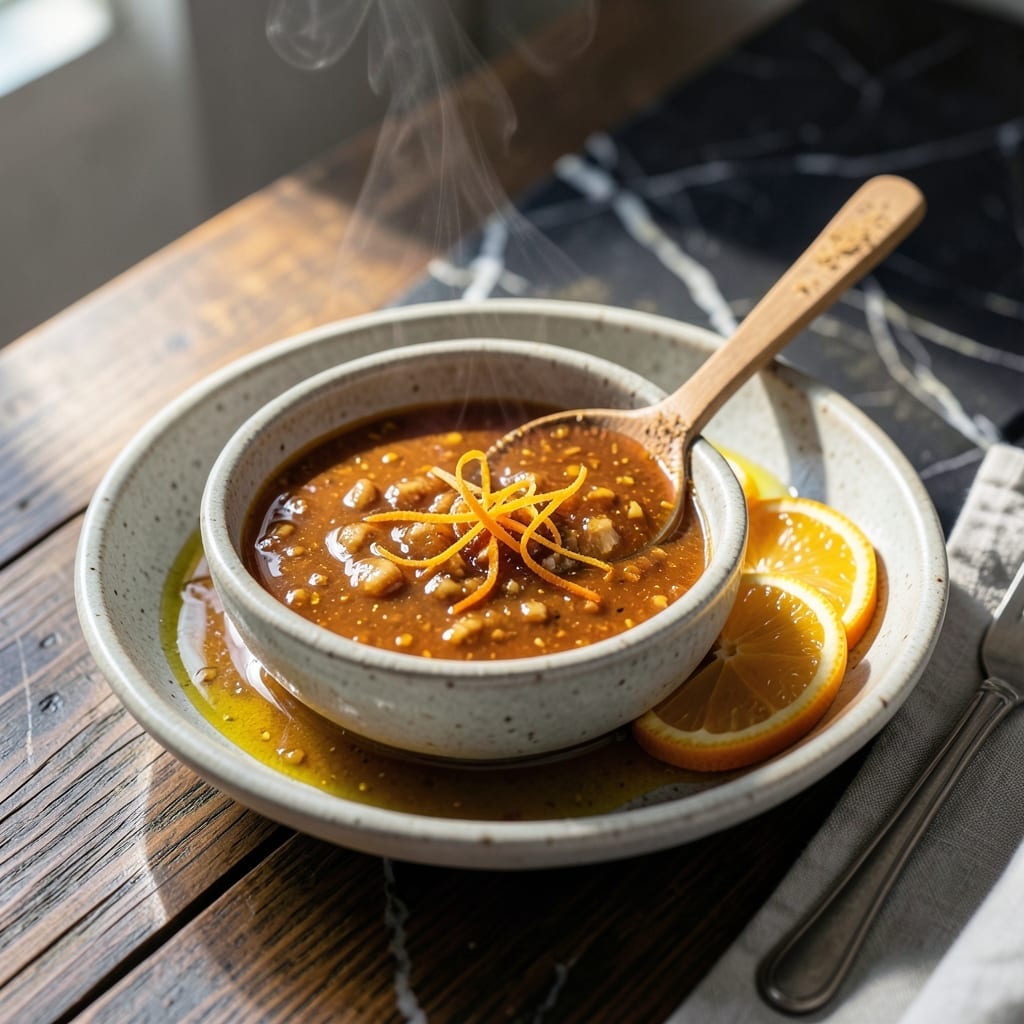
This sauce captures the perfect balance of bright citrus and warm ginger in every spoonful. I developed it to add depth to simple dishes without overpowering them.
The combination of fresh orange juice and grated ginger creates a versatile sauce that works as a marinade, glaze, or finishing touch. It takes 10 minutes to make and keeps well for a week.
What makes this special is how the sweetness of orange complements the sharp bite of ginger. The result is a sauce that’s both vibrant and deeply flavorful.
Use it on grilled proteins, stir-fries, or as a dipping sauce. It’s the kind of condiment that elevates everyday meals effortlessly.
Ingredients for Orange Ginger Sauce
Eight simple ingredients come together for this vibrant citrus and spice sauce.
| Ingredient | Amount | Notes |
|---|---|---|
| Fresh Orange Juice 🍊 | 1 cup | Newly squeezed preferred |
| Fresh Ginger Root 🌿 | 3 tbsp | Peeled and finely grated |
| Maple Syrup 🍁 | ¼ cup | Pure for best flavor |
| Rice Vinegar 🍯 | 2 tbsp | Or apple cider vinegar |
| Soy Sauce 🫙 | 2 tbsp | Low-sodium if preferred |
| Garlic Cloves 🧄 | 3 cloves | Minced finely |
| Sesame Oil 🫒 | 1 tsp | Toasted variety recommended |
| Orange Zest 🍊 | 1 tbsp | Finely grated from fresh orange |
[recipe_ingredient_scaler]
The ginger is non-negotiable here. Look for firm, smooth roots with a spicy aroma—older ginger gets fibrous and dull. I grab mine from Whole Foods or the bulk section at natural food stores. The oranges should be heavy for their size, a sign they’re juicy. Navel or Valencia oranges both work, but avoid seedless if you’re zesting (they often have thicker, bitter peel).
No fresh ginger? Ground ginger at one-quarter the amount works in a pinch, but fresh is brighter. Swap maple syrup for agave or coconut sugar if needed. For a gluten-free version, tamari or coconut aminos replace the soy sauce. The sesame oil can be omitted, but it adds that nutty depth—Kadoya brand is my go-to for quality.
This keeps beautifully in the fridge for 1 week in a sealed jar. The flavors actually deepen over time. For longer storage, freeze in ice cube trays for up to 3 months (that parenthetical aside about convenience).
Why You’ll Love This Recipe
- I’ll be real: it tastes even better the next day, and a small batch lasts me all week in the fridge.
- 5-Minute Whisk: I just dump everything in a saucepan and stir—no chopping, no fuss, just fresh orange juice and ginger doing the work.
- Zing in Every Bite: The ginger’s sharp kick mellows into the orange’s sweetness, with that maple syrup tying it all together so perfectly.
- Drizzle on Anything: Honestly, I’ve used it on salmon, tofu, even roasted carrots—it’s my secret weapon for turning plain dishes into something special.
Step-by-Step Instructions for Orange Ginger Sauce
Simple technique, bold flavor—this sauce comes together faster than you think.
Step 1: Bloom Aromatics in Sesame Oil
Heat 1 tsp Sesame Oil in a saucepan over medium heat until it shimmers. Add the 3 cloves Garlic Cloves and 3 tbsp Fresh Ginger Root, stirring constantly for 30-45 seconds until fragrant but not browned.
This quick bloom releases the essential oils in the garlic and ginger, creating a flavor foundation that’s both pungent and warm. Watch closely—the garlic burns easily at this stage. You want it just golden at the edges, not dark brown.
Step 2: Combine Liquid Components and Simmer
Pour in the 1 cup Fresh Orange Juice, 0.25 cup Maple Syrup, 2 tbsp Rice Vinegar, and 2 tbsp Soy Sauce. Stir to combine, then bring to a gentle simmer over medium-high heat.
As the mixture heats, the maple syrup will dissolve completely and the orange juice will begin to mingle with the other liquids. You’ll notice the color deepen slightly as the soy sauce incorporates. This simmering step is where the magic starts to happen.
Step 3: Add Zest and Reduce to Desired Consistency
Stir in the 1 tbsp Orange Zest and reduce heat to medium-low. Let the sauce simmer for 8-10 minutes, stirring occasionally, until it thickens enough to coat the back of a spoon.
The orange zest adds a bright, citrusy depth that complements the warm spice from the ginger. As the sauce reduces, the flavors will concentrate and the texture will become glossy and syrupy. Taste and adjust sweetness or acidity if needed—though I’ve found the proportions here hit the perfect balance.
Step 4: Finish and Serve Warm
Remove from heat and let the sauce cool for 2-3 minutes. It will thicken slightly more as it cools. The final consistency should be pourable but with enough body to cling to proteins or vegetables.
This sauce works beautifully drizzled over grilled chicken, tofu, or roasted vegetables. The combination of sweet maple syrup, tangy vinegar, and umami-rich soy sauce creates a complex flavor profile that elevates any dish it touches. Serve warm for the best experience.
Pro Tips For Making Orange Ginger Sauce
- Grate Ginger Fine: Use a microplane for the ginger—it releases more juice and blends smoothly into the sauce. I learned this the hard way after picking out fibrous bits from my first few batches.
- Reduce Before Sweetening: Simmer the orange juice and vinegar for 3-4 minutes first to concentrate the flavor, then add the maple syrup. Sounds weird, but it prevents a watery, overly sweet sauce.
- Skip Pre-Bottled Juice: Freshly squeezed orange juice makes a real difference here—store-bought tastes flat and can turn the sauce bitter when reduced. After burning a batch with cartoned juice, I never cheap out again.
- Balance with Soy Last: Add the soy sauce at the very end and taste as you go—it’s salty and can overpower the ginger and citrus if added too early. My grandmother swore by this, and she was right.
Troubleshooting Perfect Results
Too Thin or Watery
If your sauce isn’t thickening after 10 minutes, you likely need more reduction time. Increase heat to medium-high and simmer uncovered, stirring frequently. I often add 1 tsp cornstarch mixed with 1 tbsp cold water for instant thickening. 💡
Overly Thick Sauce
If it reduces too much, whisk in 2-3 tbsp warm water or additional orange juice to restore the right consistency. The sauce should coat a spoon but still drip slowly. I keep extra orange juice on hand for this exact reason.
Bitter Taste
Bitterness usually comes from overcooked garlic or ginger. Next time, reduce blooming time to 20-30 seconds. To fix a batch, balance with 1 tbsp maple syrup or a pinch of salt. Fresh ingredients prevent this issue entirely.
Sauce Separating
If the sauce breaks, it needs re-emulsification. Whisk vigorously while heating on low for 1-2 minutes. A tiny amount of Dijon mustard can help stabilize it. I find this rare with proper stirring during reduction.
Too Sweet or Too Tangy
Adjust sweetness with 1 tsp vinegar or acidity with 1 tsp maple syrup. Taste as you go—this sauce should have balanced bright and warm notes. I always taste before the final reduction.
Grainy Texture
This happens with under-grated ginger. Use a microplane for the ginger root to avoid fibers. If already made, strain through a fine-mesh sieve. Smooth texture is key for this sauce’s elegance. ✨
Nutrition Facts
Frequently Asked Questions
Can I use bottled orange juice instead of fresh?
Fresh is best for bright flavor, but bottled works in a pinch. Use 100% juice with no added sugar. The sauce may taste slightly less vibrant.
How long does this sauce keep in the fridge?
Stored in an airtight container, it stays fresh for 7-10 days. The flavors deepen over time. For longer storage, freeze for up to 3 months.
What dishes pair best with this sauce?
It’s incredibly versatile! Try it on grilled chicken, tofu stir-fries, or roasted veggies. Also works as a glaze for salmon or a dipping sauce for spring rolls.
Can I make this spicier?
Add 1/2 tsp red pepper flakes with the ginger or a dash of sriracha at the end. Taste as you go to control the heat level.

Trained in classic French technique but raised on slow-cooked ribs and spicy rubs, she blends culinary skill with smoke and soul.
- Recipe for Boneless Pork Chops in Cast Iron Skillet: Sear and Baste to Juicy Perfection - October 3, 2026
- Recipe for Boneless Cross Rib Roast: Slow-Roasted Beef with Herb Crust - October 3, 2026
- Hamburgers in Sauce Recipe Crock Pot: Slow-Cooked Savory Delight - October 3, 2026