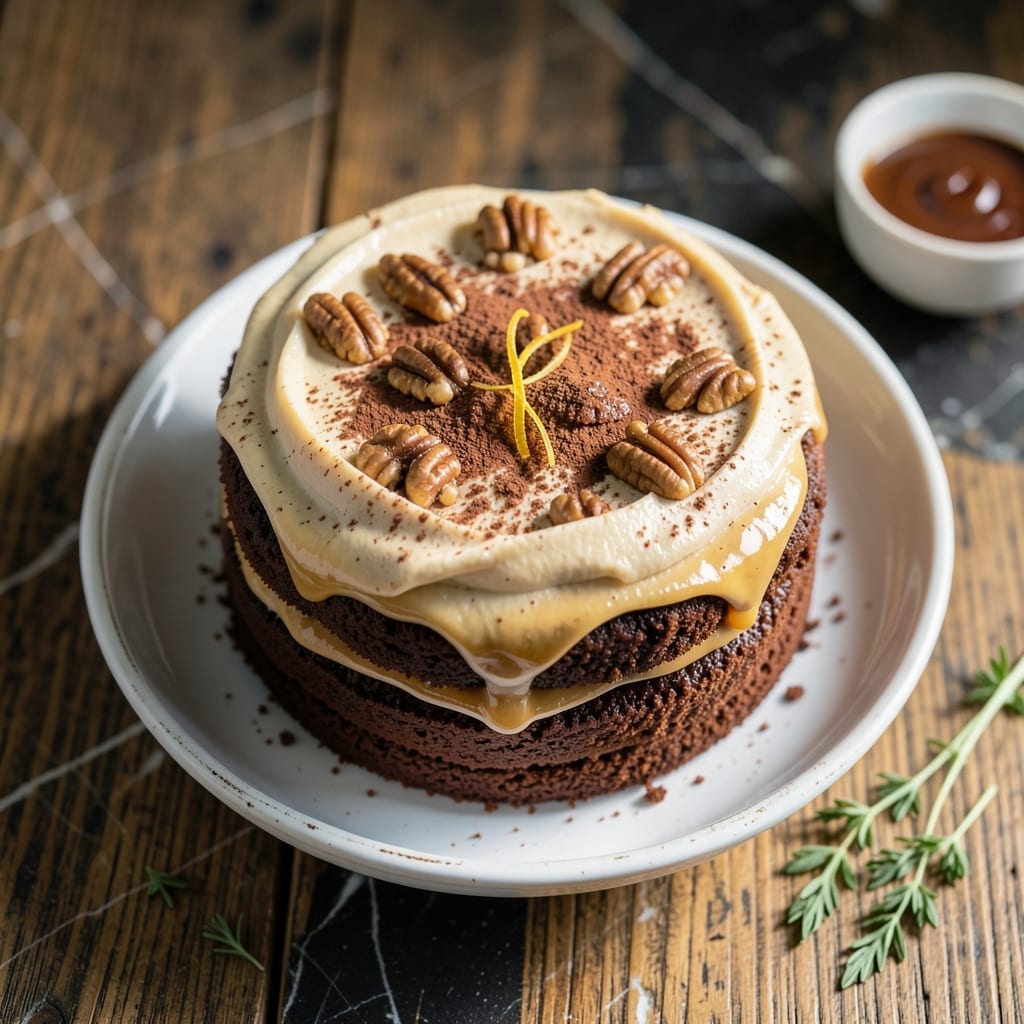
This timeless dessert has delighted bakers since its 1957 debut, offering a perfect blend of rich chocolate and signature coconut-pecan frosting.
The original version delivers classic flavor with a moist crumb and sweet, nutty topping that defines this beloved cake.
Ingredients for Original German Chocolate Cake Recipe 1957
Classic cake ingredients meet the signature coconut-pecan topping everyone remembers from 1957.
| Ingredient | Amount | Notes |
|---|---|---|
| All-Purpose Flour 🌾 | 2 cups | Sifted before measuring |
| Granulated Sugar 🍚 | 2 cups | Fine white granulated |
| Unsweetened Cocoa Powder 🟤 | ¾ cup | Dutch-process preferred |
| Baking Soda 🧂 | 1 tsp | Ensures proper rise |
| Salt 🧂 | 1 tsp | Fine table or sea salt |
| Large Eggs 🥚 | 4 whole | Room temperature preferred |
| Buttermilk 🥛 | 1 cup | Full-fat for richness |
| Vanilla Extract 🌿 | 2 tsp | Pure extract, not imitation |
| Unsalted Butter 🧈 | 1 cup | Melted and cooled slightly |
| Sweetened Shredded Coconut 🥥 | 2 cups | Finely shredded preferred |
| Pecans 🌰 | 1 ½ cups | Chopped, toasted optional |
| Evaporated Milk 🥛 | 1 can | 12 oz can, undiluted |
| Light Brown Sugar 🟤 | 1 ½ cups | Firmly packed |
| Egg Yolks 🥚 | 3 whole | For frosting richness |
[recipe_ingredient_scaler]
The cocoa powder defines the depth of flavor here. Hershey’s Special Dark or Ghirardelli Dutch-process deliver the authentic taste. Buttermilk is non-negotiable—its acidity reacts with the baking soda for that signature moist crumb. Most supermarkets carry it near the milk, but in a pinch, whole milk plus 1 tbsp vinegar works. For the unsalted butter, European-style adds richness, though any quality brand will do.
No buttermilk? Sour cream thinned with milk at a 1:1 ratio substitutes well. Out of pecans? Walnuts or hazelnuts offer similar texture and flavor. The evaporated milk can be swapped with half-and-half if needed, though it may alter the frosting’s thickness slightly. For the coconut, freshly shredded is ideal but pre-shredded saves time without sacrificing much texture.
Store the cake in an airtight container at room temperature for up to 3 days. Refrigeration dries it out, so avoid unless absolutely necessary. The frosting can be made 1 day ahead and stored in the fridge—bring to room temperature before spreading. Freezing the cake is not recommended; the texture suffers upon thawing.
Why You’ll Love This Recipe
- One Bowl Wonder: I mix everything right in the same bowl—flour, sugar, cocoa, baking soda, salt—and it still turns out rich and moist every time.
- Deep Chocolate Fix: That unsweetened cocoa powder gives it a bold, old-school chocolate taste that’s way better than modern shortcuts.
- Birthday Favorite: This is the cake I make for every celebration, and honestly, no one ever complains.
- Budget Friendly: A handful of pantry staples and I’ve got a showstopper dessert that feeds a crowd without breaking the bank.
Step-by-Step Instructions for Original German Chocolate Cake
This classic method delivers the authentic texture and rich coconut-pecan frosting from the 1957 original.
Step 1: Prepare the Cake Batter
Preheat your oven to 350°F. In a large bowl, sift together the 2 cups All-Purpose Flour, 2 cups Granulated Sugar, 0.75 cup Unsweetened Cocoa Powder, 1 tsp Baking Soda, and 1 tsp Salt. Sifting ensures a light, airy texture and prevents lumps in the batter.
In a separate bowl, whisk the 4 whole Large Eggs until smooth, then add the 1 cup Buttermilk, 2 tsp Vanilla Extract, and 1 cup Unsalted Butter (melted and cooled). Gradually incorporate the dry ingredients into the wet mixture, stirring just until combined. Overmixing will develop gluten, resulting in a dense cake.
Step 2: Bake the Cake Layers
Divide the batter evenly into three greased and floured 9-inch round pans. Bake in the preheated oven for 25-30 minutes, or until a toothpick inserted into the center comes out clean. The layers should spring back lightly when touched.
Allow the cakes to cool in the pans for 10 minutes, then transfer them to a wire rack to cool completely. Cooling completely prevents crumbling when you apply the frosting. This step is crucial for achieving clean, professional layers.
Step 3: Make the Coconut-Pecan Frosting
In a medium saucepan, combine the 1 can Evaporated Milk, 1.5 cups Light Brown Sugar, and 3 whole Egg Yolks. Cook over medium heat, stirring constantly, until the mixture thickens slightly, about 5-7 minutes.
Remove from heat and stir in the 2 cups Sweetened Shredded Coconut and 1.5 cups Pecans. Let the frosting cool to room temperature, stirring occasionally. It will thicken further as it cools, reaching the perfect spreading consistency.
Step 4: Assemble and Frost the Cake
Place one cake layer on a serving plate and spread a generous layer of frosting on top. Repeat with the remaining layers, finishing with frosting on the top and sides of the cake. The frosting should generously coat the cake, with visible coconut and pecan pieces throughout.
For the best flavor and texture, let the cake sit at room temperature for at least 1 hour before serving. This allows the frosting to set slightly and the flavors to meld together. Serve slices at room temperature for the full vintage experience.
Pro Tips For Making Original German Chocolate Cake Recipe 1957
- Bloom the Cocoa: Heat the cocoa powder with the boiling water first—about 2 minutes of stirring until it’s smooth and dark. I learned this the hard way after my early cakes tasted flat and chalky.
- Measure Flour Right: Spoon the all-purpose flour into your measuring cup, then level it off. Scooping directly from the bag packs it down, and you’ll end up with a dense, dry cake.
- Don’t Overmix: Stir the batter just until the flour disappears. After overworking a few batches, I finally got why my cakes were tough instead of tender.
- Test with a Toothpick: Start checking for doneness at 30 minutes—when the toothpick comes out with a few moist crumbs, pull it out. Waiting for a completely clean toothpick means a dry cake.
Troubleshooting This Dish
Cake Sinks in Middle
If your cake sinks, your baking soda may be expired or the batter was undermixed. Test by dropping a spoonful in water—if it doesn’t bubble, replace it. Also, ensure your oven is fully preheated to 350°F before baking. 💡
Dry or Dense Texture
Overmixing develops gluten, creating a tough crumb. Stir just until flour disappears. Also, check your cocoa powder—Dutch-process works best here. Measure flour by spooning into cups, not scooping directly from the bag.
Frosting Too Runny
If the frosting won’t thicken, cook it longer over medium heat while stirring constantly. It should coat the back of a spoon. If it’s still loose, chill it for 15-20 minutes before spreading. Avoid high heat, which can curdle the egg yolks.
Frosting Too Thick
Add 1-2 tbsp evaporated milk and stir until smooth. If it’s grainy, the sugar may not have dissolved fully—return it to low heat and whisk vigorously. Room temperature ingredients blend more smoothly, so avoid cold milk or butter.
Cake Sticks to Pan
Always grease pans thoroughly with butter or nonstick spray, then dust with flour or cocoa powder. Let cakes cool for 10 minutes before removing—they’re too delicate to flip immediately. I use parchment paper rounds for extra insurance. ✨
Coconut Sinks in Frosting
Toast the shredded coconut lightly before adding to the frosting—this helps it suspend better. Stir the frosting occasionally as it cools to keep ingredients evenly distributed. If needed, thicken with a touch of powdered sugar.
Nutrition Facts
Frequently Asked Questions
Why does this recipe use buttermilk?
Buttermilk reacts with baking soda for a tender crumb and rich flavor. Its acidity also balances sweetness.
Can I make this cake in advance?
Yes! Bake layers 1 day ahead and store airtight at room temperature. Frost just before serving for best texture.
What if I don’t have evaporated milk?
Use half-and-half as a substitute, but expect slightly thinner frosting. Avoid regular milk—it lacks richness.
How do I prevent the cake from sinking?
Ensure your baking soda is fresh and oven is fully preheated to 350°F. Don’t open the door during baking.

Trained in classic French technique but raised on slow-cooked ribs and spicy rubs, she blends culinary skill with smoke and soul.
- Recipe for Boneless Pork Chops in Cast Iron Skillet: Sear and Baste to Juicy Perfection - October 3, 2026
- Recipe for Boneless Cross Rib Roast: Slow-Roasted Beef with Herb Crust - October 3, 2026
- Hamburgers in Sauce Recipe Crock Pot: Slow-Cooked Savory Delight - October 3, 2026