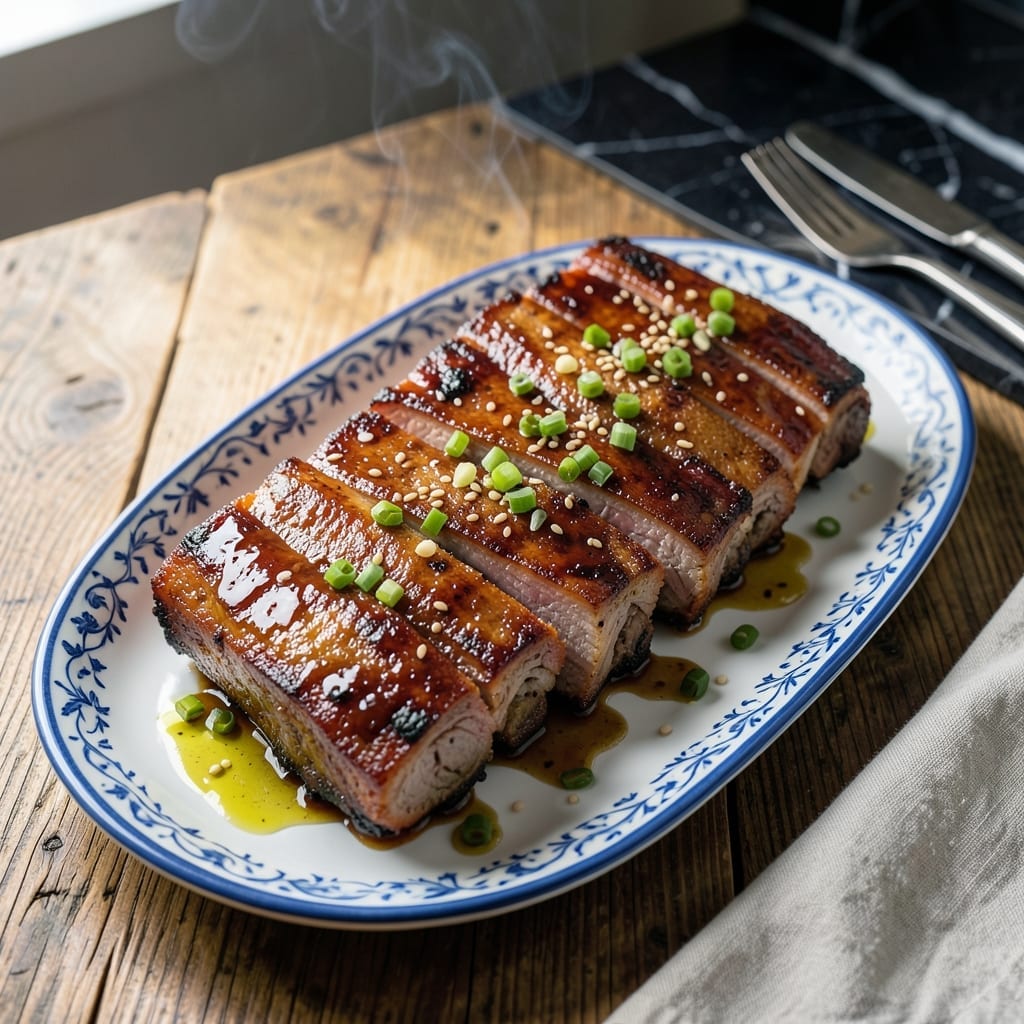
Getting my first whiff of hickory smoke at a family cookout inspired this slow-roasted approach. It delivers tender ribs with a caramelized glaze right from your oven.
This method combines low-and-slow cooking with a sweet and smoky barbecue sauce that builds layers of flavor. The ribs emerge fall-off-the-bone with a sticky, glossy finish.
No smoker required—just your oven and a few hours of patience. The result is restaurant-quality ribs with minimal effort and maximum payoff.
Serve with classic sides for a meal that feels like a backyard BBQ without leaving your kitchen.
Ingredients for Oven Baked Barbecued Spare Ribs
Pantry staples meet a full rack of ribs for that slow-roasted magic at home.
| Ingredient | Amount | Notes |
|---|---|---|
| Pork Spare Ribs 🥩 | 3 lb | Full rack, membrane removed |
| Kosher Salt 🧂 | 1 tbsp | Diamond Crystal preferred |
| Black Pepper 🌶️ | 1 tsp | Freshly ground |
| Garlic Powder 🧄 | 1 tsp | Not garlic salt |
| Onion Powder 🧅 | 1 tsp | Fresh ground preferred |
| Smoked Paprika 🌶️ | 1 tsp | For depth of flavor |
| Barbecue Sauce 🍯 | 1 ½ cups | Sweet and smoky variety |
| Apple Cider Vinegar 🍏 | 2 tbsp | Balances sweetness |
| Brown Sugar 🍚 | ¼ cup | Light or dark |
| Honey 🍯 | 2 tbsp | Or maple syrup |
| Worcestershire Sauce 💧 | 1 tbsp | Adds umami depth |
| Liquid Smoke 🔥 | ½ tsp | Hickory flavor preferred |
| Olive Oil 🫒 | 1 tbsp | For brushing ribs |
[recipe_ingredient_scaler]
The ribs are everything here. Pork spare ribs give you that perfect meat-to-fat ratio for fall-off-the-bone tenderness. Look for racks around 3-4 lbs at your butcher or Costco—they’re often sold as full racks. Ask them to remove the membrane if you’re not comfortable doing it yourself (takes 30 seconds with a paper towel for grip). The membrane is that tough, shiny layer on the bone side—don’t skip this step.
No liquid smoke? Skip it—the smoked paprika and barbecue sauce will carry enough flavor. Swap honey for maple syrup or agave if you prefer. The brown sugar can be coconut sugar, but it’ll add a slight caramel note. For the barbecue sauce, I’m partial to Stubb’s Original for its tangy kick, but any thick, sweet-and-smoky variety works. If you’re making your own, balance sweet, acid, and spice.
Ribs keep wrapped tightly in the fridge for up to 4 days. Reheat in a 300°F oven with foil, then a quick brush of extra sauce to revive the sticky glaze. Freezes beautifully for 3 months—portion into meal-sized packs for easy dinners.
Why You’ll Love This Recipe
- I’ll be real: they taste just as good reheated the next day, if they last that long.
- Hands-Off Cooking: I just season, pop them in the oven, and let the heat do all the work—no babysitting required.
- Smoky Garlic Bite: The garlic and onion powder rub gives these ribs that deep, savory punch I crave every time.
- Feeds a Hungry Crowd: Between us, these disappear fast at summer cookouts or Sunday family dinners.
Step-by-Step Instructions for Oven Baked Barbecued Spare Ribs
Here’s my foolproof method for fall-off-the-bone ribs with a sticky, smoky glaze.
Step 1: Season and Prep the Ribs
Start by patting the 3 lb Pork Spare Ribs completely dry with paper towels. This step ensures the seasoning sticks properly and promotes better browning in the oven.
In a small bowl, combine the 1 tbsp Kosher Salt, 1 tsp Black Pepper, 1 tsp Garlic Powder, 1 tsp Onion Powder, and 1 tsp Smoked Paprika. Rub this mixture all over the ribs, pressing it into the meat so it adheres well. I like to let them sit for 10-15 minutes while the oven preheats to allow the flavors to penetrate.
Step 2: Slow-Roast the Ribs Until Tender
Preheat your oven to 275°F. Place the seasoned ribs on a baking sheet lined with foil (for easy cleanup), meat-side up. Cover the pan tightly with another sheet of foil, sealing the edges well to trap steam.
Roast the ribs for 2.5 to 3 hours until the meat is fork-tender and starts to pull away from the bones. This low-and-slow method breaks down the collagen, resulting in ribs that are tender but not falling apart. Resist the urge to peek—every time you open the oven, you lose precious heat and moisture.
Step 3: Prepare the Barbecue Glaze
While the ribs roast, make the glaze. In a saucepan over medium heat, combine the 1.5 cups Barbecue Sauce, 2 tbsp Apple Cider Vinegar, 0.25 cup Brown Sugar, 2 tbsp Honey, 1 tbsp Worcestershire Sauce, 0.5 tsp Liquid Smoke, and 1 tbsp Olive Oil.
Simmer for 5-7 minutes, stirring frequently, until the mixture thickens slightly and becomes glossy. The glaze should coat the back of a spoon but still be pourable. This step intensifies the flavors and ensures the glaze clings beautifully to the ribs.
Step 4: Glaze and Broil for a Sticky Finish
Once the ribs are tender, remove them from the oven and increase the temperature to 400°F. Carefully unwrap the foil and brush the ribs generously with the prepared glaze.
Return the ribs to the oven, uncovered, and broil for 5-7 minutes until the glaze is bubbly and slightly caramelized. Watch them closely to prevent burning—the sugar in the glaze can char quickly. For extra stickiness, I brush on another layer of glaze halfway through broiling.
Step 5: Rest and Serve
Remove the ribs from the oven and let them rest for 5-10 minutes before slicing. This allows the juices to redistribute, ensuring every bite is moist and flavorful.
Slice the ribs between the bones and serve with any remaining glaze on the side. The meat should be tender enough to pull apart with a gentle tug, and the glaze should have a beautiful sheen with a hint of smokiness. For the best experience, enjoy them hot with plenty of napkins!
Pro Tips For Making Oven Baked Barbecued Spare Ribs
- Dry the Ribs: Pat the spare ribs completely dry with paper towels before seasoning—I learned this the hard way after my first batch steamed instead of browned.
- Low and Slow: Bake at 275°F for 2.5-3 hours, then finish with a broil for that sticky barbecue crust. Sounds weird, but it works.
- Skip the Overcrowding: Give the ribs space on the rack so they crisp up instead of steaming each other—your future self will thank you.
- Rest Before Serving: Let the ribs rest 10-15 minutes under foil after baking, or all those juices will end up on the cutting board.
Pro Cooking Tips for Perfect Results
Temperature Control
That 275°F slow-roast is non-negotiable for breaking down collagen without drying the meat. I use an oven thermometer to verify my oven’s accuracy—many run 10-15°F hot. Trust me, patience here rewards you with that fall-off-the-bone texture.
Foil Sealing Technique
Double-layer your foil when wrapping the ribs, crimping the edges tightly to create a steam chamber. This mimics a smoker’s environment. I learned this trick at my first BBQ competition—it locks in moisture better than a single layer.
Glaze Timing
Don’t add the glaze until the ribs are fully tender. The sugars in barbecue sauce can burn if exposed to 275°F for hours. That final 400°F broil caramelizes the glaze in just 5-7 minutes without bitterness.
Resting Importance
Those 5-10 minutes of rest let juices redistribute through the meat. I once skipped this step for a hungry crowd—regretted it immediately as precious juices pooled on the cutting board instead of in the meat. 💪
Rib Positioning
Always roast ribs meat-side up. This ensures the fat cap bastes the meat as it renders. I rotate my baking sheet 180°F halfway through cooking for even browning, especially in ovens with hot spots.
Sauce Consistency
Your glaze should coat a spoon but still drip slowly. If it’s too thin, simmer 2-3 minutes longer. Too thick? Add 1-2 tbsp water. This consistency clings perfectly to the ribs during broiling.
Nutrition Facts
Frequently Asked Questions
Can I use baby back ribs instead of spare ribs?
Yes, but adjust cooking time. Baby backs are smaller and cook faster—reduce roasting to 2-2.5 hours at 275°F. They’ll still get tender but may dry out if overcooked.
Why do I need to remove the membrane?
It prevents seasoning from penetrating and creates a chewy texture. Use a paper towel for grip to peel it off in one piece before seasoning.
How do I prevent the glaze from burning?
Broil at 400°F for only 5-7 minutes, watching closely. Brush on half the glaze, broil 3 minutes, then add the rest. This builds layers without charring.
Can I make this ahead of time?
Roast ribs a day ahead, cool, and refrigerate. Reheat wrapped in foil at 300°F for 20 minutes, then glaze and broil.

Trained in classic French technique but raised on slow-cooked ribs and spicy rubs, she blends culinary skill with smoke and soul.
- Recipe for Boneless Pork Chops in Cast Iron Skillet: Sear and Baste to Juicy Perfection - October 3, 2026
- Recipe for Boneless Cross Rib Roast: Slow-Roasted Beef with Herb Crust - October 3, 2026
- Hamburgers in Sauce Recipe Crock Pot: Slow-Cooked Savory Delight - October 3, 2026