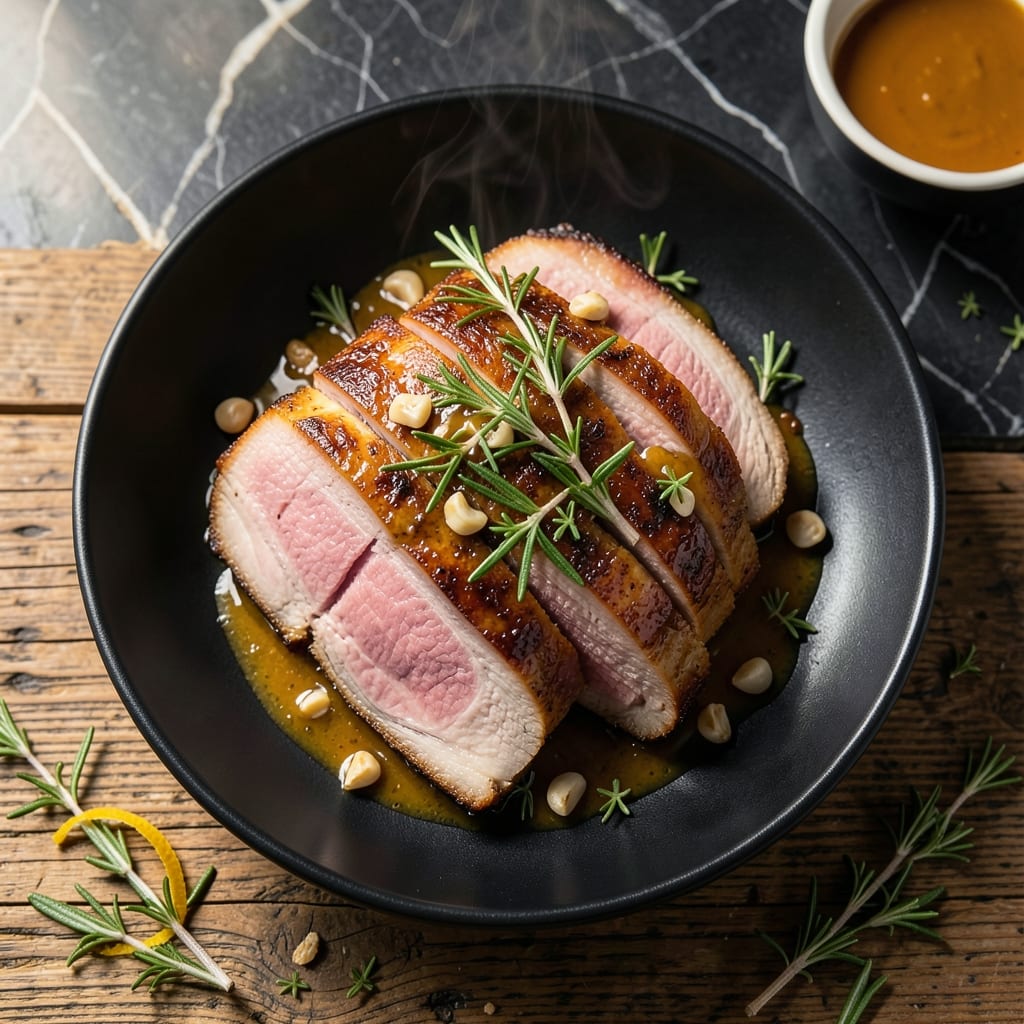
This oven-roasted pork tenderloin delivers tender, juicy results with minimal effort. The secret lies in a simple herb-garlic crust that locks in moisture while creating a flavorful exterior.
With just 20 minutes of active prep, you can have a restaurant-quality main course ready to serve. The high-heat roasting method ensures even cooking and a beautiful golden-brown finish.
Each bite offers perfectly cooked pork with a fragrant herb-garlic crust. The meat stays remarkably moist thanks to the quick cooking time and protective seasoning layer.
Pair with roasted vegetables or mashed potatoes for a complete meal. This method guarantees consistent results every time.
Ingredients for Oven-roasted Pork Tenderloin
Pork tenderloin, fresh herbs, and garlic form the backbone of this elegant yet simple dish.
| Ingredient | Amount | Notes |
|---|---|---|
| Pork Tenderloin 🥩 | 1 ½ lb | Trimmed of excess fat |
| Garlic Cloves 🧄 | 6 cloves | Minced for crust |
| Fresh Rosemary 🌿 | 2 tbsp | Finely chopped, stems removed |
| Fresh Thyme Leaves 🍃 | 2 tbsp | Stems discarded, roughly chopped |
| Dijon Mustard 🟡 | 3 tbsp | For binding herb crust |
| Extra-Virgin Olive Oil 🫒 | 2 tbsp | Divided for searing and crust |
| Kosher Salt 🧂 | 1 ½ tsp | Diamond Crystal preferred |
| Freshly Ground Black Pepper 🌶️ | 1 tsp | Coarse grind preferred |
| Dried Sage 🍃 | 1 tsp | Rubbed between palms |
| Smoked Paprika 🌶️ | 1 tsp | Adds depth to crust |
| Unsalted Butter 🧈 | 2 tbsp | Melted for basting |
| Shallot 🧅 | 1 whole | Finely minced for pan sauce |
| Dry White Wine 🍷 | ½ cup | For deglazing pan |
| Low-Sodium Chicken Broth 🥫 | ½ cup | Reduced for pan sauce |
[recipe_ingredient_scaler]
The pork tenderloin is the star here. Optimal quality requires fresh, pale pink cuts with minimal visible fat—Whole Foods or Costco typically offer the best selection. Avoid any pieces with grayish discoloration or strong odor. The herb combination of rosemary, thyme, and sage provides the aromatic base that defines this preparation. Professional kitchens use organic herbs when possible for superior fragrance and flavor.
Substitutions can be made without sacrificing quality. No fresh herbs? Dried at one-third the amount works, though fresh is preferred. Garlic powder at half the quantity can replace fresh cloves in a pinch. For a dairy-free version, olive oil can stand in for butter in the basting step. The wine is optional—additional chicken broth with a splash of vinegar achieves similar acidity.
Store the pork tenderloin in its original packaging in the coldest part of the refrigerator for up to 3 days. The herb crust components can be prepped 1 day ahead and refrigerated. Leftovers keep for 4 days refrigerated and reheat beautifully, making this an ideal make-ahead option for entertaining.
Why You’ll Love This Recipe
- One Pan Wonder: I toss the pork with garlic, rosemary, and thyme, pop it in the oven, and that’s it—one pan, minimal mess.
- Herb-Crusted Perfection: The Dijon mustard glaze with fresh herbs creates this sticky, fragrant crust that’s honestly hard to resist.
- Meal Prep Hero: I make a big batch on Sunday and it’s just as good in tacos, salads, or sandwiches all week long.
- Budget-Friendly Feast: A single pork tenderloin feeds my family for two nights, and it’s cheaper than takeout.
Step-by-Step Instructions for Oven-Roasted Pork Tenderloin
Master this technique for perfectly tender pork with a fragrant herb crust every time.
Step 1: Prepare the Herb Crust for Maximum Flavor
In a small bowl, combine the 2 tbsp fresh rosemary, 2 tbsp fresh thyme leaves, 6 cloves minced garlic cloves, 1 tsp dried sage, and 1 tsp smoked paprika with the 3 tbsp Dijon mustard and 1 tbsp extra-virgin olive oil. The mustard acts as a binding agent while adding tang.
Stir until the mixture forms a thick, cohesive paste. I rub the dried sage between my palms first to release its aromatic oils. This herb mixture should be fragrant enough that you can smell it from across the kitchen—that’s how you know the flavors will shine.
Step 2: Sear the Pork Tenderloin for a Golden Crust
Pat the 1.5 lb pork tenderloin completely dry with paper towels—this ensures a proper sear. Season all sides generously with the 1.5 tsp kosher salt and 1 tsp freshly ground black pepper. The salt should form a visible crust on the surface.
Heat the remaining 1 tbsp extra-virgin olive oil in an oven-safe skillet over medium-high heat until shimmering. Sear the pork tenderloin on all sides for 2-3 minutes per side until golden brown. The meat should release easily from the pan when ready to turn—don’t force it.
Step 3: Apply the Herb Crust and Roast
Brush the herb paste evenly over the entire surface of the seared pork tenderloin, pressing gently to adhere. The crust should completely coat the meat with no bare spots. Add the 2 tbsp unsalted butter to the skillet and let it melt, then baste the pork with the foaming butter for 1 minute.
Transfer the skillet to a preheated 400°F oven and roast for 15-20 minutes or until the internal temperature reaches 145°F. The crust will darken slightly and become fragrant. Use a meat thermometer for accuracy—overcooking will dry out the pork.
Step 4: Create the Pan Sauce While Resting
Transfer the pork to a cutting board and tent loosely with foil. Let it rest for 10 minutes while you prepare the sauce. Place the skillet over medium heat and add the 1 whole minced shallot. Cook for 1-2 minutes until translucent.
Deglaze the pan with the 0.5 cup dry white wine, scraping up all browned bits with a wooden spoon. Let it reduce by half, then add the 0.5 cup low-sodium chicken broth. Simmer for 3-4 minutes until the sauce coats the back of a spoon. Slice the pork and serve with the sauce drizzled over the top.
Pro Tips For Making Oven-Roasted Pork Tenderloin
- Sear Before Roasting: I learned this the hard way—searing the tenderloin in a hot pan for 2 minutes per side before roasting locks in juices and gives that golden crust everyone raves about.
- Trim the Silver Skin: Sounds weird, but it works: peel off that tough membrane running along the tenderloin before seasoning, or it’ll curl up and cook unevenly.
- Use a Meat Thermometer: After burning three batches, I finally figured out pulling it at 145°F internal temp guarantees perfect doneness without drying it out.
- Crush the Garlic: My grandmother swore by this, and she was right: smashing the garlic cloves before rubbing them on the meat releases way more flavor into the crust.
Storing and Reheating This Recipe
Refrigerator Storage
Let your pork cool for no more than 2 hours before transferring to airtight containers. I use glass containers to preserve the herb crust’s integrity. Store at 40°F or below for up to 4 days. The flavors deepen overnight as the herbs continue to infuse. ❄️
Freezer Storage
For longer storage, wrap slices tightly in plastic wrap then place in a freezer-safe bag. Squeeze out excess air to prevent freezer burn. This method keeps the pork tender for up to 3 months. Thaw overnight in the refrigerator before reheating.
Oven Reheating
Preheat your oven to 350°F and place pork slices in a baking dish with a splash of chicken broth. Cover with foil and heat for 10-15 minutes. This gentle method prevents drying while restoring the original texture. 🔥
Stovetop Reheating
For quick reheating, warm slices in a skillet over medium-low heat with a pat of butter. Add a tablespoon of water, cover, and steam for 3-4 minutes. This keeps the pork moist and revives the herb crust beautifully.
Microwave Reheating
Place slices on a microwave-safe plate with a damp paper towel. Heat on 50% power for 1-2 minutes, checking and turning halfway. This prevents the edges from becoming tough or rubbery.
Nutrition Facts
Frequently Asked Questions
What oven temperature works best?
Use 400°F for perfect results. This high heat sears the outside while keeping the inside juicy. The pork will develop a beautiful golden crust without overcooking.
How do I know when it’s done?
Use a meat thermometer to check for 145°F internally. The pork will be slightly pink in the center but safe to eat. Let it rest for 10 minutes before slicing.
Can I use dried herbs instead of fresh?
Yes, substitute dried at 1/3 the amount. Rub them between your palms to release more flavor. Fresh herbs provide the best taste, but dried work in a pinch.
Why does my pork come out dry?
Overcooking is the main culprit. Pull it from the oven at 145°F and rest it properly. Also, avoid skipping the searing step—it locks in moisture.

Trained in classic French technique but raised on slow-cooked ribs and spicy rubs, she blends culinary skill with smoke and soul.
- Recipe for Oven Baked Halibut: Buttery White Fish with Zesty Lemon Topping - October 3, 2026
- Meatball Curry Recipe Kerala Style: Coconut-Spiced Gravy With Tender Bites - October 3, 2026
- Recipe for Curried Tofu: Aromatic Spices With Crispy Edges - October 3, 2026