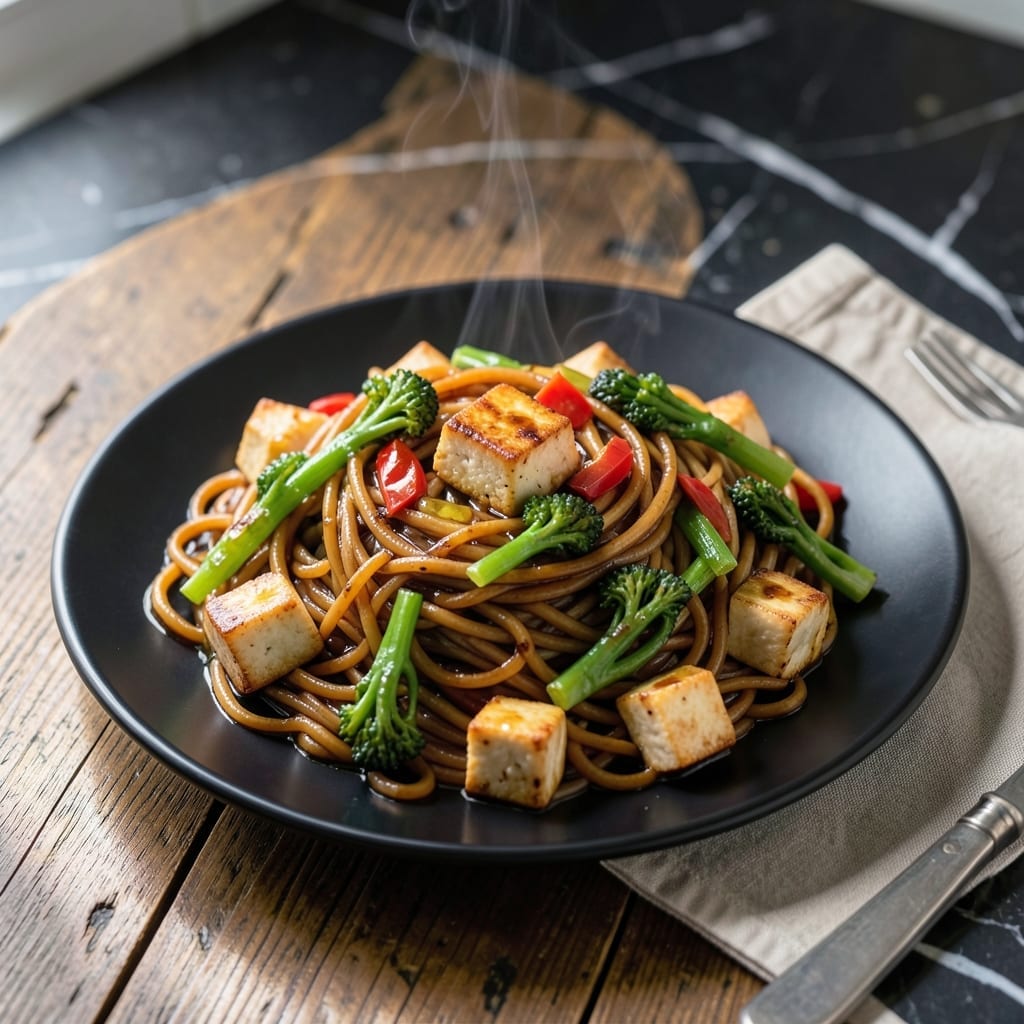
This vegan take on Thai street food delivers bold, smoky flavors without compromise. The dish relies on wide rice noodles and a carefully balanced sauce to recreate the traditional taste.
High-heat wok cooking creates that signature char while keeping the noodles tender. The result is a satisfying, plant-based version that stays true to the original spirit.
Ingredients for Pad See Ew Recipe Vegan
Wide rice noodles, bold sauces, and fresh vegetables create this plant-based Thai classic.
| Ingredient | Amount | Notes |
|---|---|---|
| Wide Rice Noodles 🍜 | 14 oz | Dried, about 1-inch wide |
| Dark Soy Sauce 💧 | 3 tbsp | For deep color and umami |
| Light Soy Sauce 💧 | 2 tbsp | For saltiness and balance |
| Vegan Oyster Sauce 💧 | 2 tbsp | Or substitute mushroom sauce |
| Chinese White Vinegar 💧 | 1 tbsp | Or rice vinegar in a pinch |
| Coconut Sugar 🧈 | 2 tbsp | Or brown sugar for caramelization |
| Garlic Cloves 🧄 | 6 cloves | Minced for aromatic base |
| Shallots 🧅 | 2 whole | Thinly sliced for texture |
| Firm Tofu 🧈 | 14 oz | Pressed and cubed for protein |
| Chinese Broccoli 🥦 | 2 cups | Cut into 2-inch pieces |
| Red Bell Pepper 🌶️ | 1 whole | Thinly sliced for crunch |
| Vegetable Oil 🫒 | 3 tbsp | High smoke point for wok frying |
| Fresh Thai Basil 🌿 | ½ cup | Loosely packed for garnish |
| Crushed Red Pepper Flakes 🔥 | ½ tsp | Adjust for heat preference |
[recipe_ingredient_scaler]
The wide rice noodles are non-negotiable for authenticity—look for dried rice sticks labeled ‘pad see ew noodles’ at Asian markets or the international aisle. Thai Kitchen or Annie Chun’s brands work well. For the soy sauces, Pearl River Bridge offers excellent quality. The vegan oyster sauce is the flavor backbone; Ocean’s Halo makes a reliable version. Press the tofu thoroughly to achieve that chewy texture characteristic of street food.
No vegan oyster sauce? Use mushroom stir-fry sauce at a 1:1 ratio. Chinese broccoli can be swapped with bok choy or regular broccoli, though the flavor profile will shift slightly. If coconut sugar is unavailable, light brown sugar works equally well. For a gluten-free version, use tamari instead of soy sauce. The vinegar can be apple cider in a pinch, though it lacks the sharpness of white vinegar.
Store dried rice noodles in a cool, dry place for up to 1 year. The sauces keep indefinitely at room temperature. Fresh Thai basil is best used within 3-4 days—wrap stems in damp paper towels. The tofu can be pressed and prepped 1 day ahead and refrigerated, making weeknight cooking faster.
Why You’ll Love This Recipe
- One Pan Wonder: I toss everything in a wok and it’s done in 20 minutes flat—no juggling multiple pots.
- Umami Bomb: That hit of vegan oyster sauce with dark soy sauce? Ridiculously good, deep and savory.
- Meal Prep Hero: Makes a huge batch that reheats beautifully for lunches all week.
- Budget Stretcher: Wide rice noodles are cheap, and a little sauce goes a long way to feed four.
Step-by-Step Instructions for Vegan Pad See Ew
Master the wok technique and achieve that signature smoky-sweet balance with every bite.
Step 1: Prepare the Noodles and Sauce Components
Soak the 14 oz Wide Rice Noodles in warm water for 20-25 minutes until pliable but still slightly firm. Drain immediately in a colander and rinse under cold water to stop the cooking process. This prevents them from turning mushy when stir-fried.
Meanwhile, combine the 3 tbsp Dark Soy Sauce, 2 tbsp Light Soy Sauce, 2 tbsp Vegan Oyster Sauce, 1 tbsp Chinese White Vinegar, and 2 tbsp Coconut Sugar in a small bowl. Whisk until the coconut sugar fully dissolves—the mixture should appear glossy and slightly syrupy.
Step 2: Sear the Tofu and Aromatics
Press and cube the 14 oz Firm Tofu into 1-inch pieces. Heat 2 tbsp Vegetable Oil in a wok or large skillet over high heat until shimmering. Add the tofu in a single layer and sear undisturbed for 3-4 minutes until golden brown on one side.
Flip the tofu and add the minced 6 cloves Garlic Cloves and thinly sliced 2 whole Shallots. Stir-fry for 1-2 minutes until the aromatics turn fragrant and the edges of the shallots begin to crisp. The tofu should be uniformly browned and slightly crispy at this stage.
Step 3: Stir-Fry Vegetables and Combine
Add the remaining 1 tbsp Vegetable Oil to the wok along with the 2 cups Chinese Broccoli and thinly sliced 1 whole Red Bell Pepper. Stir-fry for 2-3 minutes until the broccoli stems turn bright green and the bell pepper softens slightly but retains its crunch.
Return the noodles to the wok, pouring the sauce mixture evenly over the top. Toss everything together with tongs for 2-3 minutes until the noodles are fully coated and begin to char slightly at the edges. The sauce should thicken and cling to every strand, creating that iconic glossy finish.
Step 4: Finish and Garnish
Sprinkle the 0.5 tsp Crushed Red Pepper Flakes over the noodles and toss once more to distribute the heat evenly. Remove from heat and immediately fold in the 0.5 cup Fresh Thai Basil leaves—just until they wilt slightly but retain their vibrant color.
The final dish should have a deep, caramelized aroma with visible char on some noodles. The tofu will be crispy on the outside yet tender within, while the vegetables maintain a slight bite. Serve immediately while hot, as the noodles will continue to absorb the sauce as they sit.
Pro Tips For Making Pad See Ew Recipe Vegan
- Soak Noodles First: I learned this the hard way—soak wide rice noodles in warm water for 15-20 minutes before stir-frying, or they’ll stay stubbornly chewy. They should be pliable but still slightly firm.
- High Heat Only: Crank the heat to max and work fast. After burning three batches, I finally figured out that medium heat just steams the noodles instead of giving them that signature char.
- Skip the Over-Saucing: Resist the urge to drown the noodles in sauce—start with 2 tablespoons of each soy sauce and adjust. Too much liquid turns pad see ew into a soggy mess instead of a smoky, caramelized dish.
- Vinegar Last: Stir in the Chinese white vinegar at the very end, off the heat. Sounds weird, but it keeps the bright, tangy flavor from cooking off while still balancing the richness of the vegan oyster sauce.
Dietary Considerations for This Recipe
Keto-Friendly Options
Traditional pad see ew uses wheat noodles, but for a keto twist, swap in shirataki noodles or spiralized zucchini. These low-carb alternatives soak up the smoky sauce just as well. Boost the dish with extra tofu or tempeh for protein.
Gluten-Free
To make this dish gluten-free, use rice noodles or tamari instead of regular soy sauce. Ensure all sauces and condiments are certified gluten-free to avoid cross-contamination. Check labels carefully for hidden gluten.
Allergens
This vegan version is naturally free of dairy and eggs, but watch for soy and wheat if allergies are a concern. For nut-free cooking, skip any optional peanuts or cashews in garnishes.
Vegetarian Modifications
Already vegetarian, this recipe can be enhanced with mushrooms or bell peppers for extra texture. For a richer flavor, add a splash of vegetarian oyster sauce or coconut aminos.
Low-Sodium
Reduce sodium by using low-sodium soy sauce and omitting added salt. Balance the flavors with fresh herbs like Thai basil or cilantro. A squeeze of lime can also brighten the dish without extra sodium.
Nutrition Facts

Trained in classic French technique but raised on slow-cooked ribs and spicy rubs, she blends culinary skill with smoke and soul.
- Recipe for Boneless Pork Chops in Cast Iron Skillet: Sear and Baste to Juicy Perfection - October 3, 2026
- Recipe for Boneless Cross Rib Roast: Slow-Roasted Beef with Herb Crust - October 3, 2026
- Hamburgers in Sauce Recipe Crock Pot: Slow-Cooked Savory Delight - October 3, 2026