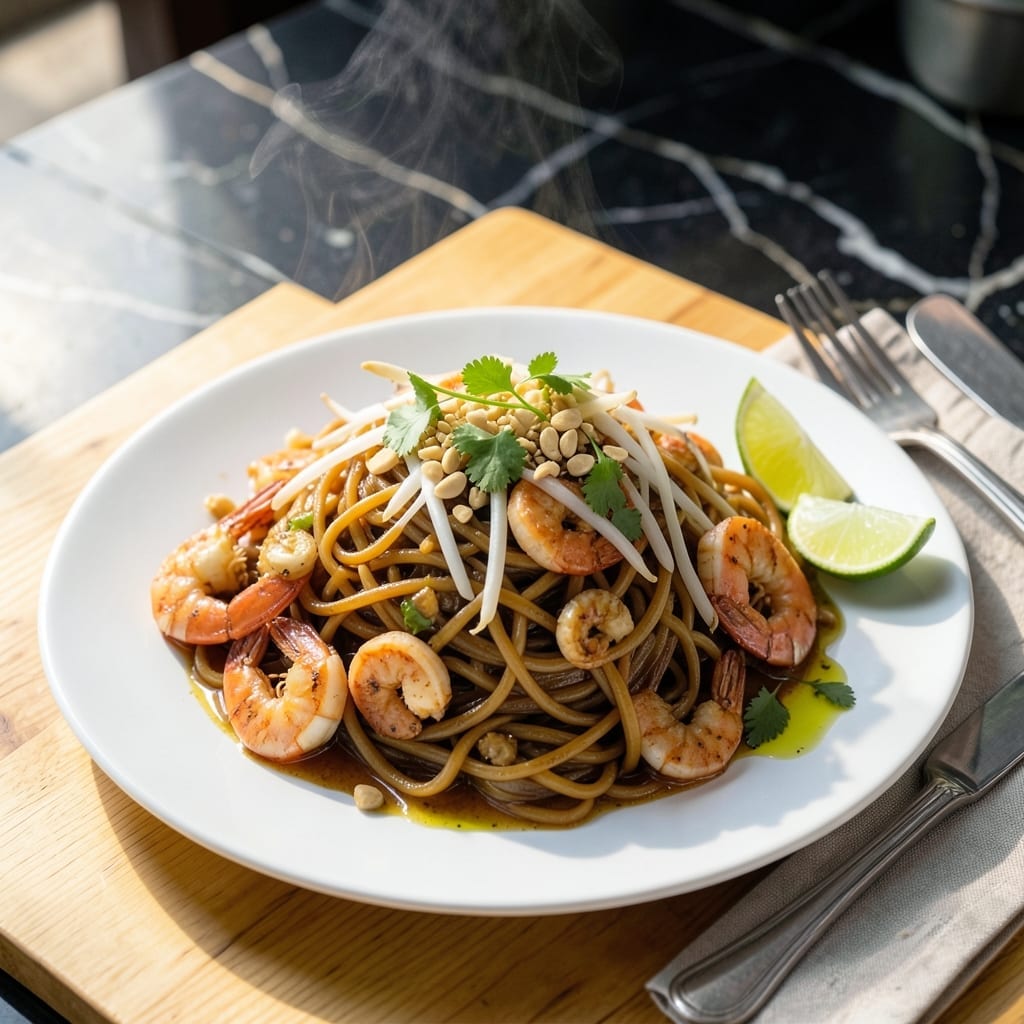
This recipe brings the vibrant flavors of Thai street food to your kitchen with an authentic touch. The tamarind paste delivers that signature tangy-sweet balance that defines traditional pad thai.
With a few key ingredients and proper technique, you’ll achieve the perfect harmony of chewy noodles, savory sauce, and fresh toppings that make this dish unforgettable.
Ingredients for Pad Thai Recipe with Tamarind Paste
Authentic pad thai requires rice noodles, tamarind, and fresh toppings for that street food magic.
| Ingredient | Amount | Notes |
|---|---|---|
| Rice Noodles 🍜 | 8 oz | Flat, medium-width for pad thai |
| Tamarind Paste 🍈 | 3 tbsp | Pure, no added sugar |
| Fish Sauce 🐟 | 3 tbsp | Thai variety preferred |
| Palm Sugar 🍚 | 2 tbsp | Or brown sugar substitute |
| Soy Sauce 🫕 | 2 tbsp | Light or all-purpose |
| Dried Shrimp 🍤 | 2 tbsp | Small, soaked in warm water |
| Garlic Cloves 🧄 | 4 cloves | Minced finely |
| Shallot 🧅 | 1 whole | Thinly sliced |
| Firm Tofu 🧈 | 8 oz | Pressed and cubed |
| Bean Sprouts 🌱 | 2 cups | Fresh, rinsed |
| Peanuts 🥜 | ½ cup | Crushed, unsalted preferred |
| Lime 🍈 | 1 whole | Cut into wedges for serving |
| Cilantro 🌿 | ½ cup | Fresh, chopped for garnish |
| Chili Flakes 🌶️ | 1 tsp | Adjust to taste |
| Vegetable Oil 🫒 | 3 tbsp | For stir-frying |
[recipe_ingredient_scaler]
Tamarind paste is non-negotiable for authenticity. Asian markets carry the best quality—look for pure paste without additives. The rice noodles must be flat and medium-width; Thai brands like Maesri are ideal. Dried shrimp adds depth, but vegetarians can omit or use a mushroom substitute. Fish sauce should be Thai Tiparos or Red Boat for optimal flavor.
No tamarind? Lime juice plus brown sugar mimics the tangy-sweet balance, though it’s not identical. Palm sugar can be swapped for brown sugar at a 1:1 ratio. Tofu can be replaced with shrimp or chicken for a non-vegetarian version. Bean sprouts and cilantro are classic toppings, but bell peppers or green onions work in a pinch.
Noodles cook fast—soak them in warm water for 15 minutes before stir-frying. The sauce can be made ahead and stored for 1 week in the fridge. Fresh toppings like cilantro and lime should be added just before serving to retain their vibrancy.
Why You’ll Love This Recipe
- 20-Minute Meal: I can go from soaking rice noodles to plating faster than my kids argue over who gets the last dumpling.
- Tamarind Tang: That sweet-sour punch from tamarind paste and palm sugar hits just right—no bland bites here.
- Lunchbox Hero: It reheats beautifully, and honestly, my picky nephew asks for leftovers in his thermos.
- Pantry MVP: Fish sauce, soy, and tamarind paste are shelf-stable, so I’m never more than a noodle soak away from dinner.
Step-by-Step Instructions for Pad Thai With Tamarind Paste
Master the technique that delivers authentic Thai street food flavor in your own kitchen.
Step 1: Prepare the Rice Noodles and Sauce Base
Soak the 8 oz rice noodles in warm water for 20-25 minutes until pliable but still slightly firm. They should bend without snapping. Drain and set aside. This step ensures they cook evenly during stir-frying without turning to mush.
In a small bowl, whisk together the 3 tbsp tamarind paste, 3 tbsp fish sauce, 2 tbsp palm sugar, and 2 tbsp soy sauce until the palm sugar fully dissolves. Taste and adjust the balance if needed—the sauce should be tangy, salty, and slightly sweet. This is the flavor foundation of your dish.
Step 2: Prep and Cook the Aromatics and Protein
Heat 2 tbsp vegetable oil in a wok or large skillet over medium-high heat. Add the 2 tbsp dried shrimp and stir-fry for 1 minute until fragrant. Push to one side, then add the 4 cloves minced garlic cloves and 1 thinly sliced shallot. Cook for 30-45 seconds until the shallot softens and the garlic turns light golden.
Add the 8 oz cubed firm tofu and stir-fry for 3-4 minutes until the tofu is lightly browned on all sides. The tofu should develop a slight crust while remaining tender inside. Transfer this mixture to a plate and set aside.
Step 3: Stir-Fry the Noodles and Vegetables
Add the remaining 1 tbsp vegetable oil to the wok and increase heat to high. Add the drained rice noodles and stir-fry for 1-2 minutes until they soften and begin to curl at the edges. Pour the tamarind sauce over the noodles and toss vigorously to coat evenly.
Add the 2 cups bean sprouts and cook for 1 minute until they wilt slightly but retain a crisp texture. Return the tofu mixture to the wok and toss everything together for another 30 seconds. The noodles should be tender and fully coated in the glossy sauce.
Step 4: Finish and Garnish
Reduce heat to low and push the noodles to one side of the wok. Crack an egg into the empty space if using (optional for traditional pad Thai), scramble quickly, then incorporate into the noodles. Toss everything together for a final 30 seconds to ensure even distribution.
Transfer to serving plates and top immediately with 0.5 cup crushed peanuts, 0.5 cup chopped cilantro, and 1 tsp chili flakes to taste. Serve with lime wedges on the side for squeezing over the top. The dish should have a balance of sweet, sour, salty, and umami flavors with a variety of textures in each bite.
Pro Tips For Making Pad Thai Recipe With Tamarind Paste
- Soak Noodles Right: Cover rice noodles with room temp water for 30-45 minutes—any longer and they’ll turn to mush, any shorter and they’ll stay stubbornly hard. I learned this the hard way after serving crunchy pad thai to guests.
- Balance the Sauce: Taste as you mix tamarind paste, fish sauce, and palm sugar—start with 2 tbsp tamarind, 1.5 tbsp fish sauce, and 1 tbsp sugar, then adjust. Sounds weird, but it works: the sauce should be tangy, salty, and just slightly sweet.
- Skip Overcrowding: Cook noodles in batches if needed—dumping everything in at once steams them instead of stir-frying. After burning three batches, I finally figured out that high heat and space are non-negotiable.
- Use Warm Water: Dissolve palm sugar in 2-3 tbsp warm water before adding to the sauce. My grandmother swore by this, and she was right: it blends smoothly instead of sitting in grainy clumps at the bottom of your bowl.
Troubleshooting This Dish
🍳 Too Dry or Tough?
Pad Thai can turn dry if the noodles are overcooked or the sauce reduces too much. Overcooking noodles removes their chewy texture, while excessive heat evaporates moisture.
Quick Fix: Stir in 1-2 tablespoons of warm water or tamarind paste to restore moisture. Toss quickly to coat the noodles evenly.
🥘 Noodles Sticking Together?
Noodles clump when undercooked or left sitting too long after boiling. Insufficient rinsing or low heat during stir-frying can also cause sticking.
Quick Fix: Rinse noodles in cold water immediately after boiling, then drain well. Use high heat and keep stirring while cooking.
⏰ Sauce Too Tangy or Sweet?
Tamarind paste is naturally tangy, and adding too much fish sauce or sugar can throw off the balance. Taste as you go to avoid overseasoning.
Quick Fix: Balance tang with a teaspoon of palm sugar or honey. For excess sweetness, add a squeeze of lime or a splash of fish sauce.
🔥 Eggs Scrambling Too Much?
Eggs can turn rubbery if overmixed or cooked too long. Adding them too early may cause them to break apart instead of forming soft, silky ribbons.
Quick Fix: Push noodles to one side of the pan, add a bit of oil, then pour in the eggs. Let them set slightly before gently folding into the noodles.
Nutrition Facts

Trained in classic French technique but raised on slow-cooked ribs and spicy rubs, she blends culinary skill with smoke and soul.
- Recipe for Boneless Pork Chops in Cast Iron Skillet: Sear and Baste to Juicy Perfection - October 3, 2026
- Recipe for Boneless Cross Rib Roast: Slow-Roasted Beef with Herb Crust - October 3, 2026
- Hamburgers in Sauce Recipe Crock Pot: Slow-Cooked Savory Delight - October 3, 2026