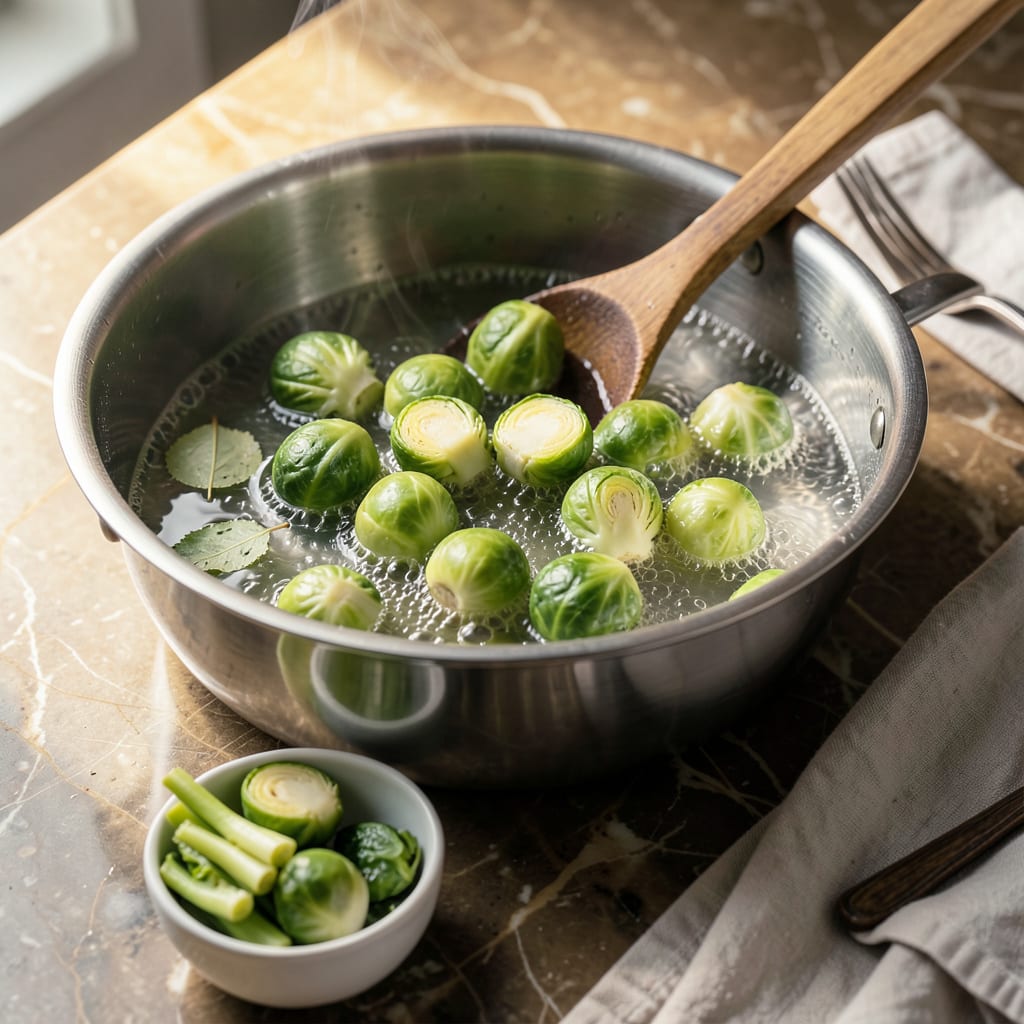
I’ll be real with you: parboiling Brussels sprouts changed my entire approach to cooking them. What used to be bitter little bullets transformed into perfectly tender bites ready for any finishing method. This simple technique takes just 5 minutes of active cooking and solves the biggest Brussels sprouts problem—uneven texture that leaves some pieces mushy while others stay raw.
Here’s the thing—parboiling gives you complete control. You’re not just softening the sprouts; you’re setting them up for success whether you plan to roast, sauté, or air-fry later. I learned this trick during a particularly hectic holiday season when I needed to prep vegetables ahead without sacrificing quality. The method works every time, delivering consistent results that even picky eaters can’t resist.
What you get is a blank canvas of perfectly cooked sprouts that maintain their shape but yield to the bite. They’re ready to absorb whatever flavors you throw at them—garlicky butter, smoky bacon, or just a simple drizzle of olive oil. The beauty is in the versatility: meal prep them for quick weeknight sides or finish them right before serving for company-worthy dishes.
Between you and me, this technique works for more than just Brussels sprouts. Once you master the timing (and I’ll walk you through exactly how), you’ll start parboiling everything from carrots to potatoes. It’s the kind of kitchen hack that makes you wonder why you didn’t try it sooner.
📚 In This Guide
- What You’ll Need
- Instructions
- Tips and Common Mistakes
What Youll Need
- ● Brussels sprouts: 1 lb (about 4 cups) fresh, trimmed and halved (or whole if small). 🌱
- ● Water: 4-6 cups (enough to cover sprouts in the pot).
- ○ Salt: 1 tbsp (optional, for seasoning the water).
- ● Large pot: 3-4 quart capacity with a lid.
- ● Colander: For draining (or a slotted spoon).
- ● Timer: To track parboiling time (2-5 minutes, depending on size). ⏰
- ○ Ice water bath (optional): Bowl of cold water + ice cubes (to stop cooking if blanching).
- ● Knife & cutting board: For trimming stems and halving larger sprouts. 🔪
- ● Tongs or slotted spoon: For easy transfer from boiling water.
- ● Paper towels: To pat dry after parboiling (if roasting or sautéing later).
Instructions for Parboiling Brussels Sprouts
This simple technique transforms Brussels sprouts into perfectly tender bites every time—let me show you how.
Prepare the Brussels Sprouts
Start by rinsing your Brussels sprouts under cool water to remove any dirt or debris. I like to trim the stems by cutting off just the very bottom—about ⅛ inch—to remove any tough or discolored parts. This small step makes a big difference in texture.
Next, remove any loose or damaged outer leaves. If you’re working with particularly large sprouts, cut them in half lengthwise so they cook evenly. For small sprouts (about 1 inch in diameter), leave them whole. The goal is uniform size so everything finishes at the same time.
Boil the Water and Salt Generously
Fill a large pot with enough water to fully submerge the Brussels sprouts—about 4 quarts for 1 pound of sprouts. Bring the water to a rolling boil over high heat. I always use more water than I think I need because adding cold sprouts will lower the temperature.
Once boiling, add 1 tablespoon of salt per quart of water. The water should taste like the sea—this is your only chance to season the sprouts from the inside out. Don’t skimp on the salt; most of it will stay in the water, not in your vegetables. The salted water also helps preserve the bright green color.
Parboil Until Just Tender
Carefully add the prepared Brussels sprouts to the boiling water. The water will stop boiling momentarily—that’s normal. Return the water to a gentle boil, then reduce the heat to medium to maintain a steady simmer. Cook uncovered for 3-5 minutes depending on size.
You’ll know they’re done when a sharp knife slides in easily with just a slight resistance. For whole small sprouts, aim for 3 minutes; for halved larger ones, 4-5 minutes. Don’t overcook—they should be tender but still hold their shape. I always test one by cutting it in half to check the center.
Shock in Ice Water to Stop Cooking
While the sprouts cook, prepare an ice bath in a large bowl—fill it with cold water and plenty of ice cubes. As soon as the sprouts reach perfect tenderness, use a slotted spoon to transfer them immediately to the ice bath. This shock treatment stops the cooking process instantly.
Let them cool in the ice water for 2-3 minutes until completely chilled. You’ll notice the color becomes even more vibrant. Drain them well in a colander, then gently pat dry with clean kitchen towels or paper towels. This step is crucial if you plan to finish them later—it prevents mushy sprouts.
Finish as Desired or Store for Later
Now your Brussels sprouts are perfectly parboiled and ready for their final preparation. For immediate serving, you can sauté them in butter with garlic for 3-4 minutes until heated through. If roasting, toss with oil and spread on a baking sheet at 425°F for 15-20 minutes until crispy.
For meal prep, store the cooled, dried sprouts in an airtight container in the refrigerator for up to 3 days. They’re now prepped for quick weeknight meals—just reheat with your favorite seasonings. This parboiling method ensures they’ll stay tender without becoming soggy, whether you finish them now or later.
Tips and Common Mistakes
Perfect parboiling comes down to timing and technique—here’s what I’ve learned from years of testing.
Salt Like the Sea: In Step 2, don’t be shy with that 1 tablespoon of salt per quart. I know it seems like a lot, but most stays in the water. The salt actually helps preserve that vibrant green color and seasons the sprouts from within. Trust me, you’ll taste the difference in the final dish.
Size Matters: For Step 3, pay close attention to those 3-5 minutes. Small whole sprouts (about 1 inch) only need 3 minutes, while halved larger ones require the full 4-5 minutes. I always pull one out and cut it in half to check—it should be tender at the core but not falling apart.
Ice Bath Importance: The 2-3 minutes in the ice bath during Step 4 isn’t optional. This shock treatment stops the cooking immediately and locks in that bright green color. Skip this, and you’ll end up with grayish, overcooked sprouts. I learned this the hard way after ruining a batch by draining them straight from the boiling water.
Drying Thoroughly: After the ice bath, take the extra minute to pat the sprouts completely dry. Any remaining moisture will cause them to steam rather than crisp up when you finish them later. I use clean kitchen towels and gently roll them dry—it makes all the difference for that perfect final texture.
Pro Tips for Parboiling Brussel Sprouts
- Perfect parboiling comes down to timing and technique—here’s what I’ve learned from years of testing.
- Salt Like the Sea: In Step 2, don’t be shy with that 1 tablespoon of salt per quart. I know it seems like a lot, but …
- Size Matters: For Step 3, pay close attention to those 3-5 minutes. Small whole sprouts (about 1 inch) only need 3 mi…
Frequently Asked Questions
How long should I parboil Brussels sprouts for the best texture?
Parboil small Brussels sprouts for 3-4 minutes and larger ones for 5-6 minutes. You want them tender but still slightly firm—they’ll finish cooking when you roast or sauté them. Test with a fork; it should slide in easily but not fall apart.
Can I parboil Brussels sprouts ahead of time?
Parboil them up to 2 days in advance, then shock in ice water to stop cooking. Drain well, pat dry, and store in an airtight container in the fridge. Reheat or finish cooking when ready—this saves tons of time for meal prep!
What’s the difference between parboiling and blanching Brussels sprouts?
Parboiling means partially cooking in boiling water (3-6 minutes), while blanching is a quick dip (1-2 minutes) followed by an ice bath to preserve color and crispness. Use parboiling for tender bites; blanching works best for freezing or bright, crunchy salads.
Why do my parboiled Brussels sprouts smell bad or turn mushy?
Overcooking is the usual culprit! Boil them no longer than 6 minutes—longer times release sulfur compounds (the smell) and break down texture. Also, use plenty of salted water (like pasta water) to keep flavors bright and texture firm.
Are there alternatives to parboiling for softer Brussels sprouts?
Yes! Try steaming (5-7 minutes) for a gentler cook or microwaving (3-4 minutes with a splash of water). For caramelized edges, skip parboiling and roast at 425°F (220°C) for 20-25 minutes—just toss with oil and salt first!
Parboiling Brussels sprouts is your shortcut to tender, vibrant, and flavor-packed results every time! 🌱 Whether you’re prepping for roasting, sautéing, or serving them solo, this simple technique cuts cooking time and locks in nutrients. Now that you’ve mastered the basics, why not experiment?
Try tossing your parboiled sprouts with garlic butter, balsamic glaze, or crispy bacon—or dive into a new recipe like honey-sriracha roasted Brussels sprouts. Happy cooking, and enjoy those perfectly prepped bites! 😊

Trained in classic French technique but raised on slow-cooked ribs and spicy rubs, she blends culinary skill with smoke and soul.
- Recipe for Boneless Pork Chops in Cast Iron Skillet: Sear and Baste to Juicy Perfection - October 3, 2026
- Recipe for Boneless Cross Rib Roast: Slow-Roasted Beef with Herb Crust - October 3, 2026
- Hamburgers in Sauce Recipe Crock Pot: Slow-Cooked Savory Delight - October 3, 2026