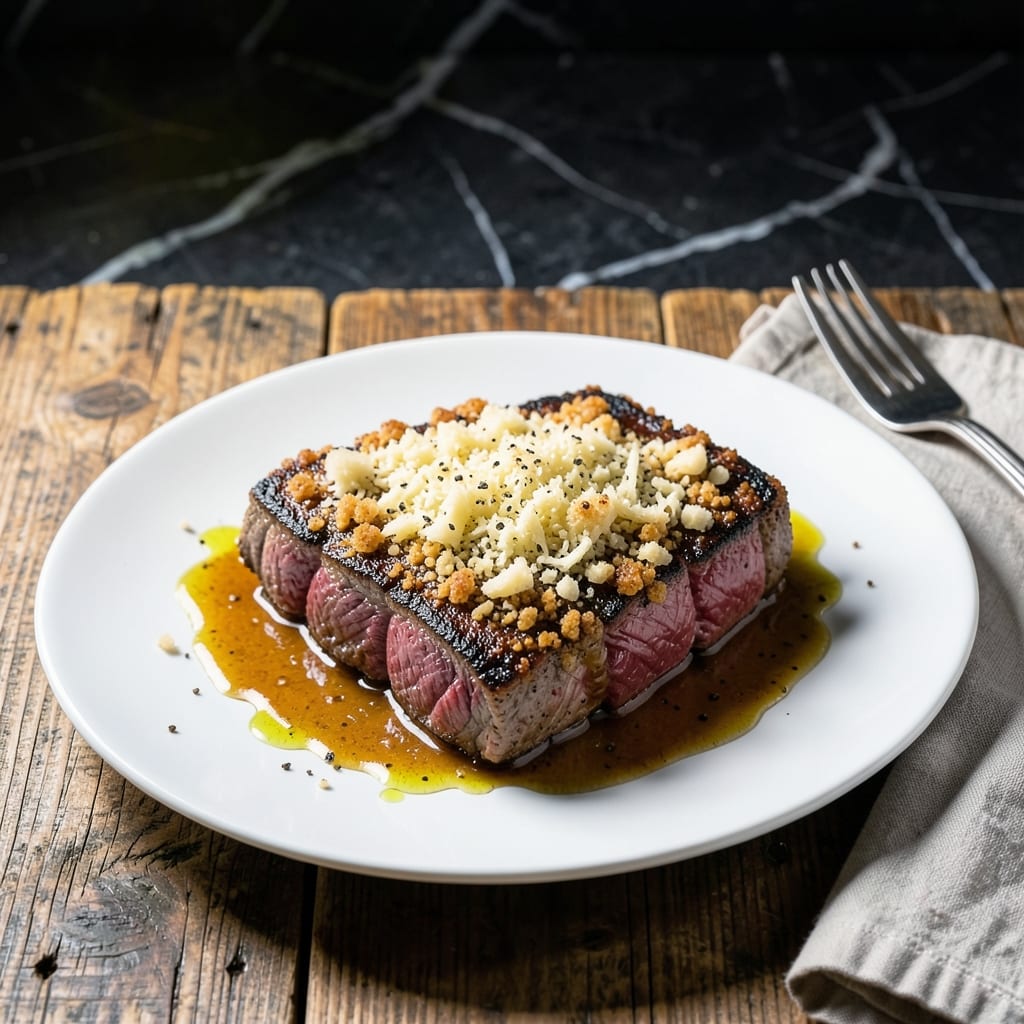
This parmesan-crusted steak delivers a golden, crispy crust with a perfectly medium-rare center every time. The secret lies in pressing the cheese crust onto the meat just before cooking to ensure it adheres beautifully while forming that signature crunch.
I’ve refined this technique over years of testing to guarantee the crust stays intact without burning. A hot pan and quick searing lock in juices, while the parmesan creates a rich, savory layer that complements the beef’s natural flavors.
The result is a steak that’s as impressive as it is delicious—tender, juicy, and topped with a golden cheese crust that adds texture and depth. Serve it with simple sides to let the main dish shine.
Pair with roasted asparagus or a crisp salad for a complete meal that feels restaurant-worthy. This method is foolproof for home cooks.
Ingredients for Parmesan Crusted Steak
Quality cut plus bold flavors create that signature golden crust every time.
| Ingredient | Amount | Notes |
|---|---|---|
| Ribeye Steaks 🥩 | 4 whole | 1.5 inches thick, bone-in preferred |
| Parmesan Cheese 🧀 | 1 cup | Freshly grated from wedge |
| All-Purpose Flour 🌾 | ½ cup | For dredging steaks |
| Kosher Salt 🧂 | 2 tsp | Diamond Crystal preferred |
| Black Pepper 🌶️ | 1 tsp | Freshly cracked preferred |
| Garlic Powder 🧄 | 1 tsp | Not garlic salt |
| Dijon Mustard 🟡 | 2 tbsp | For crust adhesion |
| Olive Oil 🫒 | ¼ cup | High smoke point preferred |
| Unsalted Butter 🧈 | 2 tbsp | For basting steaks |
| Fresh Rosemary 🌿 | 2 tbsp | Finely chopped, stems removed |
| Fresh Thyme 🍃 | 2 tsp | Leaves only, stems discarded |
| Vegetable Oil 💧 | 1 tbsp | For pan searing |
[recipe_ingredient_scaler]
The steak cut is non-negotiable here. Ribeye with its marbling delivers the juiciest results—New York strip works in a pinch but lacks fat. Whole Foods and Costco have excellent selections. Look for bright red meat with white fat streaks (the good stuff, not the pre-cut steaks). The Parmesan must be Parmigiano-Reggiano—grate it from a wedge yourself for proper melt and texture.
No ribeye? Filet mignon offers tenderness but needs a quick sear to avoid overcooking. Swap Dijon for whole-grain mustard for visual texture. The herbs can be dried at one-third the amount, but fresh delivers superior aroma. If avoiding gluten, almond flour replaces all-purpose at a 1:1 ratio. The butter must be unsalted—salted can over-season the crust.
Prep the crust mixture up to 8 hours ahead—store refrigerated. Cooked steaks rest 10 minutes before serving to retain juices. Leftovers keep 3-4 days refrigerated, but best eaten fresh. Freezing cooked steaks? Not recommended—texture suffers.
Why You’ll Love This Recipe
- One Pan Dinner: I love that I only need a skillet and a few minutes to get that golden parmesan crust on the ribeye.
- Crispy, Cheesy Bite: The parmesan forms this crave-worthy crust that gives way to the juicy steak underneath—honestly, it’s my favorite part.
- Date Night Ready: This feels fancy enough for a special occasion but is unfussy enough for a Tuesday night treat.
- Leftovers? No Problem: The steak reheats surprisingly well, and I’ll be real: I’ve eaten cold slices straight from the fridge.
Step-by-Step Instructions for Parmesan Crusted Steak
This method ensures a perfect golden crust while maintaining a juicy, medium-rare center every time.
Step 1: Prepare and Season the Ribeye Steaks
Pat the 4 whole Ribeye Steaks completely dry with paper towels—moisture prevents proper searing. Season both sides generously with the 2 tsp Kosher Salt, 1 tsp Black Pepper, and 1 tsp Garlic Powder. Press the seasoning into the meat so it adheres well during cooking. This step builds the flavor foundation for your crust.
Let the seasoned steaks sit at room temperature for 30-45 minutes before cooking. This ensures even cooking throughout the thick 1.5-inch steaks and prevents the centers from being cold when the crust is perfect.
Step 2: Create the Parmesan Crust Mixture
In a shallow dish, combine the 1 cup Parmesan Cheese and 0.5 cup All-Purpose Flour. Stir in the 2 tbsp Fresh Rosemary and 2 tsp Fresh Thyme until evenly distributed. The flour helps the Parmesan adhere to the steaks, while the herbs add aromatic depth to the crust.
In a separate small bowl, whisk the 2 tbsp Dijon Mustard until smooth. This acts as the “glue” for the Parmesan mixture. Brush the Dijon mustard evenly over all surfaces of each steak, creating a sticky base for the crust to cling to.
Step 3: Sear and Crust the Steaks
Heat the 1 tbsp Vegetable Oil in a large skillet over medium-high heat until shimmering. Add the steaks and sear for 2-3 minutes per side until a deep brown crust forms. Don’t move the steaks during searing—this ensures a proper Maillard reaction for maximum flavor.
After searing, immediately press each steak into the Parmesan mixture, coating all sides completely. Return the steaks to the hot pan and add the 2 tbsp Unsalted Butter. As the butter melts, spoon it over the steaks repeatedly to baste the crust for 1-2 minutes until the Parmesan turns golden brown.
Step 4: Finish and Rest the Steaks
Reduce heat to medium and continue cooking the steaks, basting with the butter and pan juices, until they reach an internal temperature of 130°F for medium-rare. This typically takes 3-5 minutes total cooking time depending on thickness.
Transfer the steaks to a wire rack set over a plate and let them rest for 10 minutes. This allows the juices to redistribute and the crust to set. Tent loosely with foil if needed, but don’t cover completely—this could make the crust soggy. The temperature will rise to 135°F during resting.
Step 5: Serve Immediately
Slice the steaks against the grain and serve immediately while the crust is still crisp. Drizzle any remaining pan juices over the top for extra flavor. Each bite should deliver the contrast of the crispy, cheesy Parmesan crust with the tender, juicy ribeye beneath.
The crust should be deep golden brown and maintain its crunch, while the interior remains perfectly pink and moist. This technique ensures the Parmesan stays attached during cooking and creates a professional-quality presentation.
Pro Tips For Making Parmesan Crusted Steak
- Dry the Steaks: Pat the ribeyes bone-dry with paper towels before coating—I learned this the hard way after my crust kept sliding off in the pan.
- Grate Fresh Parmesan: Skip the pre-grated stuff and use a microplane on a block of Parmigiano-Reggiano; the finer texture clings better to the steak and melts into a crispier crust.
- Skip the Overcrowding: Cook one steak at a time if needed—crowding the pan drops the temperature and turns your Parmesan crust into a sad, chewy mess.
- Rest Before Serving: Give the steaks 5 minutes under foil after cooking; this keeps the juices from running all over your plate when you cut into that beautiful crust.
Regional Styles of This parmesan crusted steak
French Bistro Style
In France, they elevate this with Comté cheese instead of Parmesan, creating a nuttier, more complex crust. The technique involves searing in duck fat instead of vegetable oil for added richness. I love the depth this brings to the dish. 💛
Italian Trattoria
Italian versions often use Pecorino Romano blended with Parmesan for a sharper, saltier bite. They’ll also add breadcrumbs to the crust mixture for extra crunch. A drizzle of balsamic reduction finishes it beautifully.
Texas Steakhouse
Everything’s bigger in Texas—including the crust. They’ll use aged cheddar mixed with Parmesan and add crushed black peppercorns for heat. The steaks are thicker, often 2 inches, and cooked low and slow before crusting.
Argentinian Asado
Argentinian cooks use provoleta cheese for its meltability and add chimichurri sauce after cooking. The crust is pressed on post-sear, then finished on the grill. This method gives a smoky edge to the cheese.
Midwest Comfort
In the Midwest, they’ll swap Parmesan for sharp white cheddar and add crushed Ritz crackers to the crust. The result is a nostalgic, hearty version that pairs well with mashed potatoes.
California Fusion
West Coast chefs might add goat cheese to the Parmesan for tang and top with fig jam for sweetness. The crust is lighter, often made with panko breadcrumbs for extra crispiness. 🔥
Nutrition Facts
Frequently Asked Questions
Why use Dijon mustard in the crust?
Dijon acts as the perfect adhesive for the Parmesan mixture. Its tangy flavor also cuts through the richness of the cheese and beef.
Can I use pre-grated Parmesan?
Avoid pre-grated—it contains anti-caking agents that prevent proper melting. Always grate fresh Parmigiano-Reggiano from a wedge for the best texture and flavor.
How do I prevent the crust from burning?
Cook over medium-high heat and baste with butter constantly. The crust browns quickly, so keep the steaks moving. Remove from pan as soon as it turns golden brown.
What if my crust falls off?
Press the Parmesan mixture firmly onto the mustard-coated steak before returning to the pan. Let the crust set for 1-2 minutes before flipping. Chill the crust mixture for 10 minutes beforehand for better adhesion.

Trained in classic French technique but raised on slow-cooked ribs and spicy rubs, she blends culinary skill with smoke and soul.
- Recipe for Boneless Pork Chops in Cast Iron Skillet: Sear and Baste to Juicy Perfection - October 3, 2026
- Recipe for Boneless Cross Rib Roast: Slow-Roasted Beef with Herb Crust - October 3, 2026
- Hamburgers in Sauce Recipe Crock Pot: Slow-Cooked Savory Delight - October 3, 2026