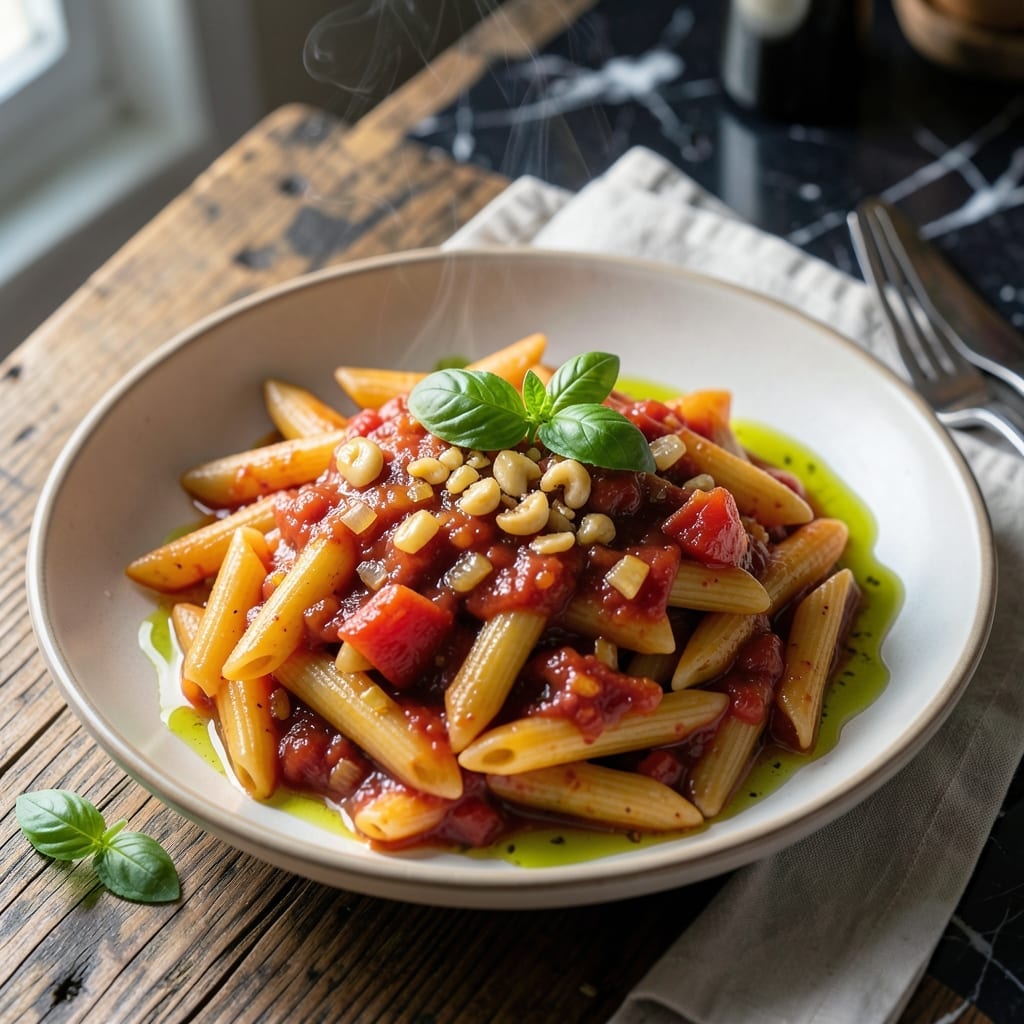
This one-pot vegetarian pasta delivers the classic Italian flavors you crave without the meat. The sauce simmers alongside the pasta, absorbing all the rich tomato and herb notes as it cooks.
You’ll have a restaurant-quality dish with minimal cleanup, where every bite carries the depth of slow-cooked marinara and perfectly al dente noodles.
Ingredients for Pasta with Pasta Sauce Recipe Vegetarian
Classic Italian flavors meet one-pot simplicity with these vegetarian staples. Restaurant-worthy every time.
| Ingredient | Amount | Notes |
|---|---|---|
| Penne Pasta 🍝 | 12 oz | Or other short pasta shape |
| San Marzano Canned Tomatoes 🍅 | 28 oz | Crushed or whole, hand-crushed |
| Yellow Onion 🧅 | 1 whole | Medium, finely diced |
| Garlic Cloves 🧄 | 4 cloves | Minced for deep flavor |
| Extra-Virgin Olive Oil 🫒 | 3 tbsp | Divided for cooking and finishing |
| Vegetable Broth 🥫 | 2 cups | Low-sodium preferred |
| Dried Oregano 🌿 | 1 tbsp | Mediterranean variety ideal |
| Dried Basil 🍃 | 1 tbsp | Or 3 tbsp fresh chopped |
| Red Pepper Flakes 🌶️ | ½ tsp | Adjust to heat preference |
| Sea Salt 🧂 | 1 ½ tsp | Diamond Crystal preferred |
| Black Pepper 🌶️ | 1 tsp | Freshly ground for brightness |
| Parmesan Cheese 🧀 | ½ cup | Freshly grated for best texture |
| Fresh Basil Leaves 🌿 | ¼ cup | Torn for garnish |
| Balsamic Vinegar 💧 | 1 tbsp | Aged for depth of flavor |
[recipe_ingredient_scaler]
The tomatoes are non-negotiable here. San Marzano cans from an Italian market or Whole Foods are ideal—they’re sweeter and less acidic. The pasta should be bronze-cut for that rough texture that grabs sauce. I always keep a bag of De Cecco penne in the cupboard (the good stuff, not the pre-shredded kind). Parmesan matters too—Parmigiano-Reggiano is worth the splurge, but any aged block will do.
No fresh basil? Dried at one-third the amount works, though it won’t have that bright pop. Out of vegetable broth? Water plus bouillon cube gets you close. If you’re missing red pepper flakes, a pinch of cayenne does the trick. The onion can be shallots if you’ve got them—sweeter, more delicate. Pasta shape? Rigatoni or fusilli hold sauce just as well as penne.
This tastes even better the next day once the flavors meld. Stores in the fridge for 4-5 days—reheat with a splash of water to loosen the sauce. Freezes beautifully for 3 months (portion before freezing). Leftovers? Toss with a little extra-virgin olive oil to revive.
Why You’ll Love This Recipe
- One Pot Wonder: I just dump the penne, San Marzano tomatoes, and garlic into boiling water—minimal cleanup, maximum flavor.
- Sun-Kissed Taste: Those San Marzano tomatoes bring a sweetness that pairs perfectly with the rich garlic and olive oil.
- My Go-To Weeknight: Honestly, it’s my reliable standby for last-minute dinners or when I need to feed a crowd.
- Stretches Further: Leftovers taste just as good the next day, and it’s kind on my grocery budget.
Step-by-Step Instructions for Pasta With Pasta Sauce Vegetarian
This one-pot method delivers rich, layered flavors with minimal cleanup.
Step 1: Sauté Aromatics for a Flavor Foundation
Heat 2 tbsp Extra-Virgin Olive Oil in a large, deep skillet or Dutch oven over medium heat. Add the finely diced Yellow Onion and cook for 5-6 minutes until translucent and just beginning to caramelize at the edges.
Stir in the minced 4 cloves Garlic Cloves, 1 tbsp Dried Oregano, 1 tbsp Dried Basil, and 0.5 tsp Red Pepper Flakes. Cook for 1 minute until fragrant—the garlic should sizzle but not brown. This builds the aromatic base that defines the sauce.
Step 2: Build the Sauce with Tomatoes and Broth
Pour in the 28 oz San Marzano Canned Tomatoes (crush them by hand if whole) and 1 tbsp Balsamic Vinegar. Stir well, scraping up any browned bits from the bottom of the pan. These bits are packed with flavor and will dissolve into the sauce.
Add the 2 cups Vegetable Broth, 1.5 tsp Sea Salt, and 1 tsp Black Pepper. Bring the mixture to a gentle simmer, then reduce the heat to medium-low. Let it cook uncovered for 10-12 minutes to concentrate the flavors and thicken slightly.
Step 3: Cook the Pasta Directly in the Sauce
Add the 12 oz Penne Pasta to the simmering sauce, pressing it down gently to ensure it’s fully submerged. Stir occasionally to prevent sticking, especially as the pasta begins to absorb the liquid.
Cook for 10-12 minutes, stirring every 2-3 minutes, until the pasta is al dente. The pasta should be tender with a slight bite, and most of the liquid should be absorbed. If the mixture gets too dry before the pasta is done, add ¼ cup of water and continue cooking.
Step 4: Finish with Fresh Herbs and Cheese
Remove the skillet from heat and stir in the remaining 1 tbsp Extra-Virgin Olive Oil. This adds a final layer of richness to the sauce. Taste and adjust the seasoning if needed—the flavors should be bold and balanced.
Sprinkle the 0.5 cup Parmesan Cheese over the top and stir until melted. Finally, tear the 0.25 cup Fresh Basil Leaves over the dish and gently fold them in. The fresh basil adds a bright, herbal note that ties everything together. Serve immediately while hot.
Pro Tips For Making Pasta With Pasta Sauce Recipe Vegetarian
- Salt the Pasta Water: Use at least 1 tablespoon of salt per gallon—it should taste like the sea. I learned this the hard way after serving bland penne one too many times.
- Crush the Tomatoes: Hand-crush the San Marzano tomatoes before adding them to the pot. Sounds weird, but it works: it breaks them down faster and thickens the sauce naturally.
- Low and Slow Garlic: Cook the garlic on medium-low heat until just golden, not brown. After burning three batches, I finally figured out that burnt garlic turns the sauce bitter.
- Reserve Pasta Water: Scoop out ½ cup of starchy pasta water before draining. My grandmother swore by this, and she was right: it helps the sauce cling to the penne beautifully.
Essential Equipment for Great pasta with pasta sauce recipe vegetarian
Must-Have Tools
To whip up a delicious vegetarian pasta with pasta sauce, start with a sturdy large pot or Dutch oven for boiling pasta and simmering sauces. A wooden spoon is perfect for stirring without scratching your cookware. Don’t forget a colander for draining pasta efficiently!
A sharp chef’s knife and cutting board are essential for prepping veggies like onions, garlic, and tomatoes. These basics ensure smooth, hassle-free cooking every time. 🥘
Nice-to-Have
For extra convenience, consider a food processor to quickly chop veggies or blend sauces to perfection. A microplane is great for grating garlic or hard cheeses like Parmesan. An immersion blender helps achieve a silky-smooth sauce texture without transferring hot liquids.
A pasta maker (like the Marcato Atlas) lets you craft fresh pasta from scratch for a gourmet touch. These tools elevate your dish but aren’t mandatory for a tasty result. 💡
Budget Alternatives
If you’re working with limited tools, a large skillet can double as a pot for boiling pasta in smaller batches. Use a grater instead of a microplane, and a fork or whisk can replace a wooden spoon in a pinch.
Mason jars or a hand blender can also serve as budget-friendly alternatives for blending sauces. Creativity in the kitchen keeps costs low without sacrificing flavor! ✨
Nutrition Facts

Trained in classic French technique but raised on slow-cooked ribs and spicy rubs, she blends culinary skill with smoke and soul.
- Recipe for Boneless Pork Chops in Cast Iron Skillet: Sear and Baste to Juicy Perfection - October 3, 2026
- Recipe for Boneless Cross Rib Roast: Slow-Roasted Beef with Herb Crust - October 3, 2026
- Hamburgers in Sauce Recipe Crock Pot: Slow-Cooked Savory Delight - October 3, 2026