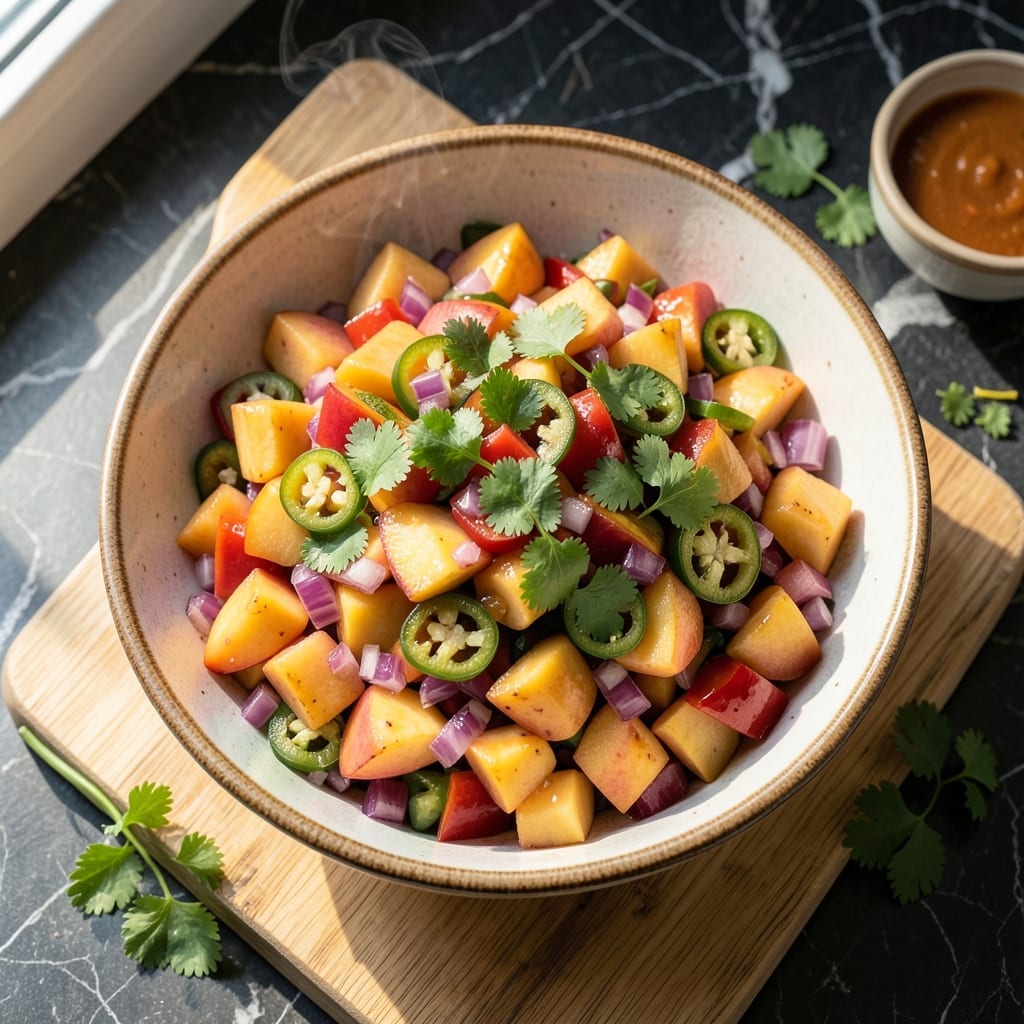
This peach salsa brings summer’s sweetness and a touch of heat to your pantry shelf. The canning process locks in fresh flavors while ensuring safety for long-term storage.
With simple ingredients and precise steps, you’ll create a versatile condiment that brightens tacos, grilled meats, or chips year-round.
Ingredients for Peach Salsa Recipe Canning
Fresh peaches and bright veggies make this canned salsa pop with summer flavor year-round.
| Ingredient | Amount | Notes |
|---|---|---|
| Peaches 🍑 | 8 cups | Peeled, pitted, diced |
| Red Onion 🧅 | 1 ½ cups | Finely diced for sharpness |
| Jalapeño Peppers 🌶️ | ½ cup | Seeds removed, minced |
| Red Bell Pepper 🌶️ | 1 whole | Diced for sweetness |
| Cilantro 🌿 | ½ cup | Fresh leaves, chopped |
| Apple Cider Vinegar 💧 | ¾ cup | Preserves color and flavor |
| Lime Juice 🍋 | ½ cup | Freshly squeezed preferred |
| Granulated Sugar 🧂 | ½ cup | Balances acidity and heat |
| Garlic Cloves 🧄 | 4 cloves | Minced for pungency |
| Canning Salt 🧂 | 1 tsp | Preservative-free for canning |
[recipe_ingredient_scaler]
Peaches are the star here. Farmers market peaches in peak season give the best flavor, but grocery store works too (just avoid rock-hard ones). Look for freestone varieties—they pit easier. The jalapeños can be adjusted for heat: keep seeds for spicier salsa, remove them all for mild. Trader Joe’s and Whole Foods often have great organic options for the produce.
No peaches? Nectarines or mangoes swap in beautifully. Out of jalapeños? Serrano peppers at half the amount work—just taste as you go. The vinegar is non-negotiable for canning safety, but white vinegar in a pinch. Cilantro haters can sub fresh parsley or basil. And the sugar? Honey or agave if you’re avoiding refined sugar, but stick to the same volume.
This salsa keeps for 12-18 months in a cool, dark pantry once canned. Refrigerate after opening and use within 1 month. The flavors actually deepen over time, so don’t be afraid to let it sit a bit before digging in (worth the wait).
Why You’ll Love This Recipe
- One Pot Wonder: I toss everything in a single stockpot and let it do the work—peaches to jalapeños, no extra bowls.
- Sweet Heat: That first bite where the peach’s juiciness meets the jalapeño’s kick? Ridiculously good.
- Party Starter: I bring a jar to summer BBQs and watch it disappear faster than the burgers.
- Pantry Gold: Honestly, it’s my secret weapon for last-minute hostess gifts—fancy but foolproof.
Step-by-Step Instructions for Peach Salsa Canning
This method ensures your salsa stays fresh and flavorful for months to come.
Step 1: Prepare and Combine the Produce
In a large bowl, combine the 8 cups Peaches, 1.5 cups Red Onion, 0.5 cup Jalapeño Peppers, 1 whole Red Bell Pepper, and 0.5 cup Cilantro. I like to use a large wooden spoon for this—it’s sturdy enough to handle the volume without crushing the peaches.
Mix gently but thoroughly, making sure the diced onion and minced jalapeños are evenly distributed throughout. The peaches should glisten from their natural juices, and you’ll start to see the vibrant colors blend into a beautiful mosaic. Don’t worry if it seems a bit dry at this point—the liquids come next.
Step 2: Add the Liquid and Seasoning Base
Pour in the 0.75 cup Apple Cider Vinegar, 0.5 cup Lime Juice, and 0.5 cup Granulated Sugar. Stir well until the sugar begins to dissolve—this usually takes about 1-2 minutes of consistent mixing. The vinegar and lime juice will start to macerate the peaches slightly, drawing out their sweetness.
The mixture should now look more liquidy, with the sugar mostly incorporated. You’ll notice the peaches start to soften a bit from the acid. This is exactly what you want. Add the 4 cloves Garlic Cloves and 1 tsp Canning Salt, then stir for another 30 seconds to distribute evenly.
Step 3: Simmer to Perfection
Transfer the salsa to a large, heavy-bottomed pot and bring to a gentle boil over medium-high heat. Stir frequently during this initial heating to prevent the sugars from sticking to the bottom. Once boiling, reduce the heat to medium-low to maintain a steady simmer.
Let it cook for 10-12 minutes, stirring occasionally, until the peaches have softened but still retain some texture. You’ll know it’s ready when the liquid has reduced slightly and the salsa has a glossy, slightly thickened appearance. The peaches should hold their shape but yield easily to a spoon.
Step 4: Process for Safe Canning
Ladle the hot salsa into sterilized canning jars, leaving ½-inch headspace at the top. Remove any air bubbles by gently tapping the jars on the counter or running a clean knife around the inside. Wipe the rims clean with a damp cloth to ensure a proper seal.
Place the lids on the jars and process in a water bath canner for 15 minutes (adjust for altitude if necessary). The jars should be fully submerged in boiling water during the entire processing time. You’ll hear the satisfying “ping” of sealed jars as they cool, confirming your salsa is safely preserved.
Pro Tips For Making Peach Salsa Recipe Canning
- Blanch Peaches First: Drop peach slices in boiling water for 30 seconds then ice bath—makes peeling way easier and keeps the texture firm for canning.
- Seed Jalapeños Thoroughly: Scrape out all the white membrane with a spoon, not just the seeds, or your salsa will have unexpected heat spikes.
- Avoid Overcooking: Simmer the salsa just until it thickens slightly, about 5-7 minutes—any longer and your peaches turn to mush.
- Use Pickling Salt: Swap regular salt for pickling salt (1 tsp per pint) to prevent cloudy brine and keep flavors bright.
Troubleshooting Great peach salsa recipe canning
Salsa Too Thin
If your salsa seems watery after simmering, don’t panic. I often solve this by returning it to the pot and cooking it down for an additional 5-10 minutes over medium heat. Stir frequently to prevent scorching. You can also add 1 tbsp cornstarch mixed with 1 tbsp water for a quicker fix. 💡
Jars Won’t Seal
First, check that your jar rims are clean and free of food residue. I always run my finger around the rim with a damp cloth. If jars still won’t seal, your lids might be faulty. Try using new, properly heated lids and reprocess for the full 15 minutes. Altitude adjustments are crucial too.
Mold Growth
This is a serious issue that means something went wrong with the canning process. If you see mold, discard the entire jar immediately. To prevent this, ensure proper 15-minute water bath processing and always use sterilized jars. I also check that my canner maintains a full rolling boil throughout.
Cloudy Salsa
Cloudiness is usually harmless and often caused by hard water or natural starches from the peaches. To minimize this, I use filtered water in my recipe and avoid overmixing. If you’re concerned about appearance, strain the salsa through a fine-mesh sieve before canning, but know that this may remove some texture.
Floating Ingredients
It’s normal for some ingredients to float to the top during processing. I prevent this by stirring the salsa gently just before ladling it into jars. If you notice it after canning, simply stir the contents before using. The flavor remains unaffected, and the texture will even out once opened.
Lid Rusting
Rust on lids usually indicates moisture exposure during storage. I store my jars in a cool, dry place and always check lids before use. If you see rust, discard the lid but the salsa is fine if properly sealed and processed. For future batches, consider using Ball or Kerr brand lids for best results. ⚡
Nutrition Facts
Frequently Asked Questions
How long does canned peach salsa last?
Properly processed jars last 12-18 months in a cool, dark pantry. Once opened, refrigerate and use within 1 month for best flavor.
Can I adjust the heat level?
Keep jalapeño seeds for spicier salsa or remove them all for mild. For extra heat, add 1/4 tsp cayenne pepper to the pot.
Why did my jars fail to seal?
This usually means the rims weren’t clean or lids weren’t properly heated. Always wipe rims with a damp cloth and use new, simmered lids. Reprocess for the full 15 minutes.

Trained in classic French technique but raised on slow-cooked ribs and spicy rubs, she blends culinary skill with smoke and soul.
- Recipe for Boneless Pork Chops in Cast Iron Skillet: Sear and Baste to Juicy Perfection - October 3, 2026
- Recipe for Boneless Cross Rib Roast: Slow-Roasted Beef with Herb Crust - October 3, 2026
- Hamburgers in Sauce Recipe Crock Pot: Slow-Cooked Savory Delight - October 3, 2026