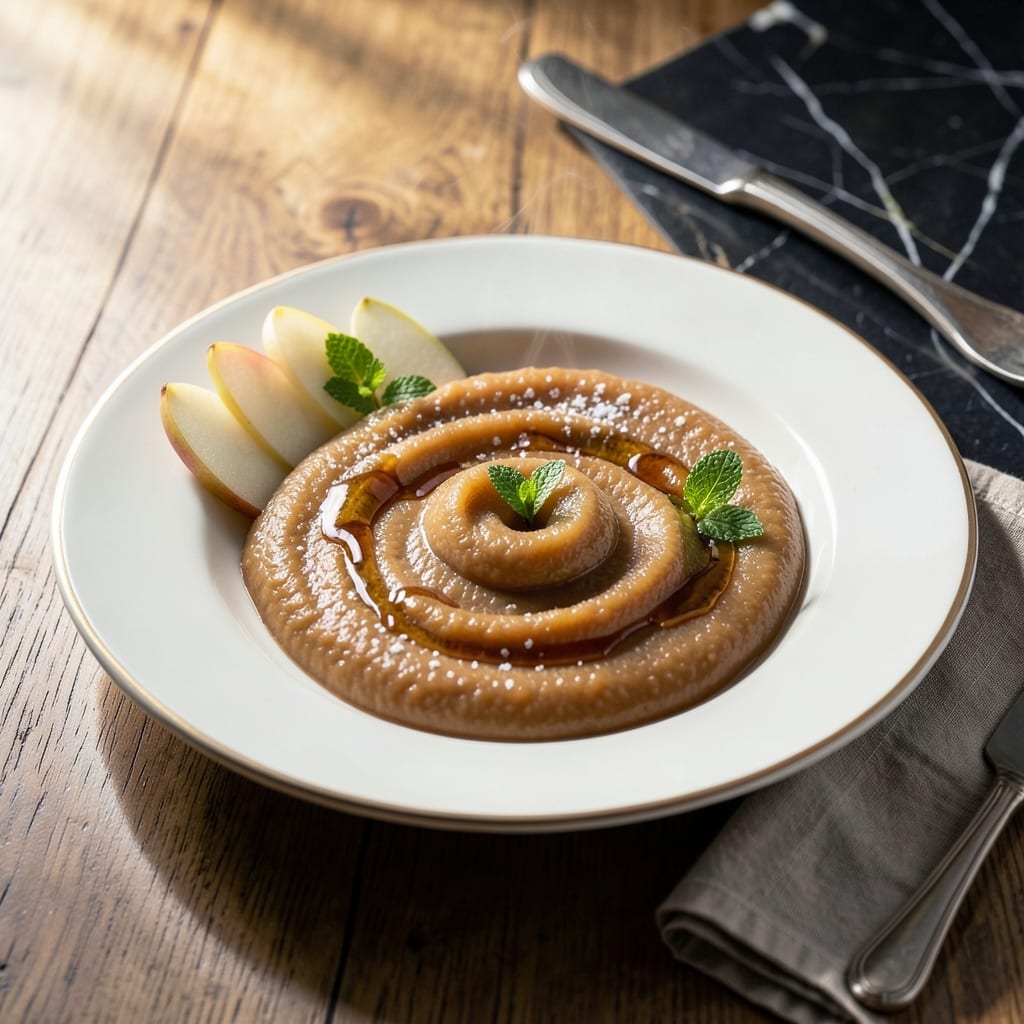
This velvety pear puree transforms ordinary dishes into gourmet creations with its naturally sweet, delicate flavor.
I developed this smooth sauce base to elevate adult palates, using ripe pears and a touch of citrus to balance sweetness. The process is straightforward yet yields restaurant-quality results every time.
Use it as a base for sophisticated sauces, a glaze for meats, or even in craft cocktails. Its versatility makes it a kitchen staple worth mastering.
The puree stores beautifully for up to a week, maintaining its vibrant flavor and silky texture.
Ingredients for Pear Puree Recipe for Adults
Eight ingredients deliver silky, sophisticated flavor for adult palates and beyond.
| Ingredient | Amount | Notes |
|---|---|---|
| Ripe Bosc Pears 🍐 | 4 whole | Cored, peeled, and diced |
| Fresh Lemon Juice 🍋 | 2 tbsp | Newly squeezed for brightness |
| Granulated Sugar 🍚 | 2 tbsp | Adjust to taste preference |
| Water 💧 | ¼ cup | For blending consistency |
| Vanilla Extract 🌿 | 1 tsp | Pure, not imitation |
| Pinch of Salt 🧂 | 1 pinch | Balances sweetness |
| Ground Cinnamon 🌶️ | ¼ tsp | Optional for warmth |
| Honey 🍯 | 1 tbsp | Substitute maple syrup |
[recipe_ingredient_scaler]
The pears are everything here. Bosc or Anjou hold their shape better than Bartletts—they’re firmer and less grainy. Look for fruit that yields slightly when pressed (ripe but not mushy). Trader Joe’s or Whole Foods usually have great options in season. If they’re rock-hard, let them sit on the counter for a day or two—they’ll soften up. Organic isn’t necessary, but do wash them well since you’ll be using the skin in some recipes (peel it here though).
No Bosc pears? Anjou works just as well. Bartletts are fine but go mushy fast, so use them right away. Skip the sugar if your pears are super sweet. The vanilla can be omitted, but it adds a nice depth—Rodelle or Nielsen-Massey are my go-tos. For a spiced version, add a pinch of cardamom or ginger. The water amount is flexible—add more if it’s too thick, less if you like it chunky (but who doesn’t love silky?).
This keeps for 7 days in an airtight container in the fridge. Freeze in ice cube trays for 3 months—perfect for portioning. The texture stays smooth, but give it a good stir before using. If it separates, just blend again with a splash of water.
Why You’ll Love This Recipe
- One Pot Wonder: I just peel, chop, and simmer—no fancy tools, no fuss.
- Vanilla-Kissed Sweetness: The Bosc pears caramelize with sugar and vanilla in a way that tastes downright indulgent.
- Dessert or Drink: I’ve spooned it over ice cream, swirled it into yogurt, and even mixed it into cocktails.
- Budget Stretch: A big batch costs pennies and keeps in the fridge for days, so I never waste ripe pears.
Step-by-Step Instructions for Pear Puree
Here’s the method for transforming those Bosc pears into a silky, sophisticated sauce base.
Step 1: Prepare the Pears for Cooking
First, I core, peel, and dice the 4 whole Ripe Bosc Pears. The Bosc variety is ideal here because it holds its shape during cooking and offers a subtle sweetness with a hint of spice. I use a paring knife for precision, making sure to remove all seeds and any tough bits near the core.
As I work, I toss the diced pears in the 2 tbsp Fresh Lemon Juice. This prevents browning and adds a bright, citrusy note that balances the natural sweetness of the fruit. I make sure every piece is lightly coated to maintain that fresh, vibrant color throughout the process.
Step 2: Simmer with Aromatics
In a medium saucepan, I combine the diced pears with the 0.25 cup Water, 2 tbsp Granulated Sugar, 1 tsp Vanilla Extract, and 1 pinch Pinch of Salt. The water helps break down the pears, while the sugar enhances their natural sweetness without overpowering it.
I bring the mixture to a gentle simmer over medium heat, then reduce to low heat and let it cook for 15-20 minutes. The pears should soften completely and become translucent at the edges. Stir occasionally to prevent sticking, and watch for the liquid to reduce slightly—this concentrates the flavors beautifully.
Step 3: Add Warmth and Sweeten
Once the pears are fully tender, I stir in the 0.25 tsp Ground Cinnamon and 1 tbsp Honey. The cinnamon adds a sophisticated warmth that elevates the puree beyond a simple fruit sauce, while the honey deepens the sweetness with its rich, floral notes.
I let the mixture simmer for another 2-3 minutes to allow the cinnamon to infuse and the honey to meld with the other ingredients. At this point, the kitchen should smell incredible—warm, sweet, and slightly spiced. If it seems too thick, I add a splash of water to loosen it to my desired consistency.
Step 4: Blend to Silky Perfection
Now, I transfer the warm pear mixture to a blender or food processor. For the smoothest texture, I blend in batches if needed, making sure not to overfill the blender. I start on low speed and gradually increase to high, blending for 1-2 minutes until completely smooth.
I pause halfway through to scrape down the sides and check the consistency. The puree should be velvety, with no visible chunks. If it’s too thick, I add a little more water, 1 tablespoon at a time, and blend again. The goal is a luscious, pourable sauce base that coats the back of a spoon without being too heavy.
Step 5: Cool and Store
I let the puree cool to room temperature, stirring occasionally to release heat evenly. This step is important because it allows the flavors to settle and deepen. As it cools, the puree will thicken slightly, which is normal.
Once cooled, I transfer it to an airtight container. It can be stored in the refrigerator for up to 5 days or frozen for 3 months. Before using, I give it a good stir, as some separation may occur. This puree is incredibly versatile—use it as a base for sauces, a topping for desserts, or even a sophisticated addition to cocktails.
Pro Tips For Making Pear Puree Recipe For Adults
- Poach the Pears First: Simmer peeled and cored pears in water with sugar and lemon juice for 10-12 minutes until fork-tender—this softens them perfectly for a smooth puree without raw bits.
- Use Bosc Pears Only: I learned this the hard way—Bosc pears hold their shape and flavor when cooked, while other varieties turn mushy or bland.
- Strain for Silkiness: After blending, press the puree through a fine-mesh sieve to remove any fibrous bits—your texture will be restaurant-smooth.
- Add Vanilla Last: Stir in the vanilla extract after cooking to preserve its delicate aroma; boiling it mutes the flavor and wastes good vanilla.
Common Mistakes When Making Great pear puree recipe for adults
Overcooking the Pears
One common mistake is letting the pears simmer too long. They only need 15-20 minutes to soften completely. Beyond that, they turn mushy and lose their vibrant flavor. I check by piercing a piece with a fork—it should slide in easily but still hold its shape.
Skipping the Lemon Juice
Always toss the diced pears in 2 tbsp Fresh Lemon Juice immediately after peeling. This prevents browning and preserves the bright, fresh color. Without it, your puree may turn dull and develop an off-flavor, especially if left sitting for a few minutes.
Wrong Pear Variety
Avoid using Bartlett pears—they’re too soft and watery for this recipe. Stick with Bosc or Anjou for the best texture and flavor. I’ve found that Bosc holds its shape better during cooking, giving you that perfect silky consistency.
Over-Sweetening
Taste before adding extra sugar or honey. Ripe pears are naturally sweet, and the 2 tbsp Granulated Sugar plus 1 tbsp Honey may be plenty. Add more sweetener gradually, in ½ tsp increments, until it meets your preference.
Blending While Hot
Never blend hot liquids in a sealed blender—it can cause pressure buildup and lead to messy explosions. Let the mixture cool slightly, fill the blender only halfway, and vent the lid. I also place a towel over the top for added safety. 💡
Ignoring Consistency
If your puree is too thick, thin it with water, 1 tbsp at a time, until it reaches a pourable consistency. Too thin? Simmer a bit longer to reduce. The ideal texture should coat the back of a spoon but still flow smoothly.
Nutrition Facts
Frequently Asked Questions
Can I use canned pears instead of fresh?
Fresh pears work best for vibrant flavor and texture. Canned pears in juice (not syrup) can substitute in a pinch, but drain and rinse them well first. The texture may be slightly softer.
How do I adjust the sweetness?
Taste before adding extra sugar. Ripe pears often need little additional sweetener. If needed, add ½ tsp at a time of honey or sugar until balanced.
What’s the best way to use this in cocktails?
Blend 2 oz puree with vodka or rum for a pear martini. Or add 1 tbsp to champagne for a sophisticated twist. Shake well with ice.
Why did my puree turn brown?
This happens when pears aren’t tossed in lemon juice immediately after peeling. The acid prevents browning. Work quickly and keep cut pears submerged.

Trained in classic French technique but raised on slow-cooked ribs and spicy rubs, she blends culinary skill with smoke and soul.
- Recipe for Boneless Pork Chops in Cast Iron Skillet: Sear and Baste to Juicy Perfection - October 3, 2026
- Recipe for Boneless Cross Rib Roast: Slow-Roasted Beef with Herb Crust - October 3, 2026
- Hamburgers in Sauce Recipe Crock Pot: Slow-Cooked Savory Delight - October 3, 2026