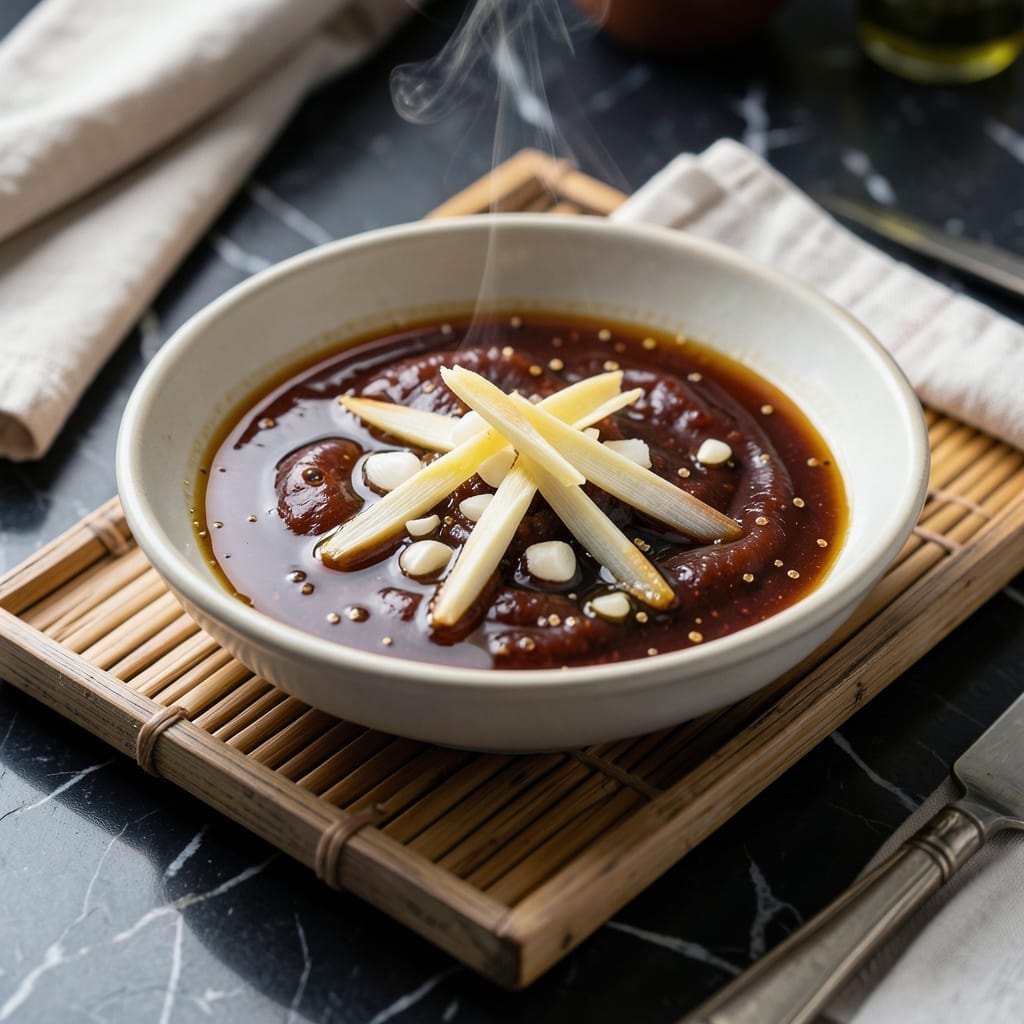
This Peking sauce delivers the classic balance of sweet, tangy, and umami that defines authentic Chinese flavors. I developed this version after years of experimenting with ratios to achieve the perfect glaze consistency.
The foundation combines hoisin sauce, soy sauce, and rice vinegar, with a touch of sugar to round out the acidity. Five minutes on the stove transforms these simple ingredients into a glossy, restaurant-quality sauce that clings beautifully to duck or works as a dipping condiment.
What you get is a versatile sauce with deep, complex flavor that elevates any dish it touches. The slightly thick texture makes it ideal for brushing on roasted meats or serving alongside spring rolls.
Make a double batch and store in the refrigerator for up to two weeks. The flavors continue to develop over time.
Ingredients for Peking Sauce
Nine simple ingredients create that classic sweet-tangy balance everyone loves
| Ingredient | Amount | Notes |
|---|---|---|
| Hoisin Sauce 🥫 | ½ cup | Quality brand for depth |
| Soy Sauce 🥫 | ¼ cup | Low-sodium preferred |
| Rice Vinegar 💧 | 2 tbsp | For tangy brightness |
| Granulated Sugar 🍚 | 2 tbsp | Balances acidity perfectly |
| Garlic Cloves 🧄 | 3 cloves | Minced finely for even distribution |
| Fresh Ginger 🌿 | 1 tbsp | Grated for smooth texture |
| Sesame Oil 🫒 | 1 tsp | Toasted for nutty aroma |
| Cornstarch 🌾 | 1 tsp | Thickens to glaze consistency |
| Water 💧 | 2 tbsp | For thinning as needed |
[recipe_ingredient_scaler]
The hoisin is key here. Koon Chun or Lee Kum Kee are the gold standard—avoid the super cheap brands (they taste like sugar with a hint of soy). Asian markets have the best selection, but most supermarkets carry at least one solid option. Look for a thick, dark sauce with a complex aroma. The soy sauce should be low-sodium so you can control the salt level yourself.
No rice vinegar? Apple cider vinegar at half the amount works in a pinch. Fresh ginger is ideal but ground ginger at one-quarter the amount gets you close. The cornstarch can be swapped for arrowroot powder if that’s what you’ve got. Want more depth? Add 1 tsp of oyster sauce—it’s traditional in many versions (just check for fish allergies first).
This glaze keeps beautifully. Store in an airtight container in the fridge for up to 2 weeks. The flavors actually improve after a day or two. Freezes well for 3 months too—perfect for making ahead. Just give it a stir before using, as it may separate slightly.
Why You’ll Love This Recipe
- Five-Minute Mix: I just dump hoisin, soy, vinegar, sugar, and minced garlic in a bowl—no stove, no fuss.
- Sweet-Savory Punch: The hoisin gives this sticky depth, while the rice vinegar cuts through with a bright tang I can’t get enough of.
- Dinner’s Secret Weapon: I drizzle it on duck, toss it with noodles, or use it as a glaze—honestly, it works everywhere.
- Pantry Stretch: Five shelf-stable ingredients I already have, and it makes enough to last a week of takeout-style meals.
Step-by-Step Instructions for Peking Sauce
This sauce comes together quickly with simple steps and delivers bold flavor every time.
Step 1: Combine the Base Ingredients
In a medium saucepan, combine the 0.5 cup Hoisin Sauce, 0.25 cup Soy Sauce, 2 tbsp Rice Vinegar, and 2 tbsp Granulated Sugar. Stir well to blend the ingredients, ensuring the sugar begins to dissolve in the liquid. I like to use a whisk for this step to break up any clumps in the hoisin.
Set the saucepan over medium heat and bring the mixture to a gentle simmer. You’ll see small bubbles forming at the edges—that’s your cue. This base creates the perfect balance of sweet, salty, and tangy that defines peking sauce.
Step 2: Add Aromatics for Depth
While the mixture heats, finely mince the 3 cloves Garlic Cloves and grate the 1 tbsp Fresh Ginger. Add both to the saucepan along with the 1 tsp Sesame Oil. Stir to distribute the aromatics evenly throughout the sauce.
The garlic and ginger should sizzle slightly when they hit the warm liquid, releasing their fragrant oils. Let them simmer for 1-2 minutes until the raw edge of the garlic mellows but doesn’t brown. This step builds the complex, savory backbone of the sauce.
Step 3: Create the Slurry and Thicken
In a small bowl, mix the 1 tsp Cornstarch with the 2 tbsp Water until smooth and free of lumps. This slurry will thicken the sauce to that perfect glaze-like consistency. Pour it into the saucepan while stirring constantly to prevent clumping.
Continue stirring as the sauce simmers for another 2-3 minutes. You’ll notice it gradually thicken, coating the back of a spoon with a glossy sheen. The sauce should reduce slightly but remain pourable—if it gets too thick, add a splash of water to loosen it.
Step 4: Adjust and Finish
Taste the sauce and adjust the seasoning if needed. If it’s too sweet, a tiny splash of rice vinegar brightens it up. If it’s too tangy, a pinch of sugar balances it out. I usually find the initial balance spot-on, but cooking is all about taste as you go.
Remove the saucepan from heat and let the sauce cool for 5 minutes. It will thicken a bit more as it cools, reaching that ideal consistency for glazing duck or using as a dipping sauce. The flavors will also meld together beautifully during this rest.
Pro Tips For Making Peking Sauce
- Bloom the Garlic: Cook the minced garlic in a little oil for 30 seconds until fragrant but not brown—I learned this the hard way after burning several batches.
- Balance the Sweetness: Taste and adjust the sugar last, as hoisin and soy sauces vary in sweetness. I skip the extra sugar if using a particularly sweet hoisin brand.
- Skip the Boil: Simmer the sauce gently instead of boiling to prevent the sugars from caramelizing too quickly and turning bitter. After ruining a batch this way, I now keep the heat low.
- Use Fresh Vinegar: Rice vinegar loses its brightness over time, so check the bottle’s date. Sounds weird, but it works: a splash of fresh vinegar at the end revives the flavor if it tastes flat.
Common Mistakes When Making peking sauce
Skipping the Slurry
I’ve seen many cooks forget to mix the 1 tsp Cornstarch with 2 tbsp Water first. Adding dry cornstarch directly to hot liquid creates clumps that are nearly impossible to smooth out. This ruins the sauce’s silky texture. 💡
Overcooking the Aromatics
Letting the 3 cloves Garlic Cloves and 1 tbsp Fresh Ginger brown in the pan adds bitterness. Cook them just until fragrant, about 1-2 minutes. Burnt garlic has a harsh, acrid taste that overpowers the sauce’s delicate balance.
Wrong Heat Level
Using high heat instead of medium heat causes the sugars to caramelize too quickly, leading to a burnt flavor. Keep the heat moderate to allow the flavors to meld gradually without scorching the sauce.
Not Tasting As You Go
The perfect balance of sweet and tangy is personal. I always taste after adding the 2 tbsp Rice Vinegar and 2 tbsp Granulated Sugar. Adjust with a pinch more sugar or splash of vinegar to suit your preference.
Ignoring Consistency
Your sauce should coat the back of a spoon but still be pourable. If it’s too thin, simmer for another 1-2 minutes. If too thick, add 1 tbsp Water at a time until you reach the ideal glaze-like texture.
Skipping the Rest
Letting the sauce cool for 5 minutes after cooking is crucial. This allows the flavors to meld and the sauce to reach its final consistency. Serving it too hot can make it appear thinner than it actually is.
Nutrition Facts
Frequently Asked Questions
Can I make this sauce ahead of time?
It keeps well in an airtight container in the fridge for up to 2 weeks. The flavors actually deepen over time.
What can I use instead of hoisin sauce?
In a pinch, mix 3 tbsp soy sauce with 1 tbsp molasses and 1 tsp five-spice powder. It won’t be identical but works for the base flavor.
Why did my sauce turn out too thin?
Likely the cornstarch slurry didn’t cook long enough. Simmer for an extra 1-2 minutes or add another 1/2 tsp cornstarch mixed with water.
Is this sauce gluten-free?
Traditional hoisin and soy sauce contain wheat. Use tamari and a gluten-free hoisin alternative to make it safe for gluten-sensitive diets.

Trained in classic French technique but raised on slow-cooked ribs and spicy rubs, she blends culinary skill with smoke and soul.
- Recipe for Boneless Pork Chops in Cast Iron Skillet: Sear and Baste to Juicy Perfection - October 3, 2026
- Recipe for Boneless Cross Rib Roast: Slow-Roasted Beef with Herb Crust - October 3, 2026
- Hamburgers in Sauce Recipe Crock Pot: Slow-Cooked Savory Delight - October 3, 2026