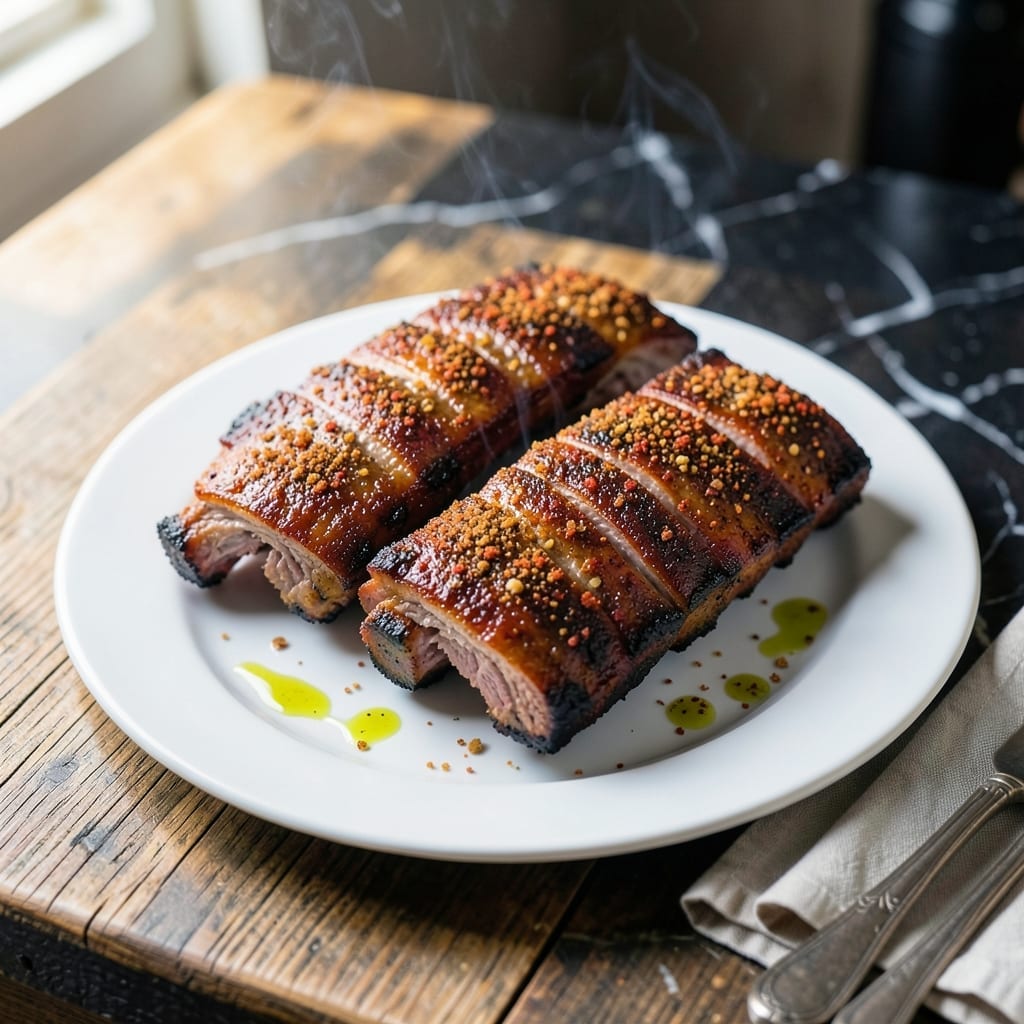
Mastering ribs on a pellet grill changed my approach to smoke cooking. The applewood infusion creates a subtle sweetness that complements the pork perfectly.
This method delivers fall-off-the-bone tenderness with a crispy bark, using precise temperature control and a simple rub for maximum flavor impact.
Ingredients for Pellet Grill Pork Rib
Applewood pellets and a bold rub transform pork ribs into tender, smoky perfection.
| Ingredient | Amount | Notes |
|---|---|---|
| Pork Baby Back Ribs 🥩 | 3 lb | Full rack, membrane removed |
| Applewood Pellets 🌳 | 2 cups | For smoky sweet flavor |
| Brown Sugar 🍚 | ½ cup | Light or dark variety |
| Paprika 🌶️ | 2 tbsp | Smoked paprika preferred |
| Garlic Powder 🧄 | 1 tbsp | Not garlic salt |
| Onion Powder 🧅 | 1 tbsp | Fresh ground preferred |
| Kosher Salt 🧂 | 1 tbsp | Diamond Crystal brand |
| Black Pepper 🌶️ | 1 tbsp | Freshly ground preferred |
| Cayenne Pepper 🔥 | ½ tsp | Adjust for heat preference |
| Yellow Mustard 🟡 | ¼ cup | For binder in rub |
| Apple Cider Vinegar 🍏 | ¼ cup | For spritzing ribs |
| Unsalted Butter 🧈 | ½ cup | Melted for basting |
| Honey 🍯 | ¼ cup | For sticky glaze finish |
[recipe_ingredient_scaler]
The ribs are everything here. Baby back ribs give you the best meat-to-bone ratio, while spare ribs offer more fat and flavor. Source from Costco or Sam’s Club for bulk savings, or ask your butcher for St. Louis-style if you prefer a cleaner cut. Always remove the membrane—it blocks smoke and rub penetration. Look for racks with good marbling for the juiciest results.
No applewood pellets? Cherry or hickory work well too—just avoid mesquite, which can overpower. Swap honey for maple syrup or brown sugar if you’re out. The mustard in the rub might seem odd, but it creates a perfect crust (trust me on this). For less heat, reduce the cayenne by half. The vinegar spritz keeps the surface moist during long cooks.
Store uncooked ribs in the fridge for up to 3 days or freeze for 6 months. The dry rub keeps indefinitely in an airtight container. Leftovers? They reheat beautifully wrapped in foil at 300°F for 20 minutes.
Why You’ll Love This Recipe
- Set and Forget: The pellet grill does all the work—just season the ribs, load the applewood pellets, and let it smoke low and slow for hours.
- Smoky Sweet Perfection: Brown sugar caramelizes with the paprika and garlic powder to create that sticky, finger-licking glaze everyone fights over.
- Crowd Pleaser: I make these for summer barbecues and they’re always the first to disappear—even my picky nephew cleans his plate.
- Leftovers? No Problem: Honestly, they taste even better the next day. I’ll shred the extras for sandwiches or toss them into tacos.
Step-by-Step Instructions for Applewood-Infused Ribs
Master the pellet grill technique for tender, smoky ribs with a perfect bark every time.
Step 1: Prepare and Season the Ribs
Pat the 3 lb pork baby back ribs dry with paper towels to ensure the rub adheres properly. Remove the membrane from the bone side by sliding a butter knife underneath, lifting, and pulling it off in one piece. This step is crucial for allowing the smoke and seasoning to penetrate the meat.
In a bowl, combine the 0.5 cup brown sugar, 2 tbsp paprika, 1 tbsp garlic powder, 1 tbsp onion powder, 1 tbsp kosher salt, 1 tbsp black pepper, and 0.5 tsp cayenne pepper. Brush the 0.25 cup yellow mustard lightly over both sides of the ribs as a binder. Apply the rub generously, pressing it into the meat so it forms an even coating. Let the seasoned ribs sit at room temperature for 30 minutes while you prepare the grill.
Step 2: Set Up the Pellet Grill for Smoking
Load the hopper of your pellet grill with the 2 cups applewood pellets. Preheat the grill to 225°F using the smoke setting if available. This low temperature ensures a slow cook that renders the fat and connective tissue, resulting in fall-off-the-bone tenderness.
Once the grill reaches 225°F, place the ribs bone-side down on the grill grates. Close the lid and allow the ribs to smoke undisturbed for the first 2 hours. Maintain a consistent temperature throughout the cook—fluctuations can lead to uneven cooking or a tough final product.
Step 3: Spritz and Wrap for Tenderness
After 2 hours, check the ribs. The surface should have developed a deep, reddish-brown bark. Using a spray bottle, lightly spritz the ribs with the 0.25 cup apple cider vinegar. This step adds moisture and a subtle tang while enhancing the bark formation.
Continue smoking for another 1.5 hours. Then, remove the ribs from the grill and wrap them tightly in heavy-duty aluminum foil. Before sealing, add 0.5 cup unsalted butter and 0.25 cup honey to the foil packet. This creates a steamy environment that speeds up the cooking process and infuses the ribs with rich, buttery-sweet flavors. Return the wrapped ribs to the grill for another 1.5 hours.
Step 4: Finish and Rest for Maximum Flavor
Remove the ribs from the foil and place them back on the grill grates, bone-side down. Brush any remaining butter and honey mixture from the foil onto the ribs. Increase the grill temperature to 275°F and cook for an additional 30 minutes to set the glaze and firm up the bark.
The ribs are done when the internal temperature reaches 195-203°F and the meat pulls back from the bones by about ¼ inch. Transfer the ribs to a cutting board, tent loosely with foil, and let them rest for 15 minutes. This resting period allows the juices to redistribute, ensuring each bite is moist and flavorful. Slice between the bones and serve immediately.
Pro Tips For Making Pellet Grill Pork Rib
- Preheat the Grill: Set your pellet grill to 225°F and let it stabilize for 15 minutes—I learned this the hard way after my first batch came out uneven because the temp was still climbing.
- Trim the Membrane: Peel off that tough silver skin on the bone side of the ribs with a paper towel for grip; skipping this makes the rub cling poorly and the texture suffer.
- Avoid Over-Saucing: Brush on your brown sugar and spice mix lightly in the last 30 minutes, or the ribs will steam instead of caramelize—my first few tries were soggy because I went heavy-handed.
- Use a Water Pan: Place a small pan of water on the grill grates near the ribs to maintain moisture during the long cook; it’s the difference between tender and dry, especially with baby backs.
Flavor Customization for This Recipe
Sweet Heat Twist
For a spicy-sweet kick, add 1 tbsp chipotle powder and 2 tbsp maple syrup to your rub. I discovered this combo at a local BBQ competition—it creates a perfect balance that makes the applewood smoke sing. The heat builds slowly, so it won’t overwhelm. 🌶️
Herb-Infused Bark
I often forage rosemary and thyme from my coastal rides. Finely chop 1 tbsp of each and mix into the dry rub. The herbs add a fragrant, earthy layer that complements the pork beautifully. Use fresh herbs only—they lose potency when dried.
Tangy Vinegar Boost
Swap the apple cider vinegar spritz for a 50/50 mix of vinegar and orange juice. The citrus brightens the smoky flavors and adds a subtle sweetness. I learned this trick from a pitmaster friend—it’s a game-changer for balancing rich, fatty cuts. 💛
Asian-Inspired Glaze
Replace the honey with a glaze of ¼ cup hoisin sauce and 1 tbsp soy sauce. Brush it on during the final 30 minutes of cooking. This creates a sticky, umami-rich finish that pairs surprisingly well with applewood smoke.
Smoky Coffee Depth
Add 1 tbsp finely ground coffee to your dry rub for a deep, smoky complexity. The coffee enhances the wood’s natural flavors without overpowering. I prefer dark roast for this—it adds a boldness that stands up to the pork.
Butter-Basted Luxury
For an extra decadent finish, mix ½ cup melted butter with 2 tbsp brown sugar and 1 tsp vanilla extract. Baste the ribs with this during the final 30 minutes. The vanilla adds a subtle sweetness that’s unexpected but delicious. 🔥
Nutrition Facts
Frequently Asked Questions
What’s the ideal smoking temperature?
Maintain a steady 225°F for the first 3.5 hours to develop a perfect bark and tender meat. This low-and-slow approach ensures the connective tissue breaks down properly.
Can I use a different wood pellet?
Cherry or hickory work well, but avoid mesquite—it can overpower the pork. Each wood adds a unique flavor profile to complement your ribs.
How do I know when they’re done?
The ribs are ready when the internal temperature hits 195-203°F and the meat pulls back from the bones by about ¼ inch. This ensures fall-off-the-bone tenderness.
Should I remove the membrane?
Yes, always remove the membrane first. It blocks smoke and rub penetration, which can result in uneven flavor and texture. A butter knife helps lift it for easy removal.

Trained in classic French technique but raised on slow-cooked ribs and spicy rubs, she blends culinary skill with smoke and soul.
- Recipe for Boneless Pork Chops in Cast Iron Skillet: Sear and Baste to Juicy Perfection - October 3, 2026
- Recipe for Boneless Cross Rib Roast: Slow-Roasted Beef with Herb Crust - October 3, 2026
- Hamburgers in Sauce Recipe Crock Pot: Slow-Cooked Savory Delight - October 3, 2026