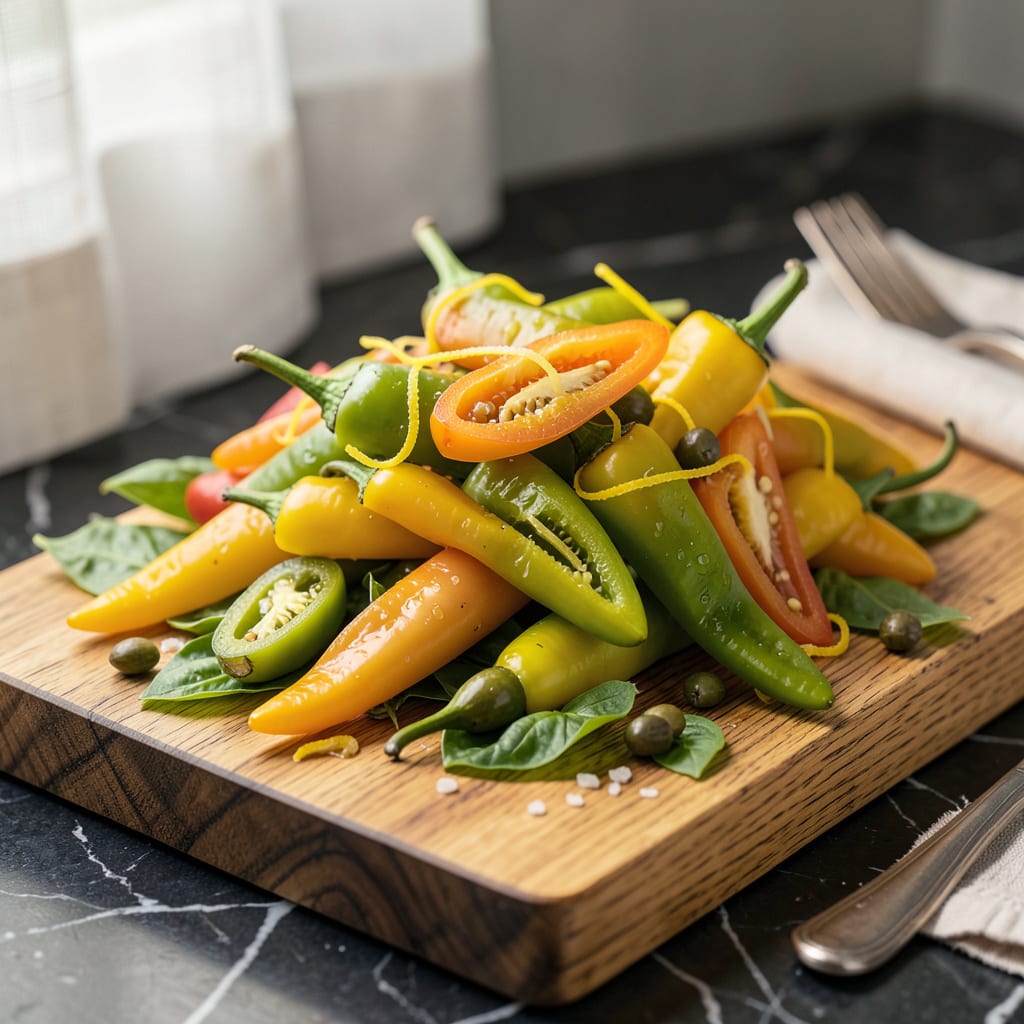
Fresh pepperoncini are mild, tangy Italian peppers perfect for adding subtle heat and bright flavor to dishes. Use them raw in salads, pickled for antipasto, or cooked in pasta and sandwiches for a zesty kick.
I love how these golden-yellow peppers bring a unique balance—just enough warmth to wake up your taste buds without overwhelming them. 🔥 Their thin skin and crisp texture make them ideal for quick cooking methods like sautéing or grilling, where they develop a slightly smoky sweetness. What’s fascinating is their versatility across cuisines: they complement rich Italian flavors just as beautifully as they cut through the saltiness of Greek feta or the smokiness of cured meats. The key is using them fresh when you want that bright, vegetal punch that pickled versions can’t deliver.
💡 In This Article
- Flavor Profile and Culinary Uses of Fresh Pepperoncini
- Top 5 Recipes Featuring Fresh Pepperoncini
Flavor Profile and Culinary Uses of Fresh Pepperoncini
Fresh pepperoncini pack a unique flavor punch that sets them apart from other peppers. On the Scoville scale, they register between 100-500 SHU, making them milder than jalapeños (2,500-8,000 SHU) but with more complexity than bell peppers.
Their flavor profile balances sweet grassy notes with a tangy, almost citrusy brightness that comes from their thin skins and high moisture content. The heat builds gradually rather than hitting you immediately, which is why they’re so approachable in dishes. 🔥
What’s fascinating is how their flavor transforms with different preparations. Raw, they offer a crisp, almost juicy texture with a clean, vegetal freshness—perfect for slicing thinly into salads or as a garnish for rich dishes.
When cooked, their natural sugars caramelize at temperatures above 325°F, developing a subtle sweetness that pairs beautifully with tomatoes, garlic, and olive oil. I’ve found that sautéing them for just 2-3 minutes preserves their texture while mellowing their tanginess slightly. The thin walls (about 1-2mm thick) mean they cook quickly without turning mushy. ✨
Their Mediterranean origins explain why they marry so well with classic ingredients from that region. The capric acid in pepperoncini (also found in goat cheese) creates a natural affinity with feta and ricotta salata.
Their mild heat cuts through the saltiness of cured meats like salami or prosciutto, while their brightness complements the earthiness of olives. This is why you’ll find them in Italian muffulettas or Greek mezze platters—they act as a flavor bridge between rich, fatty components and acidic elements like vinegar or lemon. 🌟
For practical kitchen use, I recommend treating fresh pepperoncini like you would a cross between a pepper and a herb. Their 2-3 inch length makes them ideal for stuffing with herbed cheese mixtures or threading onto skewers.
The seeds contain most of the heat, so removing them reduces the Scoville impact by about 30% if you’re serving heat-sensitive diners.
What most home cooks miss is that their flavor intensifies when paired with fat—try infusing them in olive oil at 180°F for 30 minutes to create a vibrant condiment that’ll elevate everything from grilled bread to roasted vegetables. ⚡
Their moisture content (about 90%) means they release liquid when cooked, which can actually benefit sauces and braises. I love adding them to tomato-based pasta sauces during the last 10 minutes of simmering—they soften just enough to blend into the sauce while maintaining their distinct flavor.
Unlike dried peppers that need rehydrating, fresh pepperoncini integrate immediately, making them a cook’s secret weapon for quick flavor boosts. Their thin skins also mean they don’t require peeling, unlike thicker-skinned peppers that can be tough when fresh. 💫
One pro tip I’ve learned from Italian grandmothers: fresh pepperoncini’s flavor peaks when they’re just turning from green to yellow. At this stage, they’ve developed their full sugar content but haven’t lost their crispness. Look for peppers that are firm to the touch with no wrinkling—this indicates they were recently harvested.
The stems should snap cleanly when bent, a sign of freshness that ensures you’re getting that signature bright, tangy flavor rather than the more muted taste of older peppers. 💛

Trained in classic French technique but raised on slow-cooked ribs and spicy rubs, she blends culinary skill with smoke and soul.
- Recipe for Boneless Pork Chops in Cast Iron Skillet: Sear and Baste to Juicy Perfection - October 3, 2026
- Recipe for Boneless Cross Rib Roast: Slow-Roasted Beef with Herb Crust - October 3, 2026
- Hamburgers in Sauce Recipe Crock Pot: Slow-Cooked Savory Delight - October 3, 2026